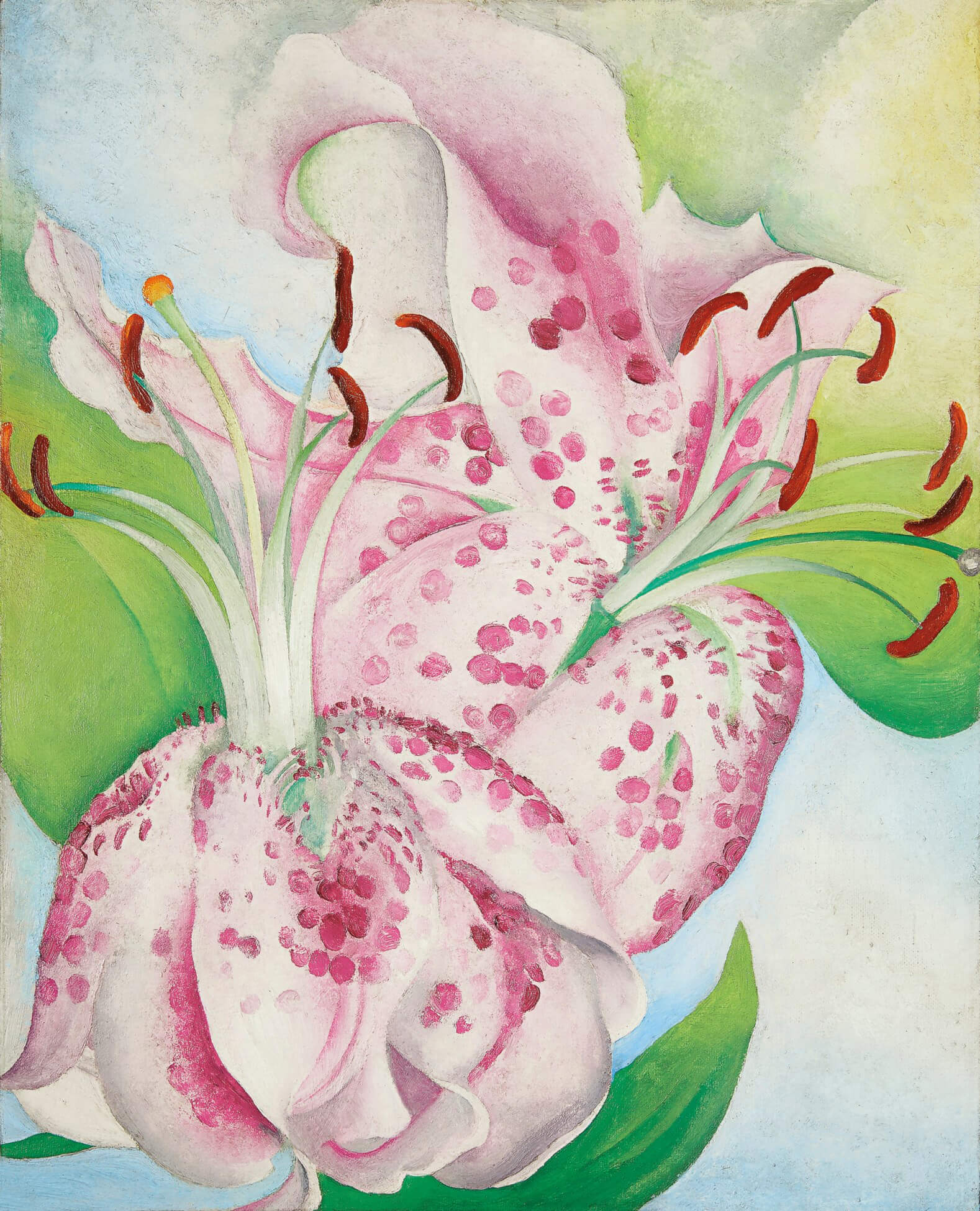
Pink Spotted Lillies, 1936
The legendary American artist Georgia O’Keeffe is best known for her monumental flower paintings that took seemingly humble, delicate subjects and transformed them into symbols of power, strength, endurance, and beauty. She often brought shades like Blush Pink into her art, not in a quiet, delicate way, but as a potent, heady colour that packed a punch, making the American art world sit up and take notice, writing in her notebook, “A flower is relatively small… So, I said to myself—I’ll paint it big… I will make even busy New Yorkers take time to see what I see of flowers.”
O’Keeffe was born on a dairy farm in Sun Prairie, Wisconsin in 1887, and by the age of 9 had already decided she wanted to become an artist. After studying at the School of the Art Institute of Chicago, followed by New York’s Art Student’s League, she spent many years working as a teacher in Virginia, South Carolina. In 1915, O’Keeffe went through a dramatic period of artistic transformation, destroying all her previous work and making a series of stripped back, black and white charcoal drawings of organic shapes and forms that veered close to abstraction. It was these works, when exhibited in New York, that eventually opened up her career as a successful artist.
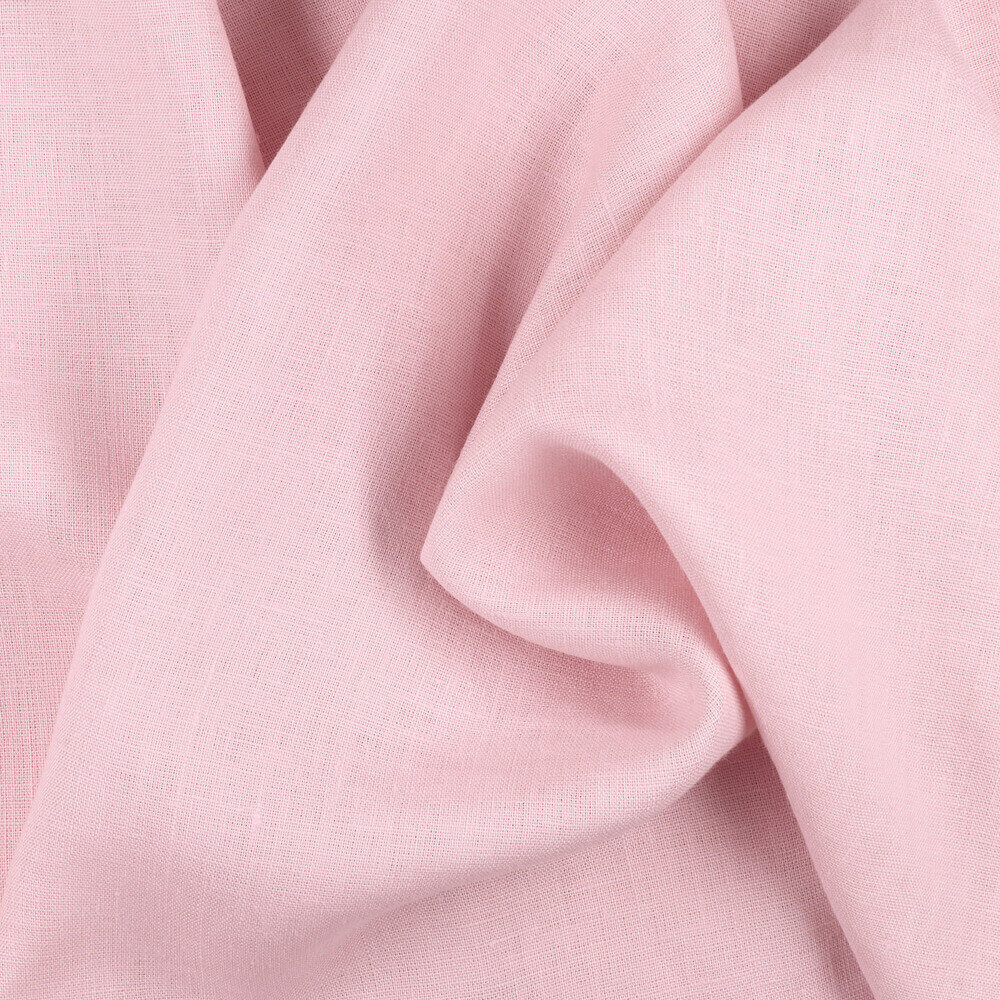
IL019 All-purpose Blush Pink FS Signature Finish Linen
Looking back, she recalled, “I decided to start anew-to strip away what I had been taught, to accept as true my own thinking. This was one of the best times of my life. There was no one around to look at what I was doing, no one interested, no one to say anything about it one way or another. I was alone and singularly free, working into my own, unknown-no one to satisfy but myself. I began with charcoal and paper and decided not to use any colour until it was impossible to do what I wanted to do in black and white. I believe it was June before I needed blue.”

All the way from the 1920s to the 1950s O’Keeffe painted flowers, producing around 200 in total, and they would become one of the most memorable and iconic symbols of her identity as an artist. She rejected the still-life tradition for painting full bouquets, instead honing in on cropped details scaled up for dramatic effect, echoing the near-abstraction of her earlier work in charcoal. “Nobody sees a flower really,” she wrote, “… it is so small. We haven’t time, and to see takes time — like to have a friend takes time,” adding, “I decided that if I could paint that flower in a huge scale, you could not ignore its beauty.”
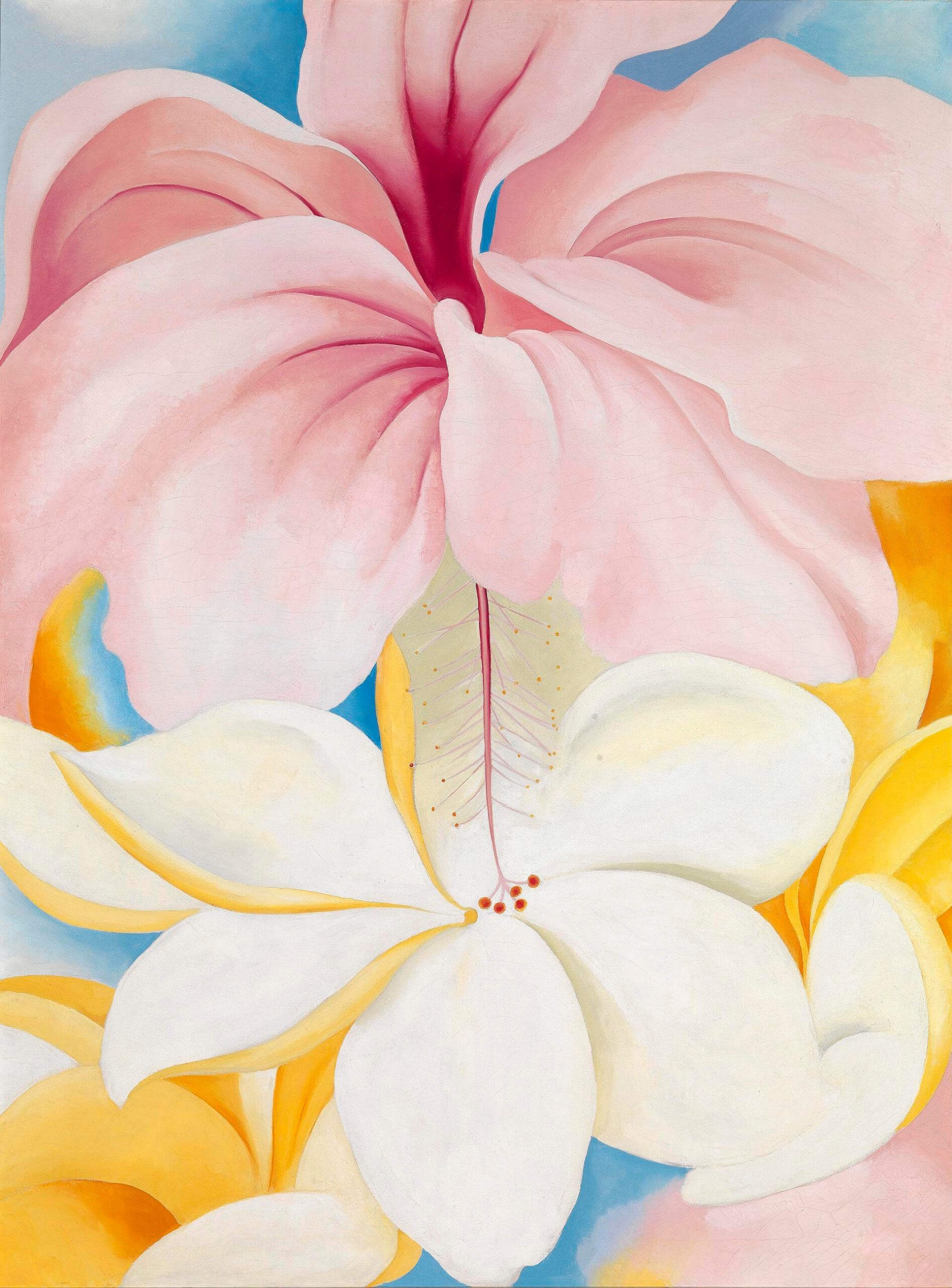
Hibiscus with Plumeria, 1939
In Red Cannas, 1927, the brilliantly bold red petals stand out, an uncompromising symbol of nature’s hardy endurance. In the background, O’Keeffe fills tiny gaps here and there with a striking cool pink, its icy shade a crisp contrast with the flower’s fiery heat. Made nearly 10 years later, Pink Spotted Lillies, 1936 places the pink in centre stage, with the soft, pale pink hue of the lilies set against the tart freshness of apple green leaves, and warm brown stamens scattered this way and that across their surface like burning embers.
Hibiscus with Plumeria, 1939, also places a cool pink flower front and centre, billowing outwards from a dark centre, with fleshy petals overlapping one another to create volume and depth. When set against a vivid cobalt blue and glowing, golden yellow, the colours form a visual feast that seems to emphasise the artist’s love of the simple beauty found in the seemingly most ordinary moments of daily life. “Filling a space in a beautiful way,” said O’Keeffe, “that is what art means to me.”