
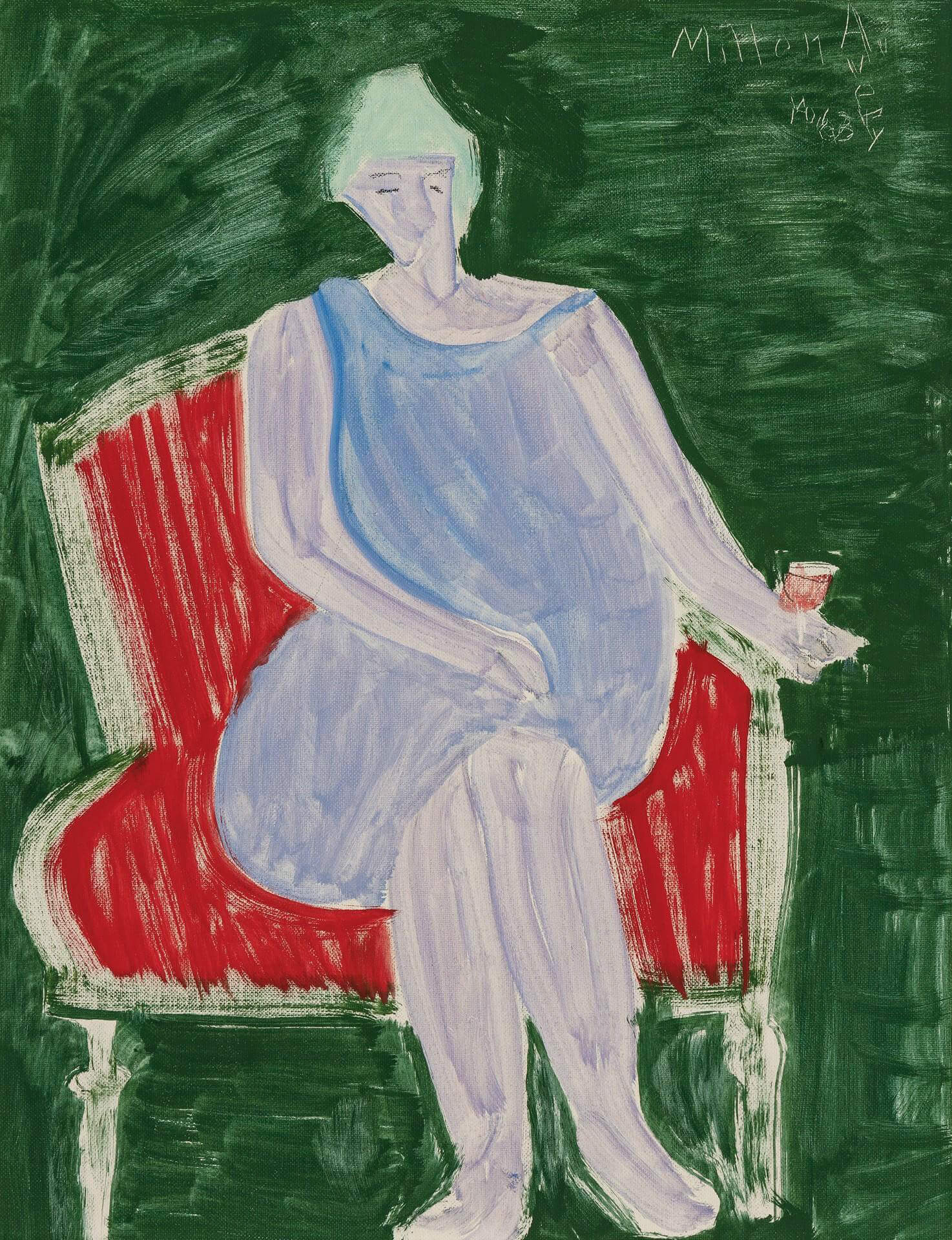
Red Bergère, 1963
The master of bold, simplified form, and vivid, brilliant colours, the great American mid-20th century painter Milton Avery found the quiet magic in everyday moments. He reimagined humble, ordinary scenes with heightened, elevated colours and liberated, loose applications of paint. Within these observations Avery often experimented freely with how brilliant accents of crimson like Vermilion Red, could sit in amongst cooler, or muted hues, creating bold, unexpected flashes of visual intensity. “Art is like turning corners,” he wrote in his notes, “… one never knows what is around the corner until one has made the turn.”
Avery was born in 1885 in Sand Bank, New York. Having worked various jobs in his youth, Avery took up evening classes at the Art Students League in New York during the 1920s. It was here that he first encountered the art of Edouard Vuillard and Henri Matisse, whose focus on the simplicity and beauty of ordinary, observed moments painted with exaggerated, vivid colours profoundly shaped his art.

IL019 All-purpose Vermilion Red FS Signature Finish Medium Weight 100% Linen
In New York Avery also befriended various leading artists of the day, many of whom were considerably younger than him, including Mark Rothko and Barnett Newman. As Avery’s career progressed, many of these artists often cited him as a key influence on their own work. Throughout his 30s and 40s Avery worked tirelessly day after day making art, telling himself to “Keep painting – day in – day out. Be absorbed by it.” Struggling through the most challenging moments were worth in by the 1940s, when Avery’s career finally hit full swing.

In the years that followed Avery became known amongst art circles as the “American Fauve”, for his daringly simple, austere designs, featuring angular panels of colour zig-zagging across the picture plane, often with sombre, muted hues offset by dazzlingly bright accents of colour. He wrote in his diary, “I try to construct a picture in which shapes, spaces, colours, form a set of unique relationships, independent of any subject matter. At the same time, I try to capture and translate the excitement and emotion aroused in me by the impact with the original idea.”
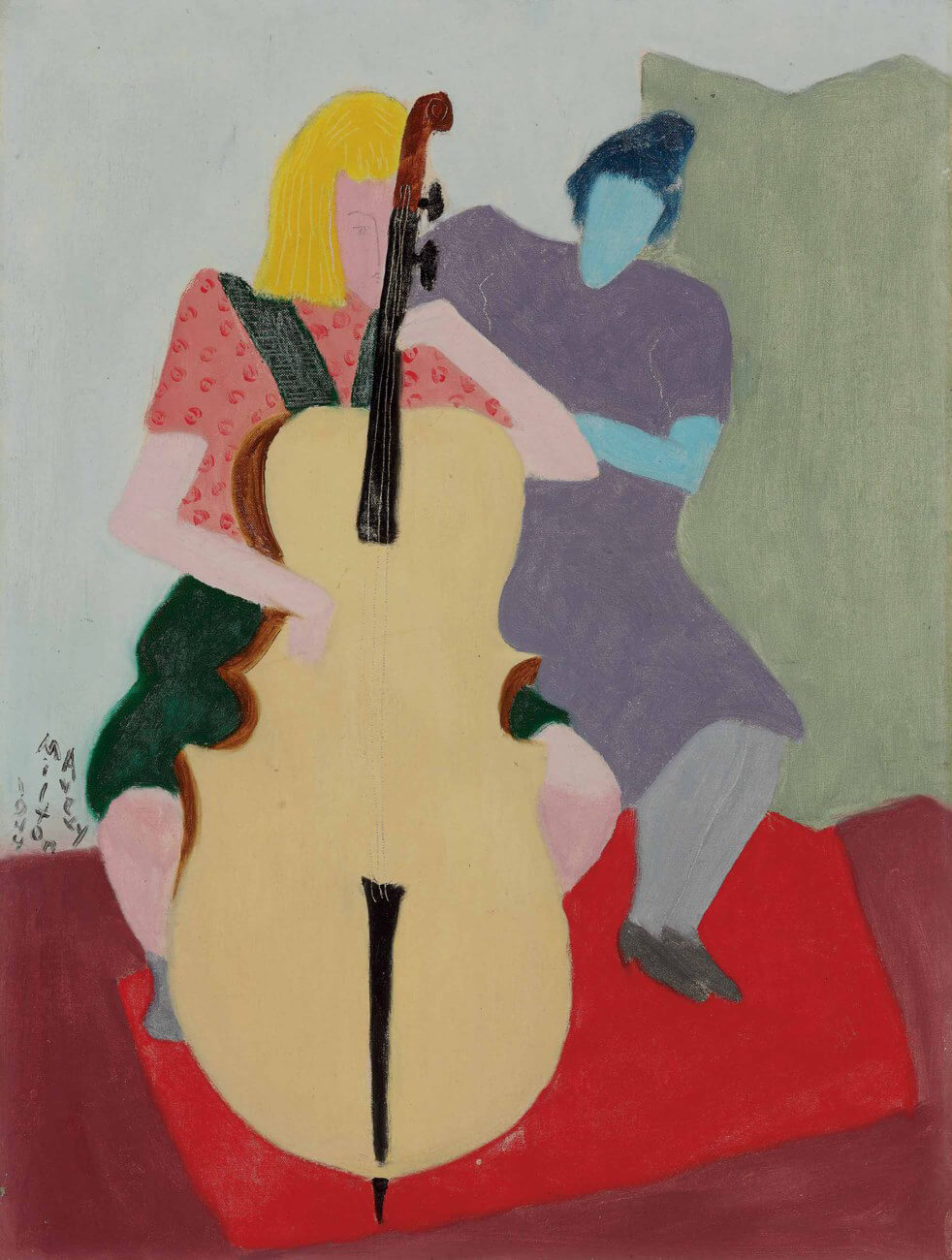
Cello Player, 1944
In Cello Player, 1944, Avery toys with how the simple representation of a figure playing music can be enlivened through playful, angular shapes and forms, echoing the fragmented, Cubist art of Pablo Picasso and Georges Braque. Refreshingly cool shades of lilac, beige and mint green are shot through with a panel of brilliant red across the ground, suggesting the rich, sonorous bass notes of the cello being played.
Painted just a few years later, the stark, and daringly simple still life study Red Tulip, 1948, shows a single tulip rising from a glass vase, its fleshy petals painted in a deep, dark shade of crimson. On the table below, the blazing intensity of the red tablecloth further intensifies the entire image, lending it a magical, otherworldly quality beyond words. “Why talk,” said Avery, “… when you can paint?”
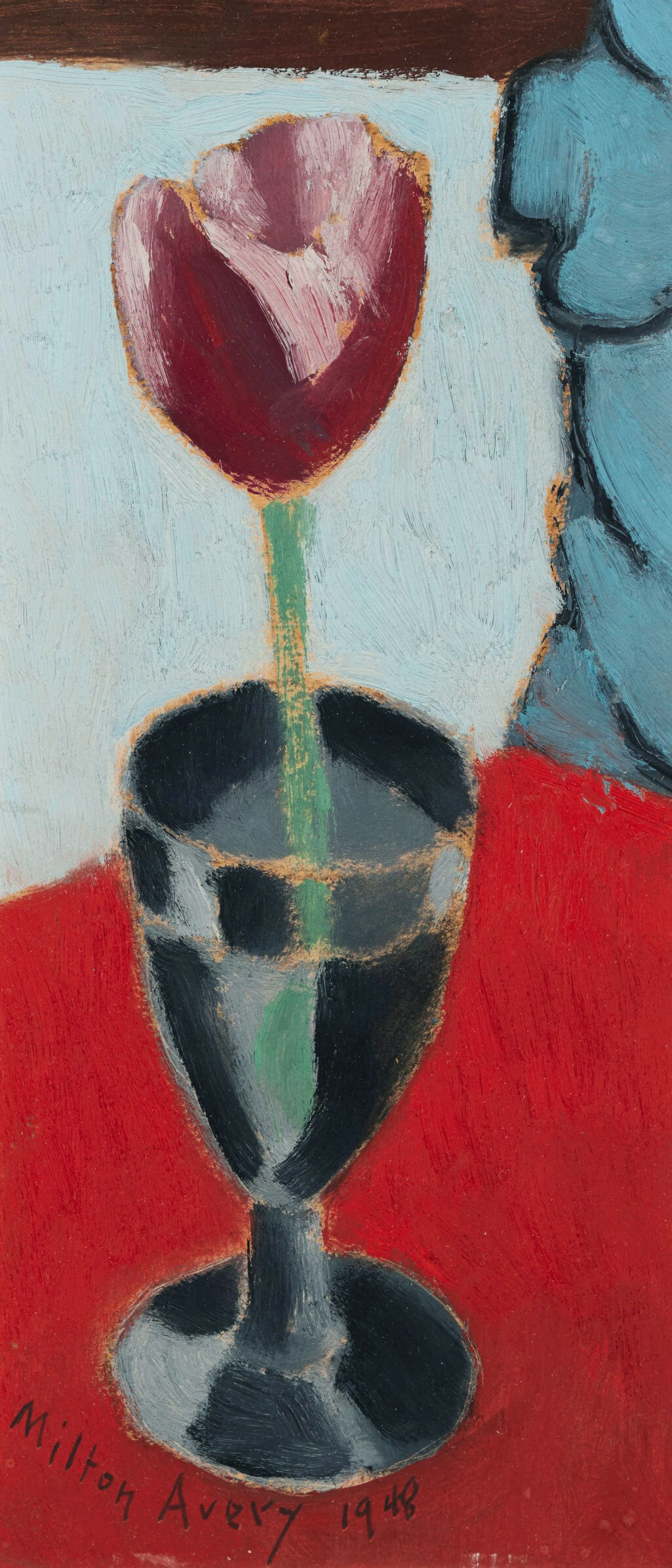
Red Tulip, 1948
Red Bergère, 1963, made later in the artist’s career, is painted with a freer application of paint, this time capturing a woman in a quiet moment of solitude, resting with a glass of wine in one hand. Dark green is scumbled across the entire background in a thin wash, forming a complimentary colour contrast with the vivid red chair upholstery, streaked across the painted surface with frenzied, energised marks. Setting his subject free from superfluous detail, the artist veers close to abstraction, letting the interaction of colour and the application of paint take precedence over subject matter. “I never have any rules to follow,” said Avery, “I follow myself.”







1 Comment
?? ??? ???? ??? ???? ?? ??? ??? ???? ????? ?? ??? ??? ?? ??? ??? ???? ? ????.