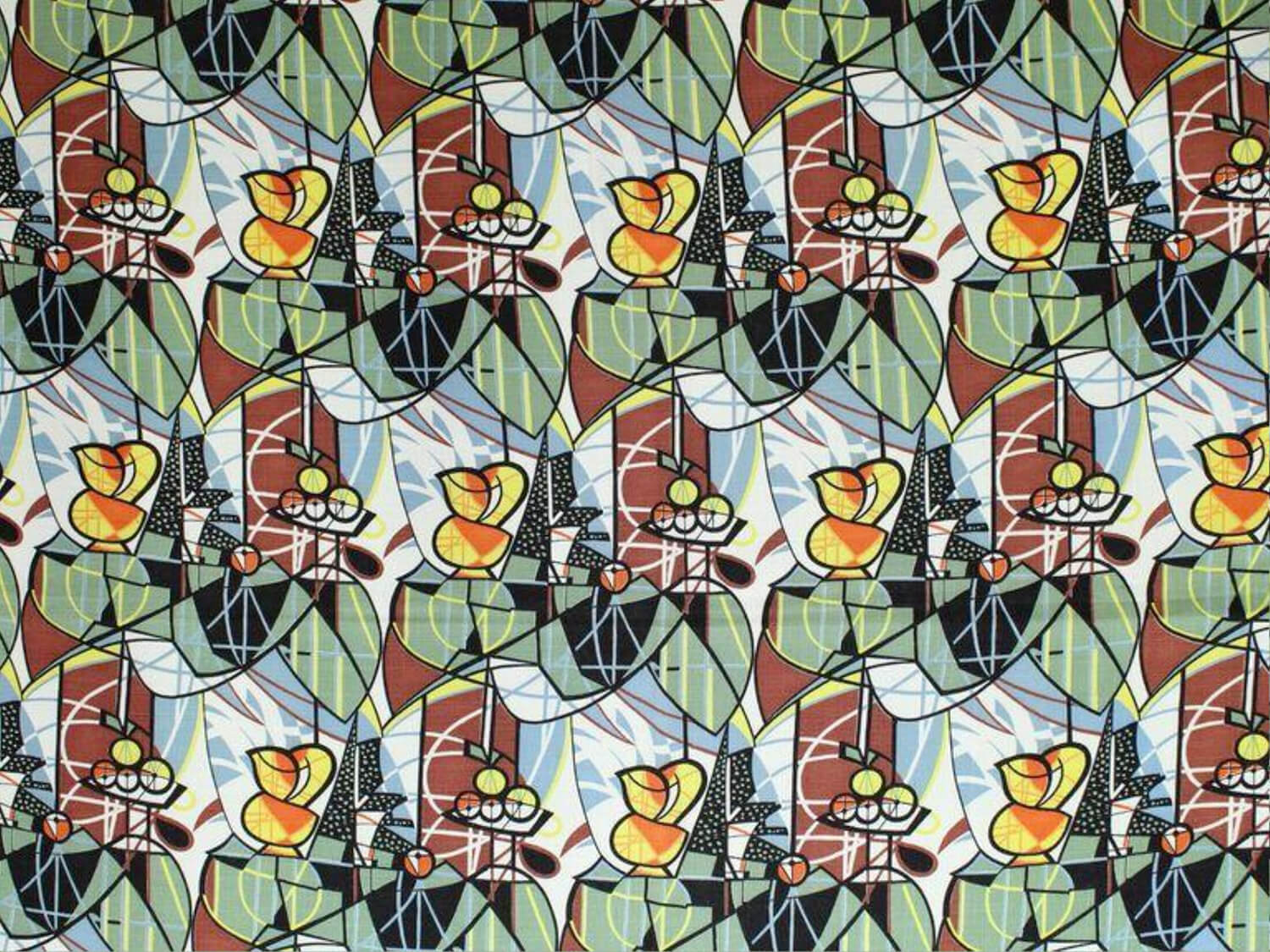
Pitcher & Bowl of Fruit , Furnishing fabric, designed by Pablo Picasso, 1956
It is hard to imagine a discipline which the great polymath Pablo Picasso didn’t turn his hand to. Among his massive outpouring of paintings, sculptures, collages, printmaking, ceramics, jewellery, and more, there are also a handful of commercially produced textiles within Picasso’s vast archive, some of which were even translated into wearable garments of clothing. Produced from the 1950s onwards, Picasso’s textiles feature some of the artist’s most treasured late-art motifs, which were transformed into brilliantly expressive repeat patterns that were made widely accessible to the public.
By the time Picasso came to textile design in the early 1950s, he had already established his name as one of the 20th century’s most iconic and inventive artists. The recurring symbolic and surreal emblems that appeared again and again in Picasso’s art were already widely known and celebrated amongst both art circles and the wider public. This meant that by the time he chose to reproduce these motifs in his fabrics, they quickly attracted public attention.
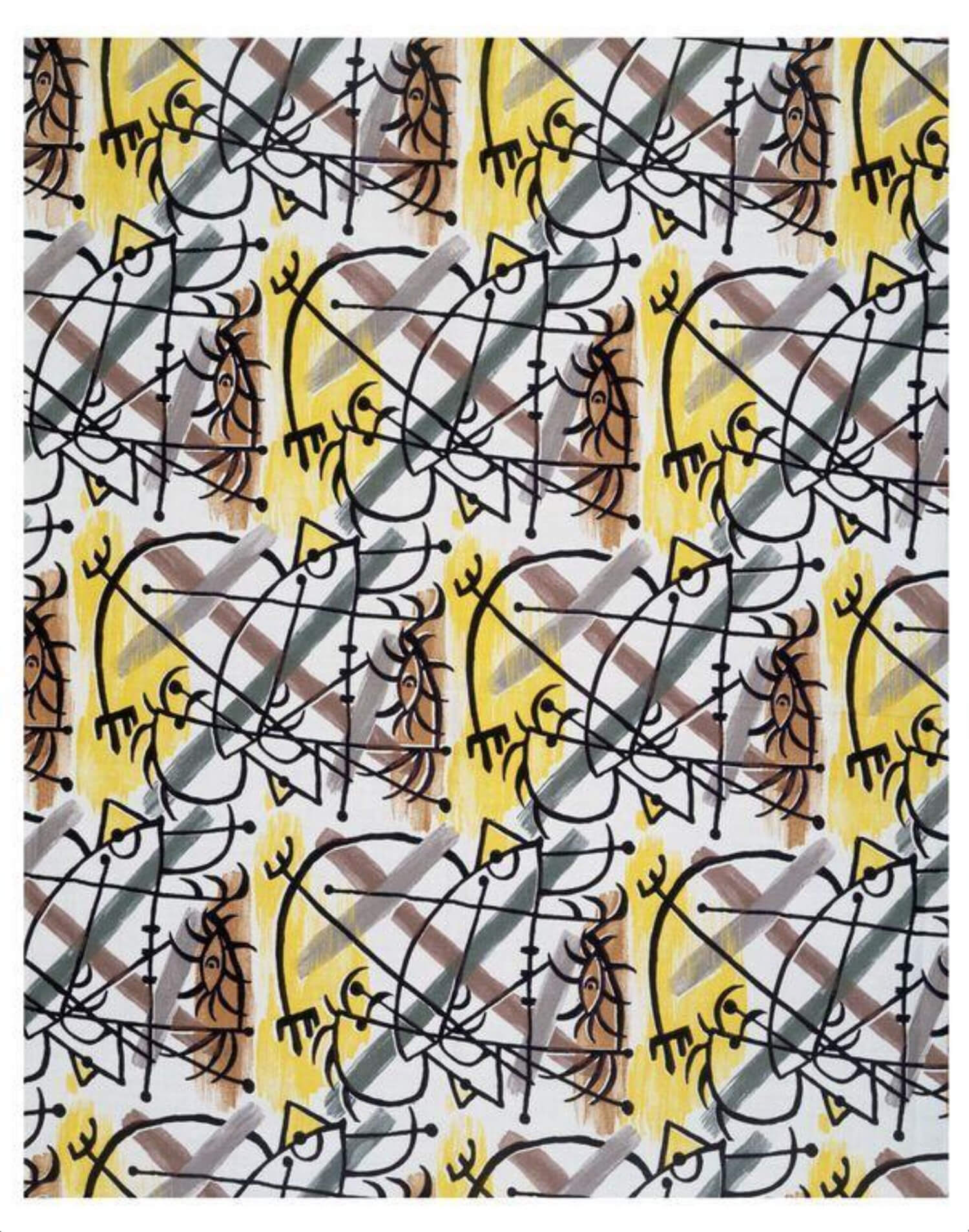
Length, designed by Pablo Picasso, 1956
Picaso’s first foray into textiles came in 1953, when Dan Fuller, then President of the American company Fuller Fabrics, invited him to take part in a new venture called the Modern Master Series, aimed at bridging the gap between fine and applied arts. In this enterprise, Fuller commissioned a group of Europe’s most renowned artists to work with him on a series of furnishing textiles; along with Picasso, Fuller also enlisted Fernand Léger, Marc Chagall, Joan Miró, and Raoul Dufy.
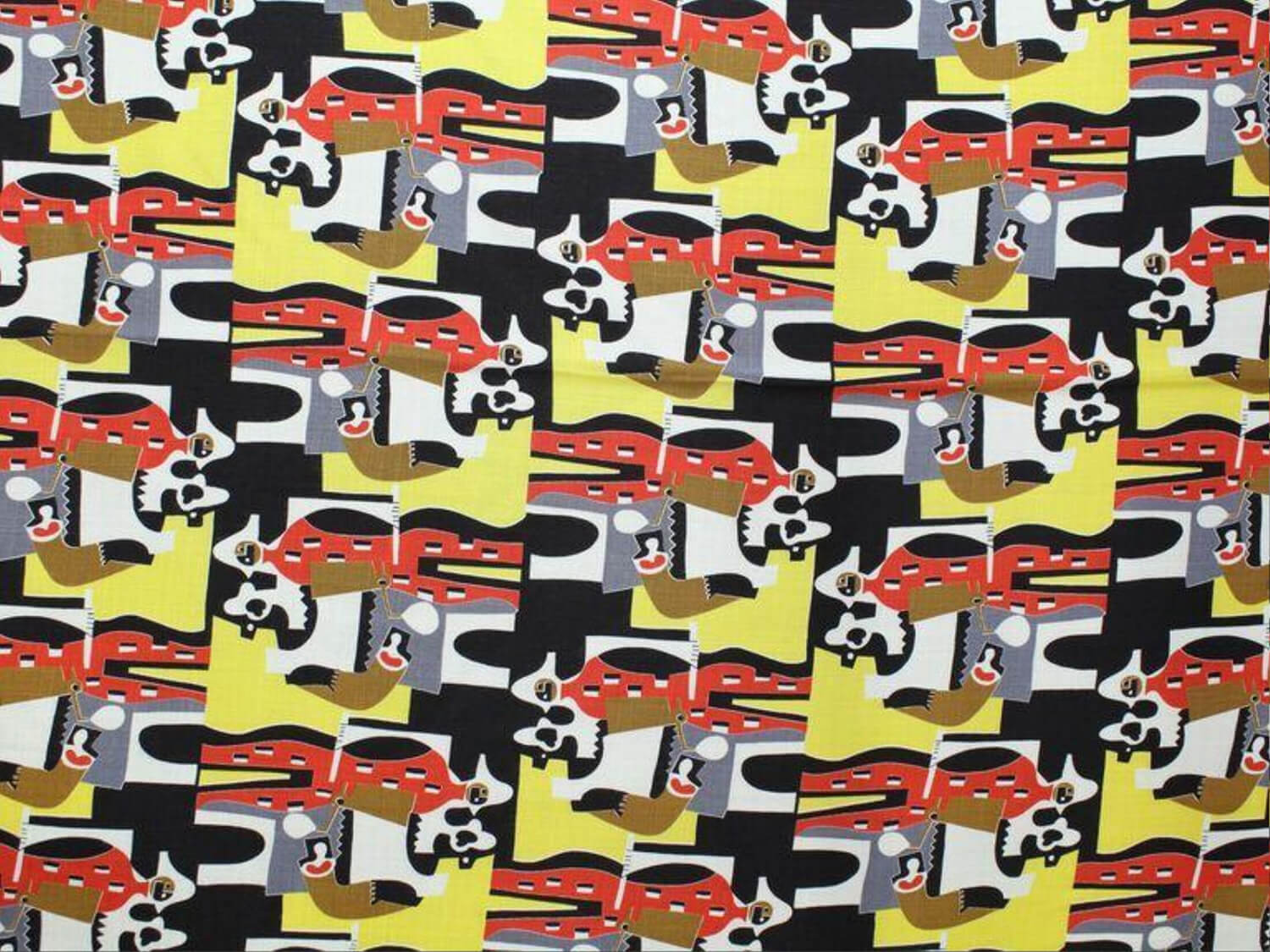
Pierrot et Harlequin, Furnishing fabric, designed by Pablo Picasso, 1956
Fuller insisted the artists were to select imagery from their pre-existing artworks rather than come up with something entirely new, thus linking the textiles with art that was already a part of the 20th century’s public consciousness. Fuller’s in-house team of designers worked closely with artists to translate these emblems into a series of striking repeat patterns.
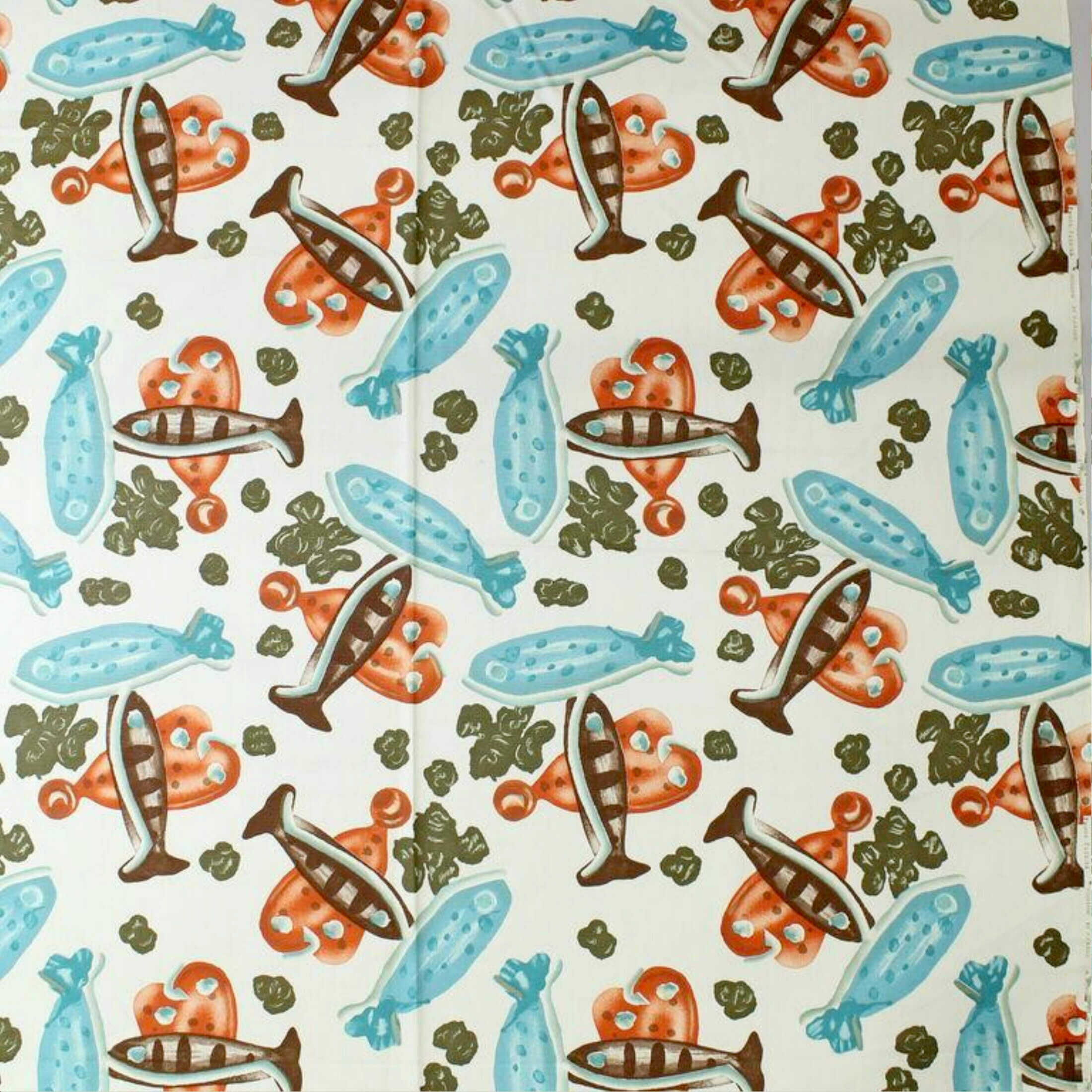
Poisson, by Pablo Picasso, 1955, manufactured by Fuller Fabrics.
Picasso created three different fabrics for Fuller, which he titled The Bullfight, Birds, and Poisson. His imagery for The Bullfight came from Bullfight Scenes, a 1945 lithograph, while Birds, and Poisson both took their playful, brightly-coloured emblems from ceramic plates the artist had painted following his experimentation with pottery during the 1940s and 1950s.
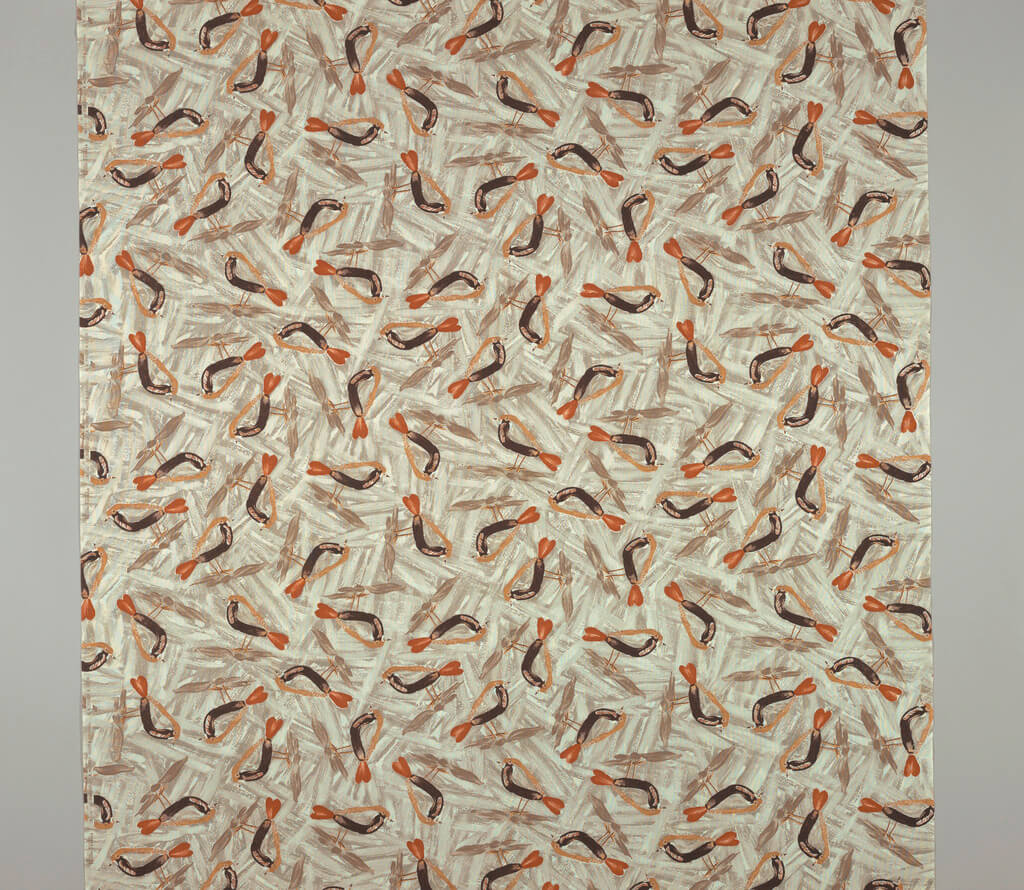
Birds, by Pablo Picasso, 1955, manufactured by Fuller Fabrics, cotton printed with copper roller incised by photographic process.
Fuller’s Modern Masters series went on display at the Brooklyn Museum in 1955, before travelling widely to museums across the United States, which contributed greatly to the widespread commercial success of the venture. Various designers also picked up on the fabric’s growing popularity, such as Claire McCardell, known today as founder of ‘The American Look’, who created a popular dress featuring Picasso’s fish for American garment company Townley.
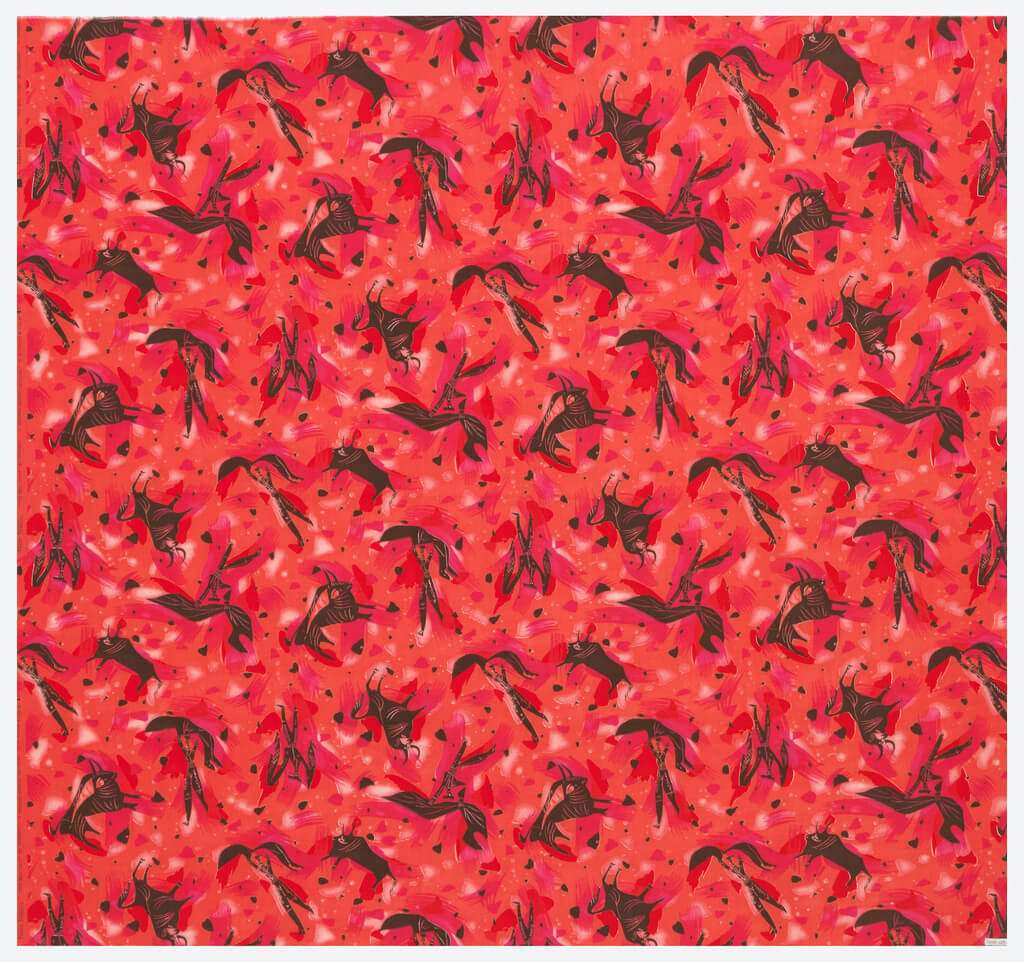
The Bullfight, 1958-9. Cooper Hewitt
Building on the success of the Modern Master series, Picasso went on to produce textile patterns with various other textile manufacturers. In 1963, he worked closely with American company Bloomcraft Fabrics to create a collection of 11 different furnishing fabrics, printed onto a variety of fabrics with rich, and vibrant colours. These included Toros y Toreos (Bulls and Bullfighting), a whimsical and expressive repeat pattern featuring drawings from a suite of bullfighting drawings the artist made in 1961. A group of dresses made with Picasso’s Bloomcraft fabric subsequently featured in the December 1963 issue of Look Magazine.
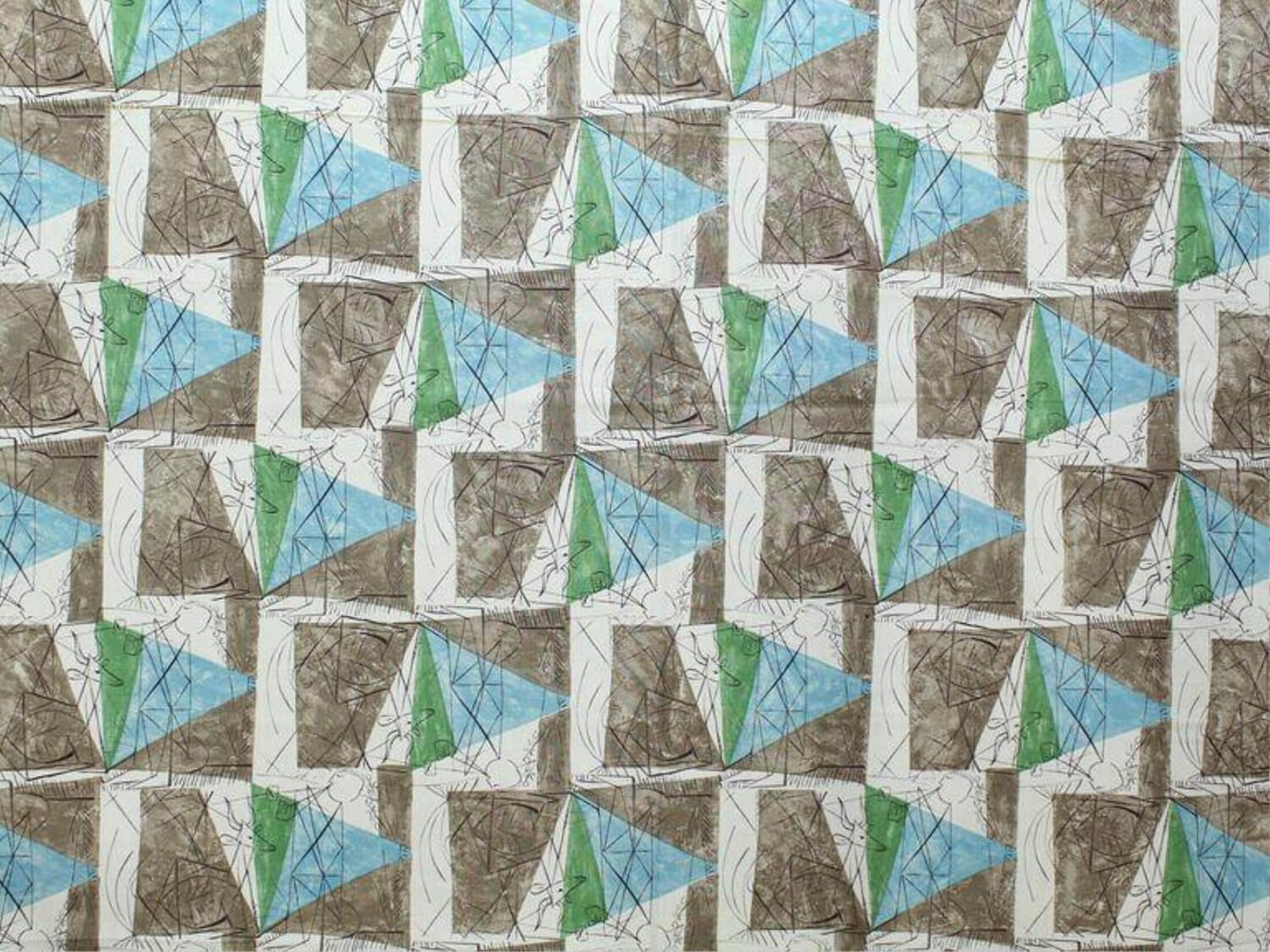
Spring, Furnishing fabric, designed by Pablo Picasso, 1956
Picasso later went on to collaborate with the American skiwear manufacturer White Stag on textiles for an apres-skiwear line. A series of Picasso’s textile designs featuring bullfighters were printed onto various fabrics including PVC, corduroy, and cotton. These went on to become a series of highly sought after dresses, jackets, sweat tops, and ponchos, which, following their United States launch in 1963, were a whirlwind success. They proved just how translatable Picasso’s designs were to mass reproduction, and played a pivotal role in breaking down barriers between art and everyday life, which had always been at the heart of Picasso’s practice.