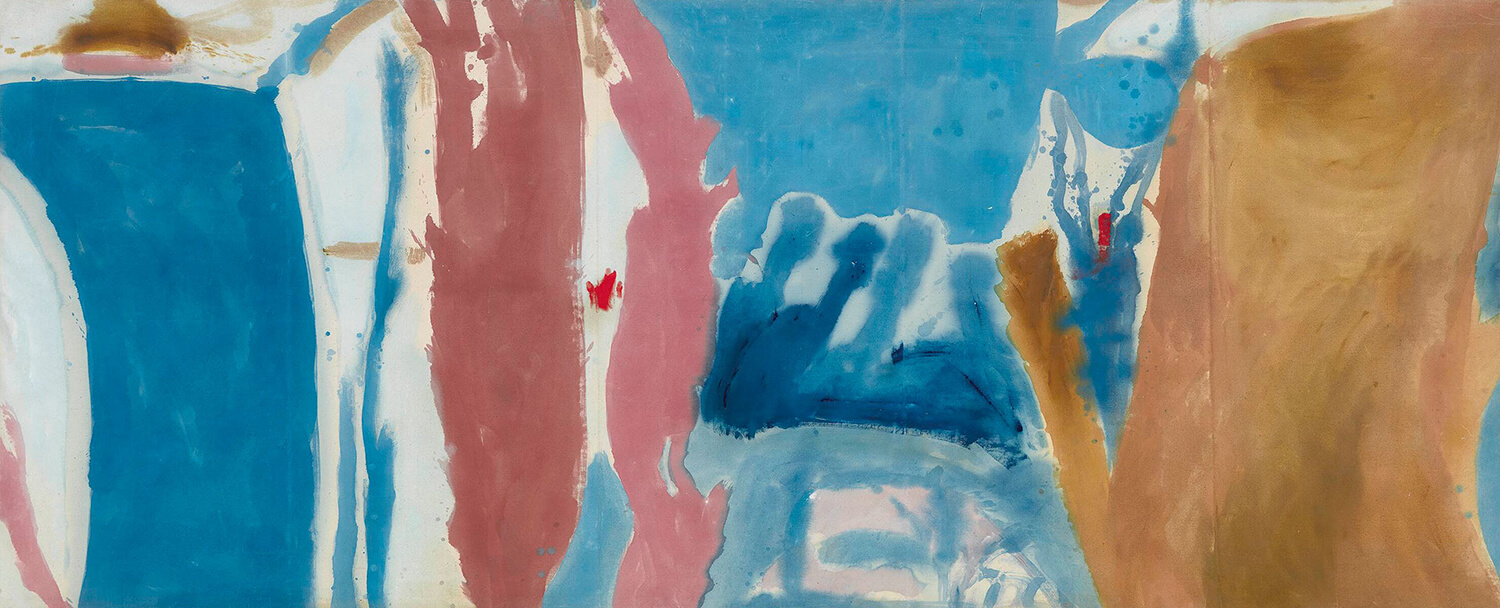
Open Wall, 1953. © 2025 Helen Frankenthaler Foundation, Inc./Artists Rights Society (ARS), New York / VEGAP. Photo: Rob McKeever, courtesy Gagosian
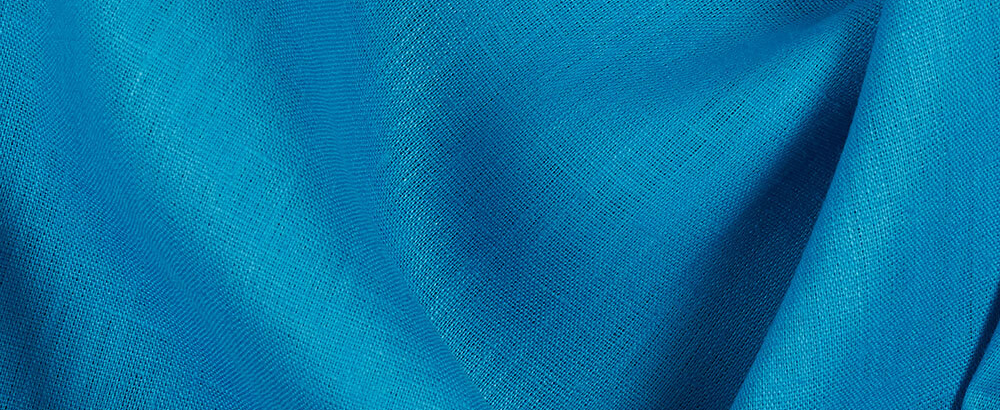
One of the most significant artists of the 20th century, American painter Helen Frankenthaler made vast, spatial fields of colour painted in loose, watery pools of paint. Colour was a key component to her work, for its resonant, atmospheric properties and the particular aqua shade of Pacific Blue Linen made its way into many of her most celebrated works of art, lending them an expansive, oceanic quality, even if they were born out of a series of improvised experimentations. She said, “There are no rules. That is how art is born, how breakthroughs happen. Go against the rules or ignore the rules. That is what invention is about.”
Frankenthaler was born in 1928 in New York City, and trained as an artist at the Dalton School, before graduating from Bennington College, Vermont, followed by a spell studying with the renowned artist and teacher Hans Hofmann. In the early 1950s she pioneered what would become her signature style – the soak-stain technique, in which diluted paint was poured directly onto raw, unprimed canvas laid out flat on her studio floor. The work was made through an entirely improvised, unplanned process, making the end result a complete surprise. “You have to know how to use the accident,” she wrote, “… how to recognise it, how to control it, and ways to eliminate it so that the whole surface looks felt and born all at once.”

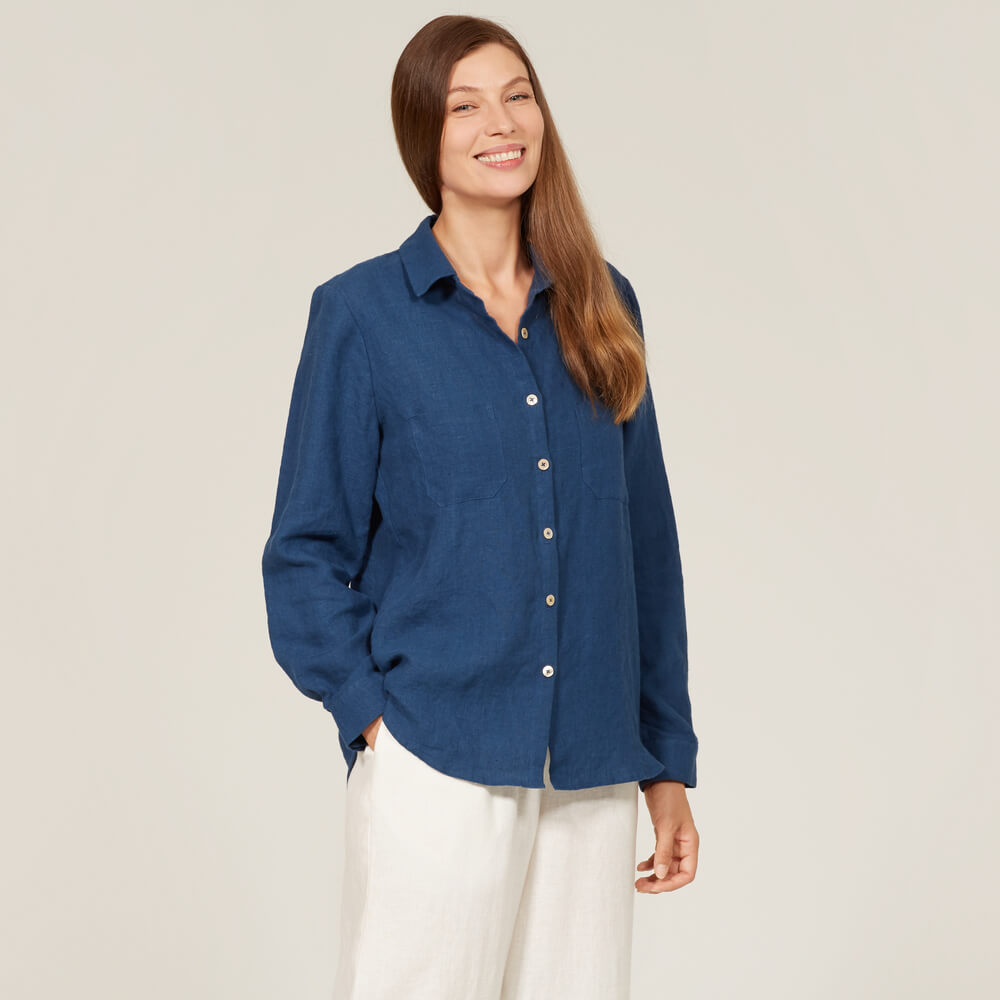
FS Pacific Blue Signature Finish Linen
Such work is now recognised as a bridge between the emotionally loaded painterliness of Abstract Expressionism and the cool, detached monochrome passages of paint in Colour Field Painting. She summed up this duality in her work when she wrote, “Art has the power to connect people on a deeper level.”
Open Wall, 1953 is one of the earliest paintings she made using this radical new technique, an 11-foot-wide panorama featuring amorphous abstracted panels of colour that suggest energy, movement, and space. Darker colours flank the sides of the canvas, and our eye is drawn to a vivid patch of aqua blue in the upper centre, suggesting the lively colour of the sea or sky. She wrote in her notes on the spatiality that flat paintings could convey, “The canvas surface is flat and yet the space extends for miles. What a lie, what trickery – how beautiful is the very idea of painting.”
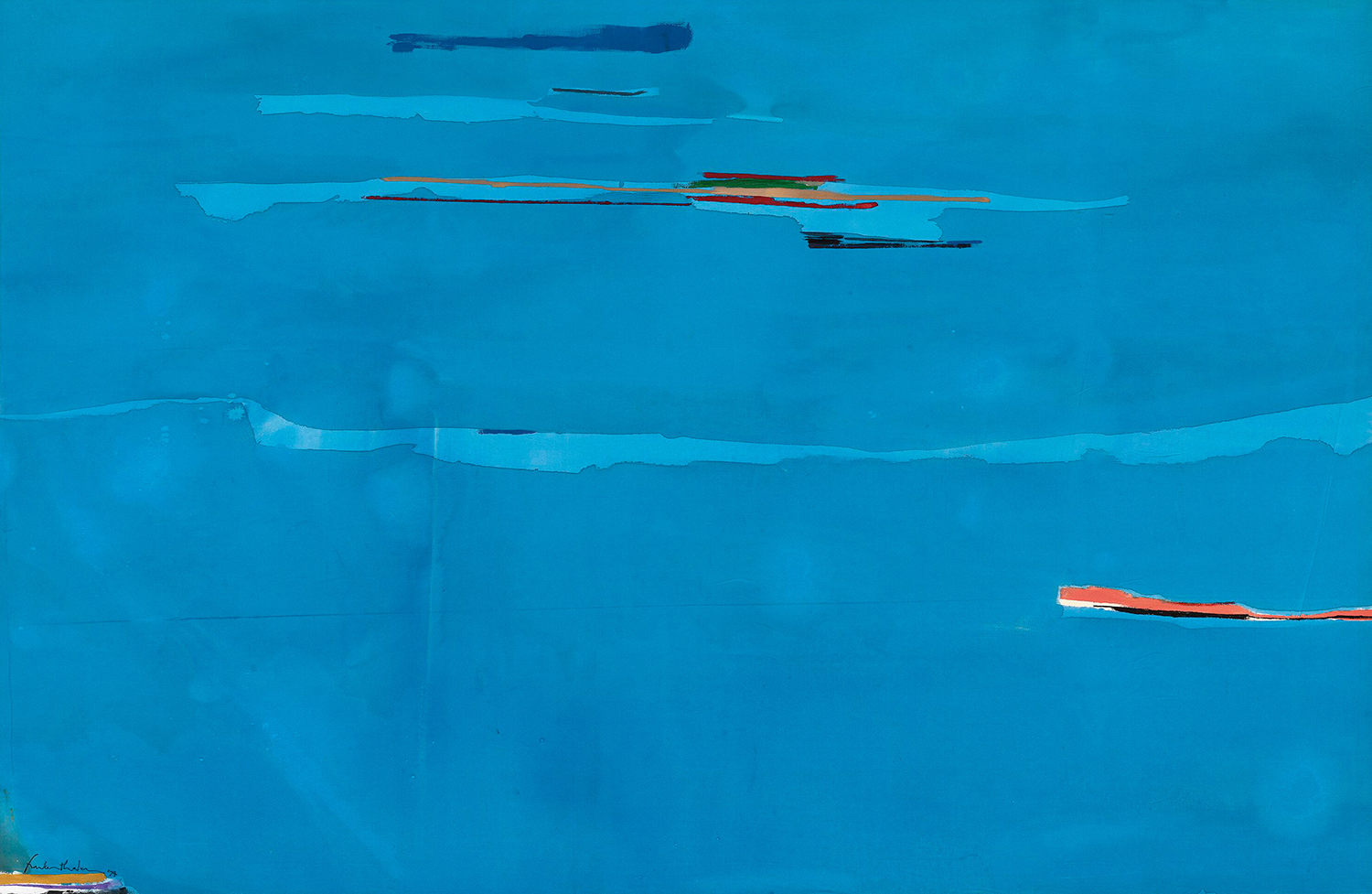
Ocean Drive West #1, 1974. © 2025 Helen Frankenthaler Foundation, Inc./Artists Rights Society (ARS), New York / VEGAP. Photo: Rob McKeever, courtesy Gagosian
During the summer of 1974, Frankenthaler rented a house at Shippan Point, Stamford in Connecticut, which looked out to the waters of Long Island Sound. The paintings she made during this time reflect on the ever-shifting patterns and colours of the sea, yet remain experimental and abstract. Ocean Drive West #1, 1974, shows floating, horizontal bands that stretch out across a vivid blue monochrome background, suggesting slim traces of land in amongst an expansive and all-encompassing sea of intense blue. On works like this one Frankenthaler mused, “A really good picture looks as if it’s happened at once. It’s an immediate image.”
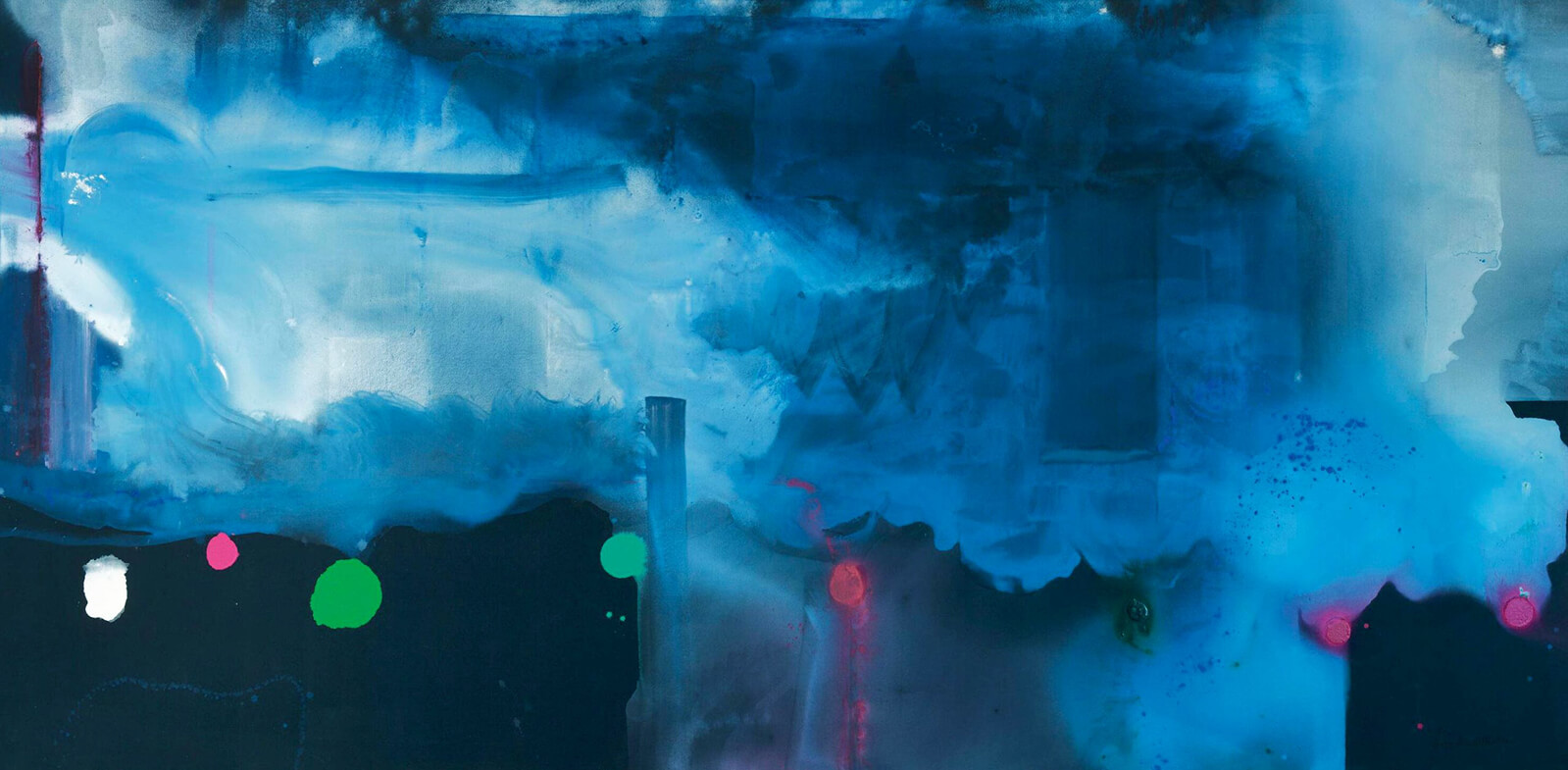
Star Gazing, 1989. © 2025 Helen Frankenthaler Foundation, Inc./Artists Rights Society (ARS), New York / VEGAP. Photo: Tim Pyle, courtesy Helen Frankenthaler Foundation, New York
Made over 10 years later, Frankenthaler’s vast canvas titled Star Gazing, 1989 shows a looser, more painterly approach, with shifting blooms of intense blue forming billowing clouds that seem to move back and forth in space. The work demonstrates Frankenthaler’s later move towards cosmic themes, referencing the abstract and unknown expansiveness of the universe. Brilliantly bold circles of colour in green, red and white seem to float on the surface of the canvas, painted in random, expressive daubs to demonstrate her ongoing dedication to improvisation, experimentation, and play. Ever the ingenious inventor, she confessed in an interview, “I’d rather risk an ugly surprise than rely on things I know I can do.”