
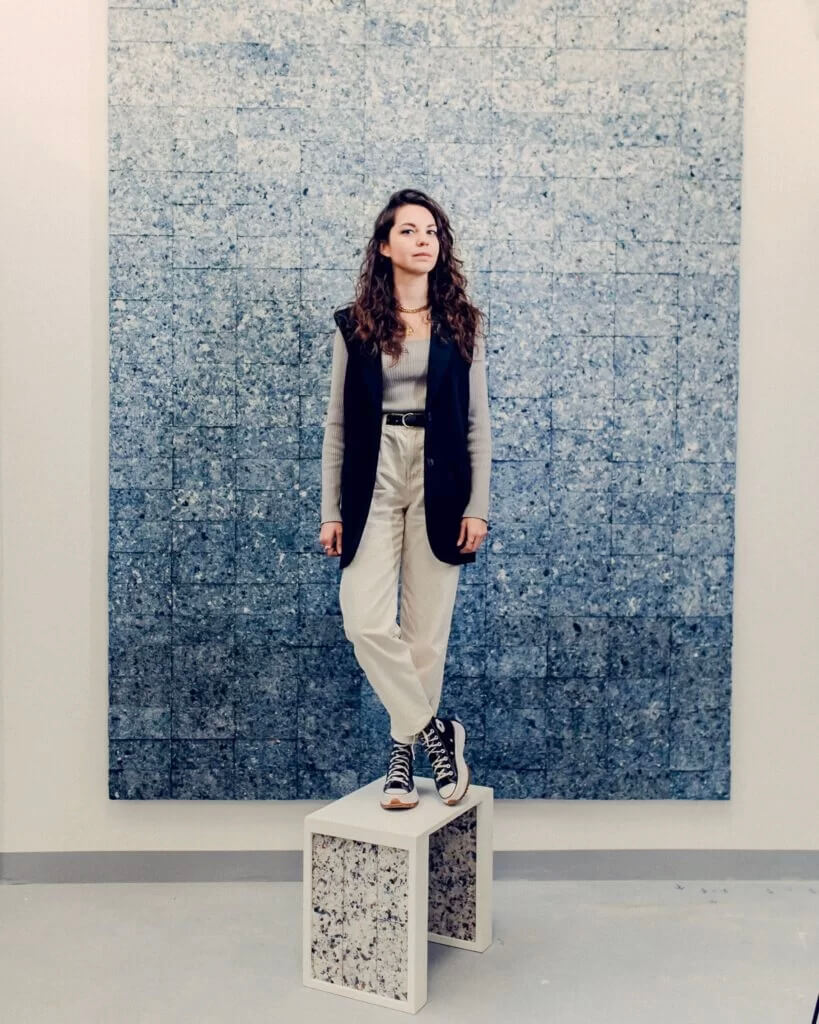
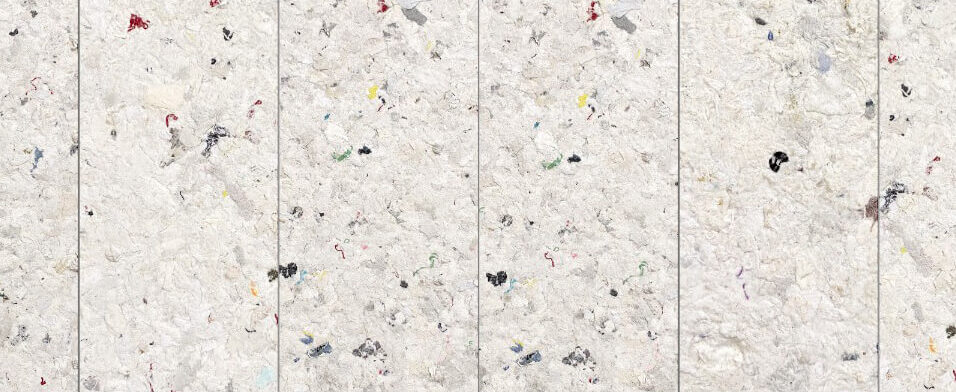
Founded by French architect and innovator Clarisse Merlet in 2018, FabBRICK is a Parisian company with a simple goal in mind: to transform waste textiles into hardwearing, durable building blocks. These eco-friendly bricks are highly durable, with insulating and thermal qualities, meaning they can be used as decorative indoor building blocks, household objects, and furniture. But they are not just ecologically sound and practical; many creatives are also attracted to the distinctive, colourful, and artisanal look of FabBRICK’s bricks, which, with their playfully colourful and handmade look, are uniquely individual. Merlet says, “FabBRICK is born from carefully repurposed fabrics, reimagined into a noble material that is both soft to the touch and visually striking.”
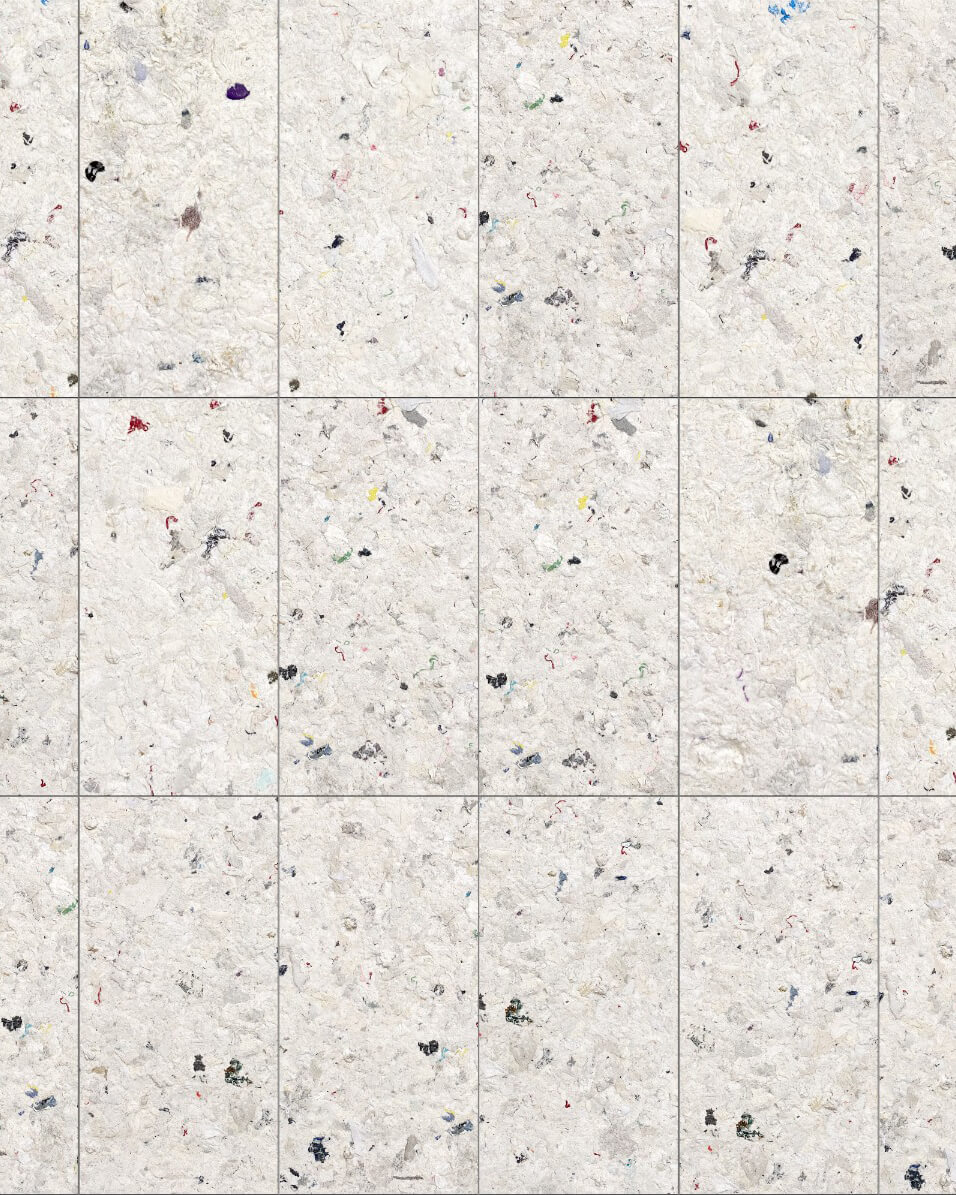
Merlet first came up with the idea to create bricks from waste fabric while still an architecture student. She experimented initially with creating blocks from other forms of waste material, before finally discovering the durability embedded within textiles. She says, “I took two T-shirts, compressed them into a brick, and it maintained its integrity. That was the origin of FabBRICK!” Since forming her company in 2018, she and her ever-increasing team have gone on to transform more than 12 tonnes of textiles into an astonishing 40,000 decorative, thermally and acoustically insulating bricks. She says, “It’s urgent and very important that we find new ways to use recycled clothing.”
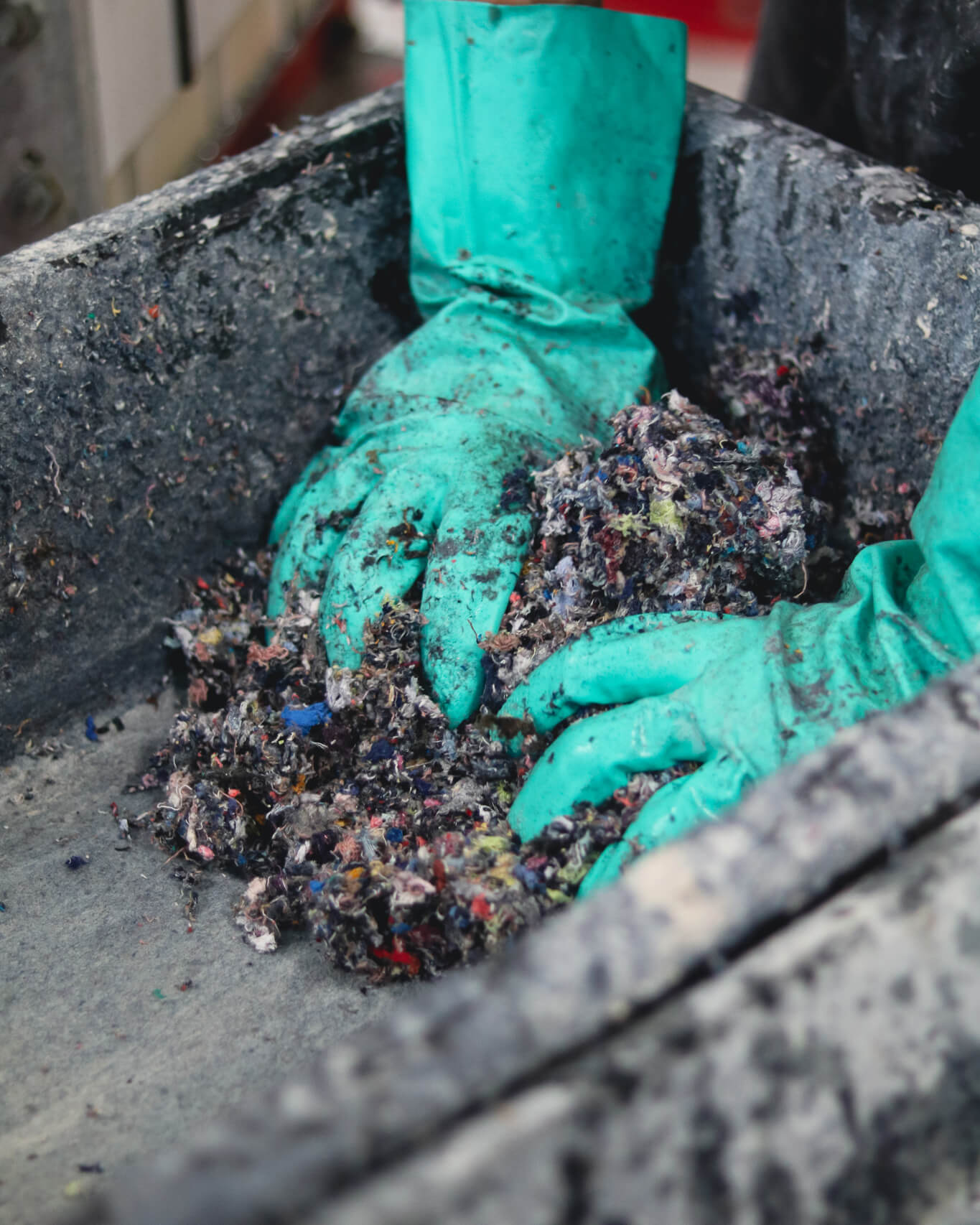
The process for creating the bricks is relatively straightforward, as Merlet explains, “The textile is compressed in a mould. To reach a good result, we need to use a crusher to transform the textile into fibres and little pieces of fabrics. Then these fibres are mixed with a binding, resulting in a [material similar to] clay that will be shaped by the mould.” As expected, the binder itself is also environmentally friendly. “The ingredients used for our glue are secret but 100% ecological,” says Merlet. “The hardest part of the research was to make an ecological glue rot-proof, that doesn’t develop moulds.”
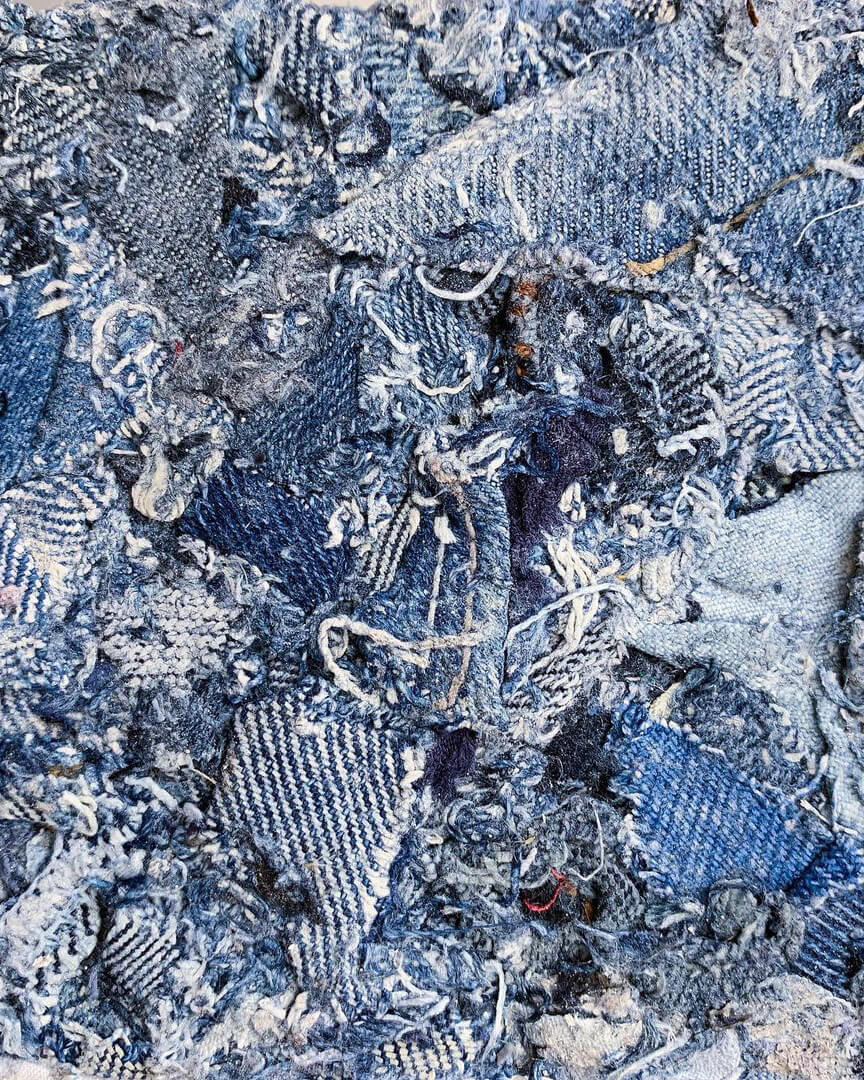
She insists, however simple the process, that quality and longevity is at the forefront of each and every brick the company creates, explaining, “Each brick is handcrafted with meticulous attention to detail, resulting in a rare and timeless product. Far from being just a functional material, FabBRICK embodies a fusion of innovation, craftsmanship, and aesthetics.”
Fundamental to the design of their bricks is an emphasis on long-term durability, so their product will withstand the test of time. “The brick has a very good mechanical resistance almost like a concrete block,” says Merlet. “This is why the structure of our furniture/ partition walls is made directly with our bricks. On another note, it has a good insulating quality, acoustic and thermal, and a good resistance to fire. Hence, we can make panels that improve the ambiance of a room or a public space. It also has a good water resistance but we recommend indoor use for now.”
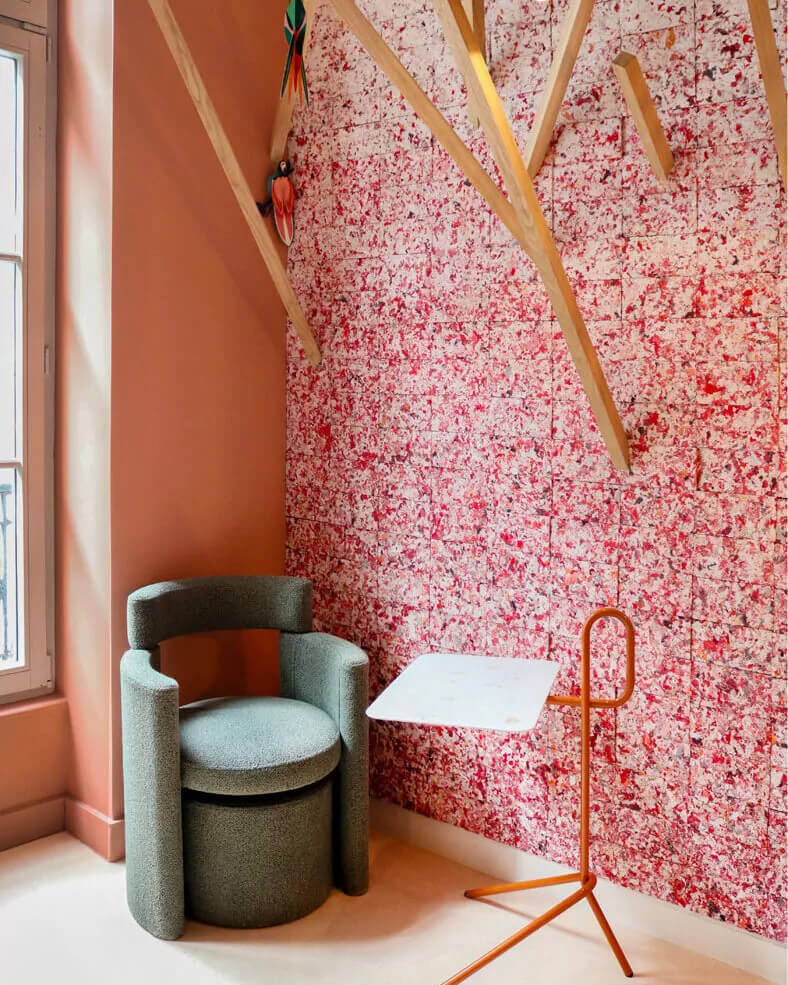
As well as producing the bricks, Merlet and her team have big ideas for taking their venture further. In recent years, they have already expanded from bricks into acoustic panelling, wall coverings, lamps, made-to-measure furniture, and more. In the long term, they hope to branch out into outdoor building material, creating an ecologically aware construction tool that might just change the future of building design. Merlet says, “We want to recycle more and more textile waste; by growing the company we will be able to recycle and produce more FabBRICK bricks, and therefore bring more sustainable projects within the construction industry.” For now, her message is a simple one, which she hopes will spread across the world, shaping how we handle excessive textile waste for generations to come: ”Don’t throw away your textile waste: give it a second life!”

1 Comment
Fascinating! Thank you.