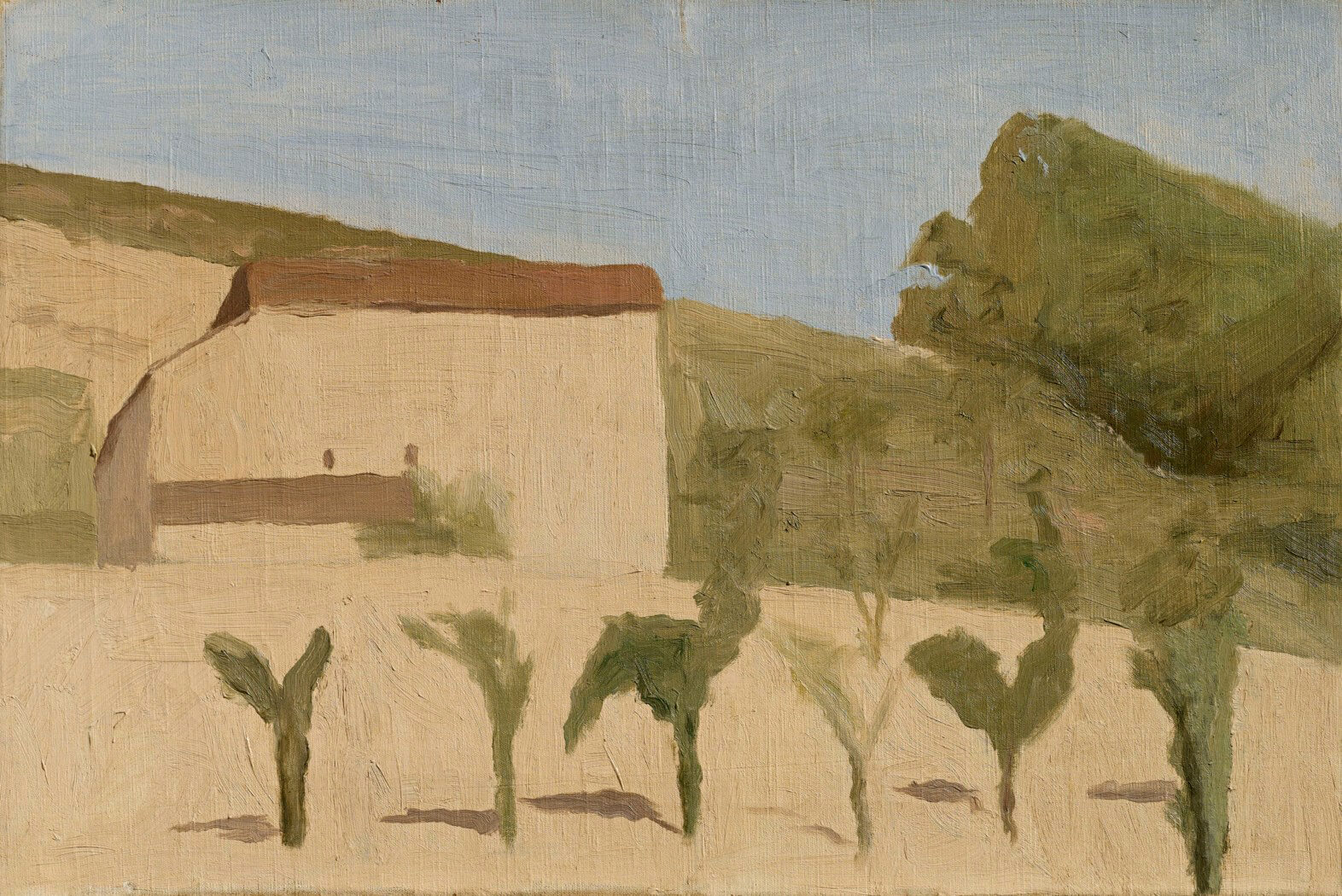
Landscape, 1943
Italian artist Giorgio Morandi was one of the most pioneering artists of the 20th century, even if his form of revolution was one of quiet, calm, and steady, consistent patience. Known for his intimate still life studies and landscapes painted with restrained, simplified shapes and pared back, muted shades of pale gold, soft grey, and buttery beige like Golden Brown linen, his early-to-mid-20th century art preceded the Minimalist movement, influencing major artists including Agnes Martin and Donald Judd. He wrote of his work, “The objective of art is not to reproduce reality, but to create a reality of the same intensity.”
Morandi was born in Bologna, Italy, in 1890, and he remained here for much of his adult life, despite the fact that his art would go on to be shown in, and bought by, museums throughout the globe. He later remarked, “One can travel the world and see nothing. To achieve understanding it is necessary not to see many things, but to look hard at what you do see.”
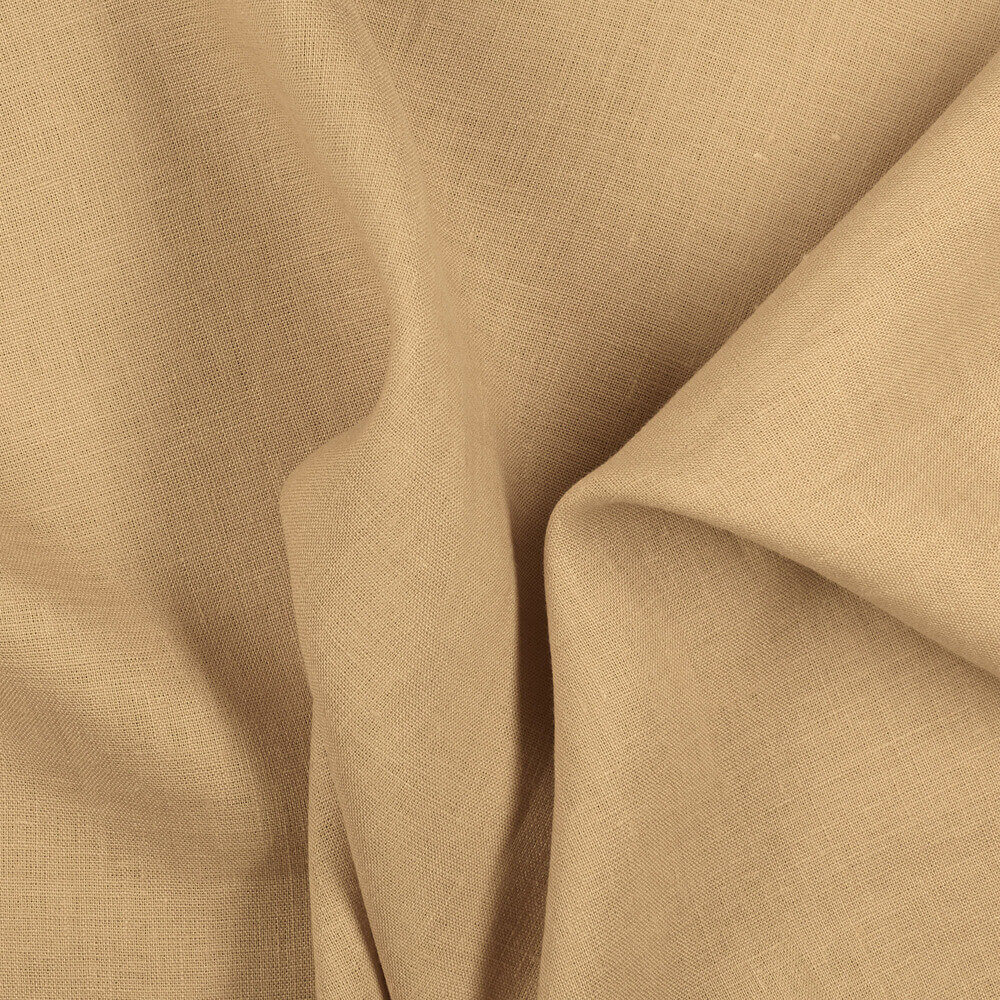
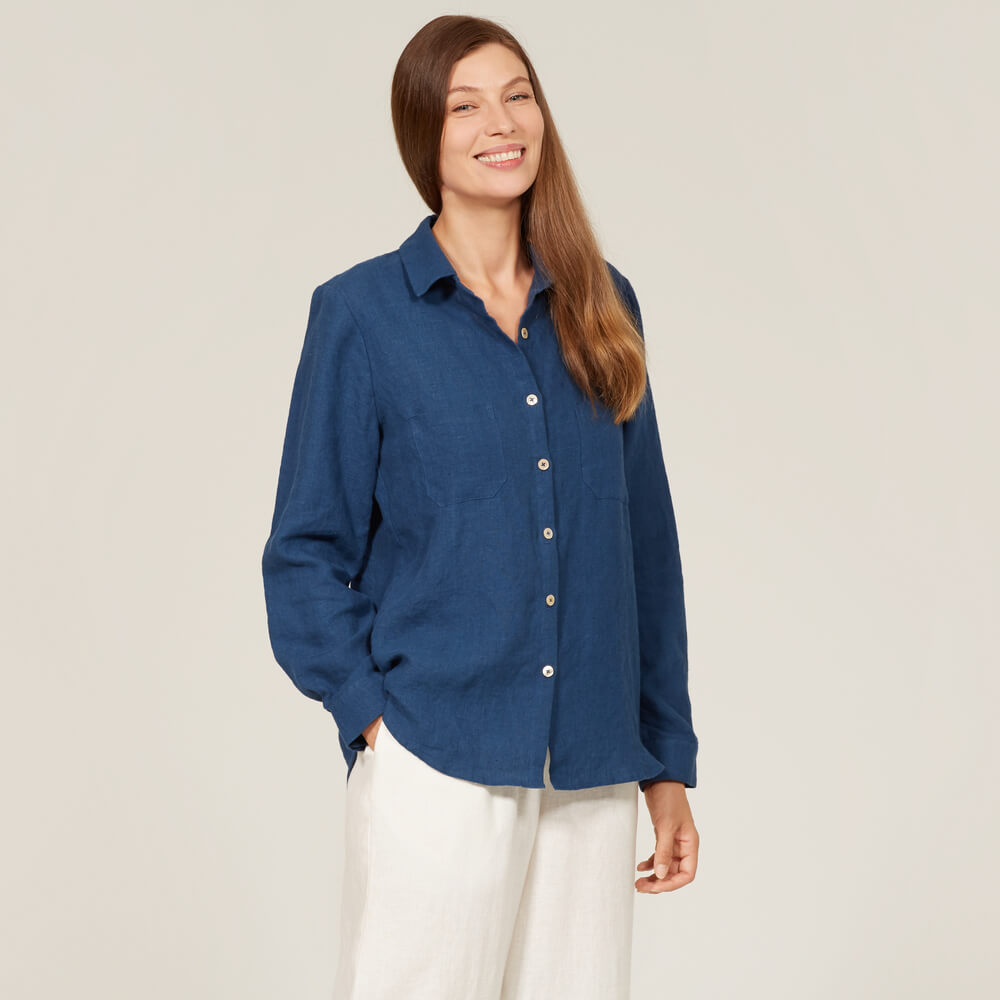
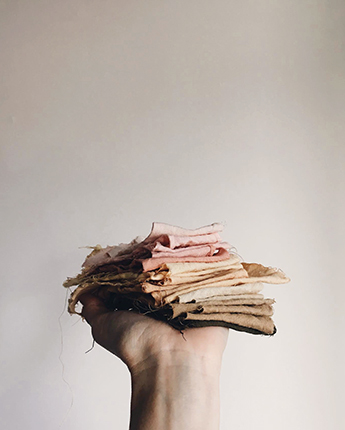
IL019 Golden Brown Midweight linen
After studying at the Bologna Accademia di Belle Arti from 1907-1913, the young Morandi forged friendships with Italian Futurists including Umberto Boccioni and Giacomo Balla, and later joined the Scuolo Metafisica with Giorgio de Chirico and Carlo Carra. But it was during the 1920s that he found his true calling, through restrained, minimal still life studies that seem to hold a quiet mystery and light within, and which would become his most enduring artistic obsession. He later commented, “I am essentially a painter of the kind of still life composition that communicates a sense of tranquillity and privacy, moods which I have always valued above all else.”

Though primarily known as a still life painter, landscapes form an important part of Morandi’s creative output, particularly the painted studies he made during summer retreats to the small Italian village of Grizzana, located in the Apennine hills above Bologna. Such was Morandi’s connection to the village, it was renamed Grizzana Morandi in 1985. In Landscape, 1943, Morandi captures the sun-drenched heat of the barren landscape with the barest of means, interrupting an expansive desert of sandy, warm beige with roughly painted streaks of golden-green, burnt umber and bright blue, creating a curious internal world where time seems to stand still. “Nothing,” wrote Morandi in his notebooks, “is more abstract than reality.”
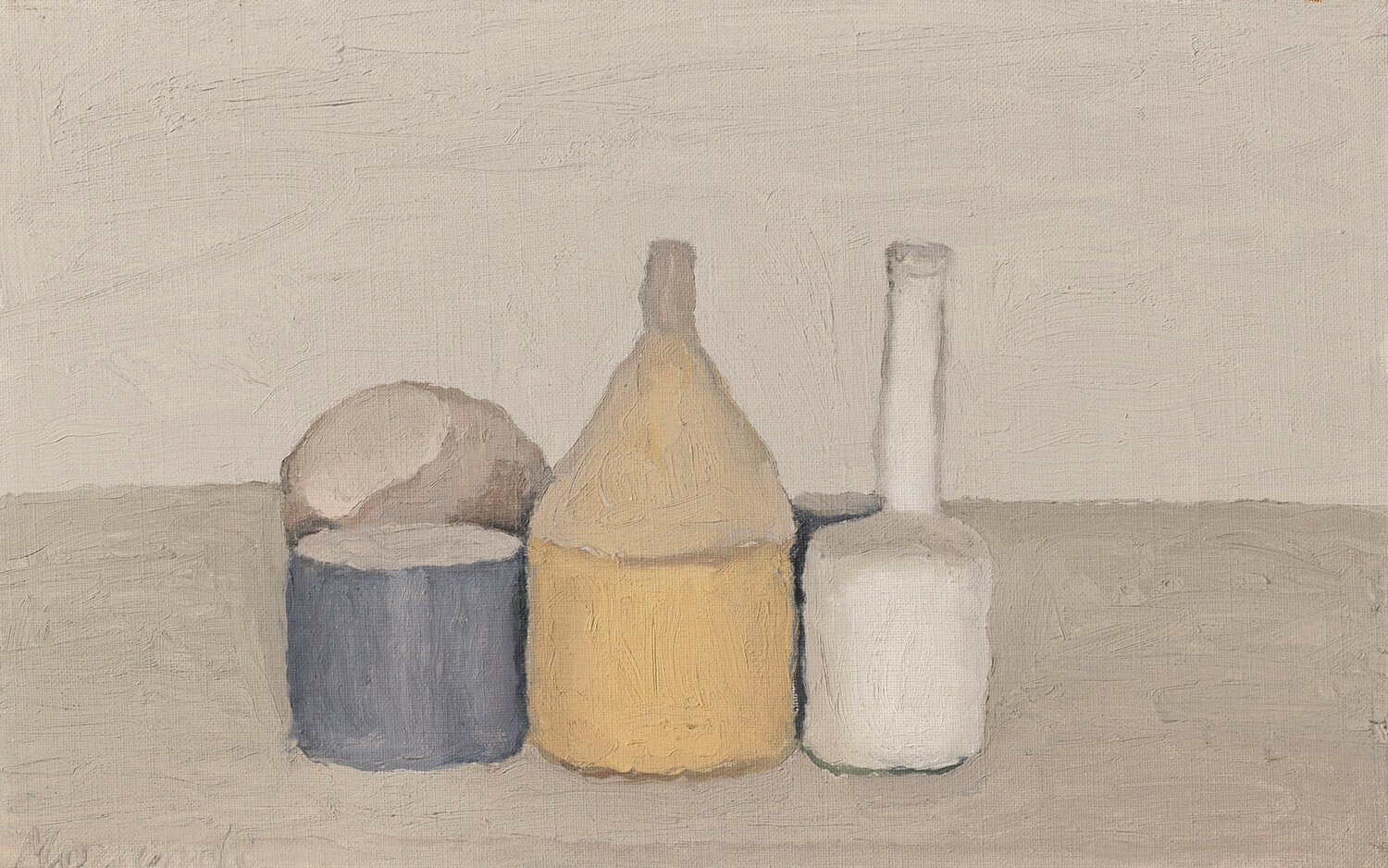
Still Life, 1955
Painted more than ten years later, Morandi’s strikingly simple Still Life, 1955, finds the unexpected magic hidden within a simple arrangement of just four objects set against a muted, grey backdrop, painted with appealingly thick passages of paint. In the centre of his humble arrangement, one vessel is painted in a golden shade of pale, buttery yellow, which seems to shine with glowing light when nestled in amongst a sea of cool hues, seemingly carrying within it the warmth of the Italian sunlight.
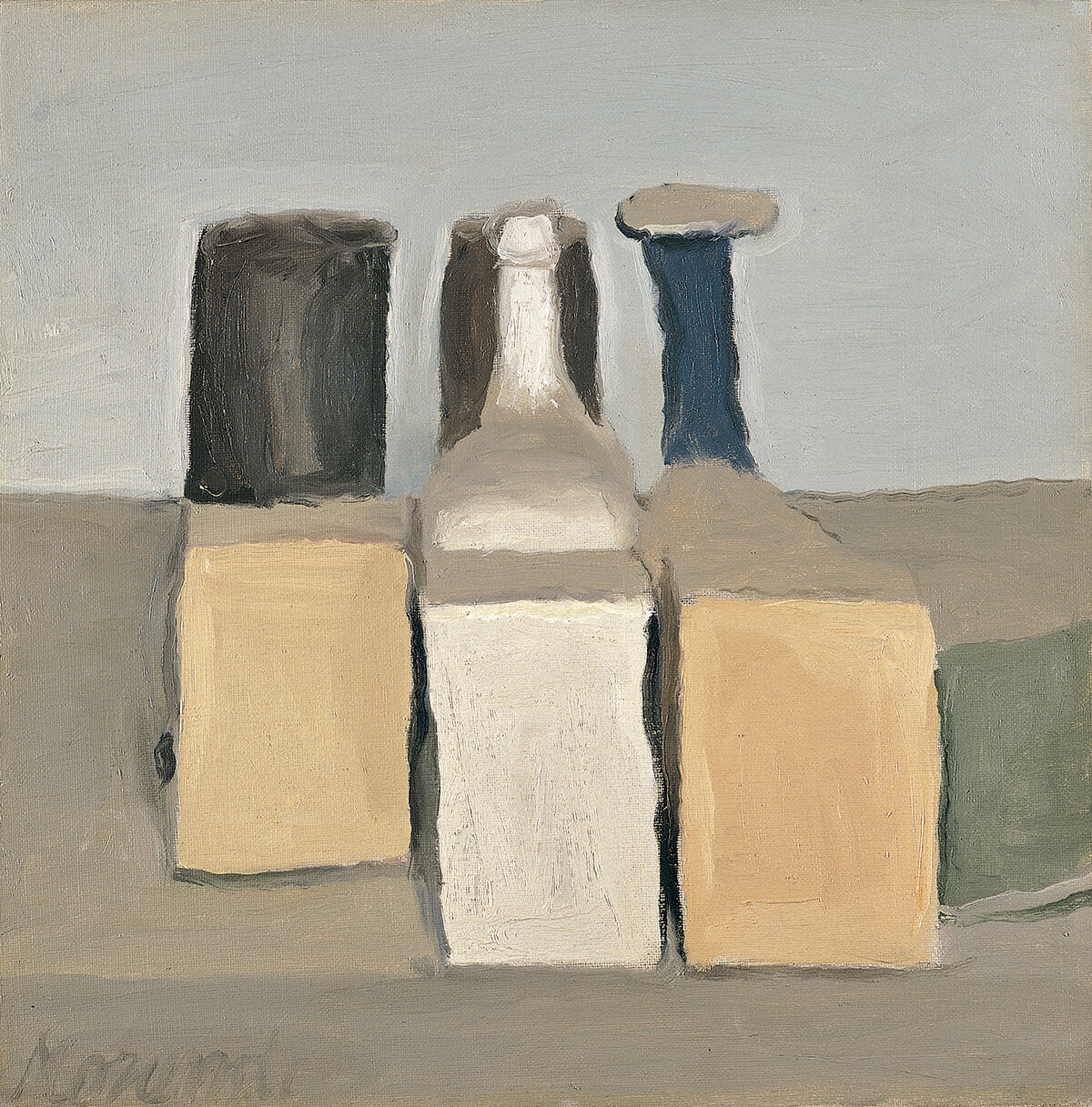
Still Life, 1956
Painted just a year later, Morandi’s Still Life, 1956 pushes a similar colour scheme into greater intensity, toying with how to further emphasise qualities of depth and light. Painted elements are stacked like building blocks alongside one another, each one deliberately and carefully selected to harmonize with the ones around it. Here two tall, buttery blocks of pale beige flank a bold panel of ice white. The white’s crisp, sharp contrast emphasizes the inner warmth of these sandy tones, particularly when black lines wedged between them add dramatic shadow. All around them, softer, cooler shades of blue and grey nestle into the surrounding scene, demonstrating the artist’s uncanny ability to create order, balance, light and atmosphere with the quietest, simplest and most modest of painterly means.