
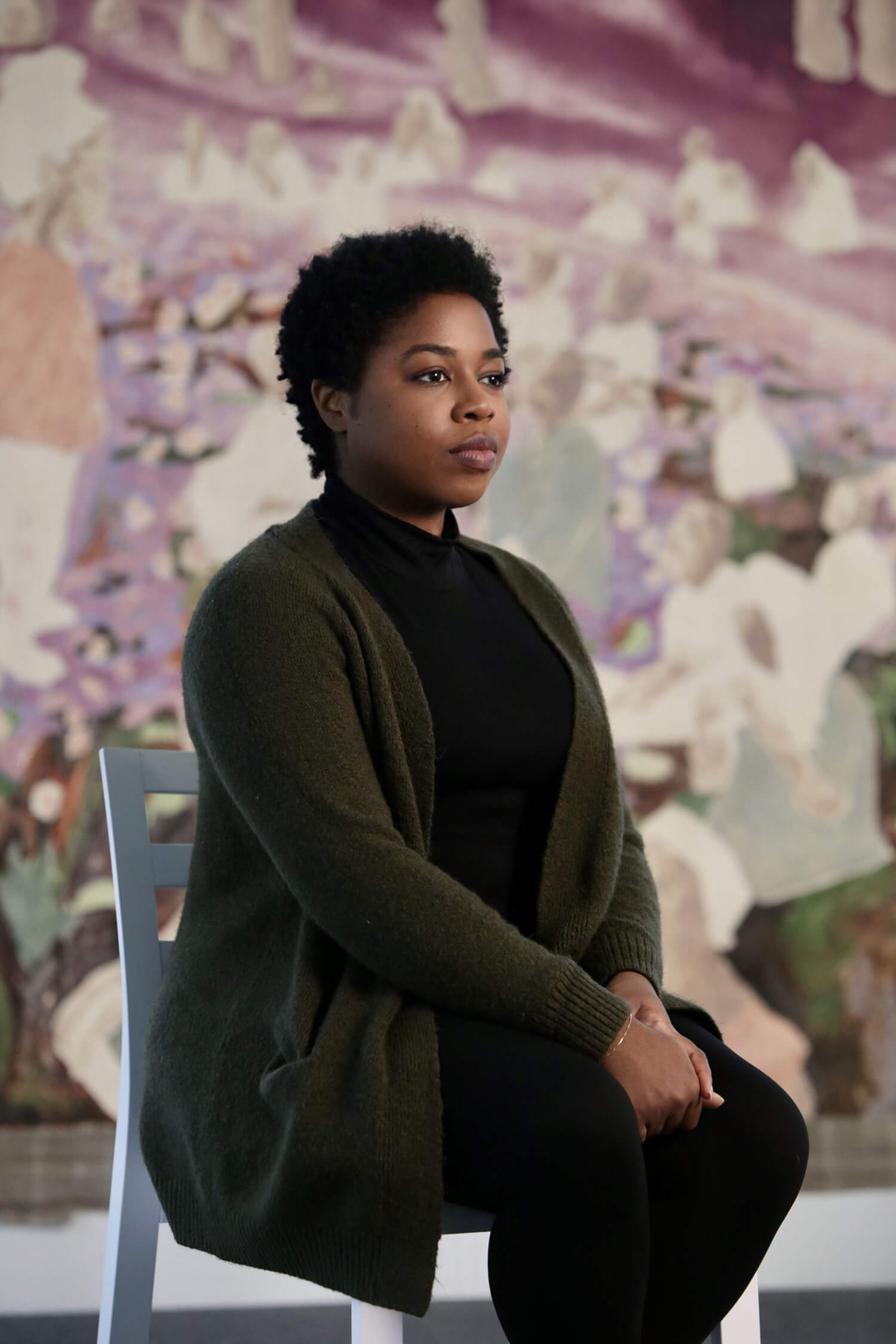
Nengi Omuku
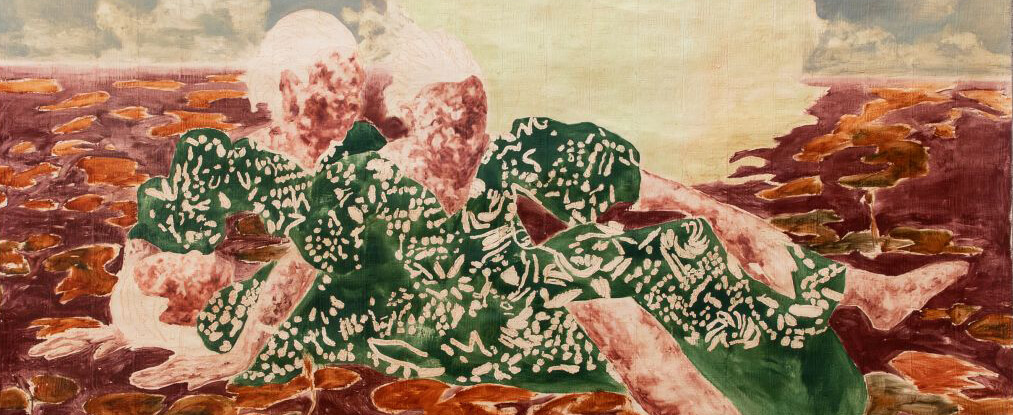
Nigerian artist Nengi Omuku makes richly tactile and evocative paintings depicting people and places with a fragmentary, dream-like quality. She reimagines images of people taken from photographic archives and the Nigerian press, transforming them into hazy, ghostly people with indistinct faces who seem to merge into and become one with their surroundings, reflecting on the ways they can open up themes around subjectivity, spirituality and collective identity. Her paintings are made onto sanyan – a traditional woven Aso-oke fabric made by the Yoruba people from wild silk and cotton – as a means of connecting deeply to the roots of her Nigerian family history, and merging materiality and subject matter neatly into a concise, singular vision.
Omuku was born in Nigeria, she left to England as a teenager to study for A-Levels and later art school. She says, “The journey was pretty straightforward, I knew I wanted to study art when I was 11 and decided it would be the Slade when I was 13 – thankfully I got in!” She also credits her mother for encouraging her artistic eye, by sharing with her skills in floristry and horticulture, which would later play out as themes within her artworks, which so often depict lush, fertile landscapes as settings for many of her complex scenes.
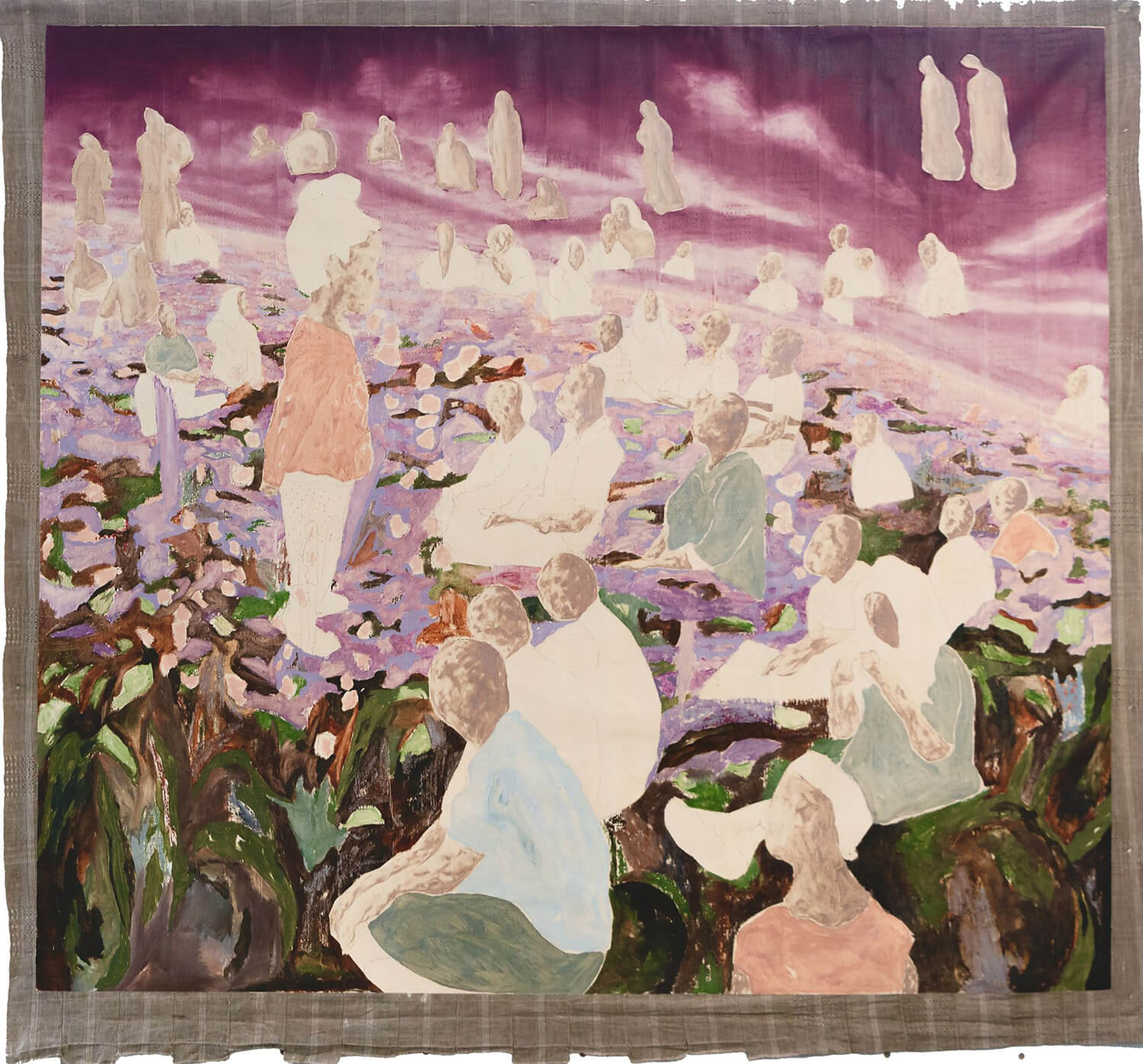
Nengi Omuku ‘Lighthouse’, 2021
Moving back to Nigeria following graduation prompted a change in Omuku’s work as she shifted from personal psychological themes to wider, socio-political concerns. She says, “I began to think about the body in this way when I moved back to Nigeria. My preoccupation while in art school was thinking about my mind and how I processed my emotions. But in Nigeria that expanded a lot, especially when I came into contact with people struggling with their mental health.” She adds, “My preoccupation then became, how do you paint the mind? How does one translate a person’s emotions on a surface, and how can the depiction of the body move beyond representation and focus instead on the state of mind of the sitter or the collective?”
Nengi Omuku, Comfort and Joy, 2022. Courtesy the artist and Pippy Houldsworth Gallery. © Nengi Omuku. Photo: Mark Blower
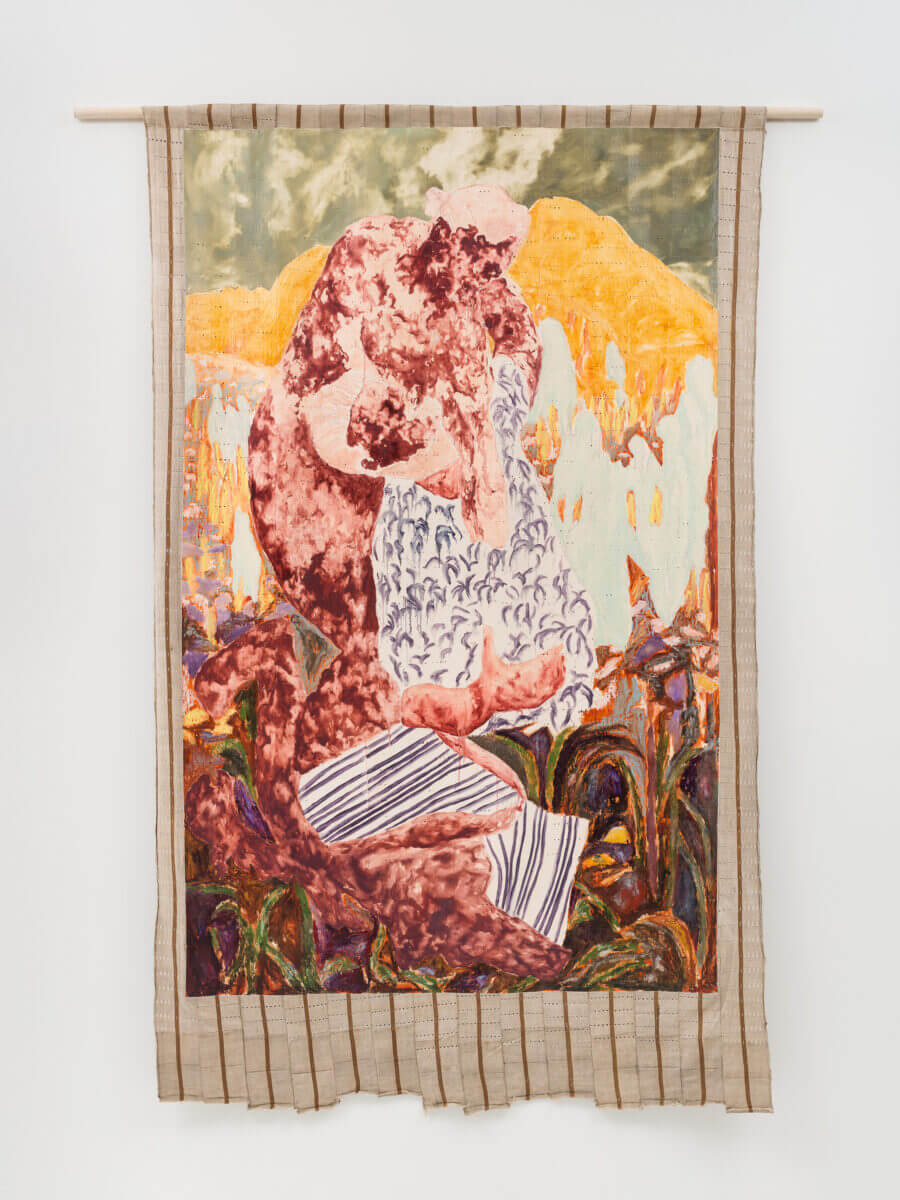
When Omuku discovered the wonders of raw sanyan fabric, with its tactile surface, and muted, warm undertones, she felt an immediate connection, and it has now become the foundational core of her entire practice as an artist. Traditionally used for ceremonial dress in Nigeria, the hand-spun textile has a long, precolonial history, although it is slowly dying out. Omuku works with found, archival fragments of sanyan, which she stitches together to create new grounds on which to paint, breathing new life into these once forgotten pieces of textile, which are so loaded with memory, history, and the material processes of working hands.
She says, “I remember the first time I was introduced to sanyan, I knew immediately that this should be the surface of the painting and not merely an object to be depicted within the painting. It was a deeply spiritual experience, because I had spent years collecting vintage textiles from different parts of Nigeria, studying their origins and how their use has evolved over time, but sanyan stuck with me because it speaks so loudly about a rich precolonial past in Western Nigeria.” Threads from the original vintage garment the fabric was salvaged from are often left visible in Omuku’s art, creating a palimpsest-like quality, where traces of history slowly reveal themselves over time. Aware of sanyan’s rarity and fragility, Omuku now also supports local textile makers by commissioning Nigerian craftspeople to spin new reams of sanyan for her art.
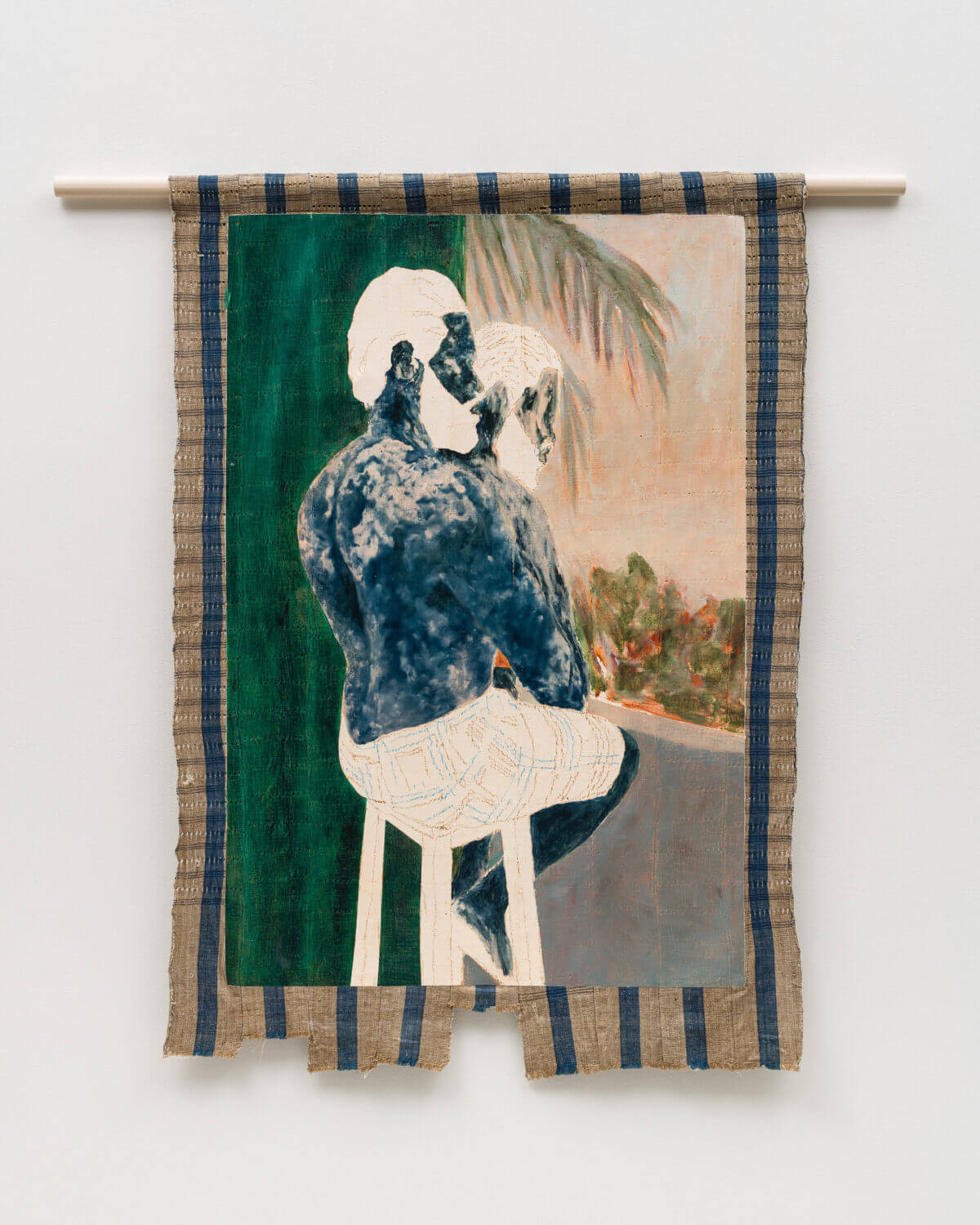
Nengi Omuku, Kwadwo I, 2022. Courtesy the artist and Pippy Houldsworth Gallery. © Nengi Omuku. Photo: Mark Blower
In creating a fusion between ancestral textiles and Western oil painting techniques, Omuku creates works of art that reflect on the complexities of her own identity, and what it means to be a Nigerian citizen today, in an increasingly globalised and industrialised world. Embedding this fabric into her practice is, she says, a great honour, allowing her to connect with the roots of her Nigerian identity, as she explains, “It is a vessel of our heritage and an immense source of pride for me as a Nigerian artist, to be able to work collaboratively with this fabric.”




2 Comments
Love the colors and texture of her work. Beautiful.
An inspiring expression of a heritage in a true artistic process. Sponsorship to allow small production of a historical fabric is priceless. I found this uplifting.