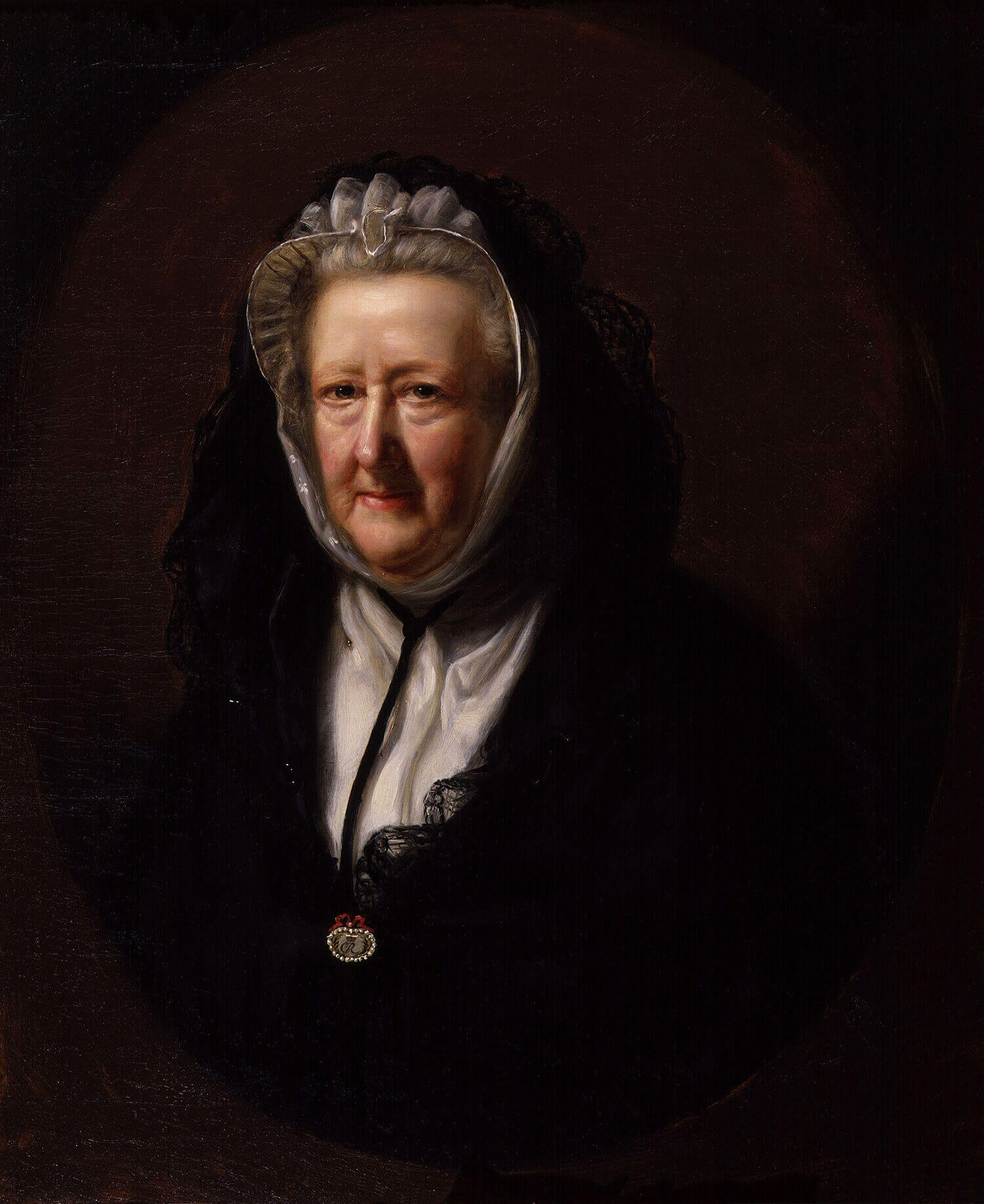
Mary Delany by John Opie, 1782
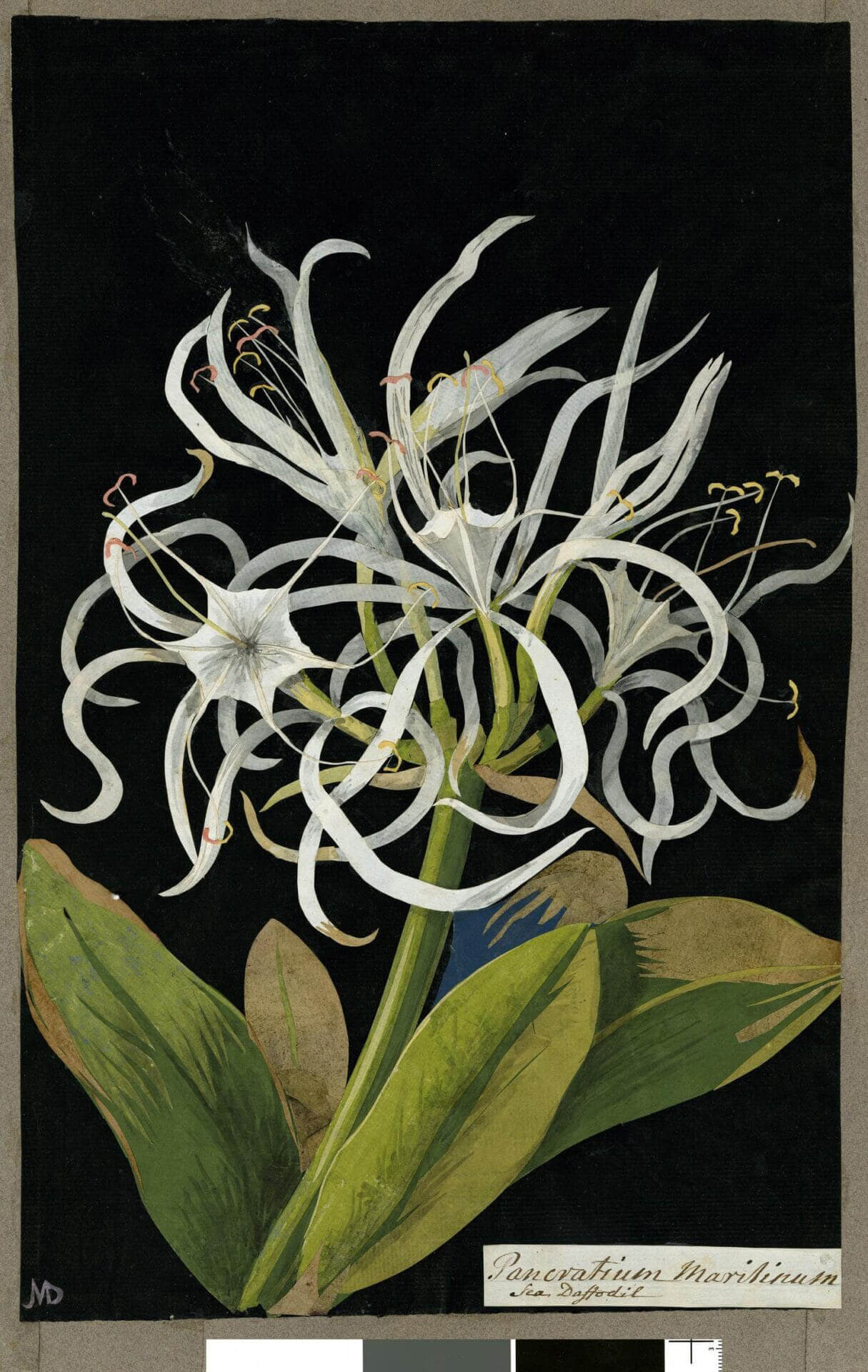
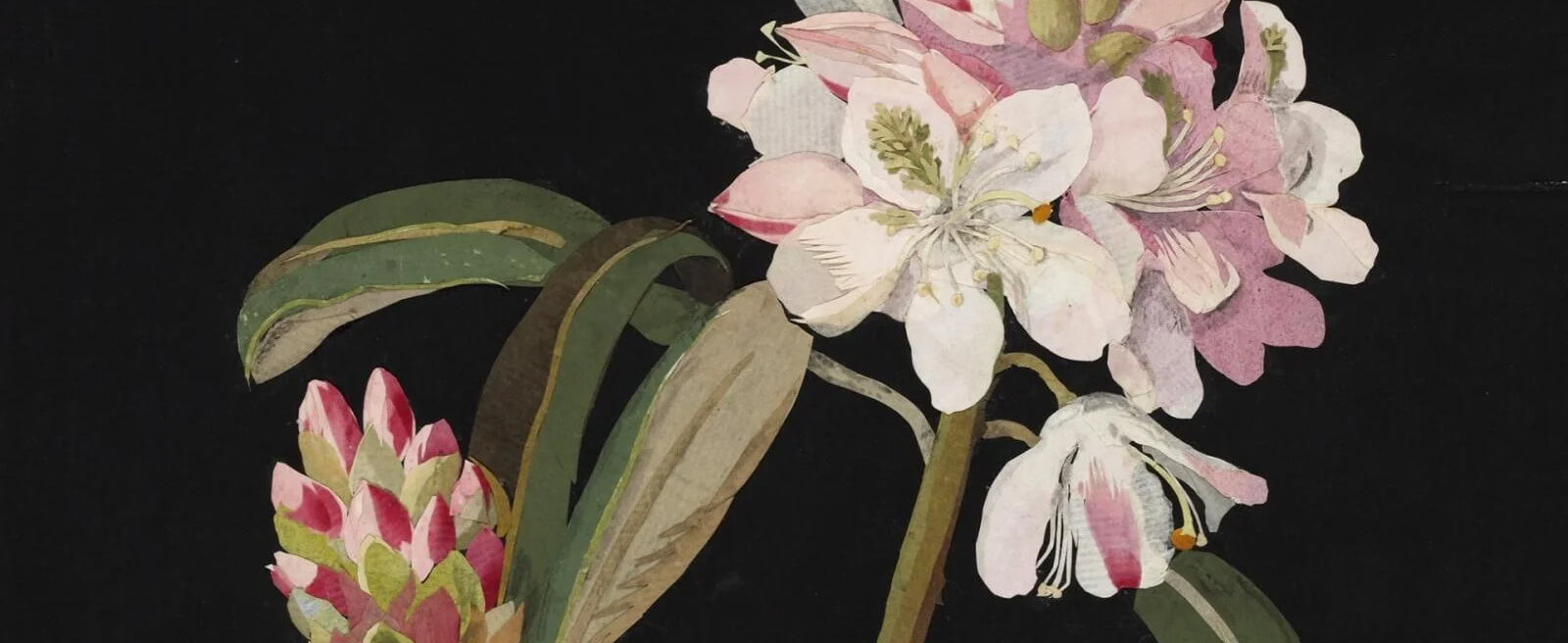
English artist Mary Delany’s artistic practice started, remarkably, at the age of 72, when she began making intricate paper collages of botanical flora and fauna in 1772. Her innovative and pioneering approach, which involved constructing extraordinarily lifelike flower and plant emblems from tiny, layered pieces of collaged paper onto black backgrounds, was a radical reimagining of the ways organic studies could be represented in works of art, and her constructions were so lifelike many mistook them for the real thing. She wrote in a letter to her niece, “I have invented a new way of imitating flowers.”
Delany had already been married, and widowed, twice by the time she came to make the flower collages that would define her career. Through these marriages, she made connections throughout London’s artistic and social circles, and became widely known. In her earlier years she had pursued various skilled crafts including needlework, plasterwork, drawing, painting, and shell-work, so already had considerable experience making and completing high-quality objects before she began her paper collages. When her second husband died, she spent a significant portion of her time living with her close friend, the Duchess of Portland, who had a rich collection of natural history specimens and antiques, including the famous Portland Vase, which fascinated Delany.
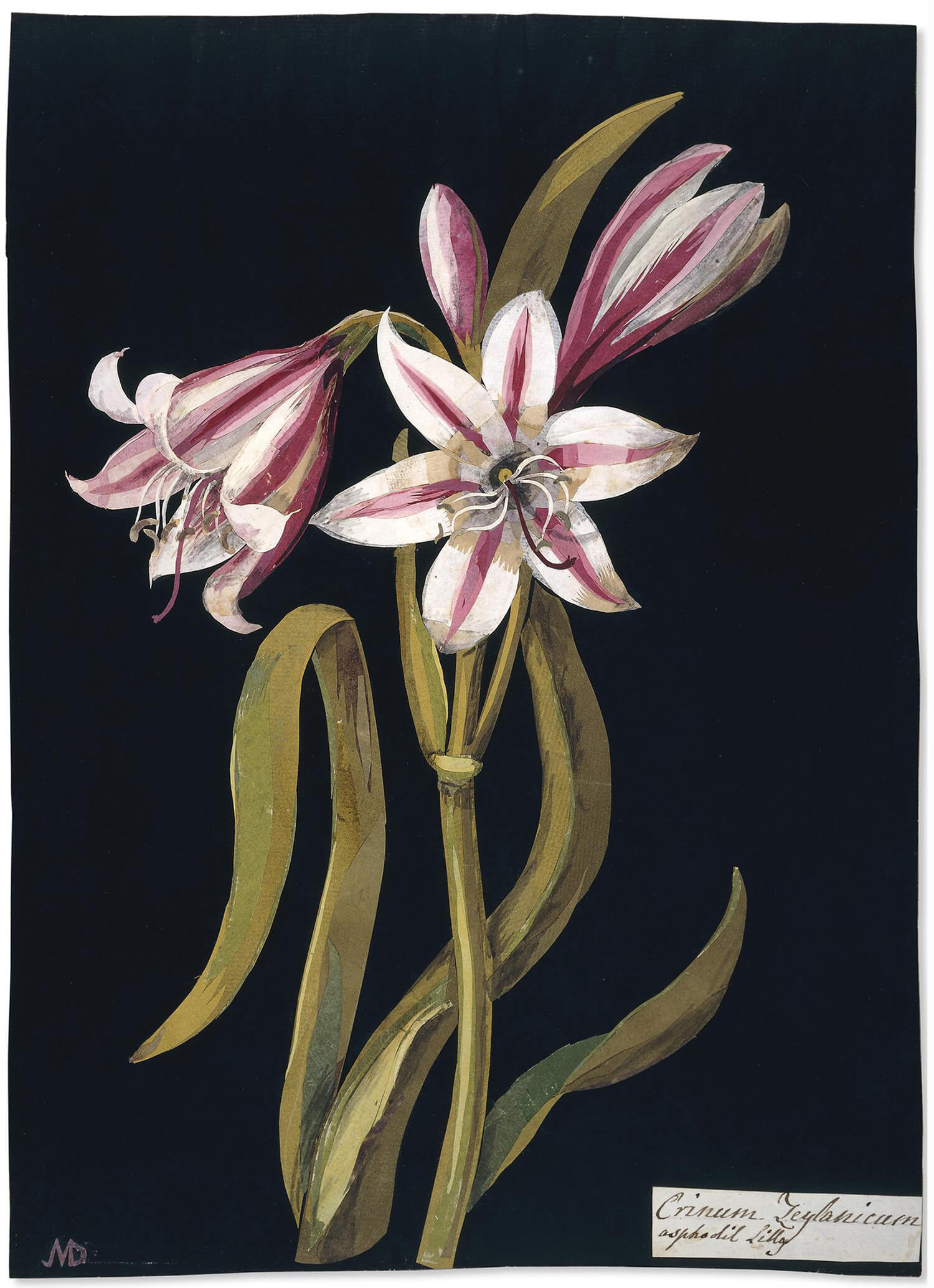
Mary Delany, Crinum Zeylanicum: Asphodil Lilly, 1778, paper collage, England, 33.8 x 24.1 cm (© The Trustees of the British Museum)
Delany’s collage discovery came quite by chance; one day she observed a piece of red paper next to a geranium on her bedside table, and realised the similarities between the two. This prompted her to imitate the geranium’s petals with thin layers of paper, thus beginning her creative journey. Over time her flower studies became increasingly complex and detailed, sometimes involving up to 200 separate pieces of paper in a single image, which allowed her to gradually build up layer upon layer of depth and form to construct a surprisingly lifelike portrayal of each flower or plant stem. Her dedication to portraying the plant in its truest form through painstaking patience can be seen in the careful, dedicated rendering of form in each specimen. She also included the common and botanical names of each species, the date, and who donated her the plant sample on each work, along with a stylised signature reading ‘MD’, rendered in cut paper.
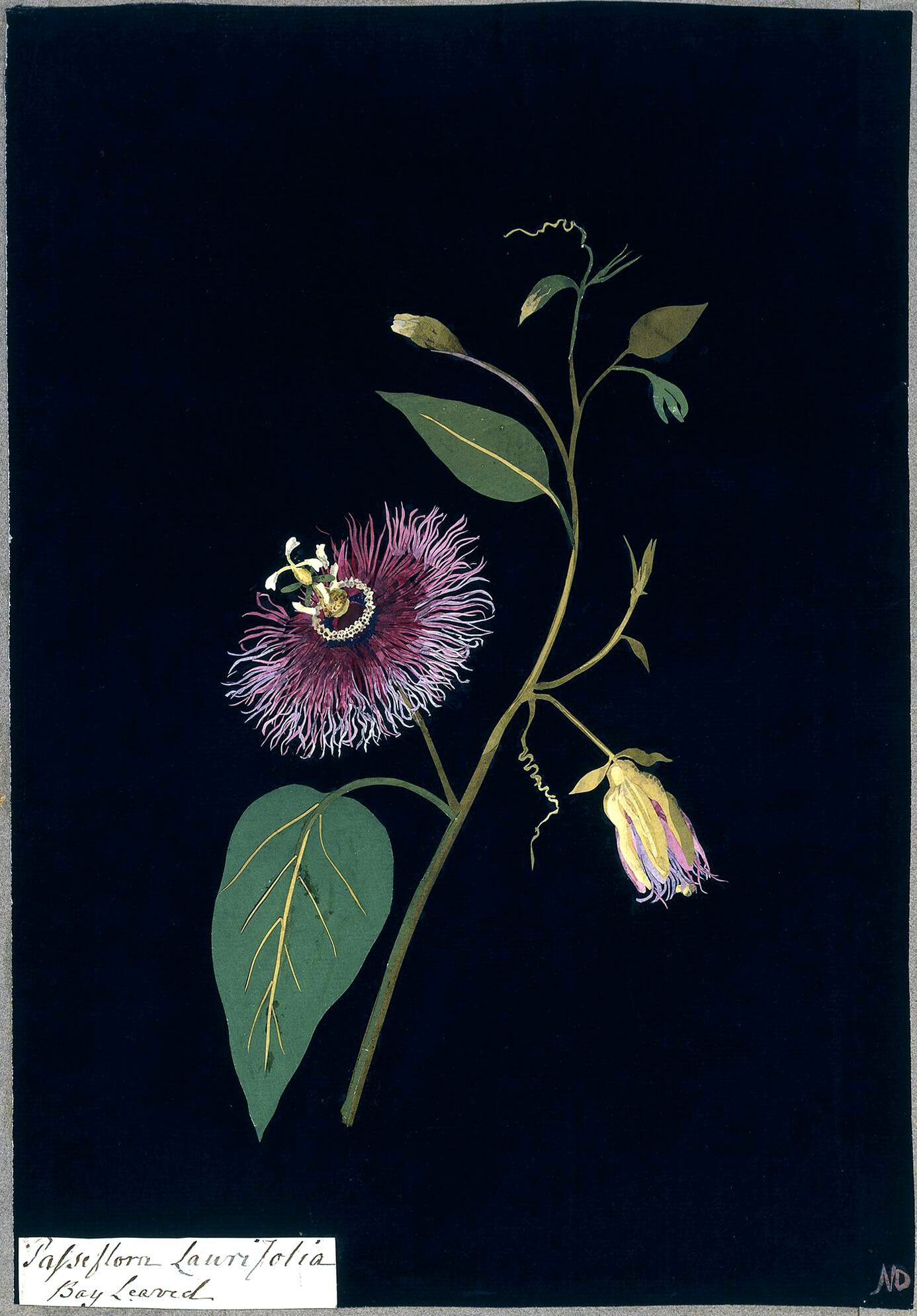
Mary Delany, Passiflora laurifolia: bay leaved, 1777, paper collage, England, 35.2 x 24.2 cm (© The Trustees of the British Museum)
As popularity for Delany’s flowers grew throughout London’s society, many friends and acquaintances began sending her flowers to render in her highly distinctive style. This means her works are as much a scientific record of nature’s rich variety as they are works of art in their own right. Kew’s Royal Botanic Gardens Botanist Joseph Banks became an avid follower of her work and sent Delany plant specimens regularly after seeing her work at the Duchess of Portland’s home and becoming entranced by her style. He referred to Delany’s art as the most accurate plant descriptions, “without the least fear of committing an error.”
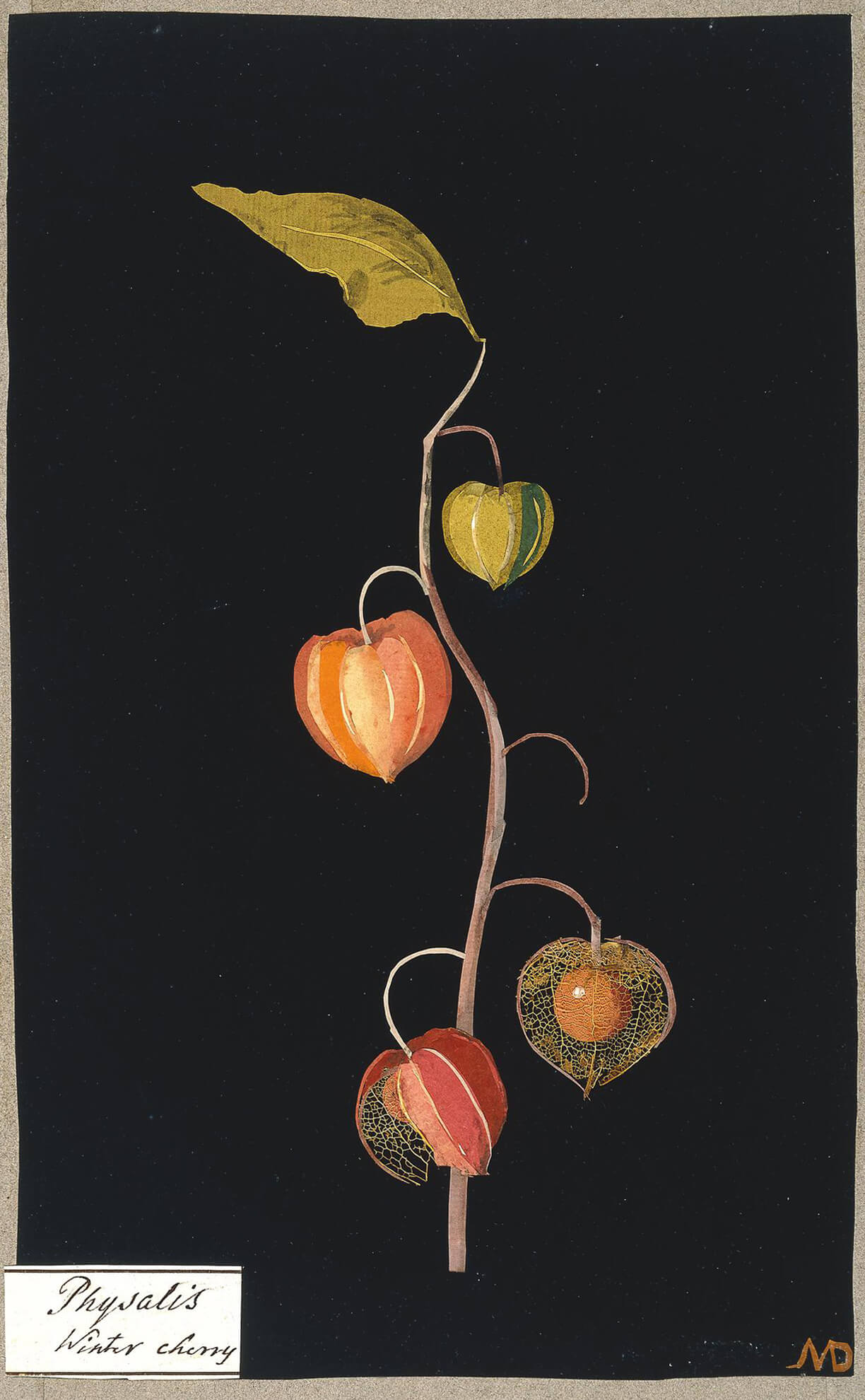
Mary Delany, Physalis, Winter Cherry, 1772-88, paper collage, England 29.1 x 17.7 cm (© The Trustees of the British Museum)
Delany spent 11 years making 985 cut paper flower collages, and this spark of prolific, productive creativity in her later years was to be the making of her. Eventually, failing eyesight in 1783 meant Delany was forced to give up her beloved craft, but by then she had already secured a powerful legacy as a pioneering artist. She is now recognised as a precursor to the collage art forms of the Dada and Surrealist artists in the early 20th century. Delany’s album of work was organised into a collection of ten albums titled Flora Delanica, and this body of work was later donated to the British Museum by the artist’s great-niece Augusta Hall in 1897; the works are viewable by appointment in small selections only, as they are as delicate, fragile and temporal as the very flowers and plants themselves.



2 Comments
Absolutely FANTASTIC! Such a joy discovering this artist! Thank you for this! Wish I could see in real life!
Wow! Utterly amazing that those lovely images are created from layers of paper–incredible work! Thank you for sharing.