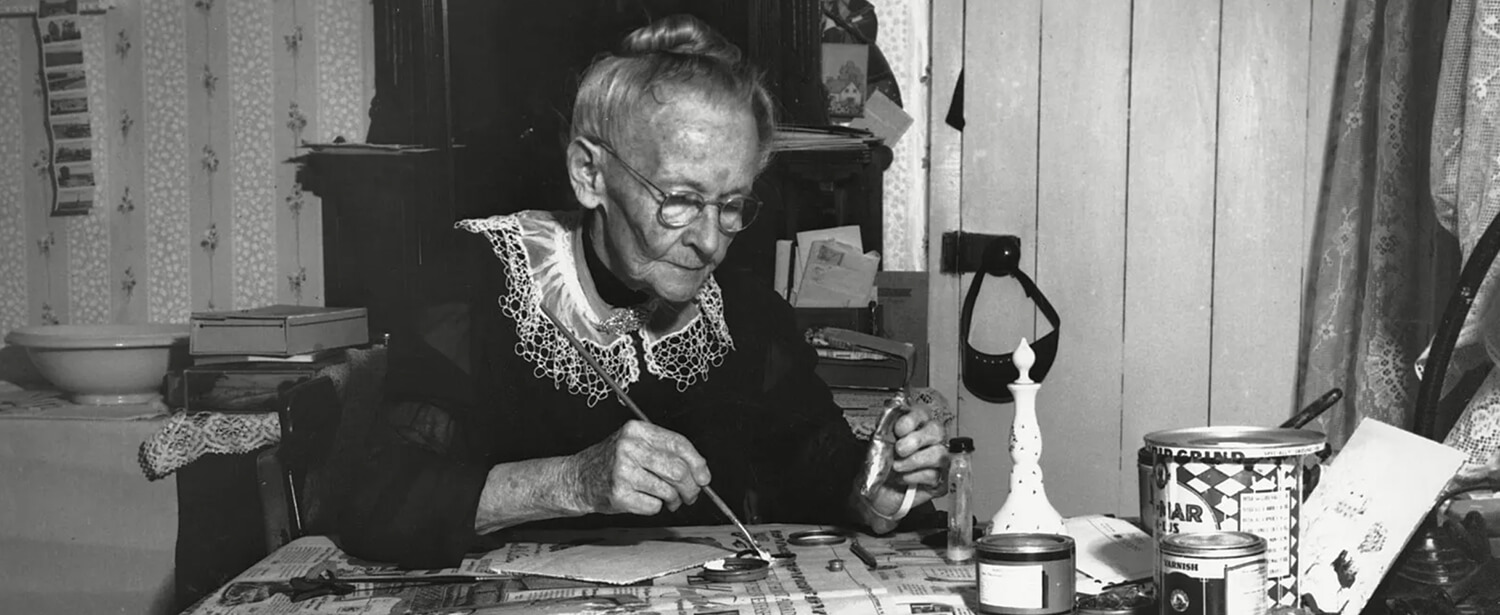
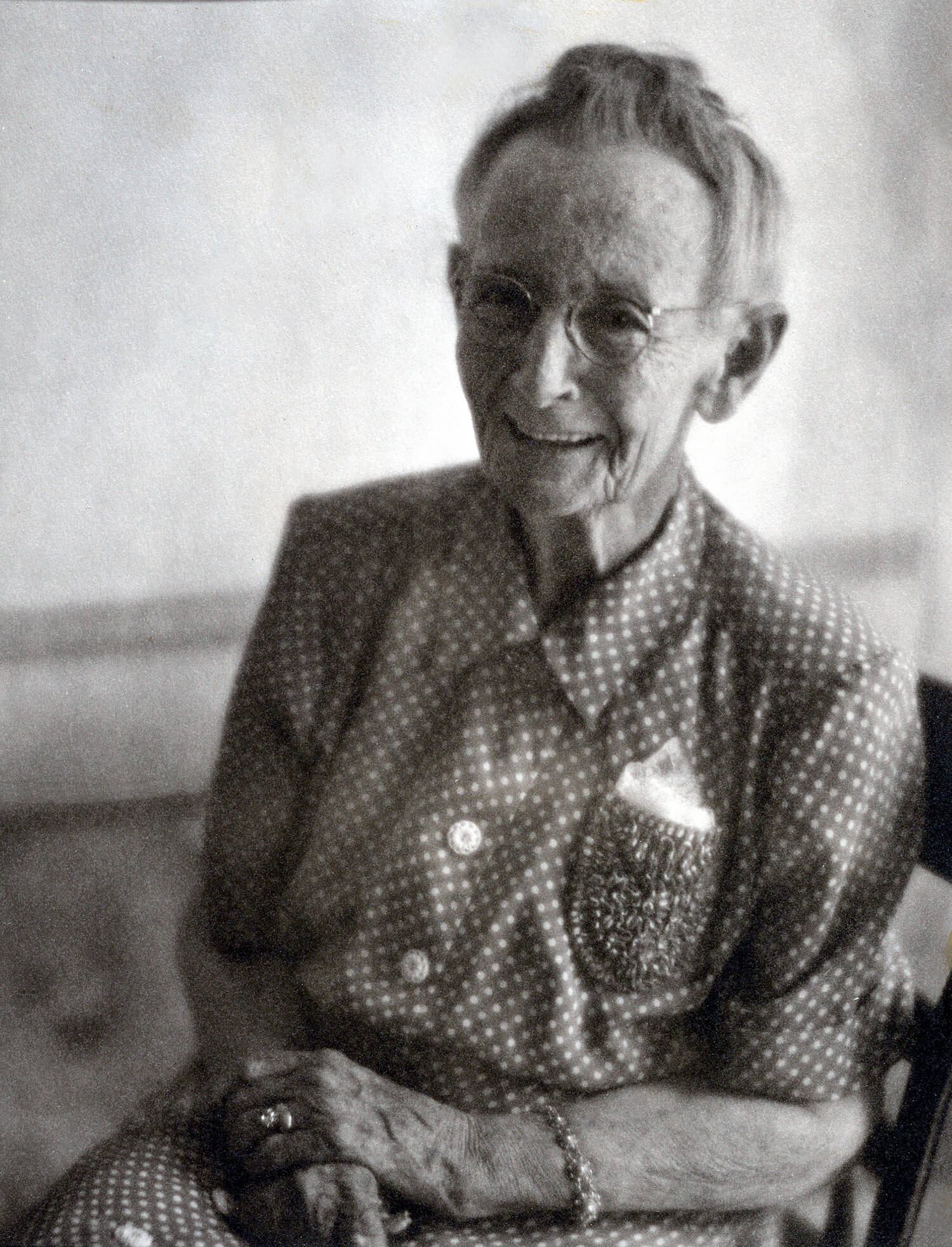
Grandma Moses, photographed by Clara Sipprell. Source: Wikimedia
Anna Mary Robertson (1860-1961), better known as “Grandma Moses”, is recognised today as one of the most celebrated American folk artists of the 20th century, but her rise to fame was slow in the making. Having spent many years working on her home farm and making embroideries and tapestries, she only turned to painting full time in her 70s, when arthritis made needlework impossible. What began in earnest as a tabletop hobby, painting intricate scenes of rural life evolved over time into a high-profile art practice, cementing her place in history. In 1940, the New York Herald Tribune affectionately referred to her as her local nickname, Grandma Moses, and the moniker stuck.
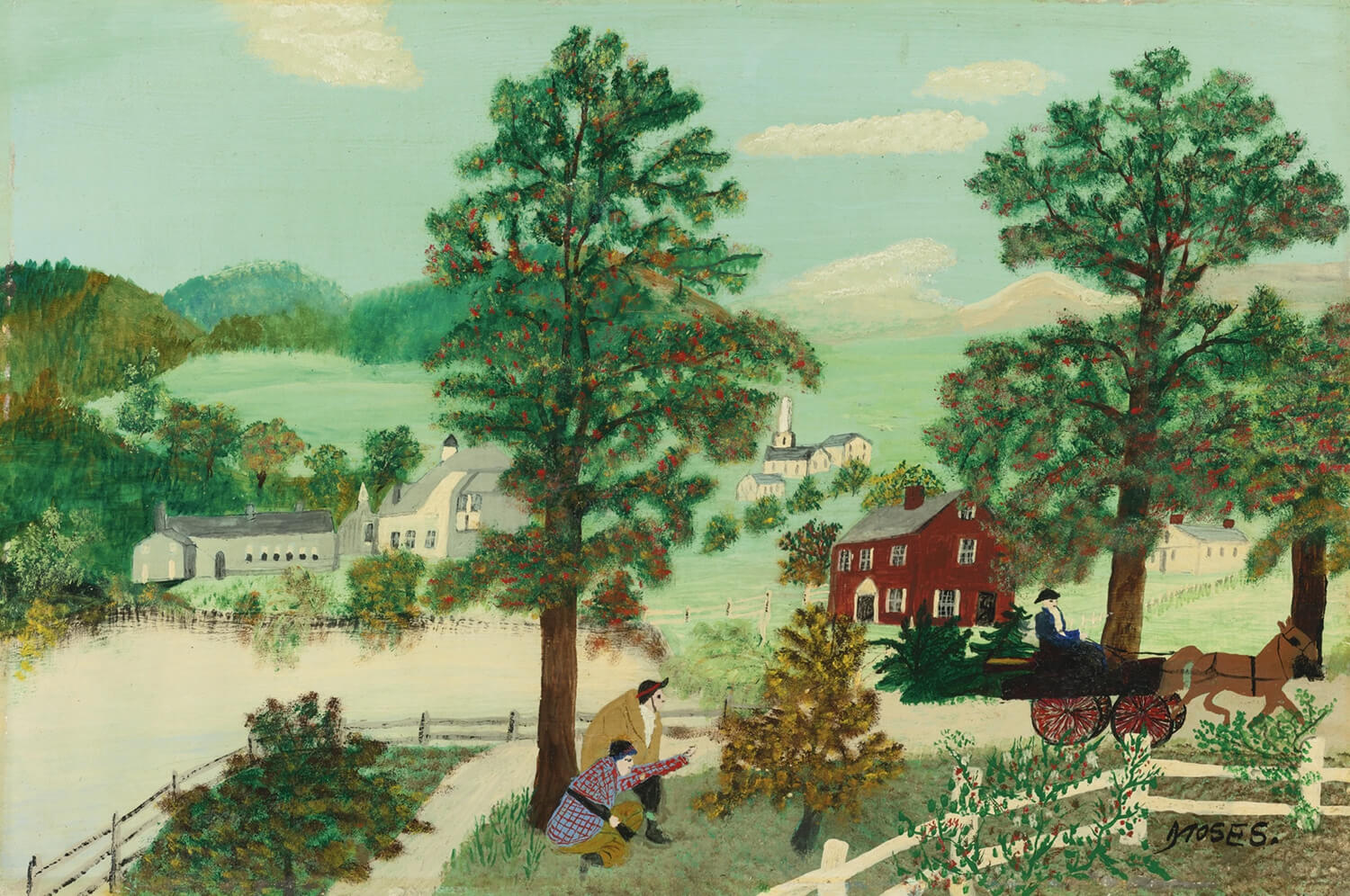
Look Ye There, 1954
Moses lived a long life – born in 1860, she was one of 10 children raised on a small farm in Greenwich, New York. As a child she would sometimes make paintings, but into adulthood she spent much of her time working as a farm hand, until she married another farm hand, Thomas Moses, at the age of 27. Together they established a busy rural life, raising five children and tending to their own family farm. Moses made her first painting, Untitled (Fireboard), 1918, when she was 50 years old, a decorative piece in dark, muted colours to adorn the board covering her fireboard, but it wasn’t for another 20 years that she would take up painting as a more regular activity.
She first began showing her detailed, panoramic country scenes alongside her homemade jam and canned fruits at local fairs, and later in local stores. It was in one such store that her paintings caught the attention of Louis Calder, an engineer and art collector from New York City, who bought all of her work from the shop, and visited her home to purchase every piece she had stashed away in her house. Calder was so impressed by her paintings he convinced his friend, gallery owner Otto Kallir to give Moses a solo exhibition, titled What a Farmwife Painted.

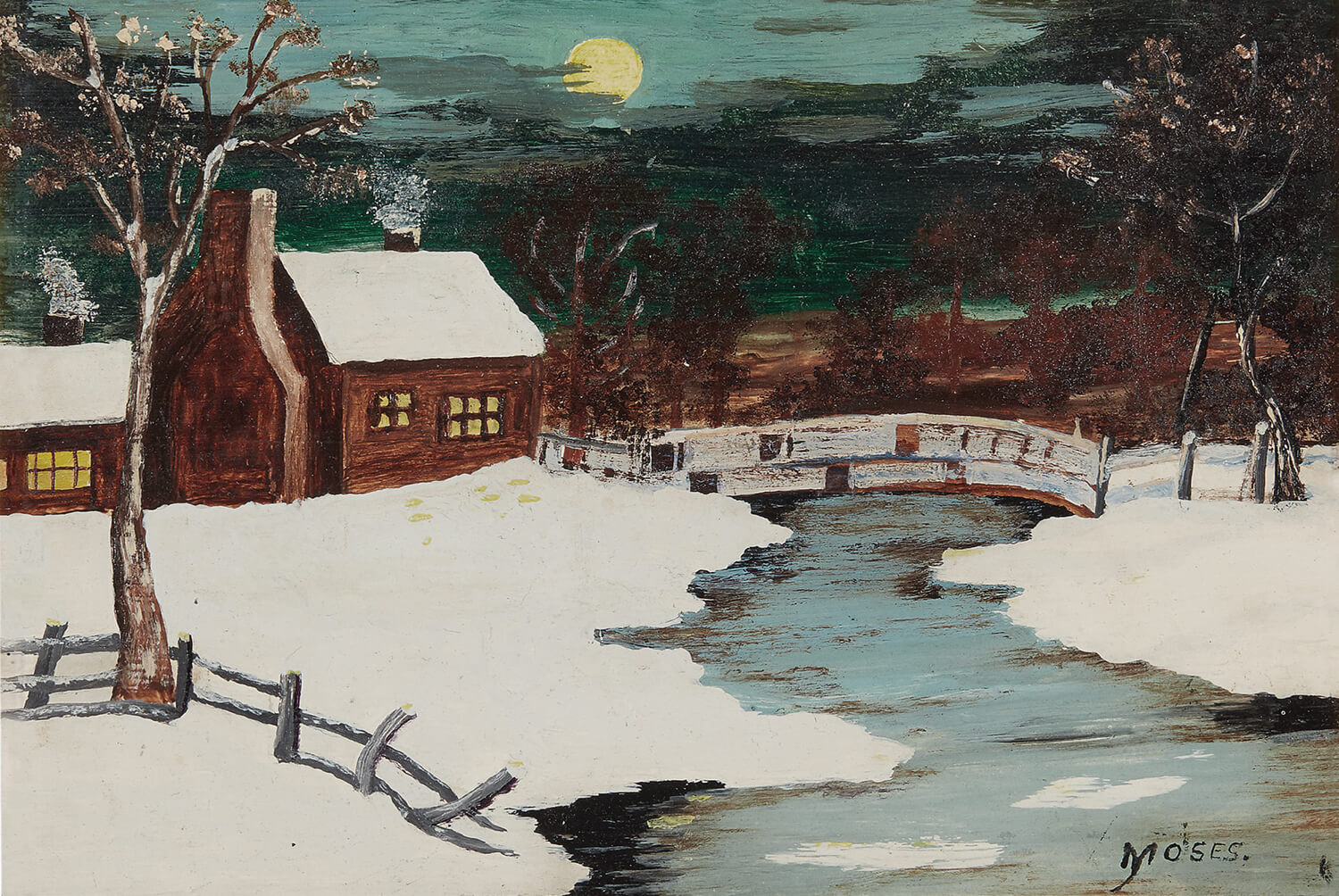
Out in the Moonlight, 1947. Source: Sotheby’s
Despite Kallir’s initial reservations about her age, the show’s success led him to become Moses’s greatest supporter, helping to push her charming, quintessential studies of American life into the American imagination. Remarkably, in the next 20 years Moses went on to paint around 1,500 paintings, which, when seen together, form a powerful portrayal of dwindling American rural life, in the vein of artists such as Andrew Wyeth. She developed a distinctive way of painting in which every part of the scene was treated with equal weight, lending them the quality of the embroideries or tapestries that she had spent her earlier years making.
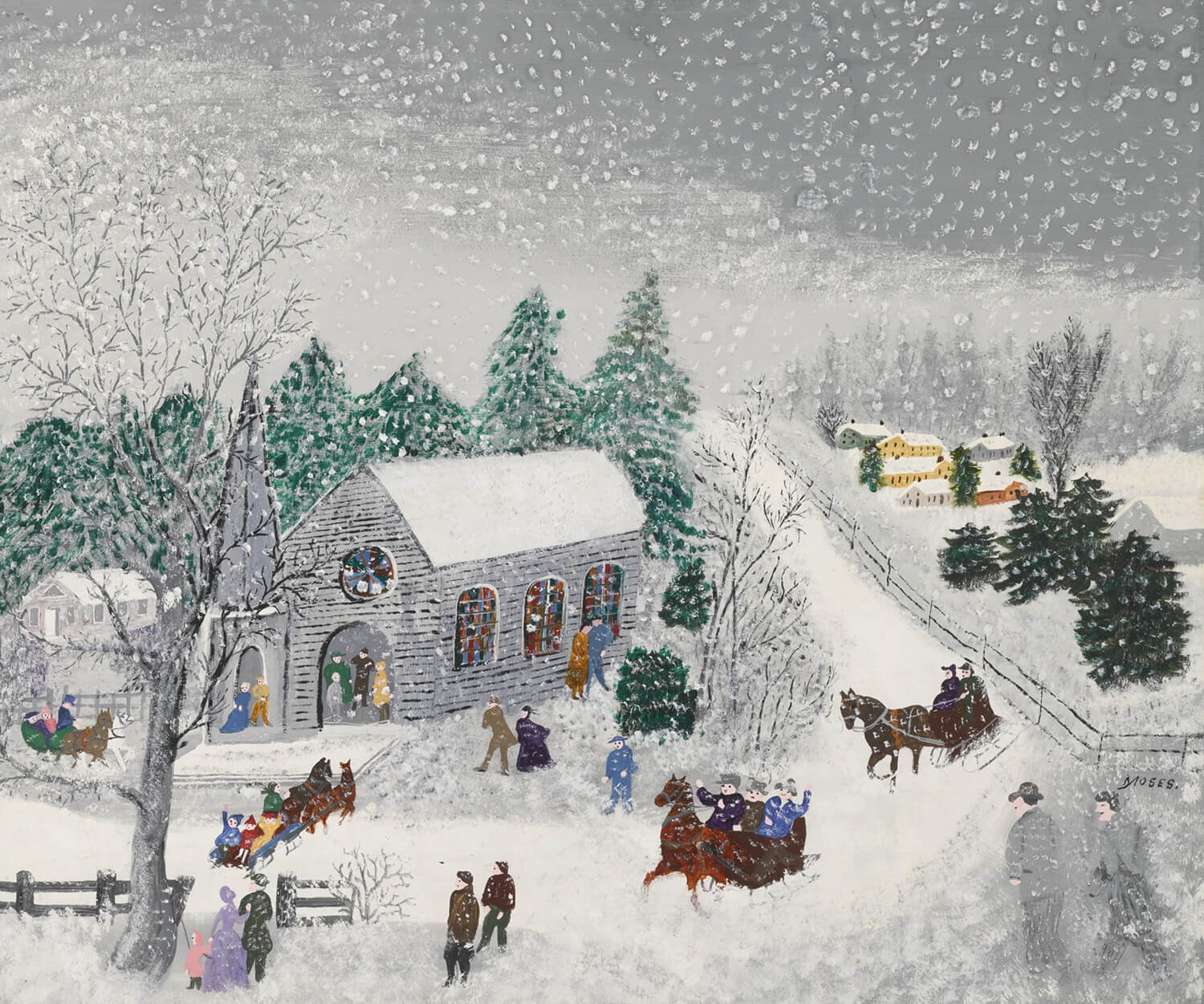
The Town Hall, 1950
Despite commercial success, with her work adorning everything from greetings cards to tea towels, it took time for Moses to be taken seriously as a heavyweight artist, as Leslie Umberger, senior curator of folk and self-taught art at the Smithsonian American Art Museum explained, “Her accessible style and narrative pictures engaged millions of people, but the artworld sidelined her for these exact same factors—as well as for more generally being elderly, female and untrained.”
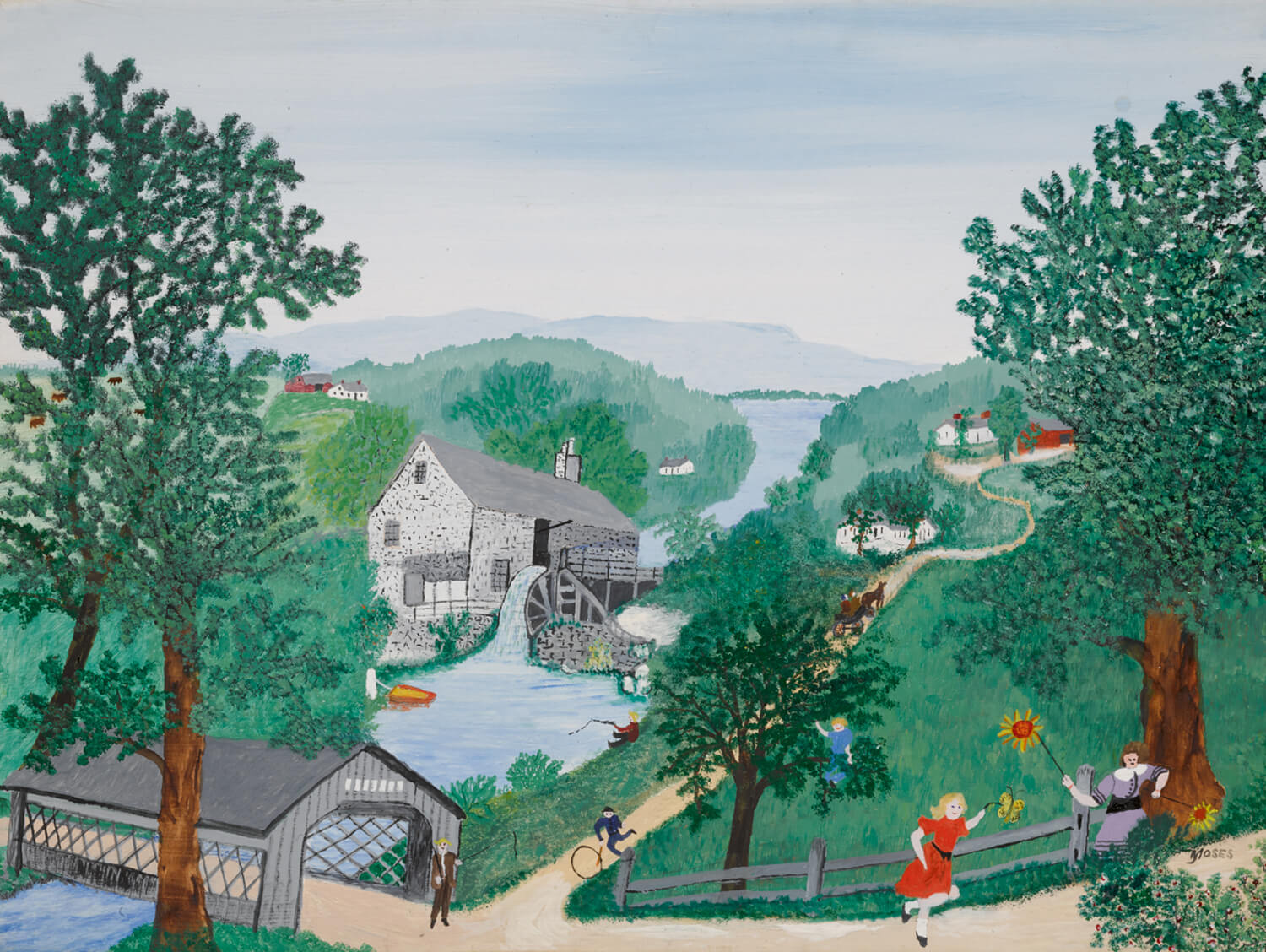
The Oaks, 1954. Source: Sotheby’s
It wasn’t until the 1950s that her work became more widely respected by large-scale museums and institutions, and in 1952, her published biography, My Life’s History, did much to elevate her status. Her work is now commonly recognised as an alternative to the experimental styles of the Abstract Expressionists emerging concurrently – instead she offering a steadfast, straightforward, and comfortingly honest view of her own life, and that of so many Americans like her. She summed up the refreshingly simple honesty of her work in her biography, noting, “I paint what I see and what I remember. I never paint dreams.”