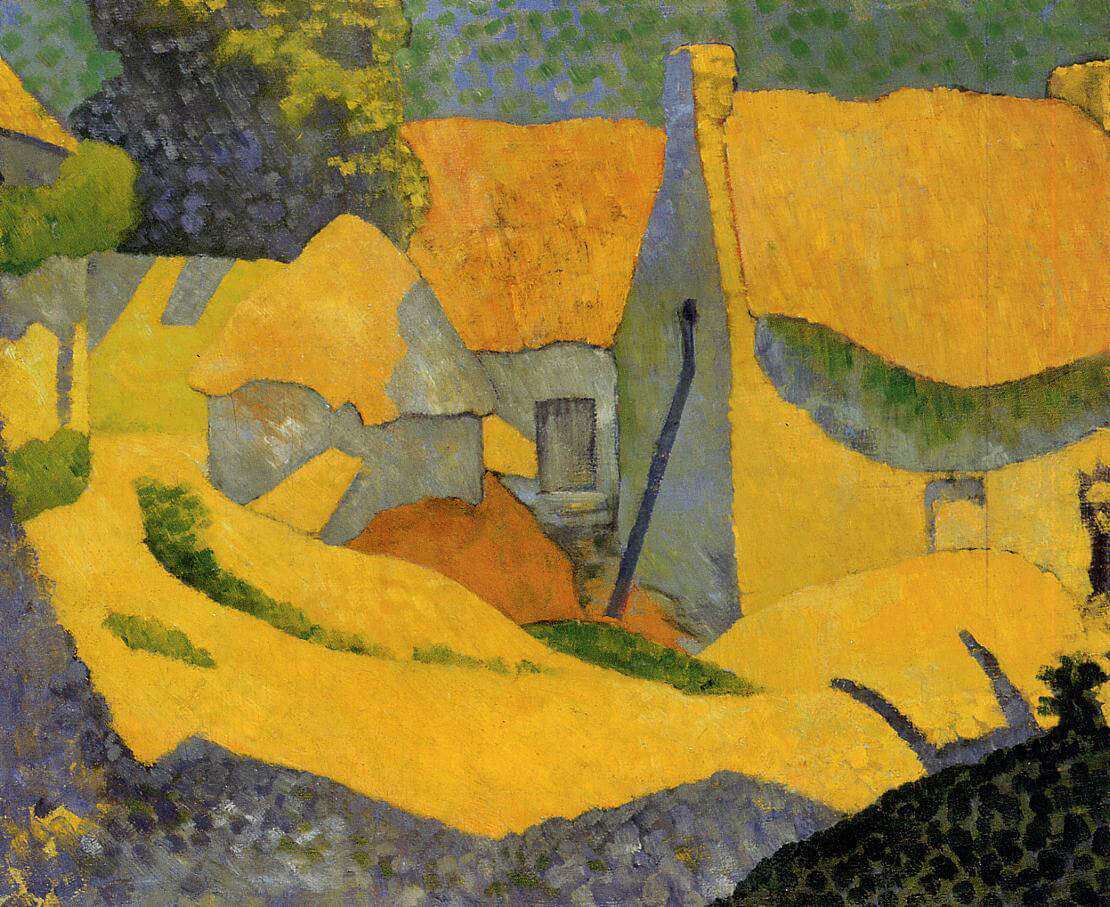
Yellow Farm at Pouldu, 1890
French post-impressionist painter Paul Sérusier was a colourist at heart. A pioneer who founded the avant-garde art group Les Nabis, he broke away from representational colour schemes into the wild and experimental world of his imagination. Throughout his long career, Sérusier toyed with rich and vivid colour palettes, including glowing golden yellows like Lead Yellow, and how they could give his artworks ambience, heat, and atmosphere. “Sounds, colours, and words have a miraculously expressive power beyond all representation,” he wrote.
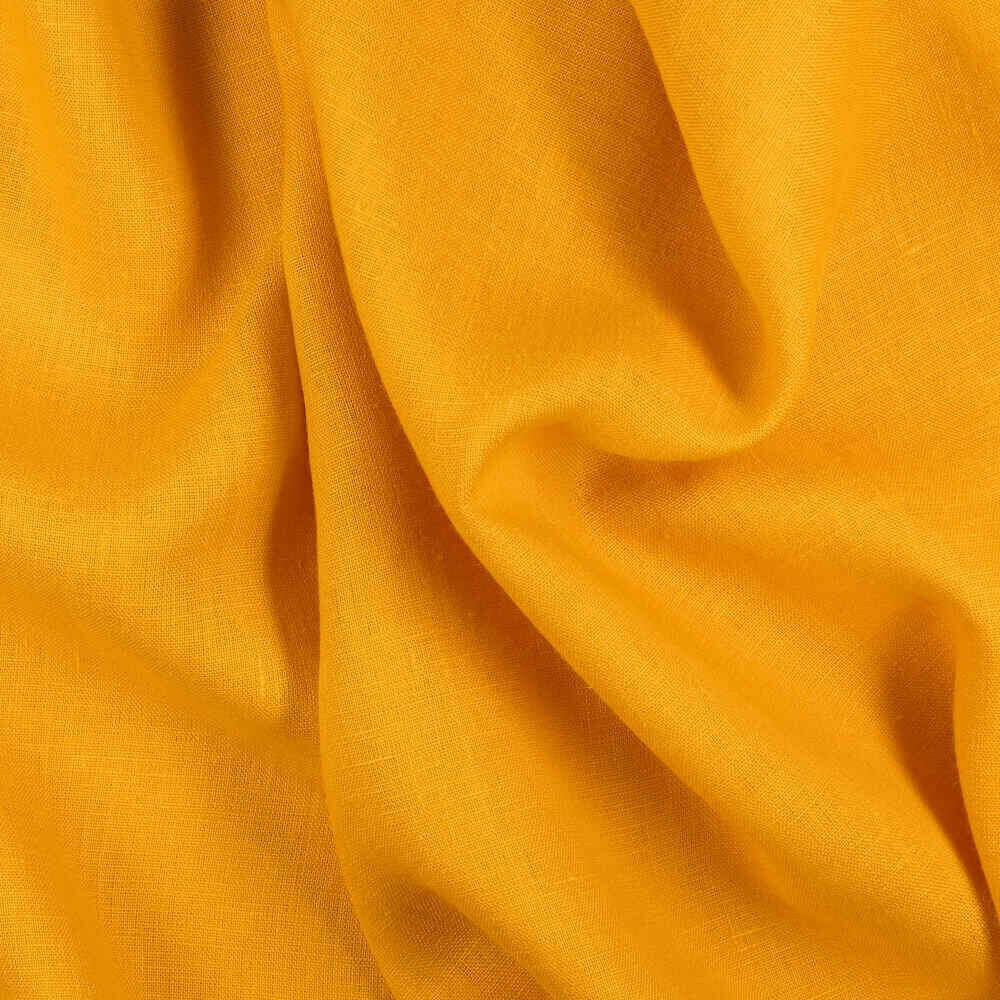
IL019 All-purpose Lead Yellow FS Signature Finish
Born in Paris in 1964, Sérusier trained as a painter at the Lycée Condorcet in Paris, followed by the Académie Julian. His early paintings were naturalistic, depicting landscapes in dark, sombre hues, but after befriending Emile Bernard and Paul Gauguin, his style became increasingly experimental, with flattened shapes and heightened, vivid colours. Referencing his period of struggle between realism and abstraction, he mused in a letter to a friend, “What part should nature play in a work of art? Where should the line be drawn? And from the standpoint of practical procedure – should one work directly from nature or merely study and remember it?”
With his fellow students from the Académie Julian – Maurice Denis, Pierre Bonnard, Paul Ranson, and Henri Gabriel Ibels – Sérusier spearheaded the artistic movement Les Nabis (Hebrew for ‘prophet), in 1889, and together they explored the emotive, symbolic properties of colour. Sérusier wrote, “The painter ought not to rest until he has given birth to the child of his imagination… begotten in a union of his mind with reality.” Nonetheless, he remained rooted in observations of the real world, toying with how its properties could be exaggerated for theatrical effect, noting, “Too much freedom frightens me, poor imitator that I am, and yet my head is filled with so many images evoked by what I see around me at all times that nature seems insignificant and banal.”

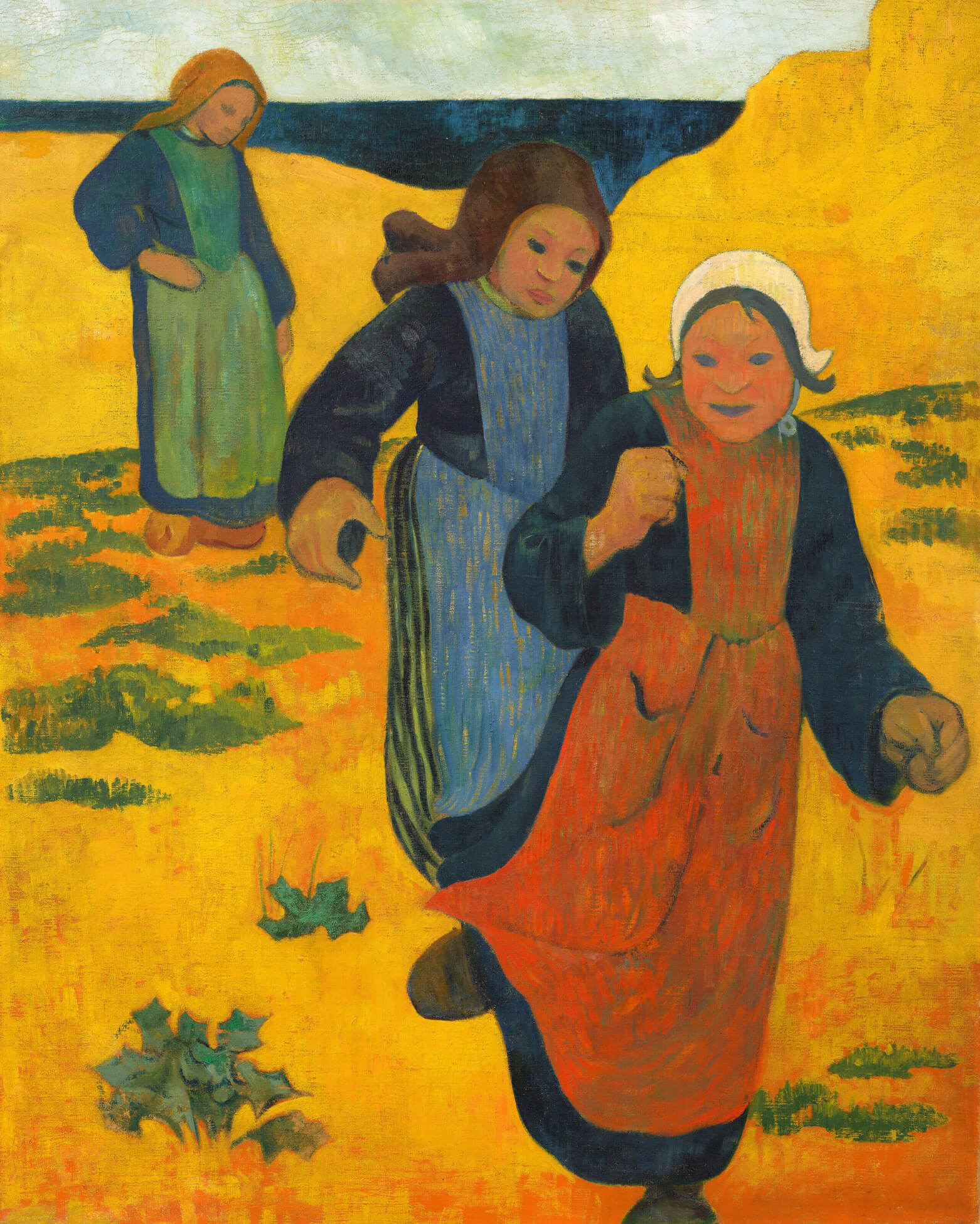
Girls at the Great Sands, 1891
Sérusier first visited Brittany in the late 1880s, and Yellow Farm at Pouldu, 1890 was made during one of his many return visits, while staying in the Breton village of Le Pouldu. He greatly admired the rustic simplicity of life here, and the spirituality of the Breton people, who seemed to exist in close harmony with nature – a far cry from the bustling metropolis of Paris. In this work the artist has simplified a humble farm view into a series of undulating golden, grey and green shapes that invest the otherwise ordinary scene with a shimmering, magical aura. Referencing the simplified, abstracted quality of works like this one, he wrote, “Remember that a painting -before being a war horse, a nude woman, or some anecdote – is essentially a flat surface covered with colours arranged in a certain order.”
In 1891, a year after completing this work, Sérusier permanently moved to Brittany, establishing a studio here from where he would venture forth and explore the surrounding scenery. Girls at the Great Sands, 1891, depicts the view into another scene at Le Pouldu, painted in the same vivid hue of mustard yellow, this time depicting the warm, enveloping sand of a sun-soaked beach on which three girls run with playful abandon, while distant golden cliffs unfold behind them.
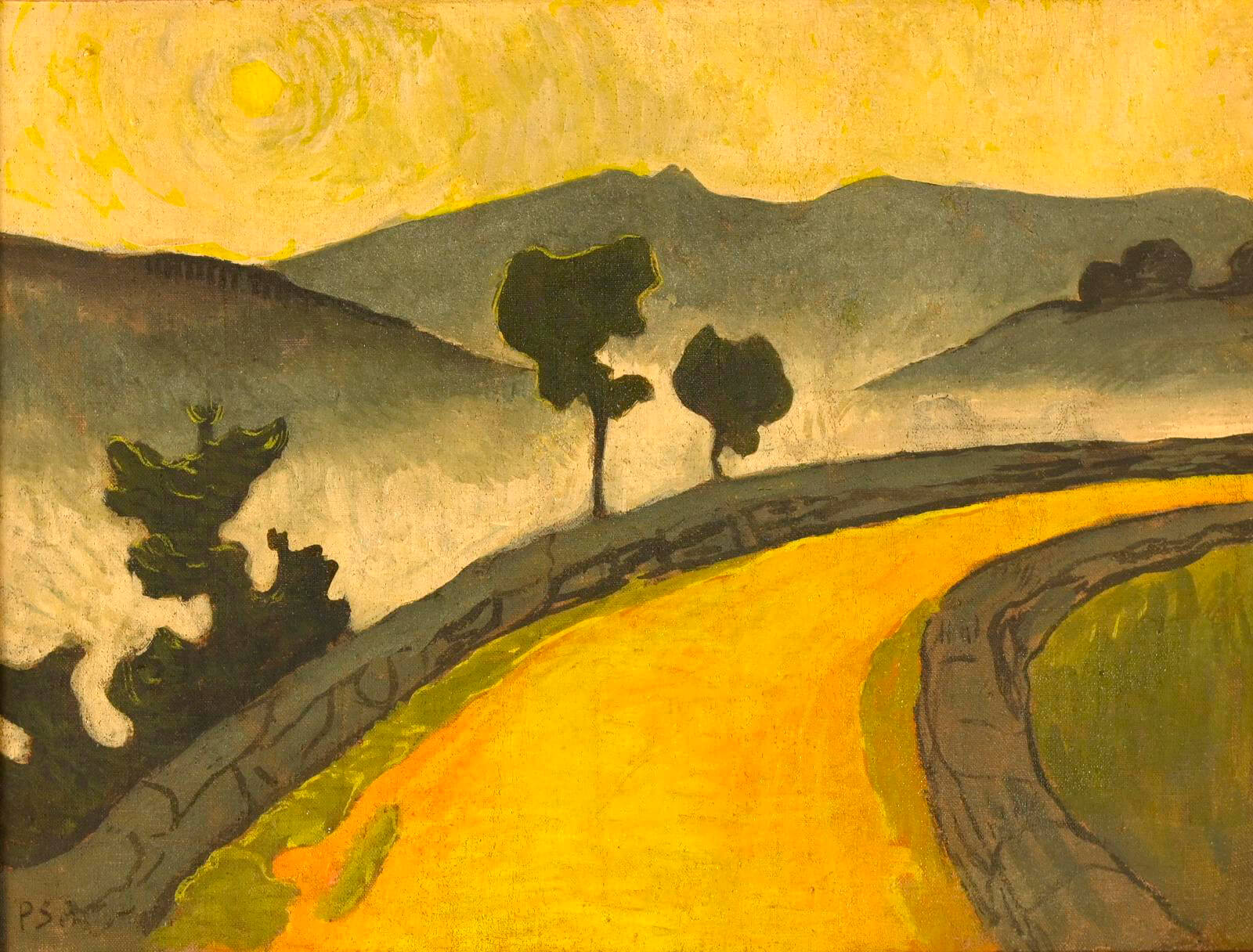
The Yellow Road, Châteauneuf-du-Faou, 1903
Sérusier painted The Yellow Road, Châteauneuf-du-Faou, 1903, just two years later, focussing this time on a view out to the Black Mountains (Les Montagnes Noir) region in Châteauneuf-du-Faou, Brittany. The dramatic view is simplified into bold, flattened planes of colour, dominated by the golden yellow road that forms a theatrical sweep from left to right, echoing the shimmering, blindingly-bright sun in the distance that seems to radiate its warmth throughout the entire scene.