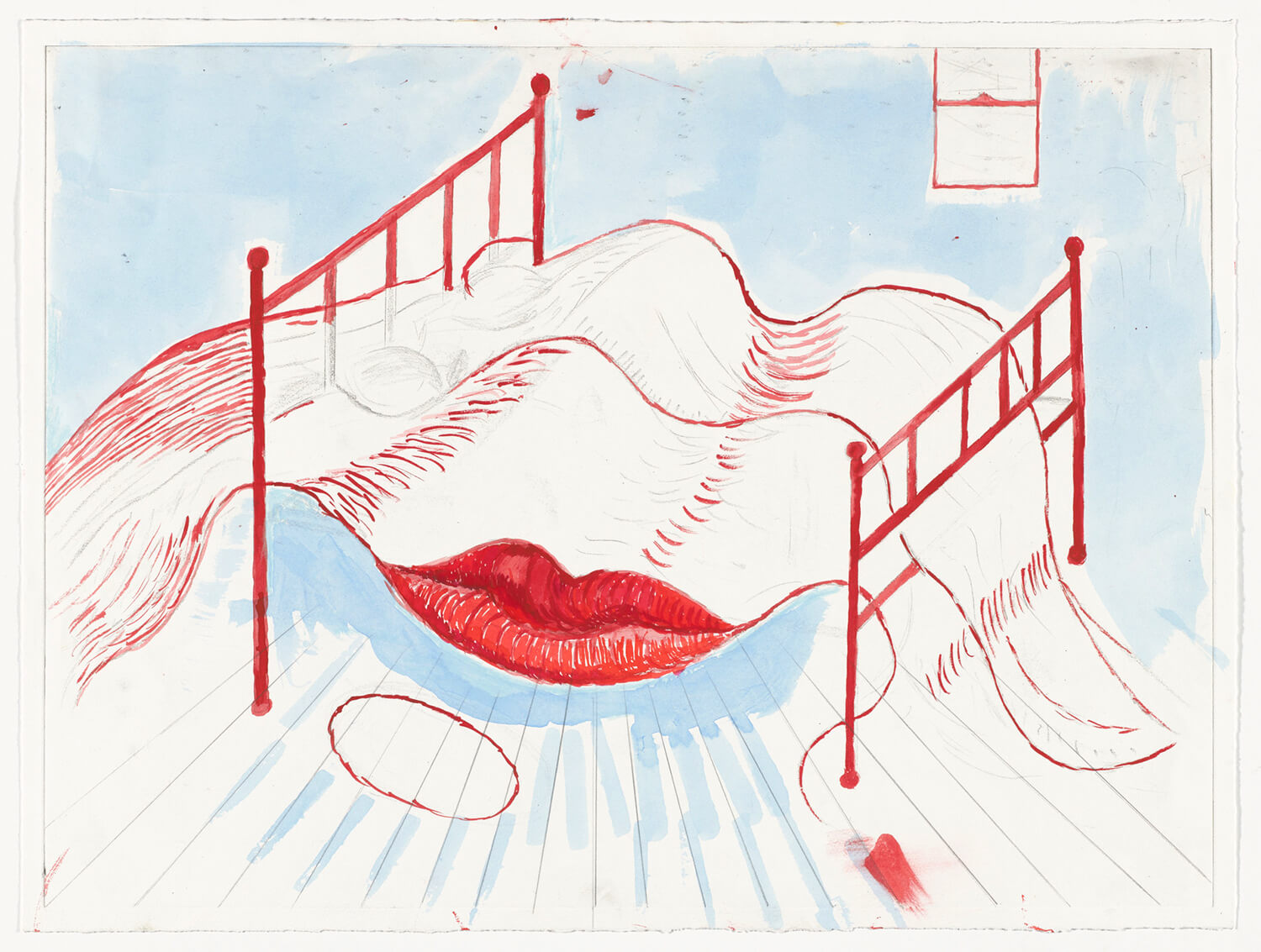
The Bed with Quilt, Blue, version 3 of 3, state II of XI, 1997
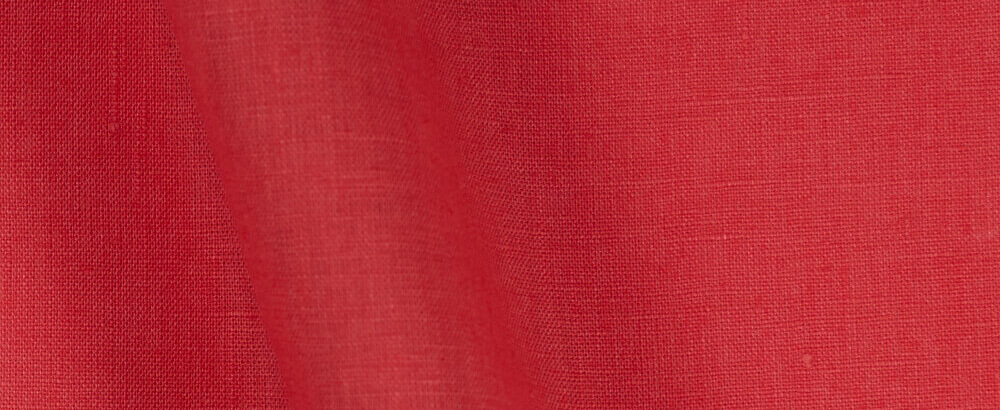
The colour red was a recurring theme in the art of pioneering 20th century French artist Louise Bourgeois, chosen for its rich symbolism, and powerful, emotive qualities. Crimson shades like Teaberry Linen often appeared in her work in a variety of guises, colouring outreaching hands, sensuous lips, and other bodily, curvaceous forms. Over and over, she toyed with the way this colour could enhance the playful, human nature of her work, so embedded with such intensely personal, psychological properties. “I am a searcher,” she wrote, “I always was… and I still am… searching for the missing piece.”
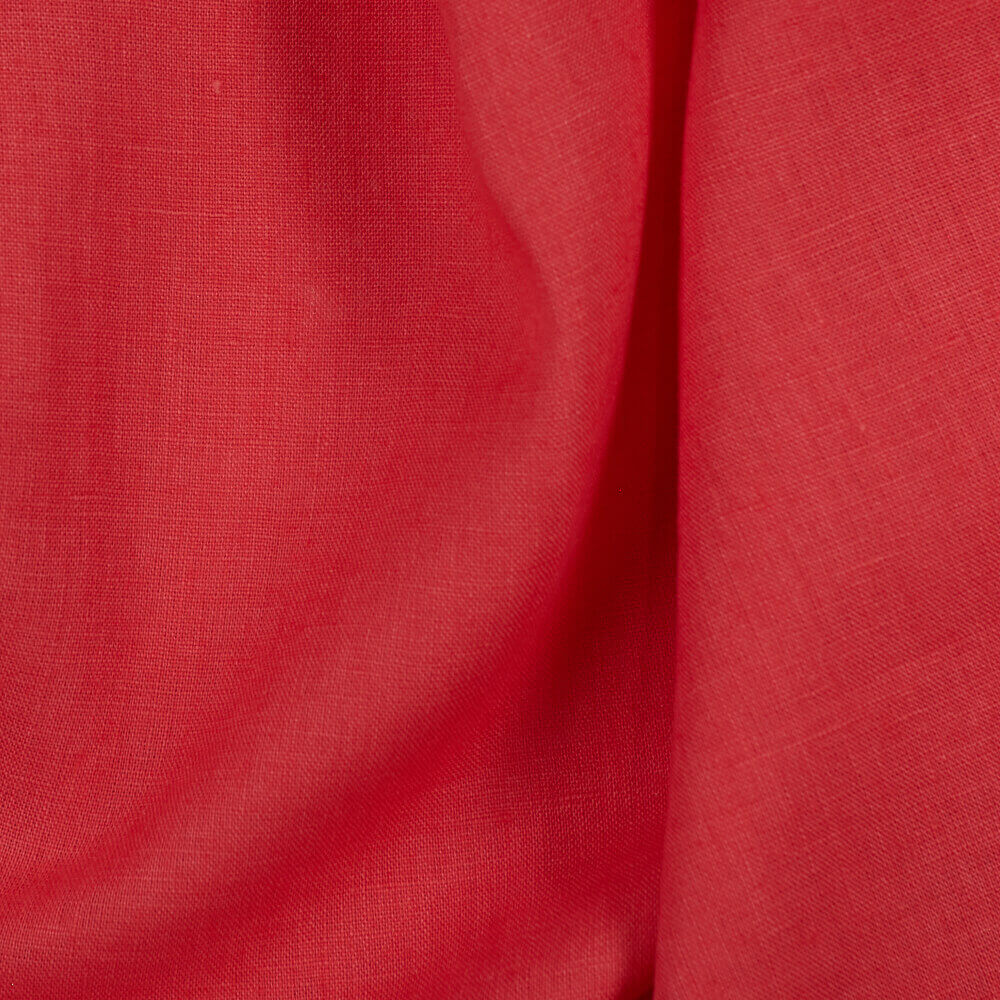
FS Teaberry Signature Finish Midweight Linen
Bourgeois was born in Paris in 1911, and from a young age she helped her family with the tapestry repair business, investing in her a lifelong fascination with the labour intensive, physical processes of making. Years later, she noted, “I am not what I am, I am what I do with my hands.” Her complicated relationship with her father led Bourgeois to a lifetime of psychoanalysis, which became the fuel for her art, which often incorporated surreal dreamlike imagery related to the human body, or intimate, domestic subjects hovering between somewhere male and female. Though primarily known as a sculptor, in a career spanning more than seven decades, Bourgeois experimented freely with a wide range of media, including printmaking, drawing, and painting.
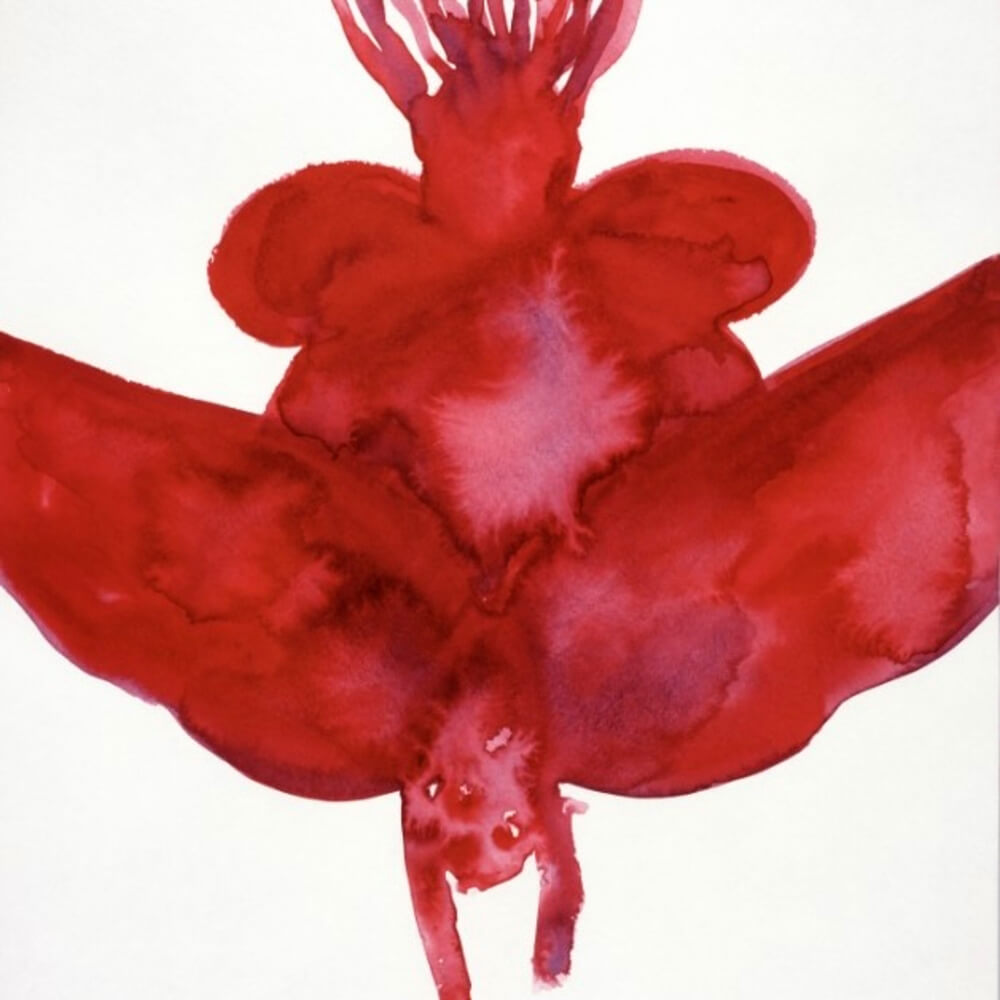
Birth, 2008
The Bed with Quilt, Blue, version 3 of 3, state II of XI, 1997 is one of many works on paper in which Bourgeois layers multiple printmaking techniques over one another. Made using etching, aquatint, drypoint, and engraving, this illustration is one of a series exploring a bed motif, onto which a bulging, undulating duvet morphs into a sensuous pair of lips. In this image she renders the lips and bed frame with a deep shade of crimson, toying with this colour’s mysterious, enigmatic and feminine properties, particularly when set against a cool shade of ice blue.
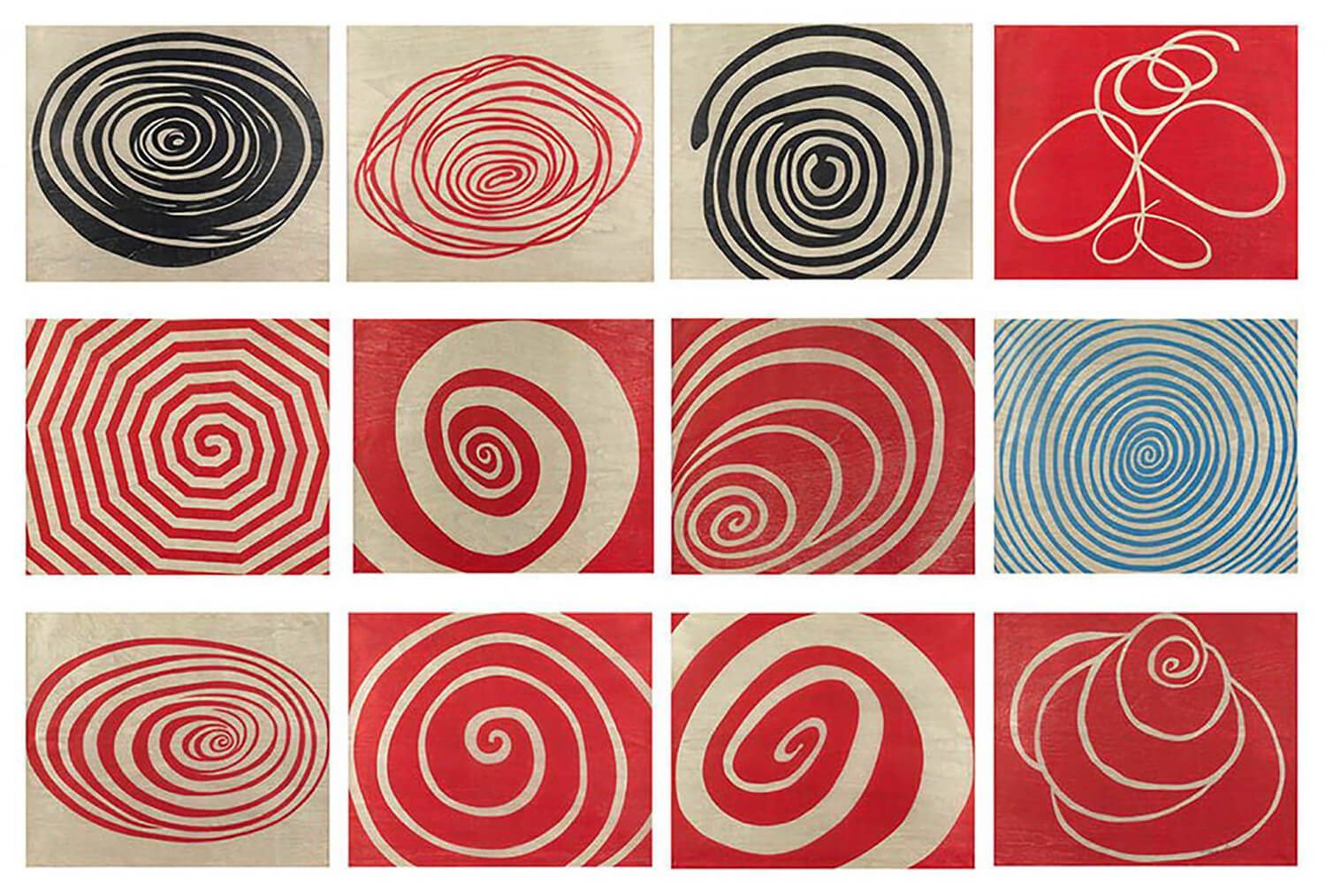
Spirals, 2005
Made almost a decade later, Bourgeois’ series Spirals, 2005, explores traditional Japanese woodblock techniques, using oil based ink on handmade paper. Like many of her works, she plays with themes of repetition and difference, arranging similar motifs into a grid-like format to jostle against one another. Long fascinated with the spiral, she called it a mix between “control and freedom”, echoing the concepts of duality that play out in so much of her art. She said, “The spiral is important to me. It is a twist. As a child, after washing tapestries in the river, I would turn and twist and ring them… Later I would dream of my father’s mistress. I would do it in my dreams by ringing her neck. The spiral – I love the spiral – represents control and freedom.” Most of her spirals in this group are rendered in a rich shade of red ink, lending them striking, eye-catching and emotionally resonant qualities.
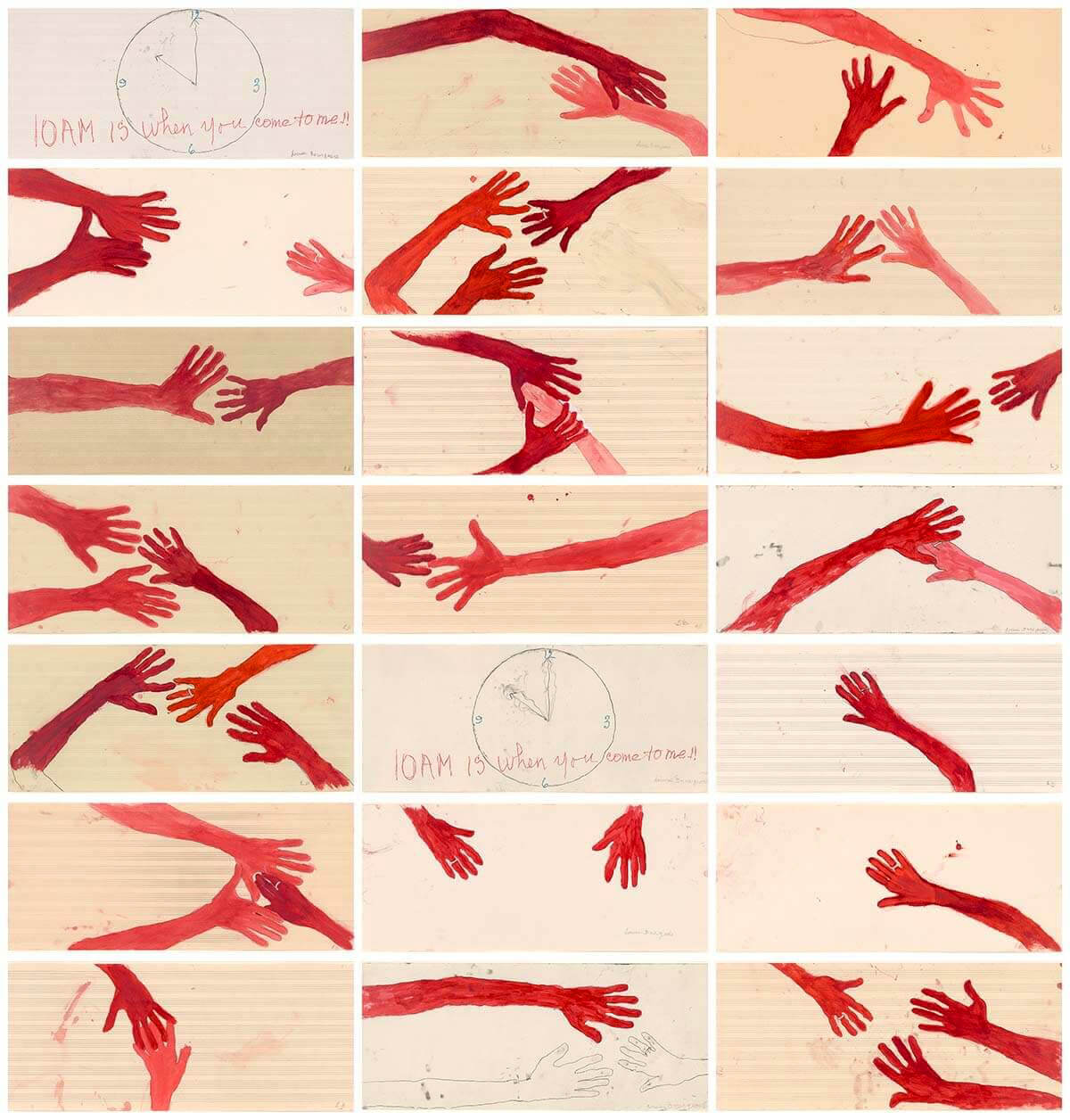
10 am Is When You Come to Me, 2006
Similar qualities of repetition appear in Bourgois’ work, 10 am Is When You Come to Me, 2006, a group of 20 etchings featuring elements of watercolour, pencil and gouache on paper, featuring tracings of her hands alongside those of her longtime assistant and best friend Jerry Gorovoy, alluding to the dependency that developed between them, and the support he provided to her throughout her life. On her relationship with him, she observed, “When you are at the bottom of the well, you look around and say, who is going to get me out? In this case it is Jerry who comes and he presents a rope, and I hook myself on the rope and he pulls me out.” Perhaps it is no surprise then that she chose to render their hands in bright crimson red, here suggesting the living, breathing, human qualities they shared with one another, and the intimate connection that bound them to one another for so much of her life.