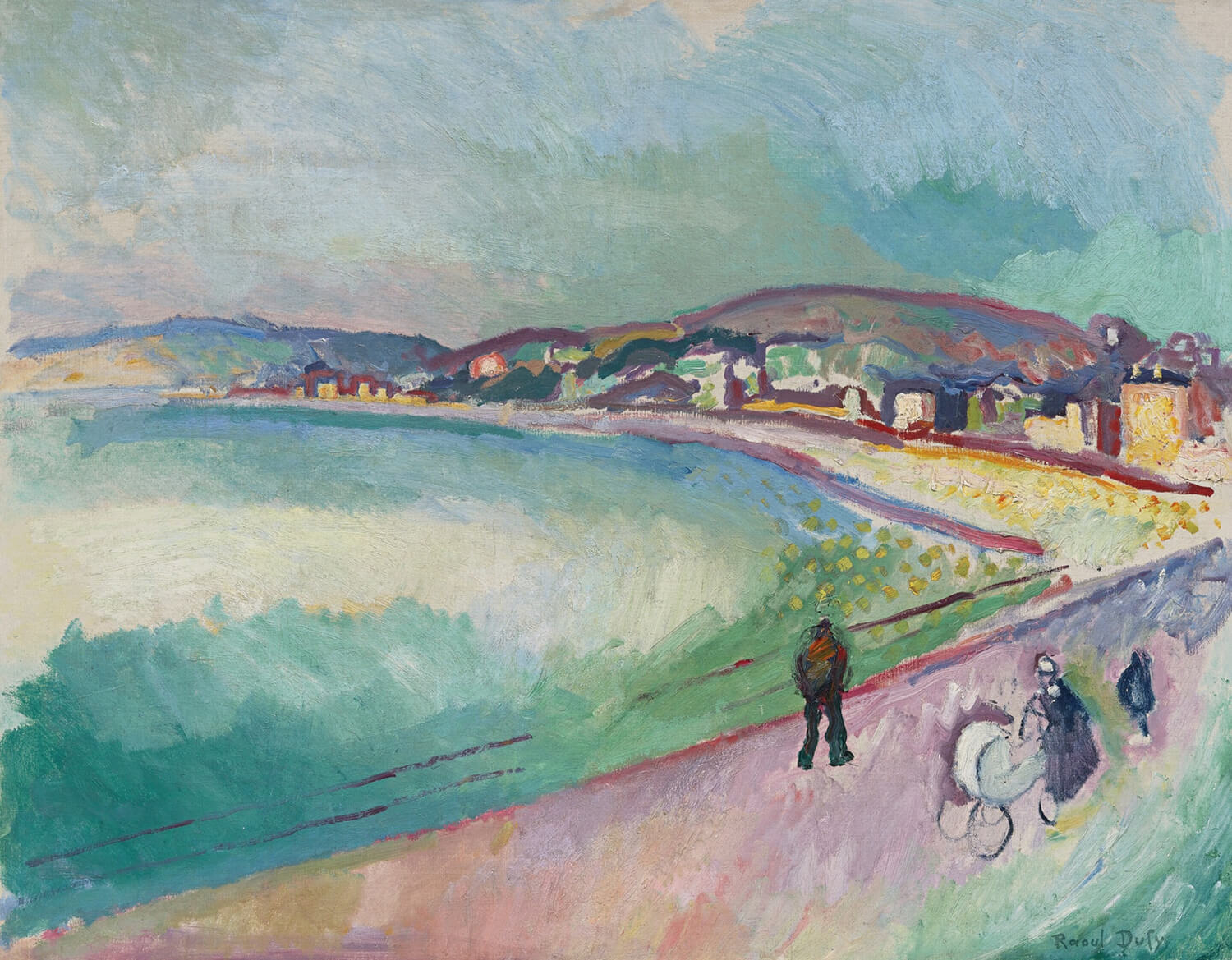
The Beach at Sainte-Adresse, 1906
French Fauve painter Raoul Dufy is widely celebrated for his vibrant, colourful paintings that celebrate optimistic observed moments and places with a distinctively fresh, light touch. He often incorporated pale, shimmering shades of pale purple like Burnished Lilac into his art, alongside a vivid array of blues and greens; through the invocation of colour and light he invested qualities of magic into the scenes of luxury and leisure he encountered throughout his daily life, from gleaming chateaux nestled in lush foliage to sun-streaked racehorses and sailing boats scattered across aqua harbours.
Dufy was born in Le Havre in 1887, and grew up watching boats coming and going from the local harbour. He later moved to Paris with his childhood friend Othon Friesz in 1900, and soon found himself immersed in the burgeoning art scene, where artists were experimenting with ever more adventurous ways of painting from life. Alongside his fellow Fauve artists including Henri Matisse, Andre Derain and Georges Braque, he broke away from the traditions of the Paris Salon with lively, loose brush marks, and heightened, exaggerated colours.
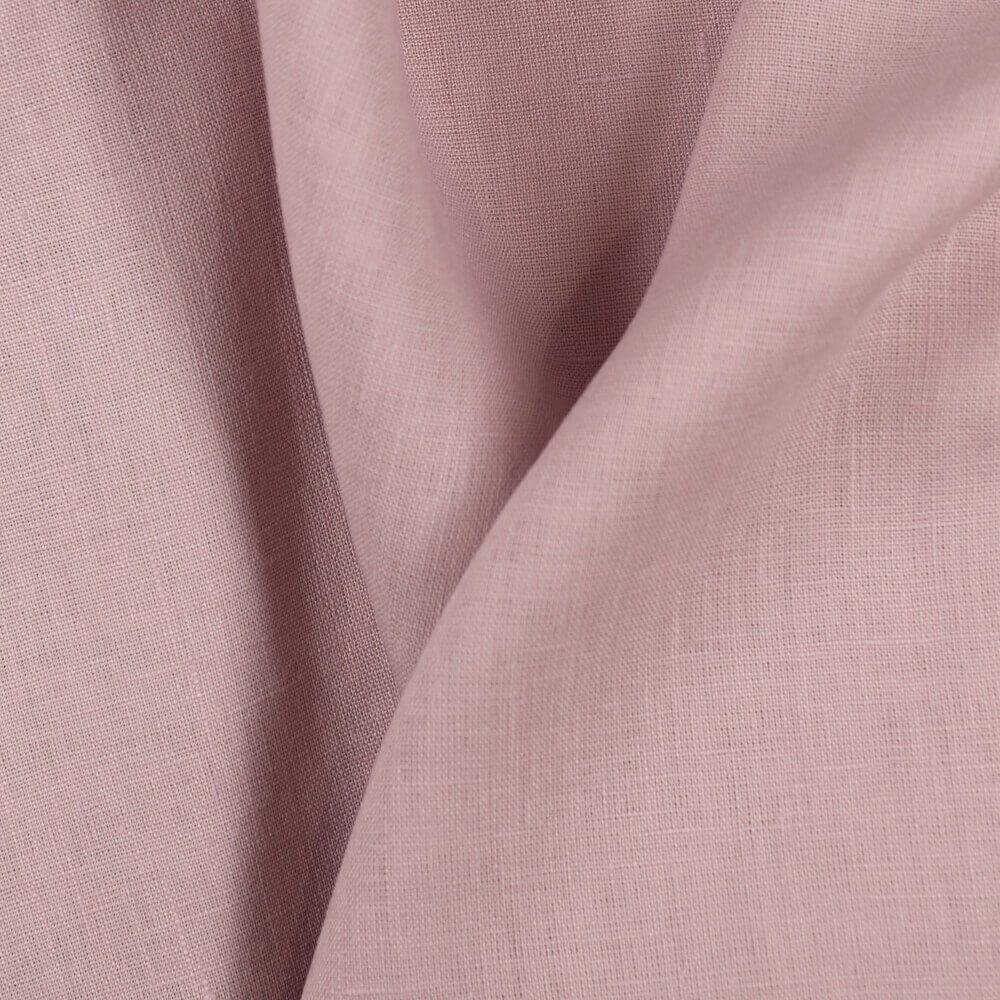
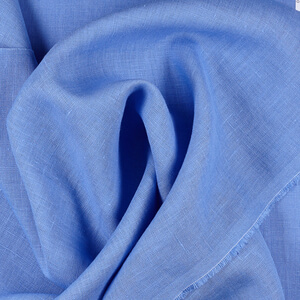
FS Burnished Lilac Signature Finish Midweight Linen
In his early painting, The Beach at Sainte-Adresse, 1906, Dufy illustrates a scene looking over the beach from an elevated perspective, distilling his view into its simplest essence. The promenade in the foreground, where a small gathering of people can be seen, is painted in bold strokes of pale lilac, which seem to carry within them the bracing freshness of coastal light. It was a pivotal work for Dufy, at which point his work became increasingly abstract, as he explained, “I was painting on the beach of Sainte-Adresse. I had previously painted beaches in the manner of the Impressionists, and had reached saturation point, realizing that this method of copying nature was leading me off into infinity, with its twists and turns and its most subtle and fleeting details… From that day onwards, I was unable to return to my barren struggles with the elements that were visible to my gaze. It was no longer possible to show them in their external form.”

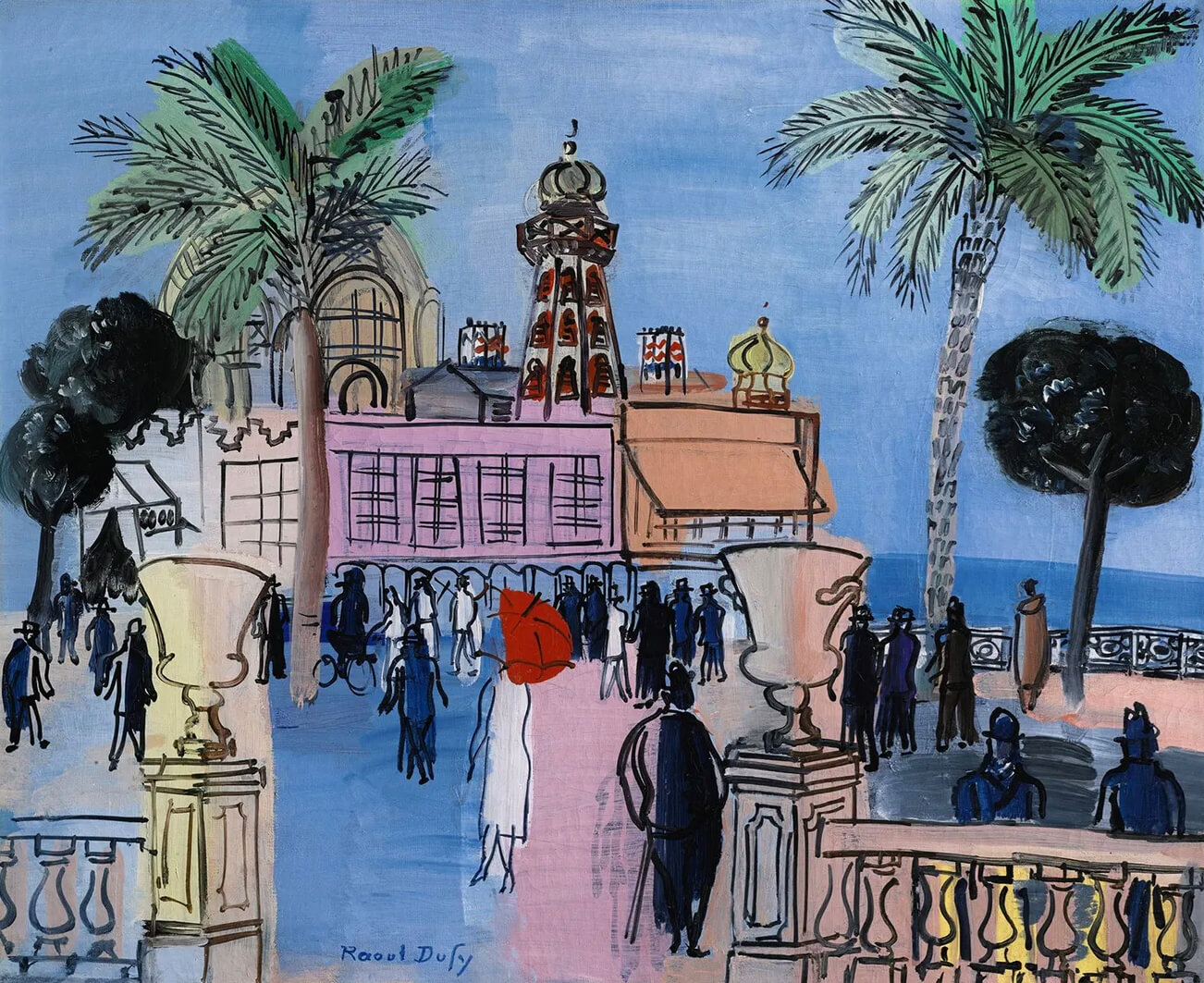
Casino in Nice with Two Urns, 1930
Over the following years Dufy developed a distinctive approach through the use of loose, fluid lines which often seem to float on the surface of ephemeral washes in pale or bright colour, lending his work an airy freshness which seems to chime perfectly with the frivolous nature of his subject matter, showing people enjoying the lighter side of life in the open air, as an antidote to postwar austerity.
In the later painting, Casino in Nice with Two Urns, 1930, Dufy paints a view into Nice with an array of brilliantly bright colours, as two lush palm trees line a pathway leading to a casino in the distance and an azure sky spills out overhead. Bold streaks of paint are applied in expressive ways across the imager foreground, including streaks of pale lilac, orange, and yellow, which capture the vivid sunshine of Nice, over which lively, illustrative lines float, describing flattened, decorative elements of structure and architecture.
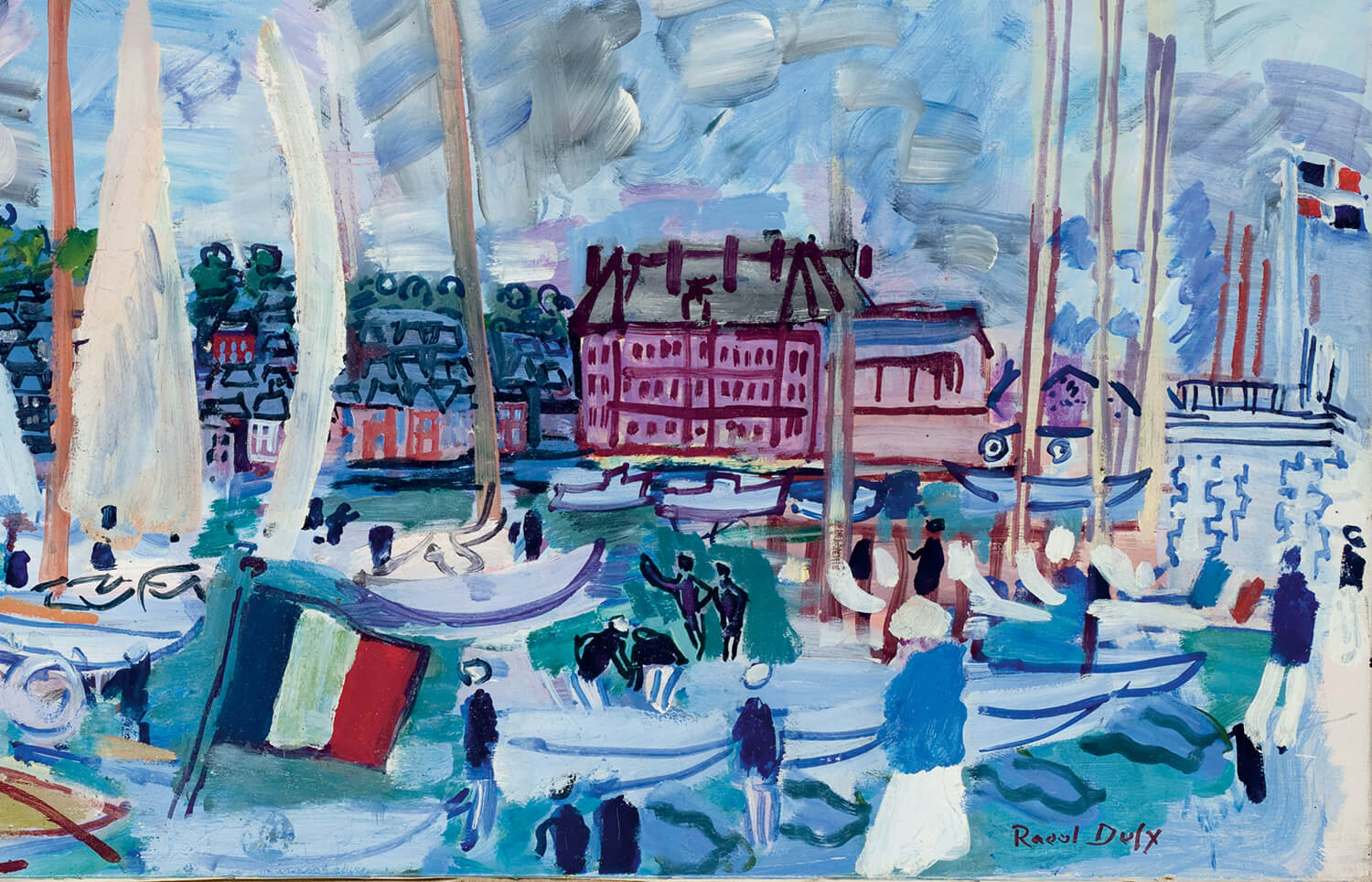
Sailing Boats in the Deauville Basin with Flag, 1933
Made three years later, Dufy’s painting, Sailing Boats in the Deauville Basin with Flag, 1933 is even more fluid, with thick, dappled streaks of paint swishing this way and that across the sky and water, suggesting dynamic rhythm and movement. Boats and people are painted over them with swift, simplified lines that further emphasise the energy and motion of this spirited scene, so brimming with joy and life. In the background, pale purple is streaked across a series of buildings, investing them, and the entire scene, with a quietly ambient, sunlit warmth.