

Mont Sainte-Victoire, 1897
The searing hot, vibrant orange of Muskmelon Linen was a colour French Post-Impressionist painter Paul Cezanne returned to over and over again, to convey the sunlight of his native France casting its burning rays onto dry rocks, crumbling mountains or red rooftops. The distinctive palette of his mature career, which leaned towards orange, alongside dusty beige, bright green and vivid blue, became one of the artist’s trademark characteristics, capturing the unique hues of the Provencal landscape where he lived for much of his life.
Cezanne was born in Aix-en-Provence in 1839 to a wealthy family. It was assumed Cezanne would follow in his father’s footsteps and study law, so he could take up the helm in the family bank. However, Cezanne only lasted two years studying law at the University of Aix-en-Provence before dropping out to pursue a career in the arts. With the support of his mother, Cezanne moved to Paris to stay with his childhood friend, the writer Emile Zola. Here he hoped to enter one of the French art academies, but his entry attempts were rejected year after year, and his paintings, which were at this time dark and sombre, were refused regularly by the Paris Salon.

FS Muskmelon SIgnature Finish Midweight Linen
Cezanne’s breakthrough came following a friendship with Camille Pissarro, who encouraged the young Cezanne to adopt an Impressionist approach to painting, working out of doors with lighter, fresher, and more vivid colours, along with swift, expressive marks. Having faced rejection from the art establishment Cezanne felt he had little to lose, so he adopted an increasingly rebellious stance, pushing the boundaries of painting in daring new directions beyond the Impressionists. He developed a unique approach with square, flattened brush marks to depict of a range of subjects, including still life studies, portraits, and landscapes, as faceted, structured forms, with a feeling of weight and volume. Cezanne called this his desire to, “… make of Impressionism something solid and enduring, like the art in museums.”

In L’Estaque with Red Roofs, 1885, Cezanne paints the view out to sea in the small fishing village of L’Estaque in Southern France. The paintings he made here demonstrate his move towards vibrant colours painted in loose, flat passages of paint, with an emphasis on capturing the essence of the place rather than a true likeness. The scattered rooftops painted in blazing hot shades of orange seem to carry with them the searing heat of the French summer sun, white the cool blue of the sea and sky beyond create a striking point of contrast. He described how the sun here made rooftops look as flat as “playing cards”, interspersed amongst lush, bristling green treetops.
Mont Sainte-Victoire, 1897
Made two years later, Mont Sainte-Victoire, 1897, is one of many iconic paintings Cezanne made of the Provencal mountain, with its craggy, domed outline and dry, crumbling surface. In his later career Cezanne became obsessed with the mountain, an emblem of his hometown where he was by now living again, painting it in all times of the day and in differing weather patterns. This painting shows the mountain from a low viewpoint, looking at its grey, rocky surface through scattered, vivid green trees and glowing yellow and orange foreground rocks that seem baked in with the day’s sunshine.
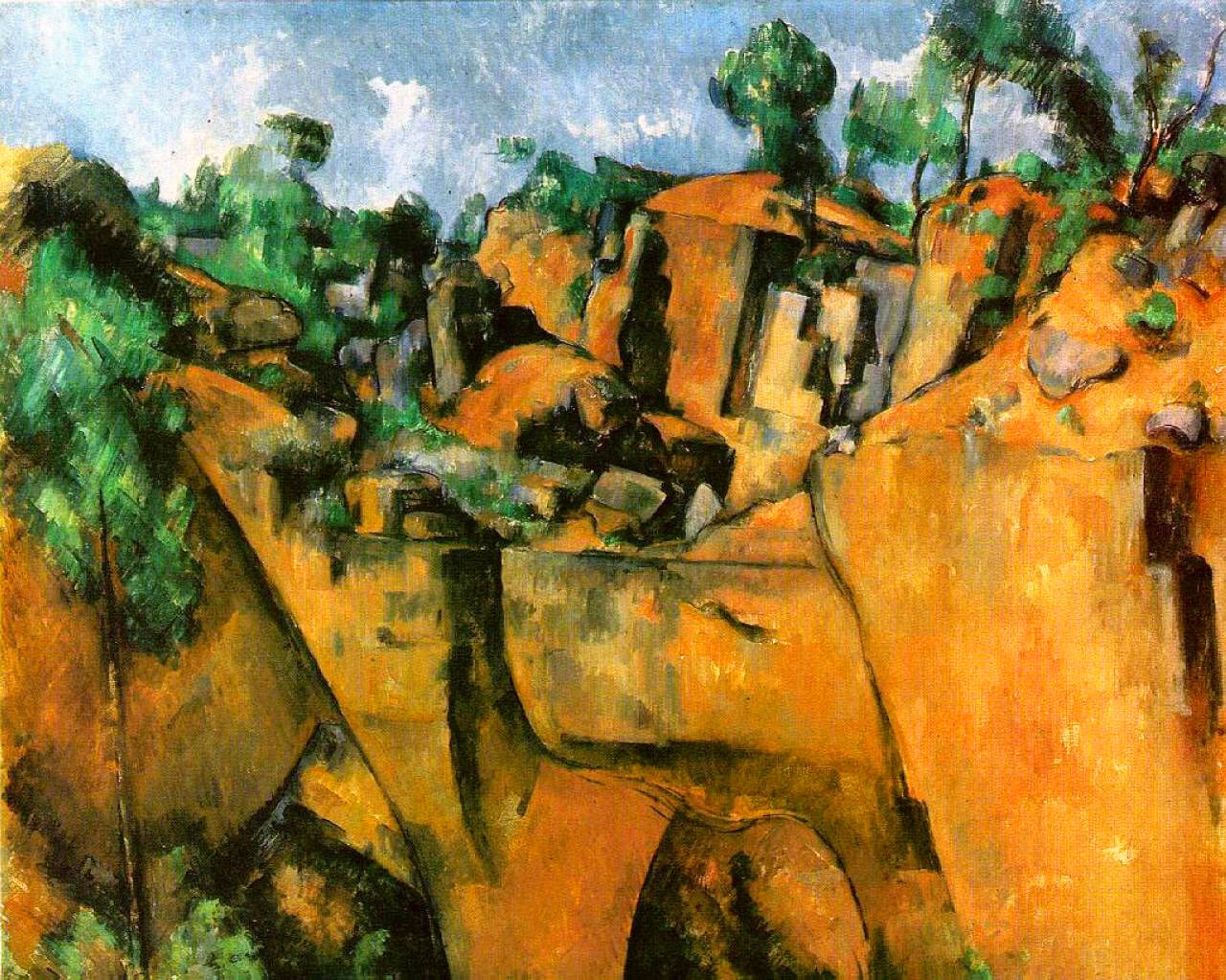
Bibemus Quarry, 1900
Cezanne’s painting Bibemus Quarry, 1900, depicts another landmark of the Provencal countryside, an area known for its dramatic, geometric rock formations which captured Cezanne’s imagination. Here he paints their faceted forms close-up, in the most vibrant hues of burnt orange which seem to flicker with the heat of flames. Ever the master of contrast, Cezanne combines the fragile temporality of sunlight with the enduring permanence of rocks, so deeply embedded with the history of the earth.





1 Comment
Very well presented. Every quote was awesome and thanks for sharing the content. Keep sharing and keep motivating others.