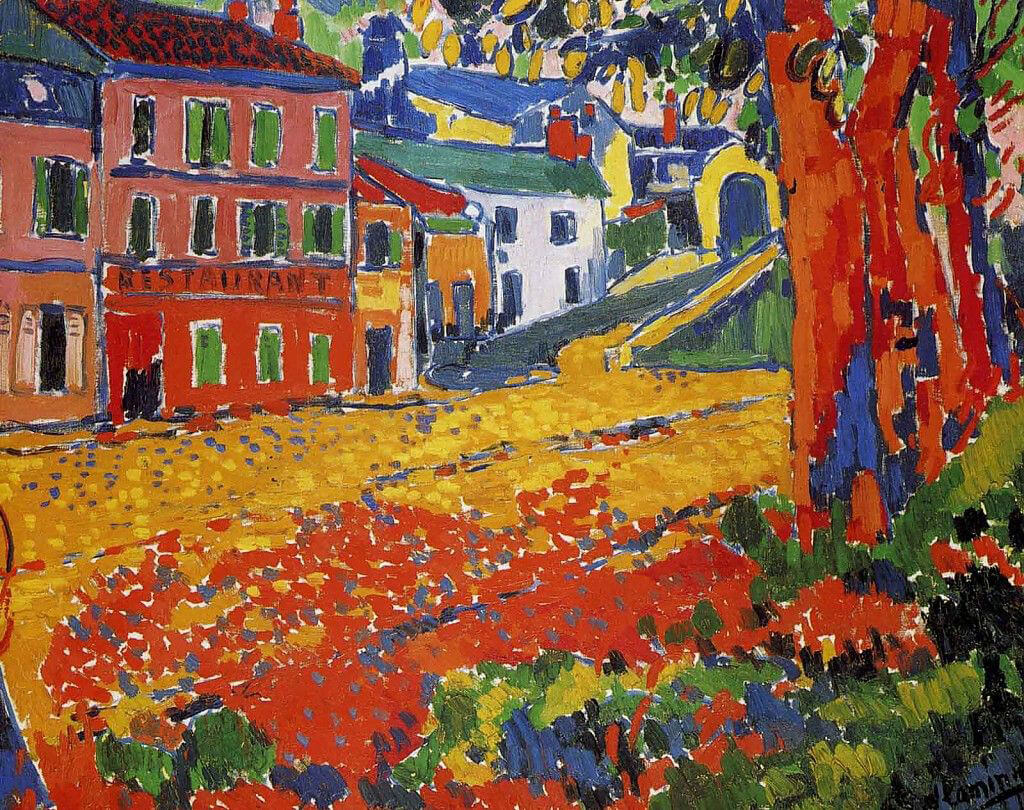
Restaurant La Machine at Bougival, 1905
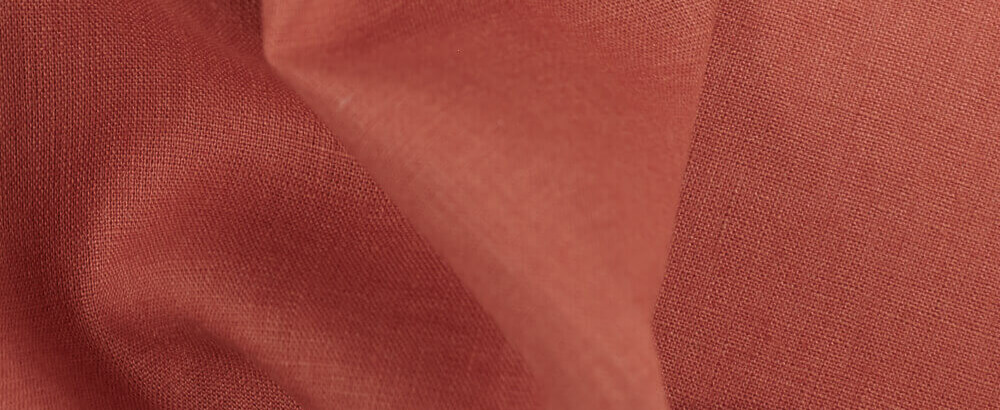
French Fauvist painter Maurice de Vlaminck explored the potent properties of colour throughout his career, combining electrifyingly bright shades with more muted, sandy hues like the soft, warm hue of Burnt Brick Linen. Influenced by the French Impressionist and Post-Impressionist painters, he worked from real world references, but he exaggerated his palette far beyond anything they had ever painted, using extreme, sometimes violently bright colours to create an emotive, imaginative response to the real world. He wrote in his notebook, “I heightened all my tonal values and transposed into an orchestration of pure colour every single thing I felt.”
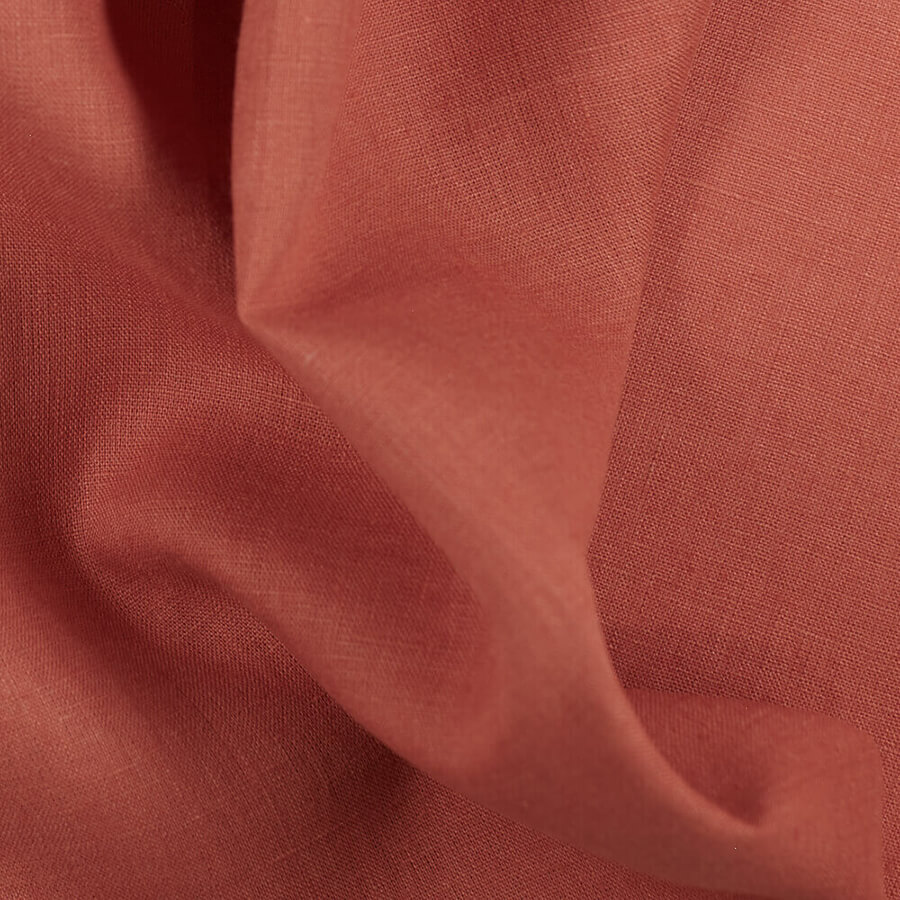
FS Burnt Brick Signature Finish Linen
Vlaminck was born in 1876 in Paris into a creative family; both his parents were musicians and teachers, passing on their musical gifts to their son, who played musical instruments long into his adult years. He took up painting as an older teenager, before training with painter Henri Rigalon in 1893. A chance encounter on a train led to a turning point in Vlaminck’s life; he met the painter Andre Derain while both were travelling to Paris, and the two struck up what would become a long-lasting friendship. The pair went on to share a studio at the Maison Levanneur, and both influenced in one another myriad ways, sharing a mutual fascination with the exploration of wild, expressive passages of paint and vivid, heightened colours.
In 1905 Vlaminck exhibited his art alongside Derain and Henri Matisse, at the controversial Salon d’Automne exhibition in 1905, when the three painters were first dubbed ‘Les Fauves’ (the Wild Beasts) by the disparaging art critic Louis Vauxcelles, a term they later adopted to describe their own art. Vlaminck’s painting Restaurant La Machine at Bougival, 1905, typifies his Fauvist art, with searing passages of intense primary colour applied in free, expressive brush marks to bring magic into a seemingly ordinary street scene. On the left, the restaurant referred to in the title is rendered in a softer, sandier shade of dark pink, a comforting and human shade nestled in amongst the riotous cacophony around it. “What is Fauvism?” wrote Derain to himself. “It is me . . . my way of combined revolt and liberation . . . my blues, my red, my yellows.”
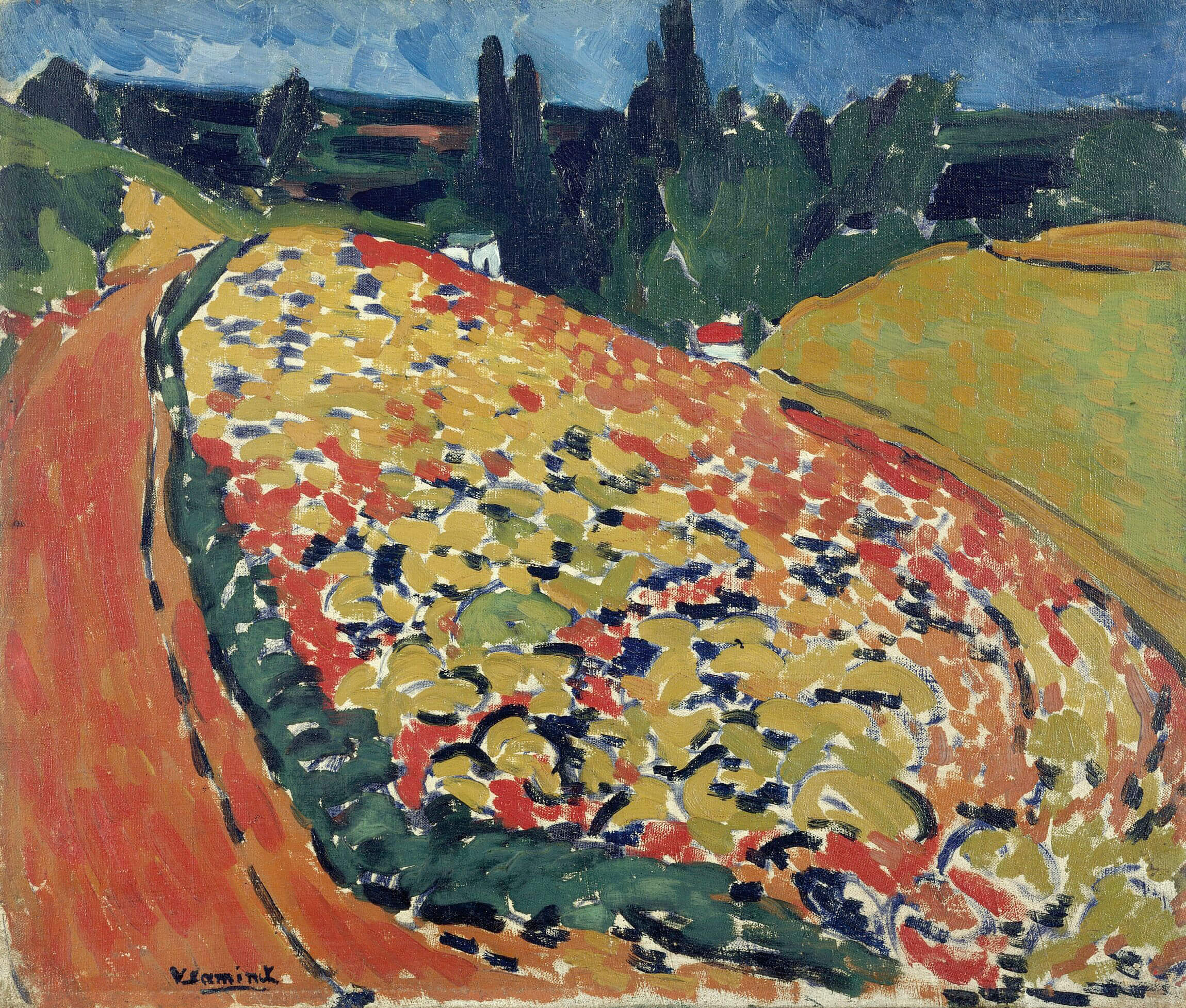
The Hillsides of Rueil, 1906
Made just a year later, the fluid and painterly scene, The Hillsides of Rueil, 1906 conveys Vlaminck’s response to the natural world, with slightly softer, sandier shades of pink and green nestled in amongst one another, applied in expressive daubs that seem to scatter like pebbles across much of the picture plane. On the left, a dramatically sweeping curve of dark pink curls around a raised mound of land, an appealing invitation that pulls us in towards the distant valley near the horizon line, where dark trees become shadow-like, menacing spectres pointing upwards to the sky.
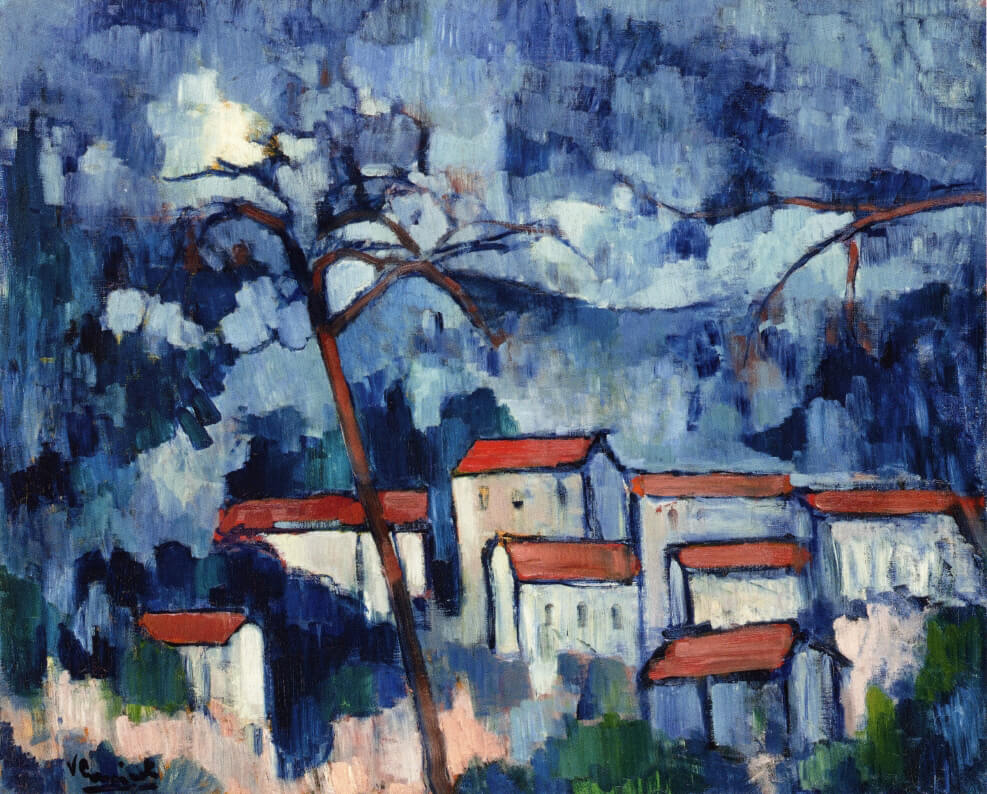
Landscape with Red Roofs, 1907
In the slightly later painting, Landscape with Red Roofs, 1907, we see Vlaminck experimenting with a different, more fluid style; painterly streaks in blue and white form a textural, patchwork-like pattern across much of the canvas, creating the illusion of atmospheric depth and space. As alluded to in the artwork’s title, however, it is the angular roofs of the small houses spread across the foreground that draw our focus in, a suggestion of real life, human presence within an otherwise almost entirely abstract scene. They are painted in a contrasting hue of warm dark pink, a rich, lively colour echoed in the branch of the slim, angular foreground tree, whose bare, wintery branches stretch upwards like arms reaching into what could be a freezing, icy sky above.