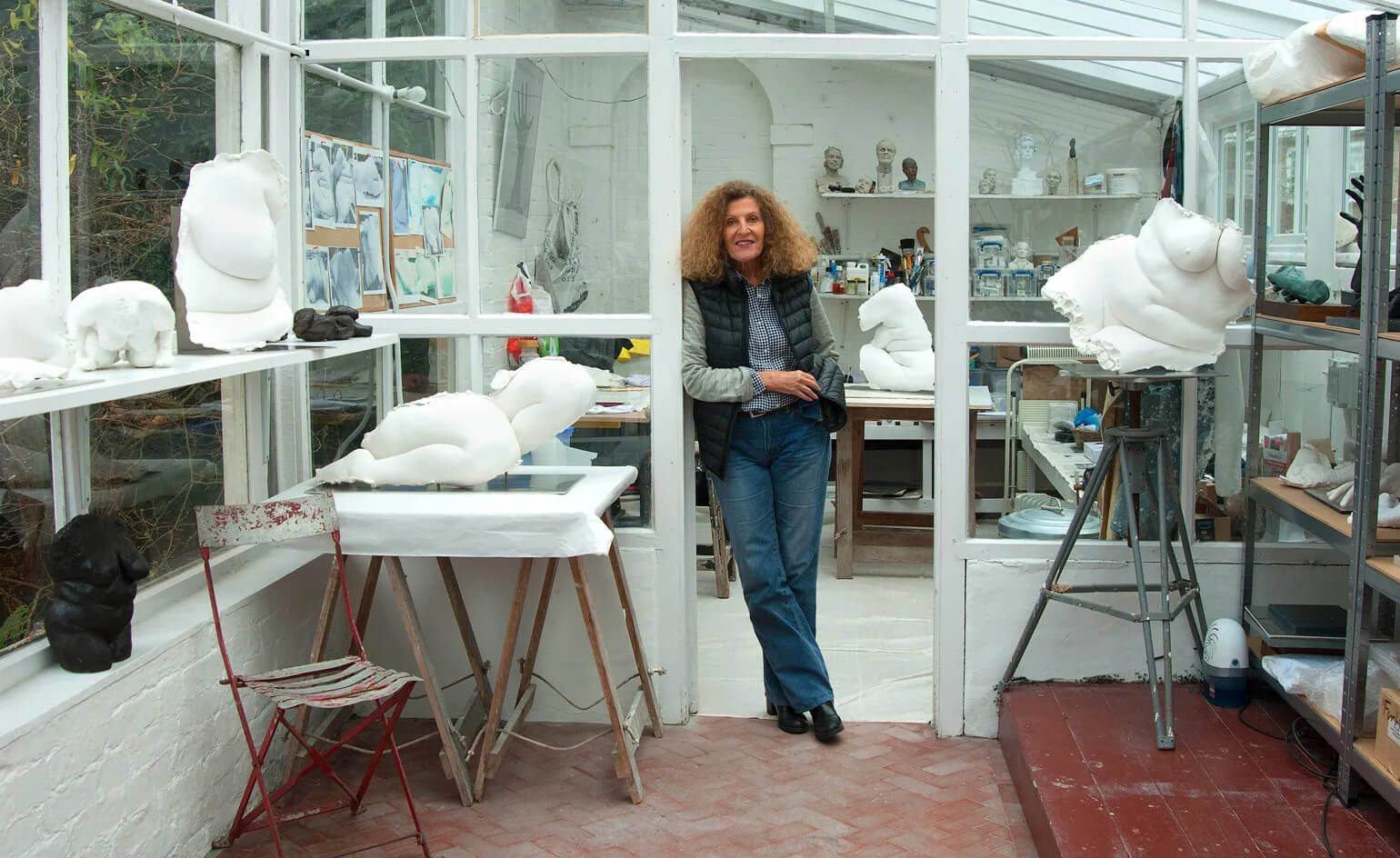
Nicole Farhi had a remarkable career in the fashion industry that spanned three decades; she launched her own eponymous womenswear label in 1982, which later expanded into menswear and interiors. But in 2012 she made a surprising career pivot, selling her interest in the company so she could turn to full-time sculpture. She said, “My years in fashion trained my eyes to read form, movement, instinctive precision. That sensitivity to physicality carried over into sculpture.”
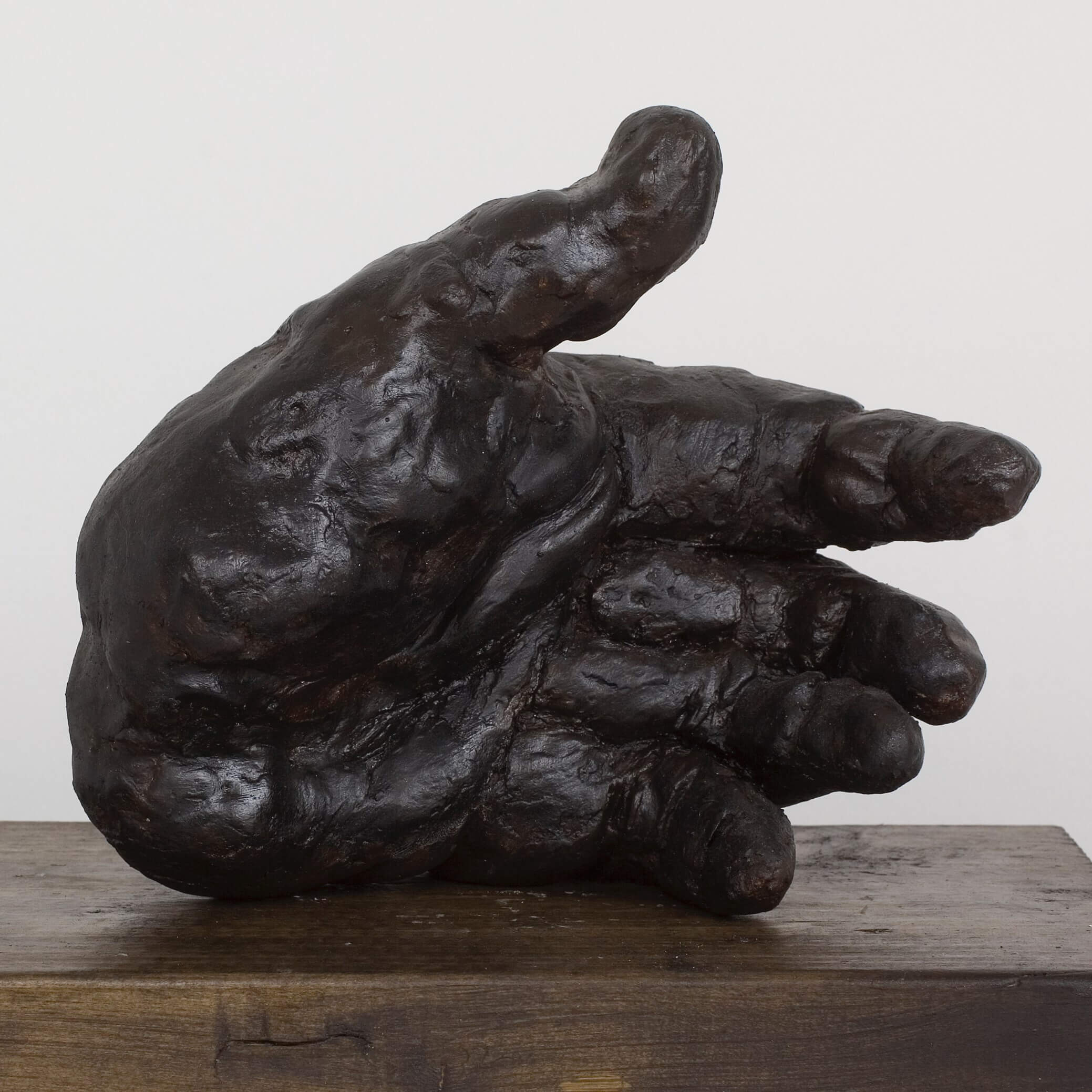
Farhi’s connection to sculpture began early, when she formed a friendship with Scottish-born sculptor Eduardo Paolozzi, after meeting him at the Royal College of Art in the late 1980s. She said, “He would take me to his foundries, to museums, we would drive around London, or would walk in the streets, and he would open my eyes to the world around us.” She adds, “He became my mentor; he taught me to work in different mediums – plaster, wax.”
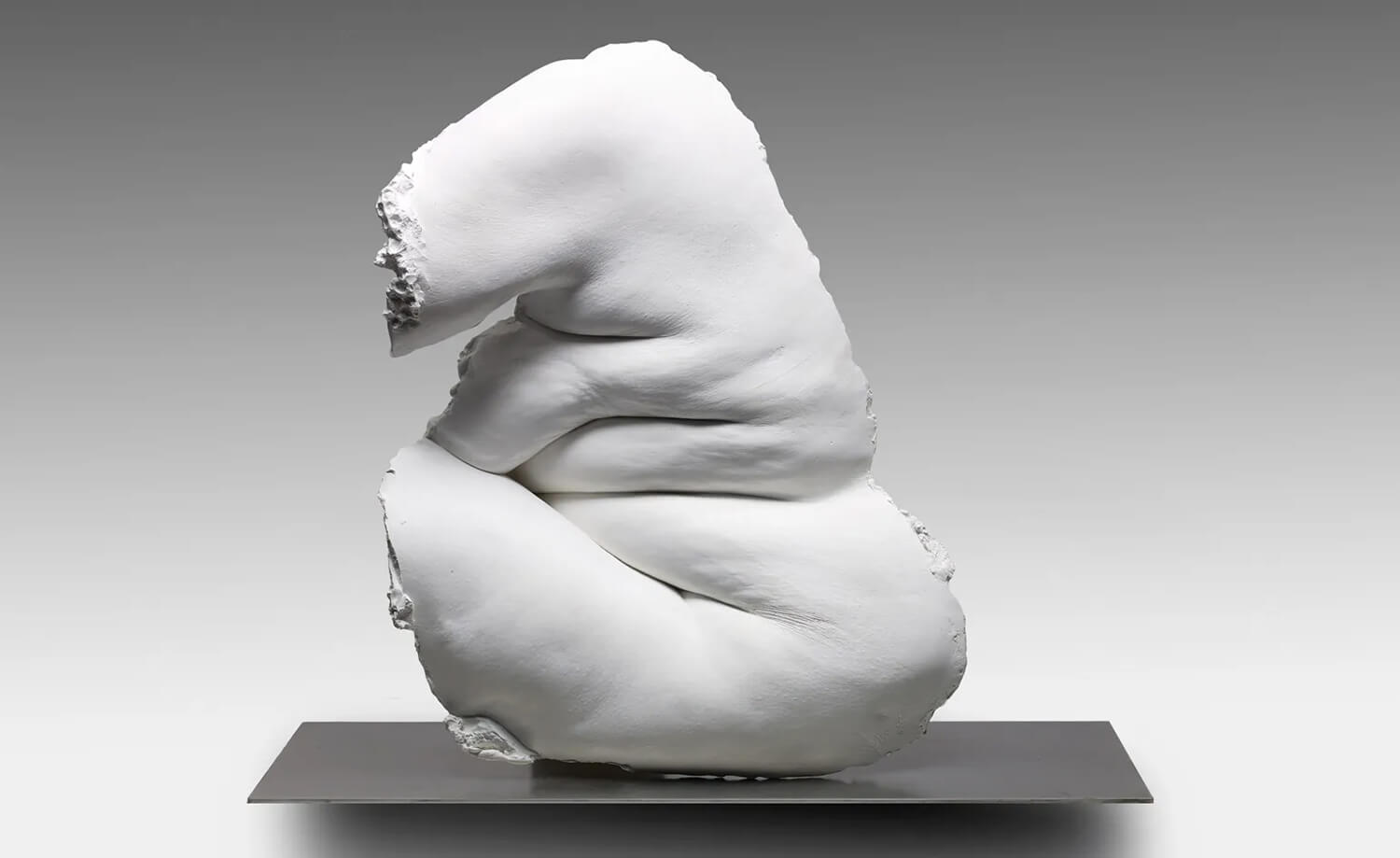
Nicole Farhi, Hebe, 2018,
Making sculptures remained an important part of her life, one that was always more than a pastime, even when she was establishing a career in fashion, as she explains, “Sculpting was more than a hobby for me. I always knew deep down that one day I would be sculpting full time. It took longer than I thought, because it is not easy to turn your back when you have built a successful company, and you are going to leave behind the people you have worked with and love, your team.”
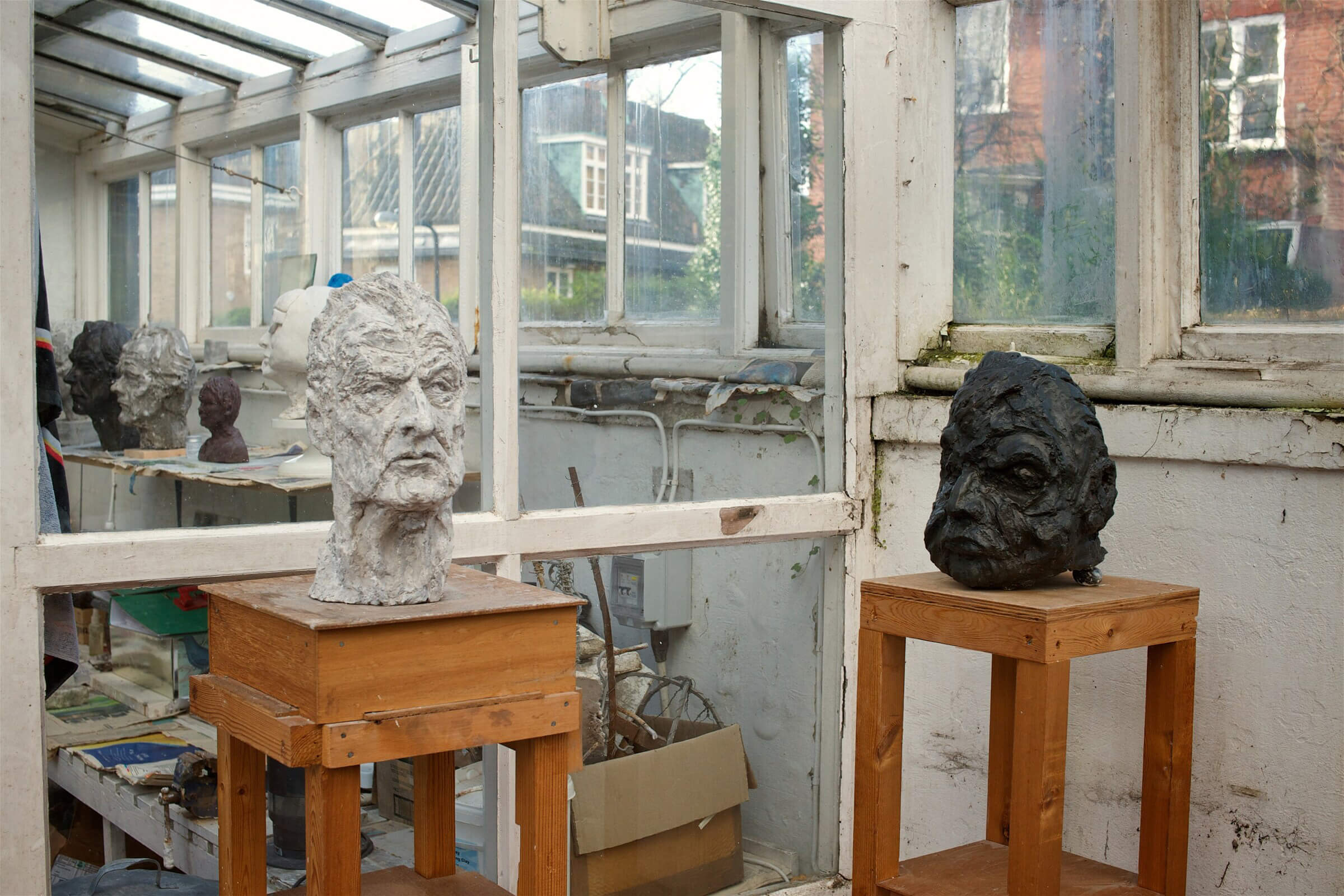
Though she found satisfaction from her fashion career, she observed, “The only thing that I was missing was making things not to sell them but simply to express my feelings, my moods, my happiness or my discontent.” For the next 35 years, Farhi continued sculpting on the side, juggling evening classes and sculpting one day a week with abstract sculptor Jean Gibson, while maintaining her fashion empire. Having experimented freely with different materials, she discovered throughout this time that clay was her preferred medium: “When I first touched clay, I thought, ‘This is it. This is my medium’.” Since then, Farhi has also expanded into casting with jesmonite, exploring its white, marble-like qualities.
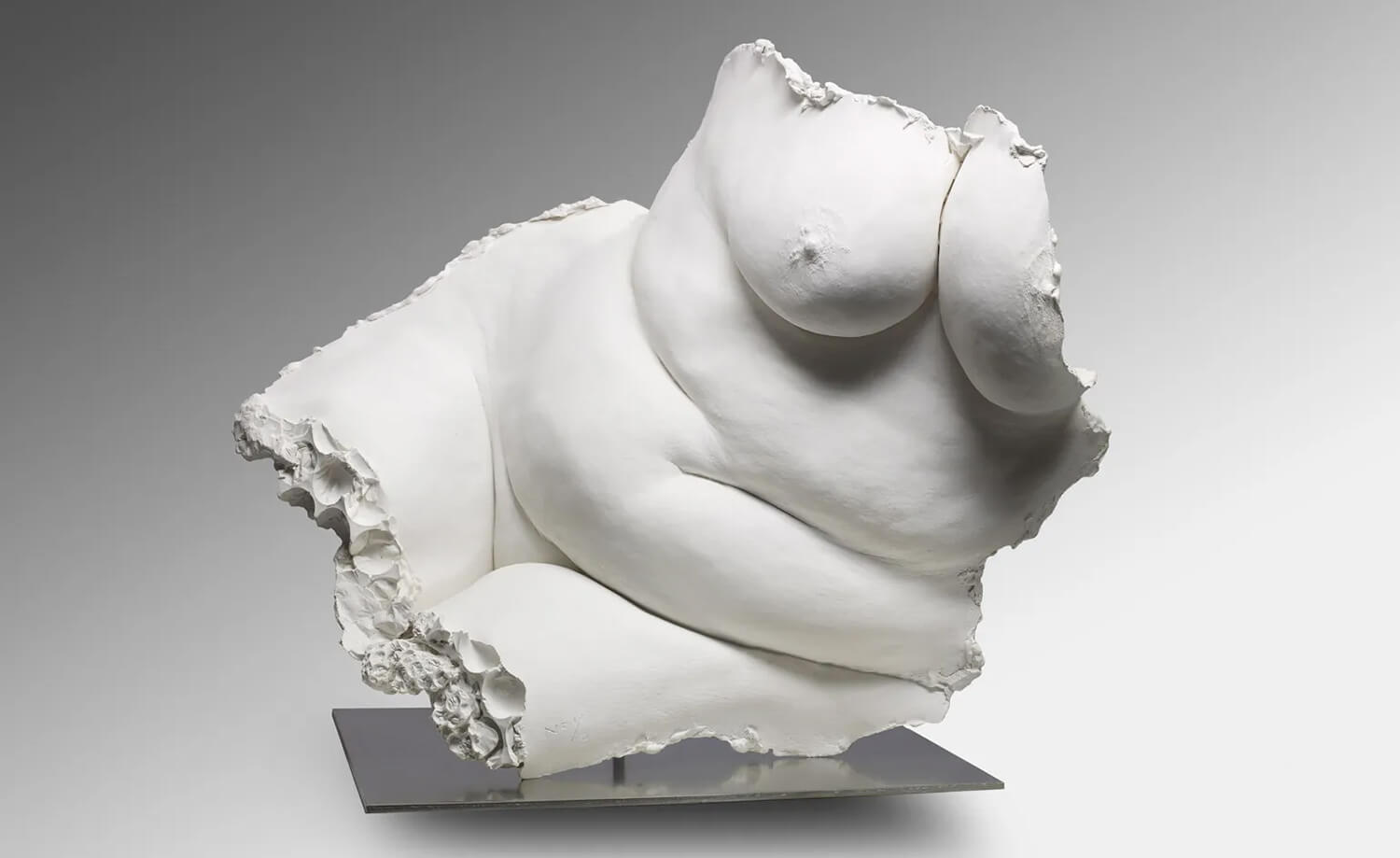
Nicole Farhi, Cybele, 2018, Jesmonite
She discovered a natural affinity towards bodily forms, often represented in smaller sections, such as reaching hands, or the creases and folds of a human torso, but she has also created a wide array of representational portraits with a free, expressive quality, showing the people who have influenced her life, ranging from Eduardo Paolozzi to Anna Wintour. Having this time to experiment with sculpture on the side of her full-time career meant Farhi had already found a strong artistic voice before making the leap into taking up sculpture full-time. She also saw many overlaps between the two disciplines she was practicing alongside one another, noting how they, “share discipline and emotional impact through shape. Both fashion and sculpture are for me acts of interpreting the body.”
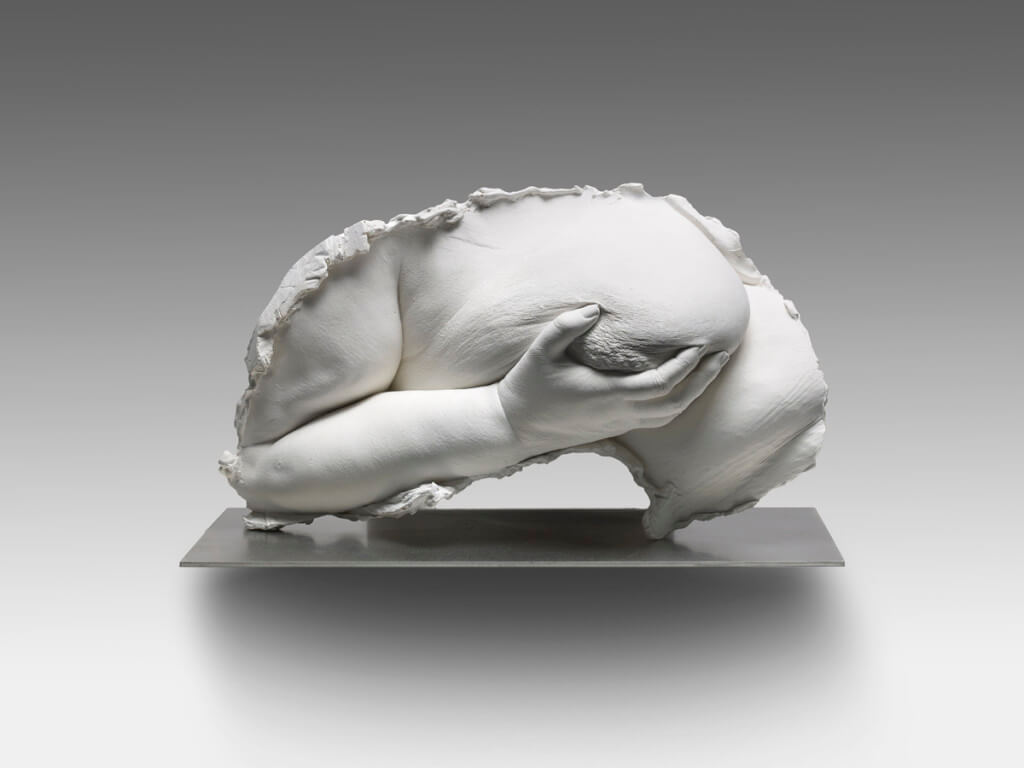
Nicole Farhi, Life and Limb, 2018, (Image credit: Nicole Farhi)
When asked if she ever regrets taking the leap, she answered with an affirmative ‘no’. She explains, “It’s something I did, I had some really good times – but [now] I’m doing something else.” She also says having prepared the ground for a career change for all those years meant taking the leap felt like the most natural move in the world. Farhi explains, “I’ve been sculpting for 35 years, so instead of sculpting three days a week I was sculpting seven.” For now, she is happier than ever, doing what she truly loves, so much so she will make the most of it for the rest of her life: “I will sculpt until I die. I know that, unless something happens to me.”