There are currently 12 Glossary in this directory beginning with the letter S.
Seam allowance
When sewing two or more pieces of fabric together, a seam allowance is the distance from the edge of the fabrics to the line of stitching. Common seam allowances are 3/8” (~1 cm), 1/2” (~1.3 cm), and 5/8” (~1.6 cm).
Seam rip
Seam ripping is cutting the threads of a seam so the seam can be taken apart without the fabric being damaged. A specific tool called a seam ripper is often used.
Self / Self fabric
Self fabric refers to the main fabric that will be used for a project — the fabric that will be visible from the outside. Sometimes patterns will say, “cut 2 in self fabric” for a pocket or facing. That means the pattern is asking you to cut the pocket or facing from the same fabric as the main outer pieces.
Selvage edge
The selvage edges of fabric run parallel to the grainline. The selvage edges of woven fabric are made by the weft (crossgrain threads) being woven back and forth across the warp (grainline threads). When the weft reaches one edge it turns around to be woven back across to the other edge. This creates durable edges that don’t fray.
Serge
Serging is a seam finishing technique done by a machine called a serger. A serger uses four spools of thread instead of a regular sewing machine’s two sources of thread. Serging is the most common way to finish seams. A common alternative to serging is using a zigzag stitch on a regular machine.
Shirring
Elastic shirring should not be confused with smocking, even though they look very similar. Smocking is created by hand using embroidery stitches and pleats to gather fabric and create some stretch. As for shirring, it is created by machine sewing parallel rows of straight stitching using elastic thread in the bobbin and regular all-purpose thread in the needle to evenly gather the fabric and produce some elasticity.
Shirt Collar
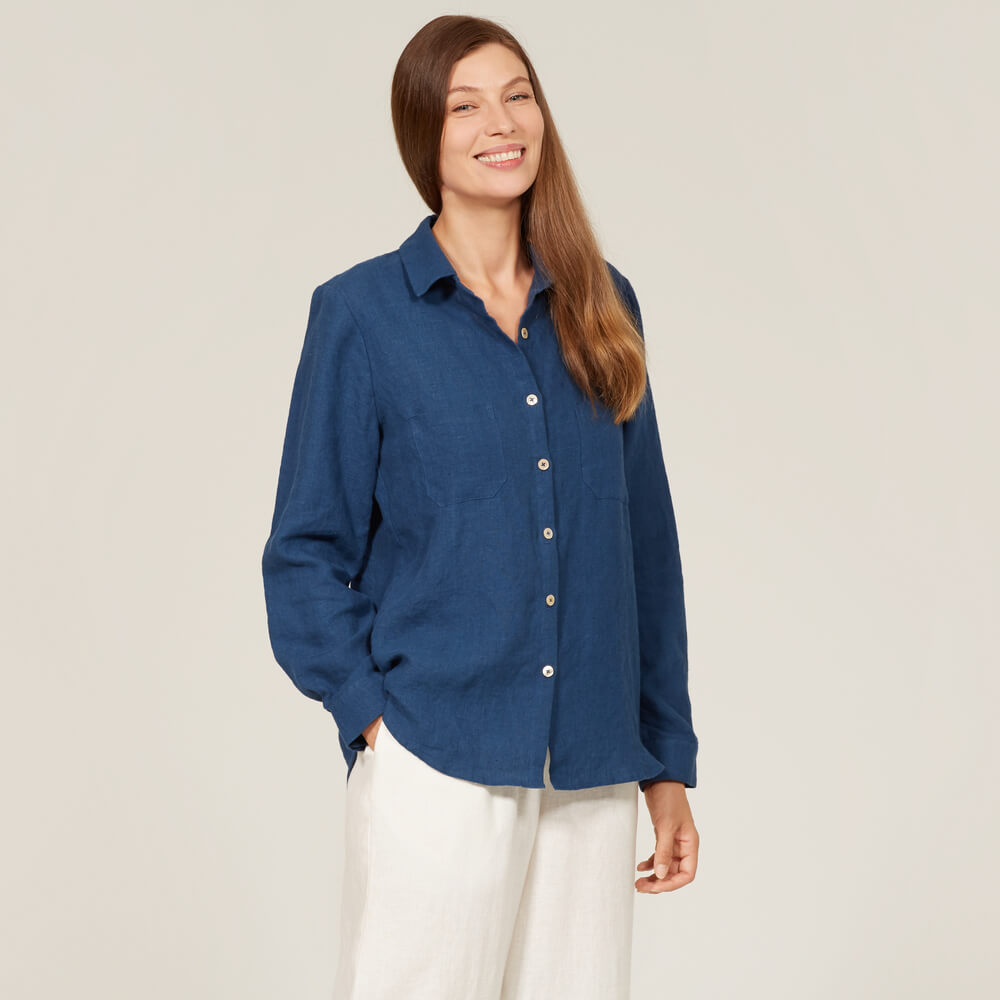
The shirt collar is the most traditional type of collar mostly found on shirts, dresses and jackets. It consists of the collar fall and the collar stand, which is a separate piece of fabric that raises the collar fall off the neckline.
Sleeve Placket
A sleeve placket is an opening at the end of a sleeve that allows your hand to fit through a narrow space easily. It’s most often seen on shirts or blouses and is generally finished with a cuff. Not only it is functional, it can also be used as a design detail.
Spaghetti Straps
Spaghetti straps (also referred to as rouleau straps) are those narrow fabric straps that you often see in lingerie, camisole tops and dresses. They look delicate and feminine, keep the shoulders bare but have a bad reputation for being difficult to sew.
Staystitch
Staystitch is a straight line of stitching within the seam allowance that helps keep vulnerable parts of fabric from fraying or stretching while the pattern is being sewn together. Staystitching is often sewn by the armhole in shirts or along the top edge of pants.
Stitch in the ditch
Stitch in the ditch is a line of stitching directly over an existing seam on the right side of the fabric. This technique is used to hide stitches and is useful on collars, waistbands, and fastening down facings.
Stitch width
Stitch width refers to the distance the fabric travels on the sewing machine between each time the needle enters the fabric. The longer the distance, the wider each individual stitch will be. Very wide stitches are looser and easier to take out later. Baste stitching uses wide stitches. Narrow stitches are tight and can be difficult to take out but are strong. Bartacks use very narrow stitch width.