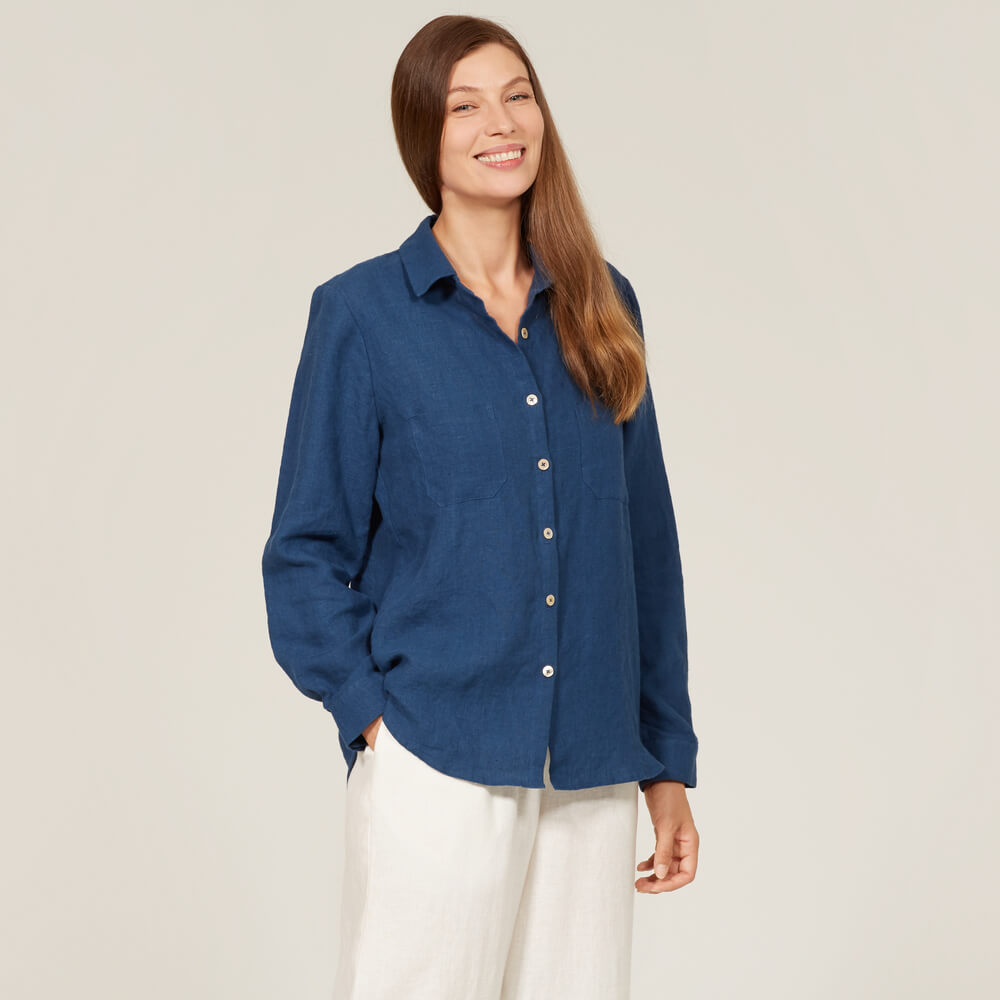

ZW Gather Dress made with FS Deep Ultramarine Signature Finish Midweight Linen
Tell us a bit about yourself and why you decided to become a pattern maker.
I’m Kelsey! I’ve been sewing and sharing my process for several years now, and last summer I decided to stop telling myself that there were enough pattern makers or that I didn’t have anything special to offer and just dove in. Pretty much as soon as I started pattern making, it felt so familiar and comfortable – like when you go home to the town you grew up in. It has been so deeply fulfilling to get to step into a new realm of sewing.
Describe your normal working day.
I do all my pattern work simultaneously with all my kids’ school drop offs and extra curriculars. I usually have a couple of hours in the morning to do the more hands on things like sewing up samples and troubleshooting designs, then I have spurts of time in the afternoons when my daughters are in dance class or swimming lessons to do all my digital work. It has to fit into the random pockets of time in my life, so sometimes that means that I’ll be doing work in bed after my girls go to bed while my husband and I are watching a movie. Honestly, it’s been such a fun challenge for me that it doesn’t feel like work, and I really look forward to all the different facets of pattern making, which makes it easy to find the time to get it all done.
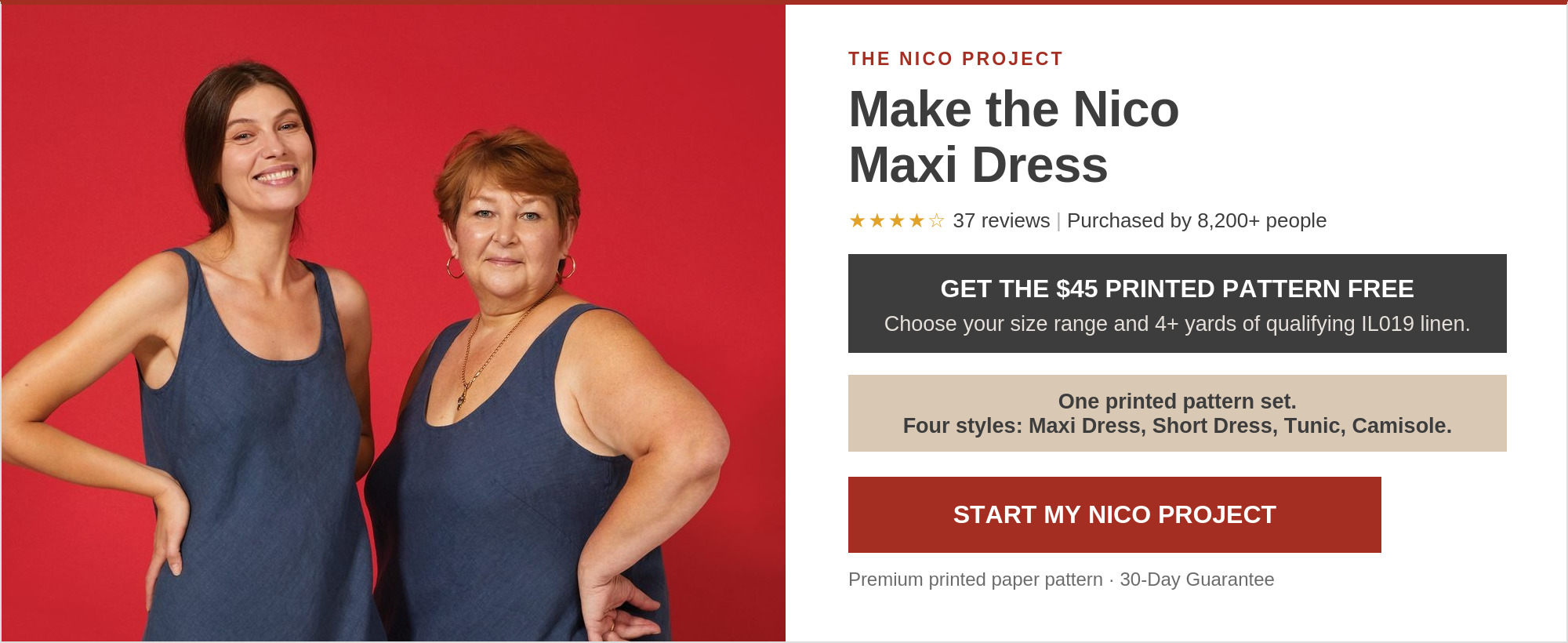

Dresses made with FS Faille Cotton in Melinda Cream
What are your top 3 tips for juggling motherhood, marriage and work?
1. Over communicate, repeat, then do it again. I’ve had to learn the hard way that asking for help isn’t a weakness; it is a strength. I can’t expect that my husband or our girls can read my mind. If I have a deadline that is coming up and it’s getting down to the wire, I’ll give my girls a pep talk on what I need from them in order to get my work done, and give my husband the option of him handling dinner or us ordering in. I find that if I communicate my needs, it makes getting things done more of a team effort vs me trying to do it all on my own.
2. Know what balls are glass and what balls are plastic. Generally speaking, when you’re a parent, you’re going to drop the ball sometimes. You just have to know which balls aren’t going to break if you drop them.
3. Release yourself from the pressure from doing it all and find areas that you can delegate out. In my business, that means contracting my grading out to a professional pattern grader so I can keep my attention on pouring all my energy into my illustration work and making sure my instructions are as comprehensive as possible. In my house, it means ordering dinner or handing over other household tasks to my husband. The kids are more of a glass ball situation, so other responsibilities will get dropped for them 🙂
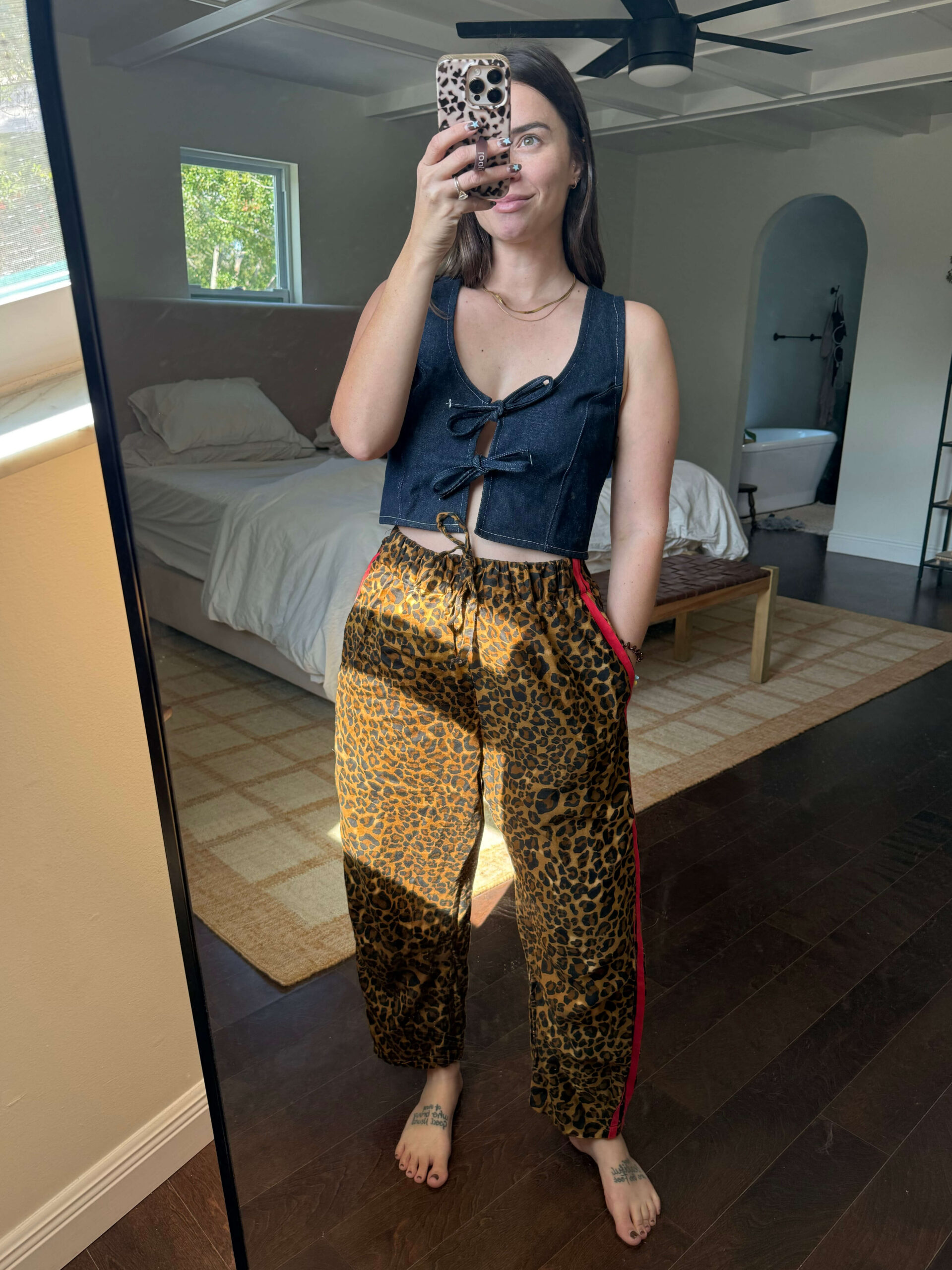
Penny Pants Pattern
What’s the best advice you’ve been given?
A few years ago, I heard a dear friend of mine who I look up to a lot say “I’m not afraid to be seen trying”. At the time, I thought to myself, “that sounds really nice, and I’d like to feel that way, but I don’t”. The idea of being seen trying, and maybe looking silly at something you’re not great at, seemed really terrifying to me. I started saying it to myself, then eventually saying it out loud, and then to others. The more I said it, the more I believed it. It really was the mantra that made me finally give pattern making a go – being vulnerable and trying something new can be scary, but staying the same and never taking a chance on yourself is way scarier.

ZW Gather Dress made with FS Deep Ultramarine Signature Finish Midweight Linen
Tell us about one failure and you’ve learned from it.
6 years ago, I had started a made-to-order handmade children’s brand. At the time, I had a baby (my first, so everything was new and hard) and was sleeping no more than 3 hours at a time, and my sewing skills were sub par. Making things to order was a creativity killer for me, and it took me 4 times longer to make something then than it does now. I tried moving to a drop model, but then it became pretty clear to me that people like the idea of handmade garments more than they like the price tag. It never really became what I wanted it to, but that “failure” was really essential to the pivot I made into pattern making, so I’m really grateful for it.

Wren Trousers in the wild
What is your proudest moment?
When I was in testing for my first pattern, the Penny Pants, seeing the testers make my pattern and actually like it was surreal. Creative career paths often come with a generous helping of imposter syndrome, but that moment made me feel like “maybe I can do this after all”.
How does it feel to be doing what you love?
It feels familiar and comfortable, like this was the path that was meant to be for me. While I’ve always tried my best and had lots of hobbies and creative outlets, I’ve never felt like I was the BEST at anything. And while I think it’d be silly to hold myself to that in pattern making, there’s just something that feels so right about it. It’s really satisfying for me.
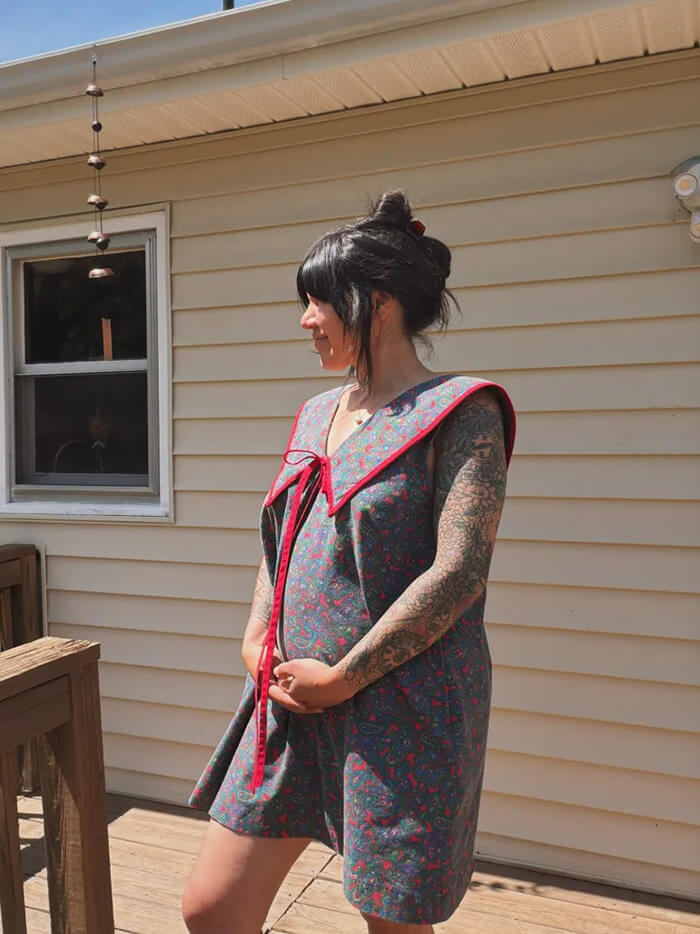
Molly Dress in the wild
Tell us about your process, from idea to pattern.
All of my patterns are born solely out of a desire I have for my own closet, but that there’s no pattern for yet. Sometimes, they’ll come from a pattern I wanted to be something good, but just missed the mark for me. From there, I’ll start out by drafting out a first iteration. I’ll sew up a sample, make changes, sew up another sample, and continue that process until it feels like it’s what I want. At that point, I send it off to my grader, who I contract for all of my patterns. Once it’s in her hands, then that frees me up to be able to work on creating all the illustrations and making sure the instructions are stellar. Then once those are completed and the pattern files have been graded, then I’ll put out a tester call and spend 3 weeks in testing with a group of 2 dozen or so sewists from the sewing community to help put a pretty bow on the pattern, and once that’s all done, then I’m ready to launch the pattern.
Who is your customer and how do they find you?
Since all of my designs are made really just from my own desires for my closet, I’d say my customer base are people who are like me! I love and gravitate towards patterns that are breezy, not fussy, comfortable, and suitable for beginners who need someone to “big sister” them through the process.
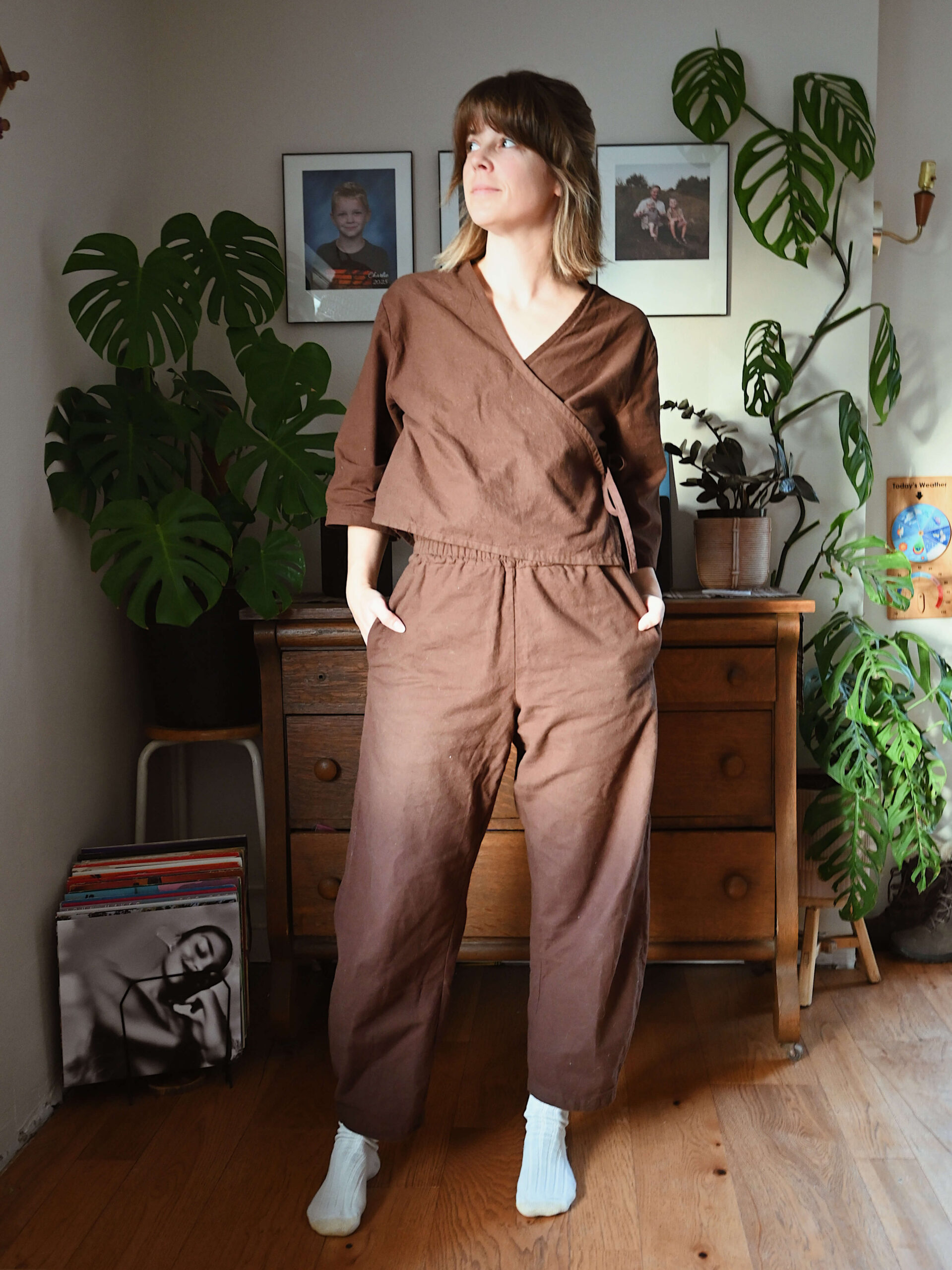
Penny Pants in the wild
Do you have a mentor who guides you?
Not in such a formal way, but all my pattern maker friends in the community have been so extremely helpful to me from day 1. I’d consider Sanna from Paradise Patterns a dear friend of mine, and she’s been an invaluable help to me when I’m spiraling over an issue and having a hard time seeing a solution.
Did you do any formal training in pattern making? If so, where and what kind of a course? And if not, how did you arrive at your skills and knowledge?
I took Confident Pattern Making and Grading! It’s a comprehensive, self paced course that teaches you how to use Illustrator for pattern making. It was an extremely helpful tool and continues to be for me, and I met some really amazing people through the course too. I also really love Pattern Lab London – they have an awesome YouTube channel that is very helpful for new pattern makers.

Tapioca Trousers from Jessilou’s Closet and a matching bra top from Sewing Experiments made with FS Tangelo Signature Finish Midweight Linen
What are your plans for this year? Are you intuitive with where you are heading, or are you a rigid planner?
I’m very intuitive with pattern making and don’t feel any need to push myself to put patterns out on a timeline at all. For me, holding myself to some arbitrary expectation would obliterate my creativity. If I’m excited about a pattern, I’m pretty fast with the process, but if I’m not feeling inspired, I won’t force myself to come up with something.
What does success mean to you?
I think there’s lots of different things that feel like success for me. Overall, I think the biggest measure of success for me is just being able to contribute to my family with my job as a pattern maker while also being able to do all the other “mom stuff”. It doesn’t feel like a job at all, really! Perhaps that is the best marker of success:)