

FS Colour Series: Dusty Rose Inspired by Pierre Bonnard’s Mauve Haze
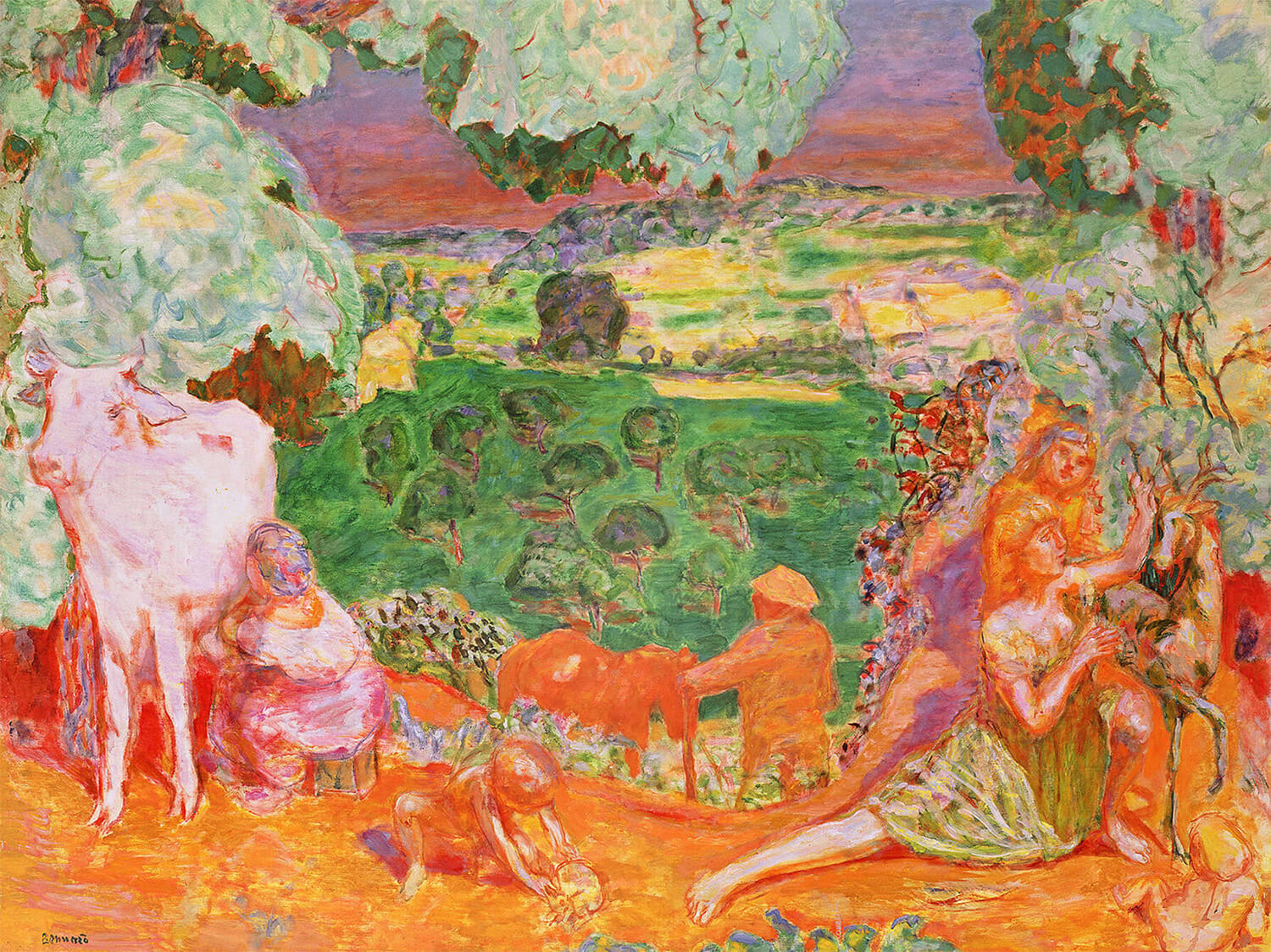
La Symphonie pastorale (Pastoral Symphony), 1916-1920
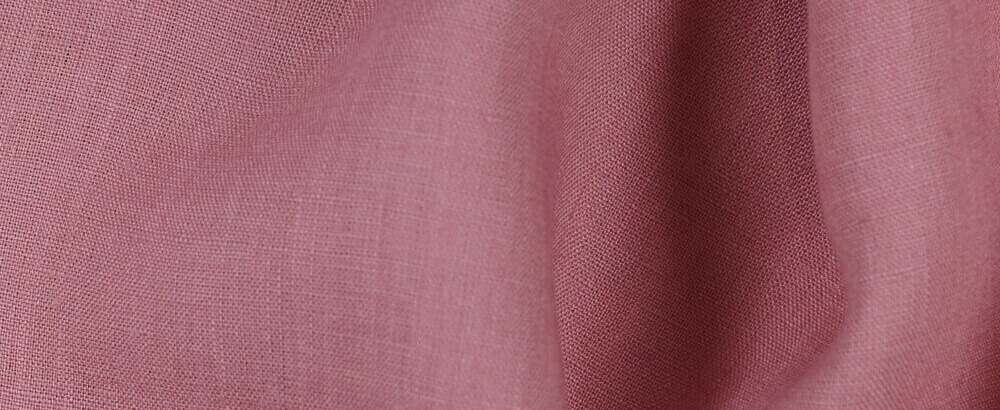
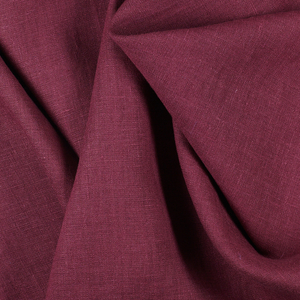
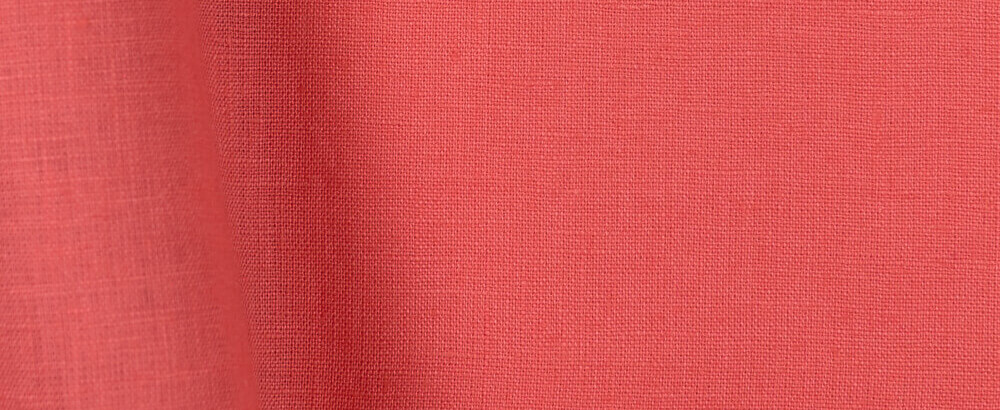
Dusty Rose Linen’s muted, pink hue was an enduring feature in Pierre Bonnard’s shimmering, intimiste paintings, conveying sunlight spreading across morning terraces, breezing through curtains, or flooding across tabletops through open windows. He had an uncanny ability to breathe wonder into life’s most ordinary moments – from intimate bathing scenes to eating breakfast in the sunlight – charging them with electrifying passages of vivid colour that seem to spread like wildfire across his canvases. “It’s not a matter of painting life,” he said, “It’s a matter of giving life to painting.”
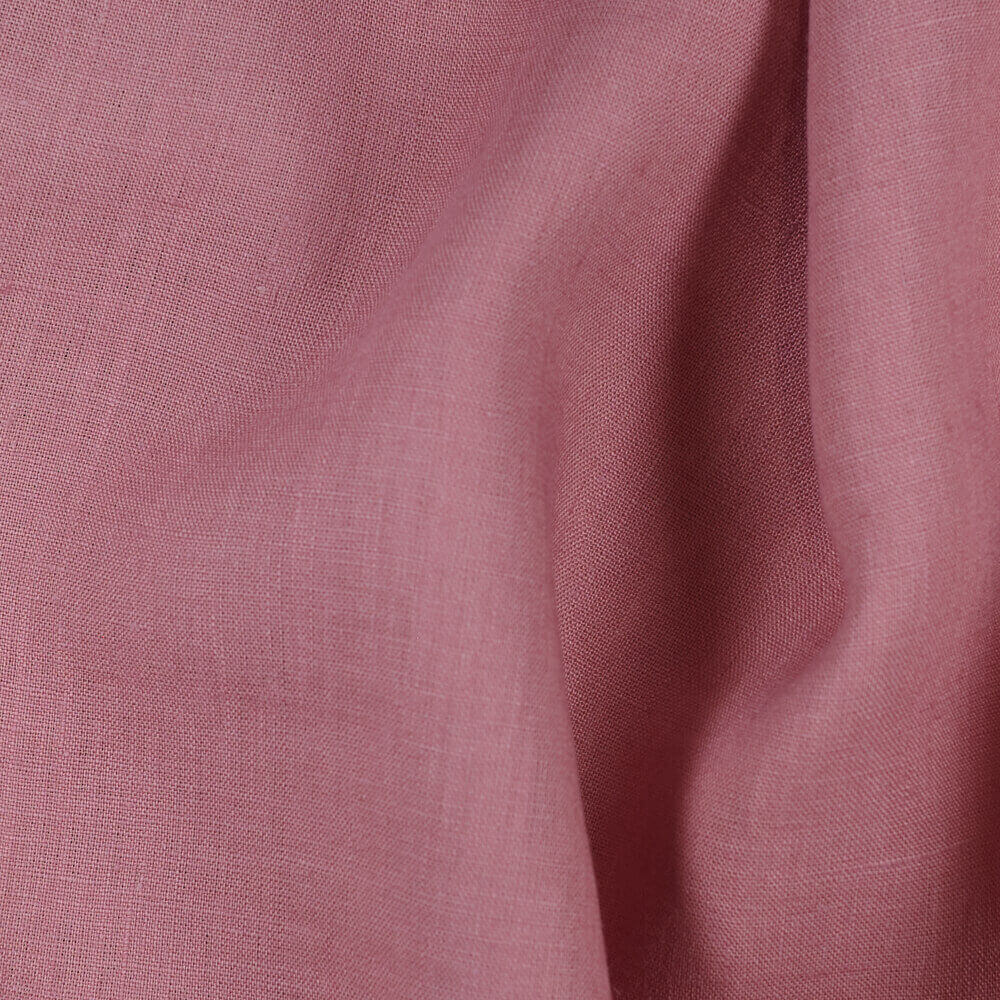
FS Dusty Rose Signature Finish midweight linen
Born in 1867 in Fontenay-aux-Roses, Hauts-de-Seine, Bonnard initially studied law at the Sorbonne on the insistence of his father, a prominent officer for the French Ministry of War. While working as a barrister for the French government, Bonnard took art evening classes; these in turn led him to pursue an education in fine art at the Academie Julian in Paris. Here he met a likeminded group of artists including Maurice Denis, Paul Serusier, and Edouard Vuillard, who would all go on to pursue similar ‘intimiste’ painting styles, observing quiet, domestic scenes with an unexpected vitality.
In 1910, Bonnard left Paris, settling in the south of France; his art thereafter took on a new and invigorating freshness, conveying the sparkling colours and glistening sunlight unique to this part of the world, noting, “It was like something out of the Arabian Nights. The sea, the yellow walls, the reflections as full of colour as the light”. His art also became increasingly abstracted, exploring the emotional, spiritual, and symbolic properties of colour, observing, “It seemed to me that it was possible to translate light, forms, and character using nothing but colour, without recourse to values.”
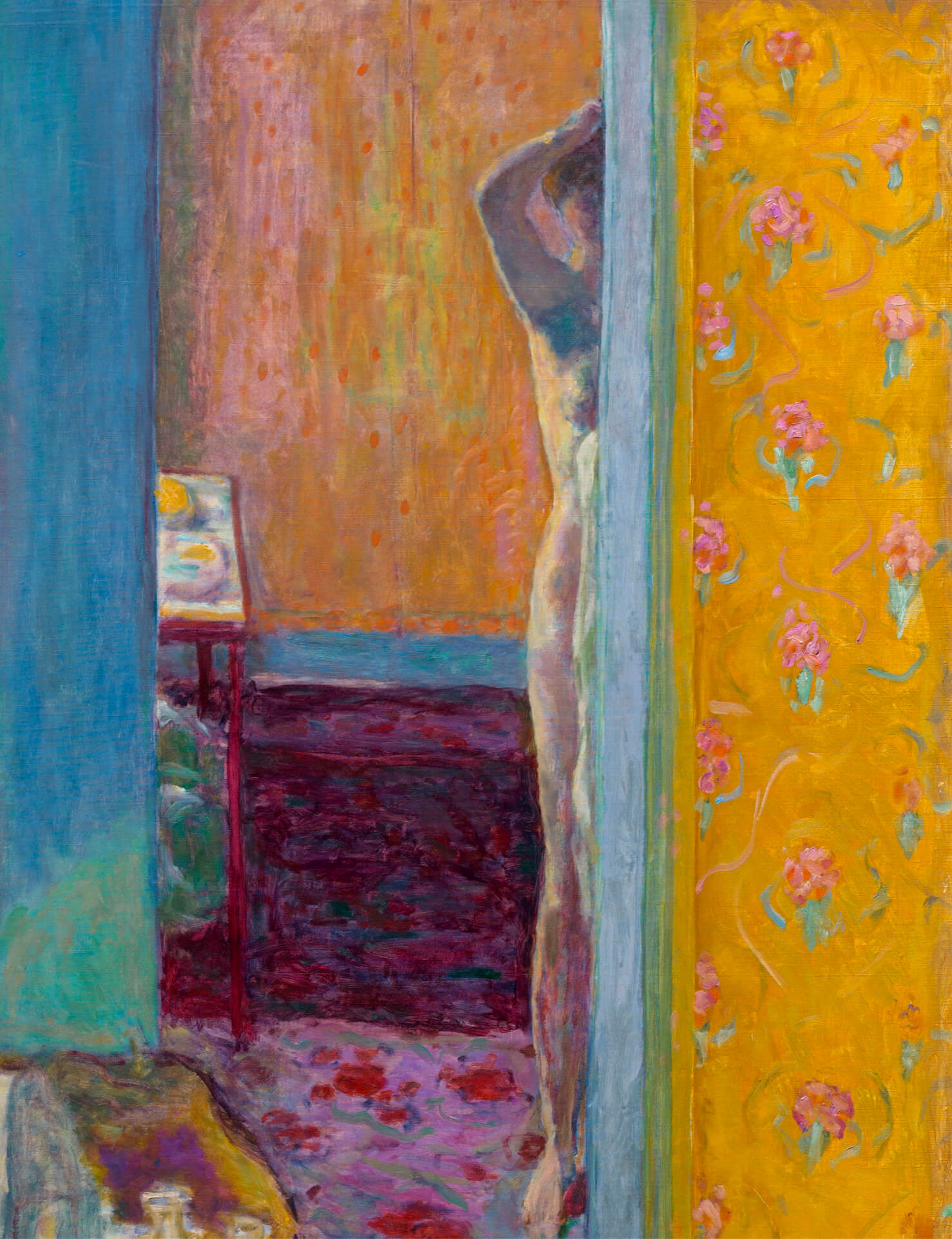
Nude in an Interior, 1935
The Terrace, 1912, is one of Bonnard’s earliest paintings depicting a terrace in sunlight, a subject which was to become one of his most enduring throughout his career. Set in the grounds of the Villa Antoinette at Grasse, near Cannes, where Bonnard and his future wife Marthe holidayed for several months in 1912, Bonnard captures the baking sunlight spilling out across the searing hot terrace with a complex, scattered myriad of yellow, orange, and mauve hues, which seem to melt into one another, forming an indecipherable, heat-haze effect, contrasting sharply with the cool, lush vegetation in the garden beyond. “The principal subject is the surface,” Bonnard concluded, “which has its colour, its laws over and above those of objects.”
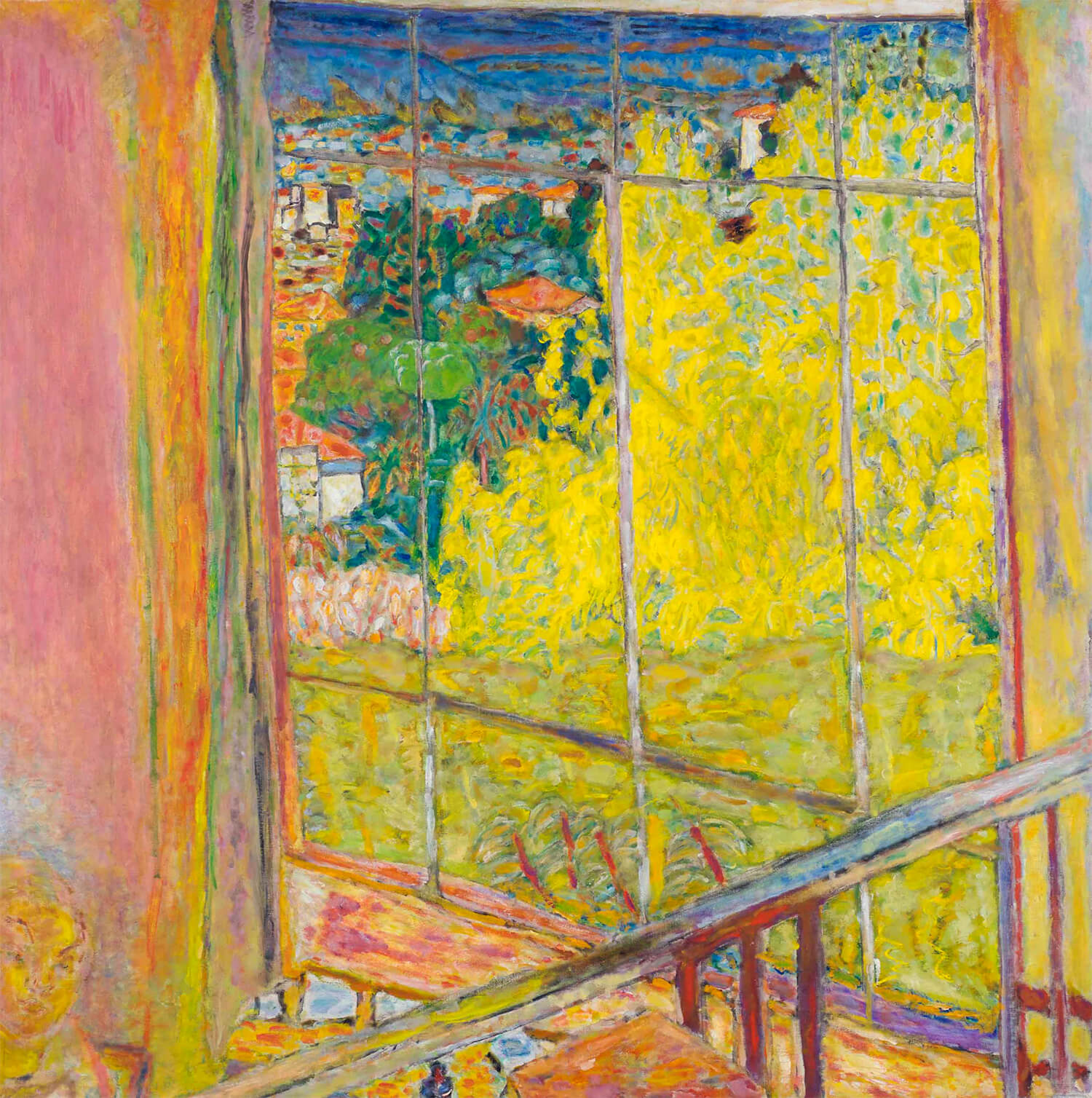
The Workshop with Mimosa, 1935
Made some years later, The Open Window, 1921, portrays Bonnard’s home in Normandy, with a view looking out to the sky beyond. Much like Henri Matisse, Bonnard was fascinated by liminal spaces such as open windows and doorways, with which he hoped to convey qualities of quiet longing, hinted at by the silent, cropped figure on the right. Vivid, warm shades of rose pink intermingle with burnt orange, painted in dappled brushstrokes that capture the temperate heat of the interior room, while the same rose hue appears in the blue sky beyond, forming a halo effect around the rustling green trees.
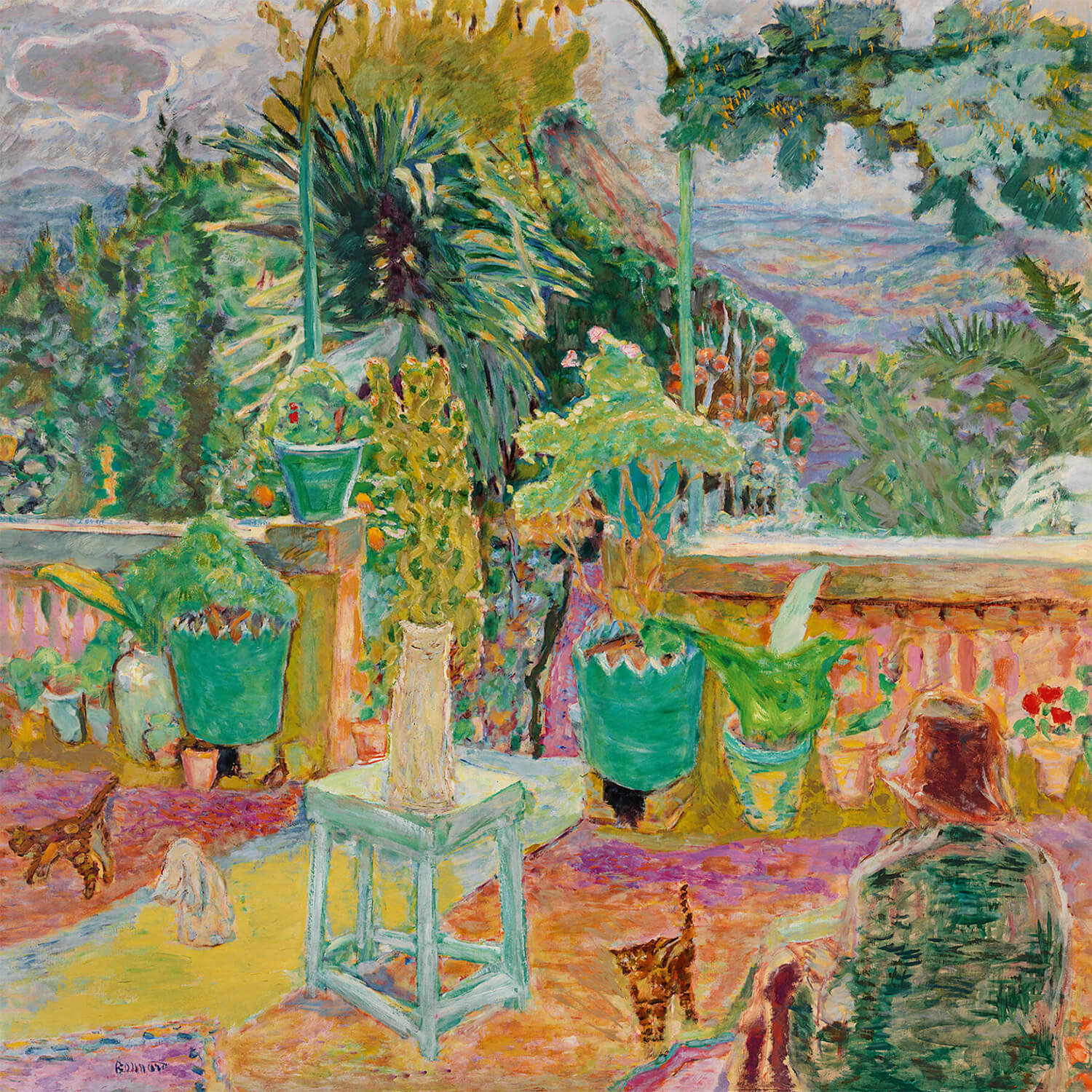
The Terrace or A Terrace in Grasse, 1912
Dining Room on the Garden, 1934-5, is one of more than 60 dining room scenes the artist painted between 1927 and 1947, each of which portrayed differing qualities of mood, light, and colour. In this work the mauve-pink hue seen in so many of his paintings takes centre stage, colouring the entire tabletop area with glowing, incandescent light, contrasted against the fiery hues of orange and yellow that merge into the surrounding shadows like the embers of a slow-burning fire. “What I am after is the first impression,” he wrote of these interior views, “I want to show all one sees on first entering the room – what my eye takes in at first glance.”

Leave a comment
Related posts
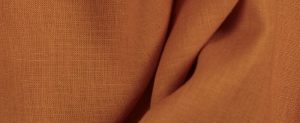
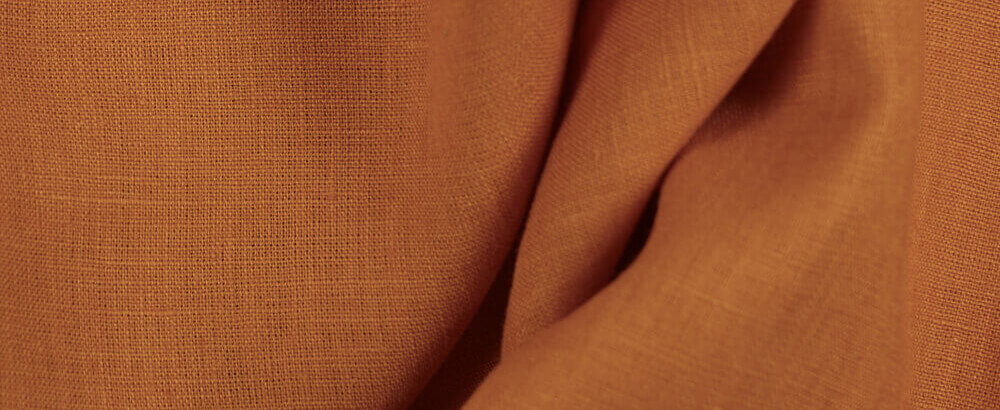
FS Colour Series: Caramel Inspired by Paul Sérusier’s Burnt Sienna
Late 19th century French painter Paul Sérusier was a pioneering colourist, whose paintings broke free from the realism of the French Impressionists into the realms of the mystical, symbolic, and imaginary. He sought ways of communicating his innermost feelings through his colourful art, writing in his notebook, “Free form and colour from their traditional descriptive…

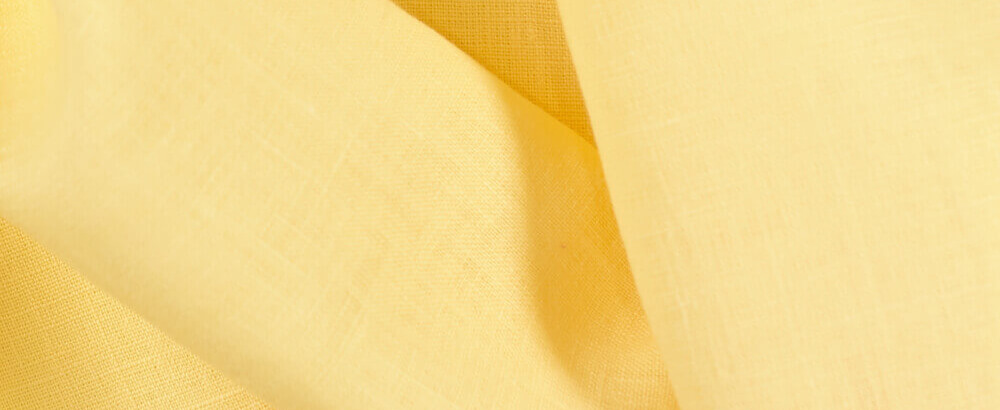
FS Colour Series: Mellow Yellow Inspired by Agnes Martin’s Golden Glow
The great American minimalist painter Agnes Martin made her name with epic canvases washed with ghostly, trembling bands of pale pastel colour that speak of memory, love, and her intimate experiences in nature. Pale golden shades of yellow like Mellow Yellow made their way into her striped bands of shimmering colour, invoking the golden glow…
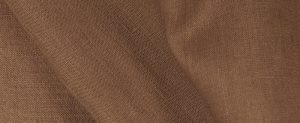
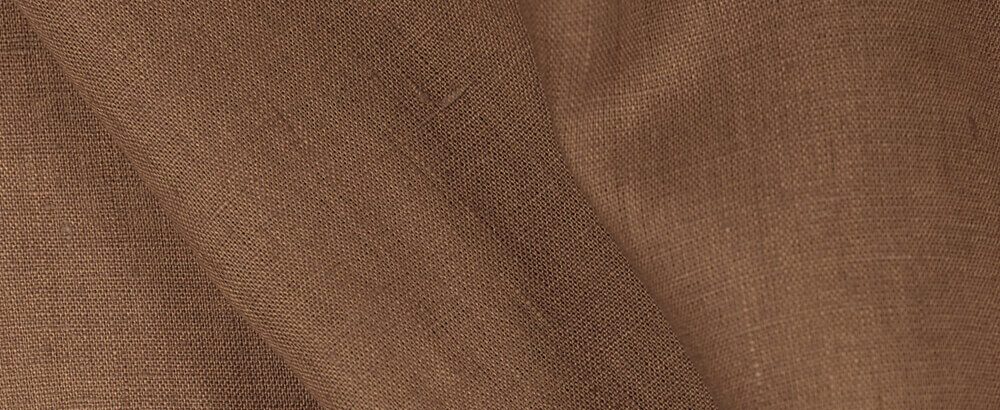
FS Colour Series: Shiitake Linen Inspired by Wilhelmina Barns-Graham’s Subtle Bronze
Renowned St Ives artist Wilhelmina Barns-Graham made work with astonishing subtlety, conveying the nuanced patina of rugged landscapes in an array of delicately shifting hues throughout her long and prolific career. Soft, subtle shades of bronzed brown like that of Shiitake Linen weaved through many of her most accomplished works of art, capturing the warm,…

FS Colour Series: Coffee Bean Linen Inspired by Edvard Munch’s Deep Shadows
The early 20th century Norwegian Expressionist painter Edvard Munch saw art as a tool for expressing his innermost thoughts, feelings and desires, and the colours he worked with were a vital tool for expressing these intimate moments from his life. Deep shades of brown like Coffee Bean often played a key role, forming dark tree…
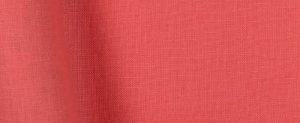
FS Colour Series: Tea Rose Inspired by Henri Matisse’s Indulgent Interiors
Interior views were one of Henri Matisse’s most enduring subjects throughout his career, a theme which allowed him to indulge in his great passion for decorative patterns, surfaces, textures, and colours. Tea Rose’s hot pink was one of the shades he returned to again and again, colouring anything from heavy curtains to lush carpets and…







SEW THIS LOOK

Latest Posts


One Comment
Vicki Lang
Love the soft colors in the paintings.