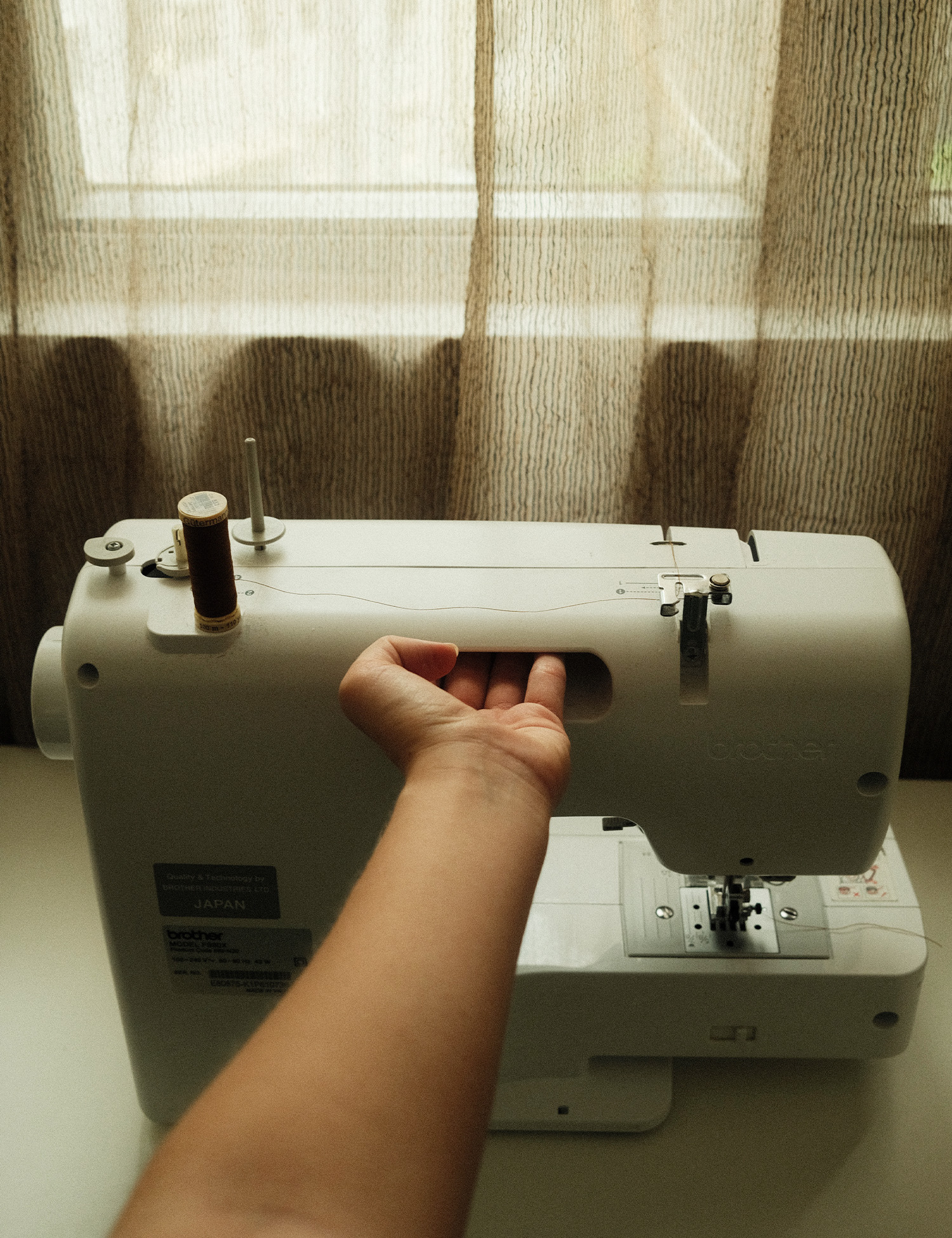
The back of the FS80X features a cutout to easily move around.
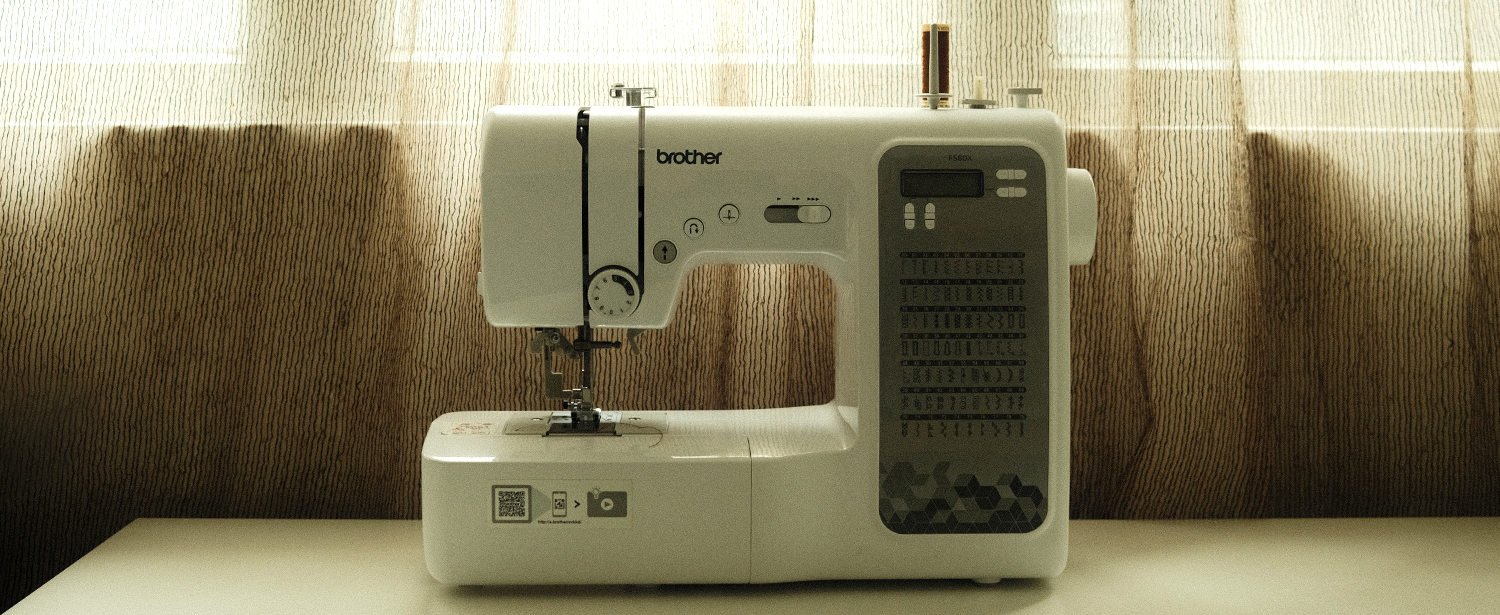
The Brother FS80X is a beginner-friendly domestic sewing machine available across several non-USA markets. Since purchasing the machine at the beginning of 2022, I’ve sewn well over 300 projects on it, including slinky silks, jeans sewn in 12oz denim, and even a wedding dress. It’s been a stable and reliable companion to whatever idea I’ve thrown its way, and I wouldn’t be surprised if four years from now it still runs just as well as it does now.
As this was my first computerized machine, it took a while to get used to, particularly when troubleshooting from unexpected function errors. I’ve learned overtime to just turn off the machine, wait a moment or two, and then turn it back on. Thankfully that doesn’t happen often for me as the machine, like hand sanitizer, does the job 99.9% of the time.
Some basics about the machine: The FS80X has an adjustable speed slider, running up to 750spm (stitches per minute). Sometimes I wish it could go just a little bit faster, but I am trying to slow my sewing down anyway so I guess it holds me accountable. Lightweight and featuring a cutout hand slot in the top back of the machine, I find it easy to move around and store in corners or cupboards.
One of the big advantages to owning a domestic machine is the variety of stitches it can sew. The FS80X is capable of 80 different stitches. Over four years of ownership, I doubt I have even used half of these as I primarily work with the default straight and wide zigzag stitches. Occasionally, I make use of the lightening bolt zigzag on knits or a decorative edge like the scallop to finish hems on plain weave fabrics such as linen or cotton. Lately, I have a tendency to bring projects with buttonholes to a local shop to have them professionally done, though I have used a few of the different buttonhole stitches many times and appreciate the variety of buttonhole shapes available.
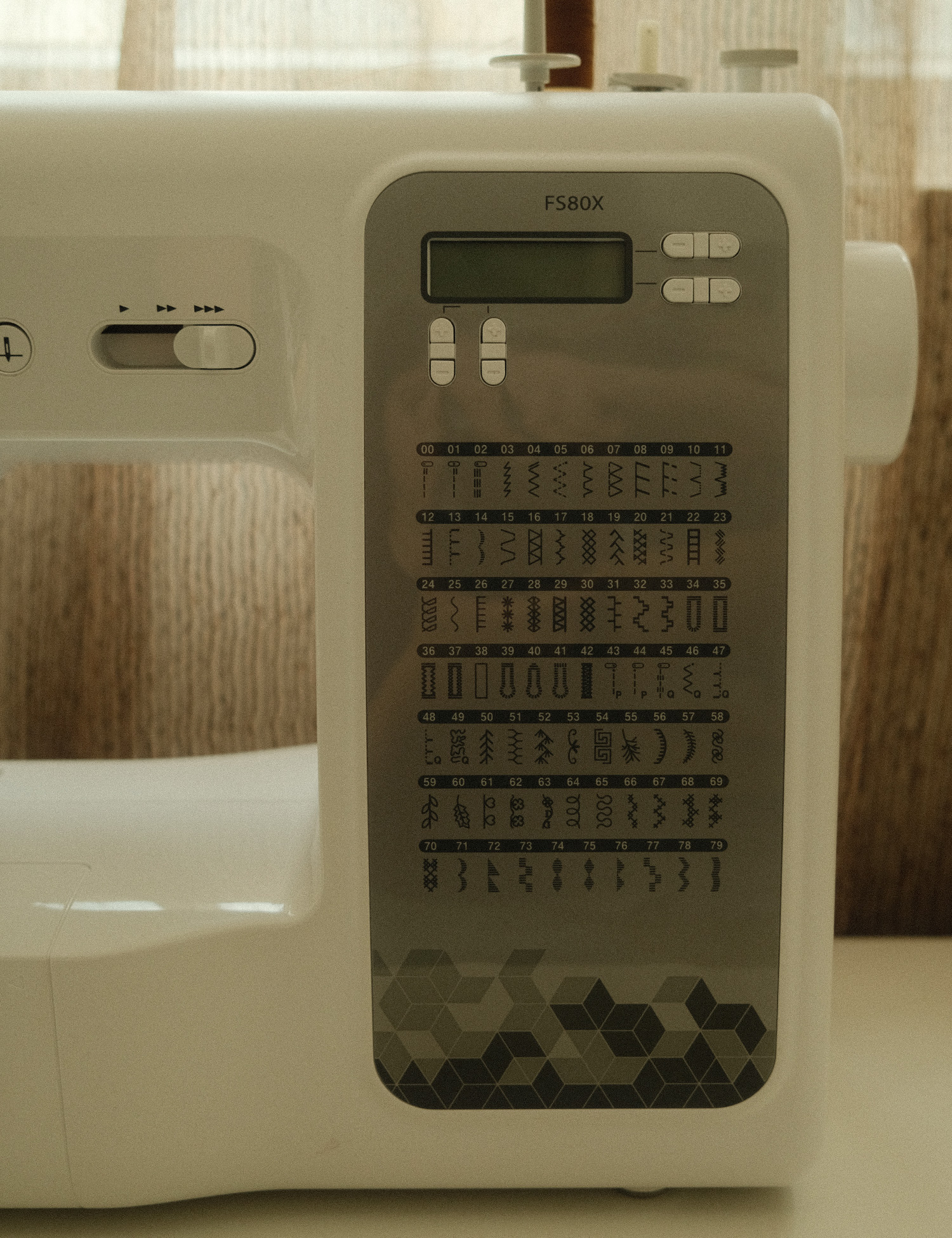
Stitch selection panel on the front of the FS80X.
On the subject of buttonholes, the FS80X is capable of sewing buttons on instead of hand-sewing. I learned this after buying the machine, and I think it is a cool function to have. I like the meditative ritual of sewing on buttons so I haven’t tried it out, but I am always intrigued by the allure of efficiency from this feature.
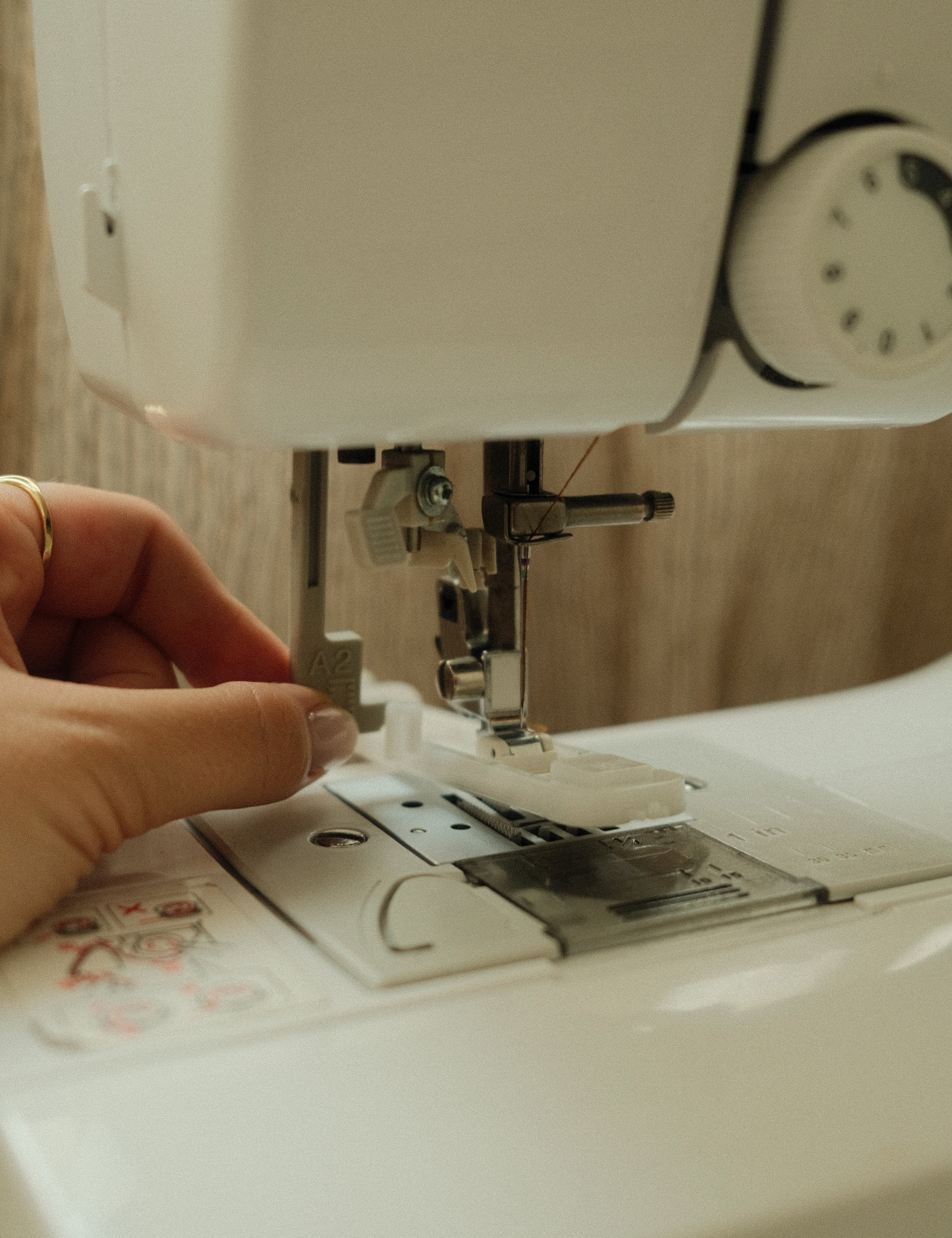
Setting up the machine for stitching buttonholes.
The machine came with a packet of accessories, which I find a necessary step towards getting the most out of any domestic sewing machine. The packet included a selection of feet attachments, cleaning brush, seam ripper, L-shaped screwdriver, extra needles, second spool component, dust cover, bobbin, eyelet punch, and finger guard.
A couple of years ago, I treated myself to the purchase of a “stitch-in-the-ditch” foot, which has improved the efficiency of my sewing as well as pushed the quality of my projects into a whole other level. If I were to get another foot, it would be a walking foot for an improved experience sewing elastic or quilting.
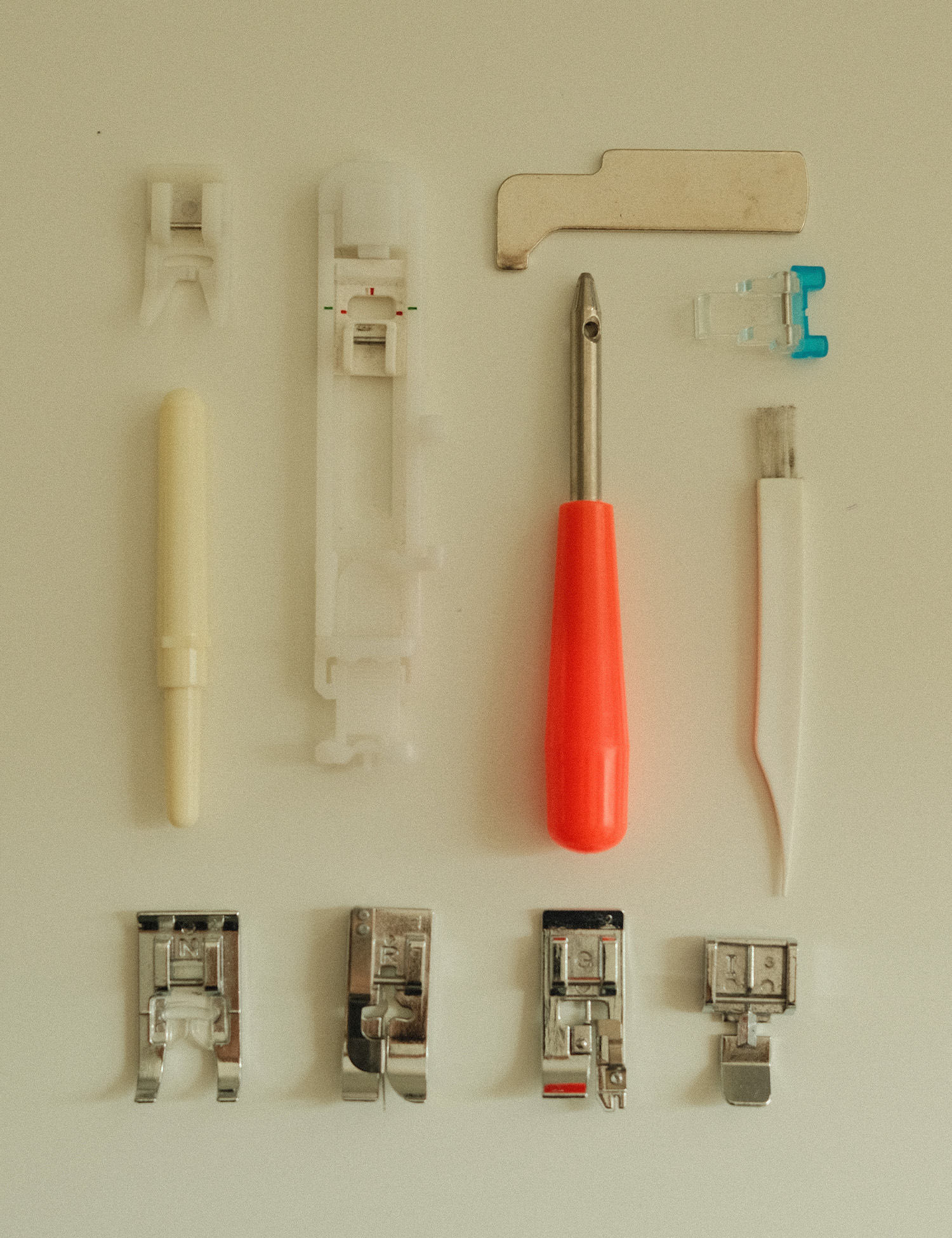
Some of the accessories included with the machine.
After the first year of sewing on this machine, I brought it in to have it serviced at a local shop. Since then I have continued servicing it myself, and try to remember to at least every six-months. I deep clean under the dog-feed almost every month, which helps maintain the basic functions of the machine like thread tension, as well as preventing skipped stitches. Overall, I find the FS80X is as easy as they come to re-oil, clean out dust or loose threads, and provide basic maintenance to.
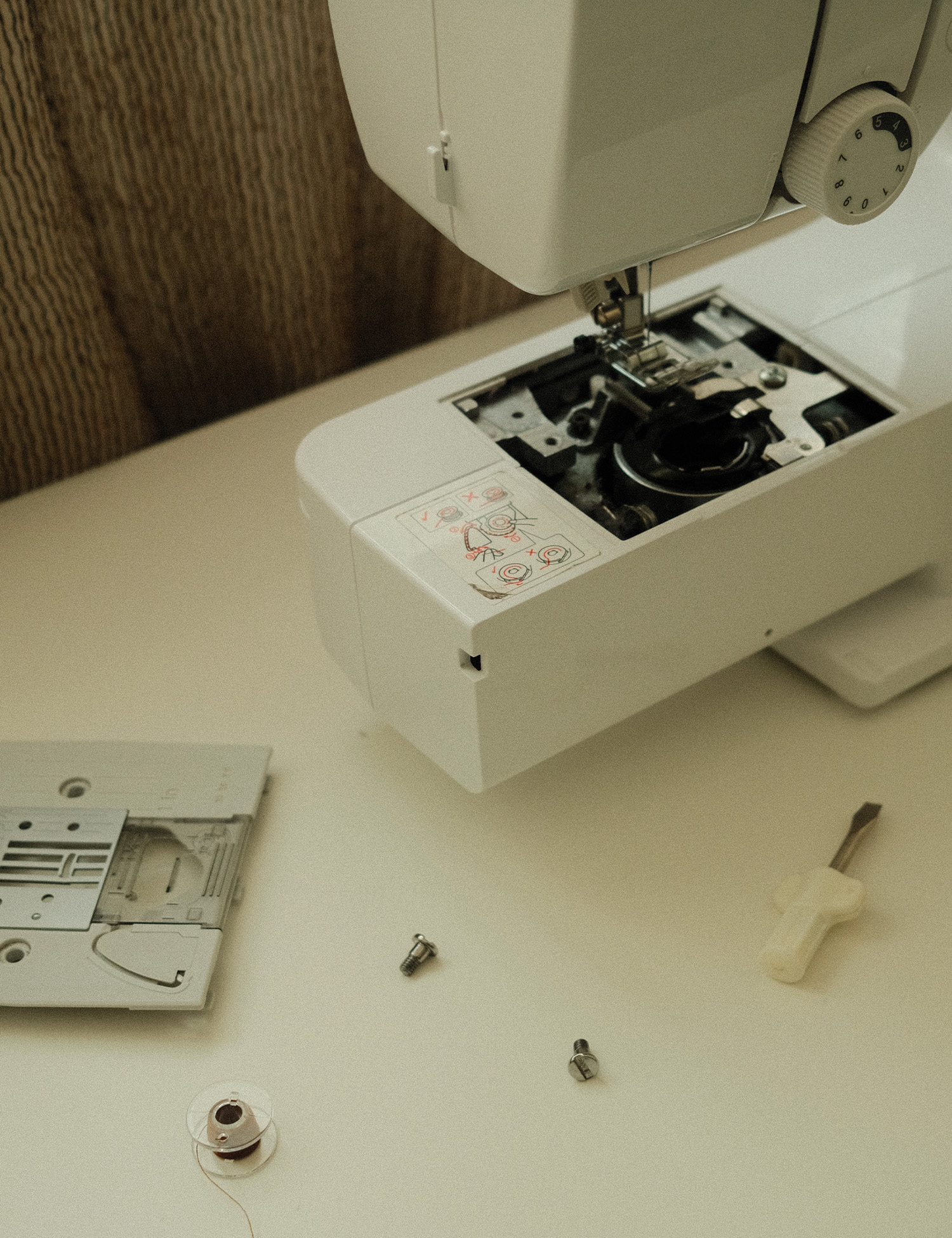
Providing regular cleaning and maintenance around the bobbin and feed.
A piece on the front of the machine detaches, referred to as a free arm or flat bed convertible sewing surface. This piece can be used to store accessories, but it’s main purpose is to make it easier to maneuver narrow circumferences like legs, sleeves, and necks while sewing.
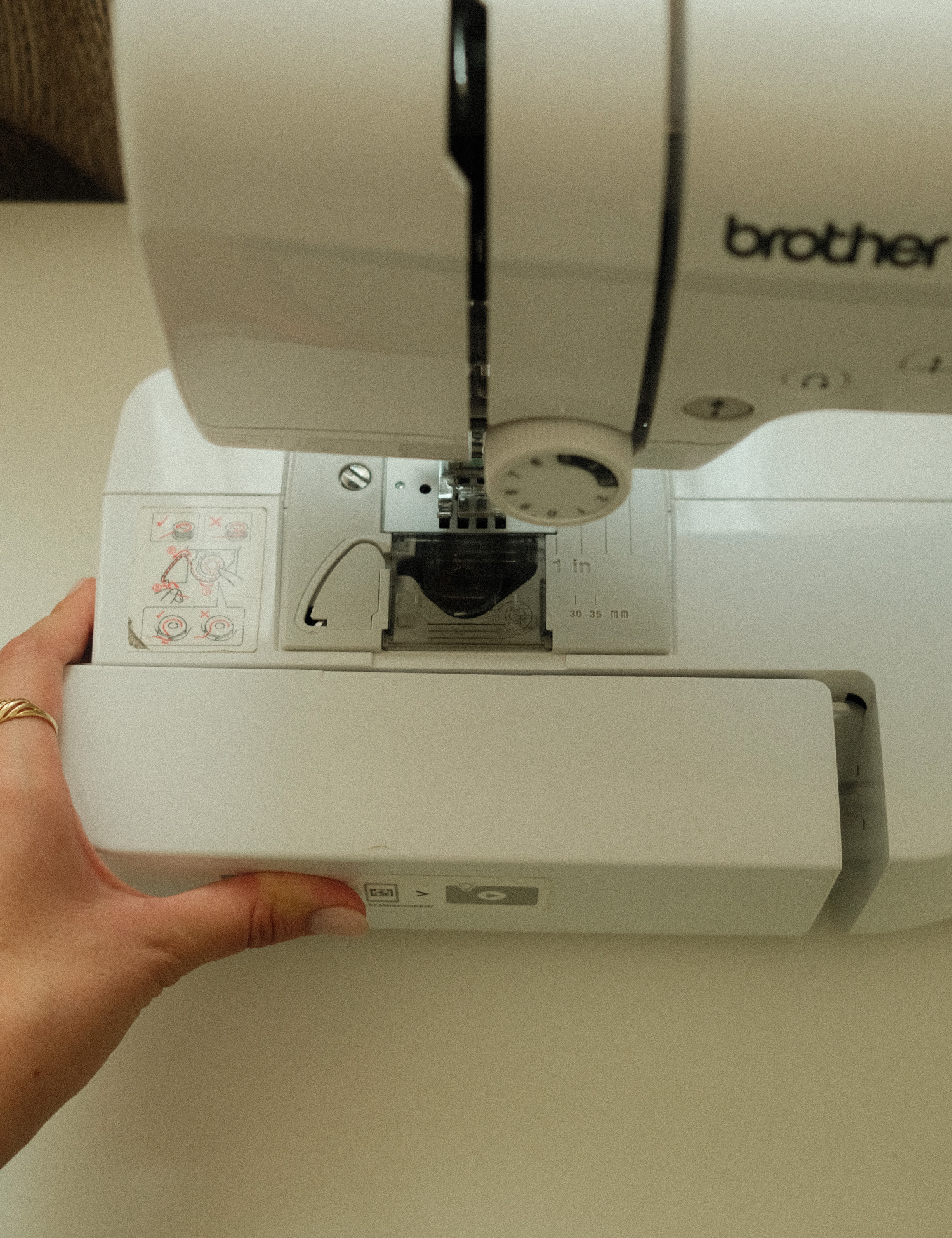
Removing the free arm from the front of the FS80X.
Even though I dream of one day owning an industrial sewing machine, I would still keep my Brother FS80X because of the power found in its duality: simplicity and versatility. It is a true beginner machine, while also capable of quality craftsmanship and longevity. I’ve been nothing but satisfied in the balancing act between care from regular cleaning and maintenance, and the joy of creating with fabric.