Nearly a decade ago I moved countries, leaving behind two wonderful machines that were not electrically compatible with my new home. One of these machines was the 1034D Overlock made by Brother. It was a wonderful machine through the many years of heavy use I put it through. Still in good condition, I passed it onto a family member who also sews.
Ready to purchase an overlock for my UK-plug home, I took to Google, searching “1034D Brother Hong Kong.” I wanted the exact experience the 1034D gave to me all those years ago: a simple machine to improve the efficiency of my sewing, as well as the quality of my garments when working with knits, loosely woven fabrics, and hard-wearing garments like jeans.
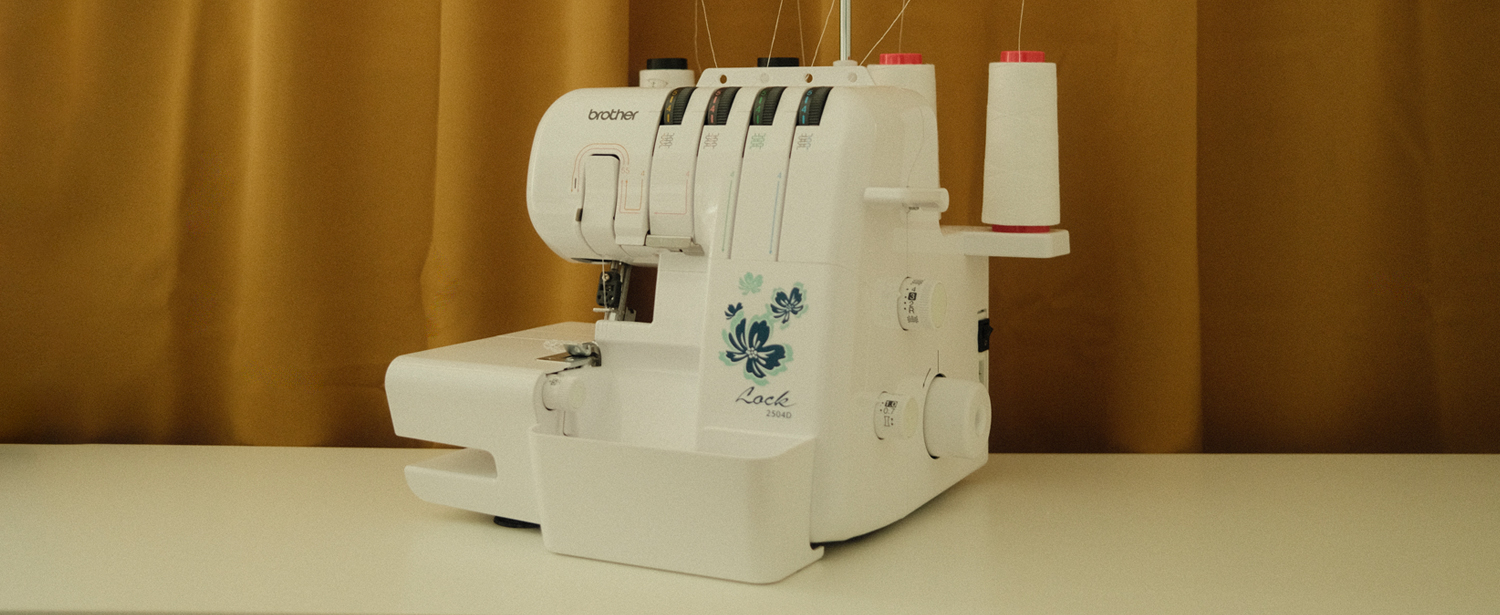
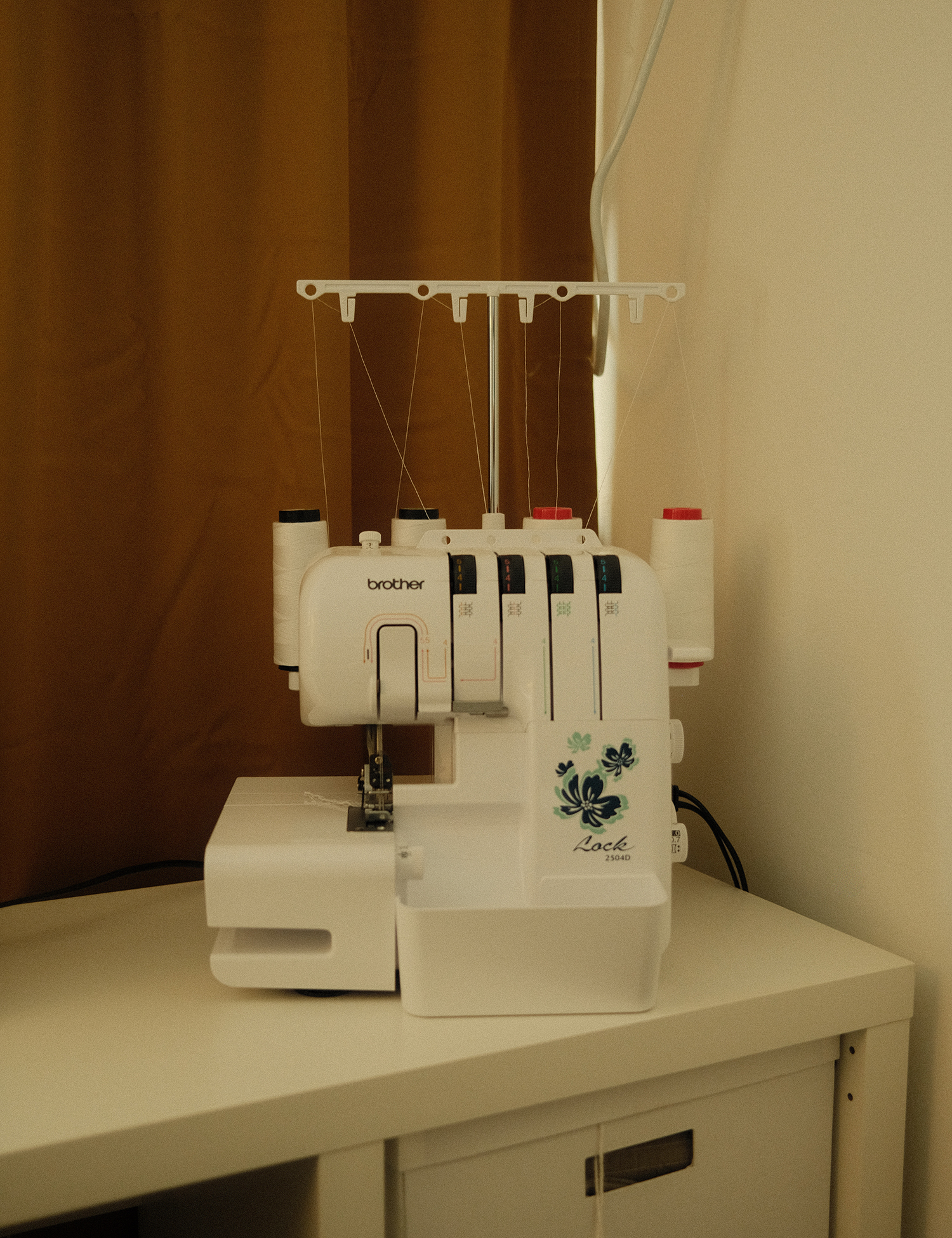
The first search result was the Brother 2540D, the entry level 3/4 thread overlock available from Brother in several non-USA regions, including Australia. Just as I hoped, it is nearly identical to the 1034D, with the only noticeable differences being cosmetic, such as knobs in different locations and a floral decal on the machine’s front.
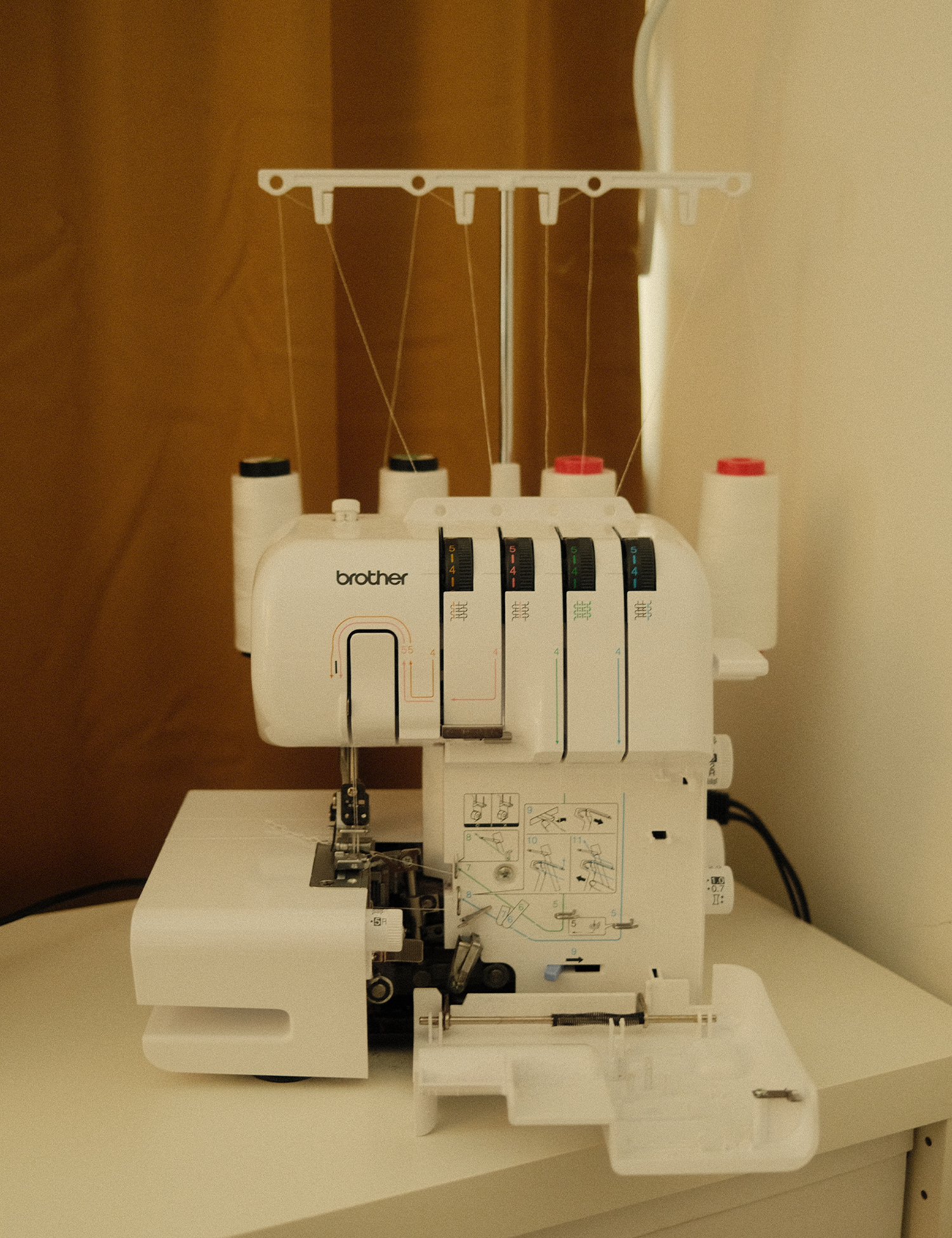
Front view of the 2540D with the cover down.
Like dying hair blonde, I think the most important part of being a good overlock owner is maintenance, which is why “easy to maintain” is the first quality I want to highlight. In my two years and well over one hundred projects since owning the 2504D, I’ve never needed to take the overlock in for repair. The machine is just that easy to open, clean, and re-oil.
Since I am already boasting about its durability, I’ll add that in the two years of ownership, I’ve only broken and replaced one needle. This is not good on my part since it is generally recommended to change needles after each project, but it does show how stable and durable of a sewing experience the overlock offers. Despite my avoidance, changing needles is another easy task as the 2504D uses the same needles as domestic/home sewing machines and the tightening mechanism to change the needle is conveniently located in front of the needles.
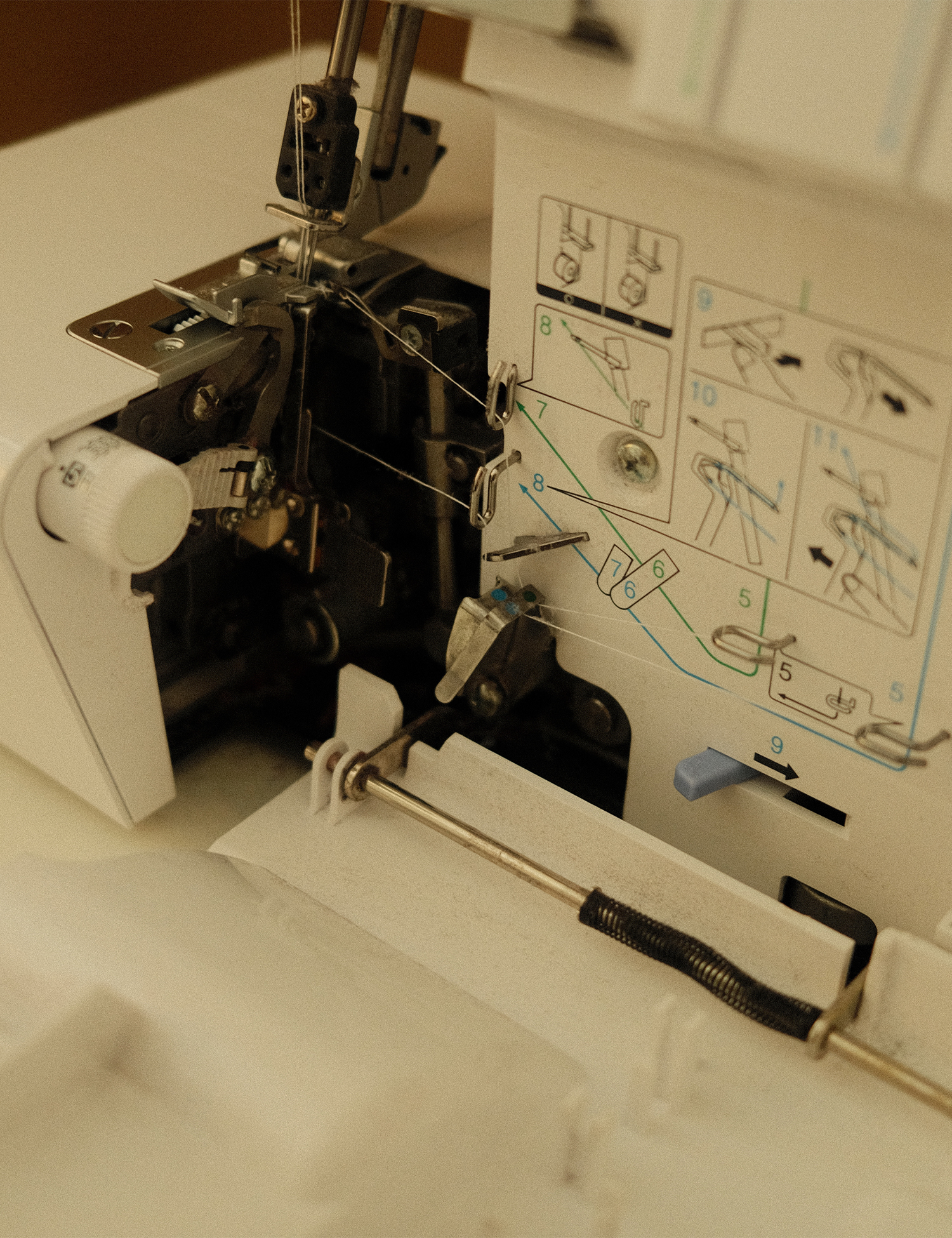
Under the front cover of the 2540D.
This brings me to threading the machine. Threading can be one of the more intimidating aspects of buying an overlock for the first time, and one of the more frequent excuses I use to stop me from sewing on my laziest days. The 2540D has both color-coded and numbered directions for each of the four threads, making it much easier to thread than it may seem at first.
Another feature to highlight is the overlock’s free arm, sometimes referred to as flat bed convertible sewing surface. A piece of the machine around the feed dog and needles can be easily removed to more comfortably maneuver small circumferences like legs, sleeves, and necks. Not all overlocks have free arm ability, so if this is a feature you think is important to your craft, its something to consider when comparing models.
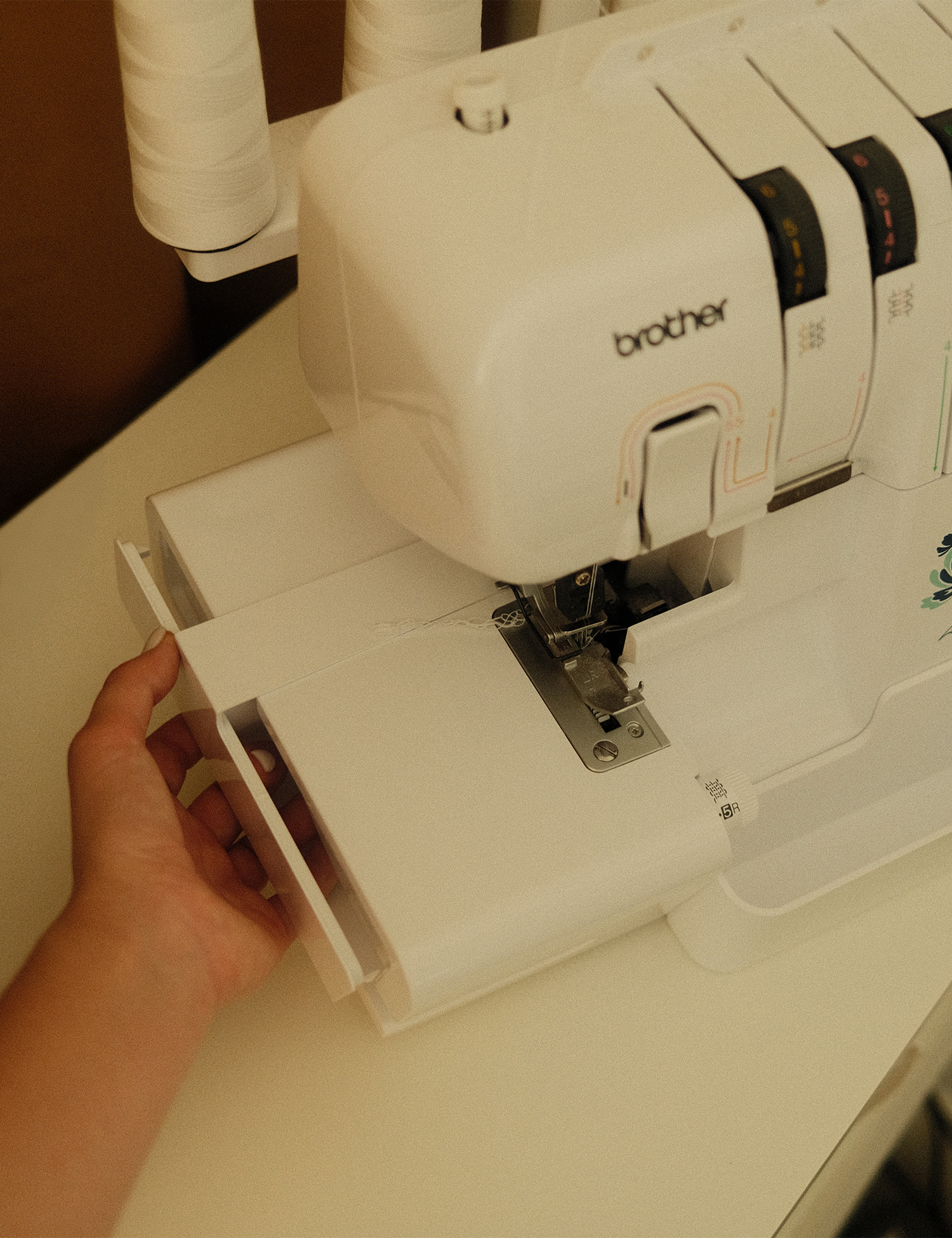
Pulling off the machine’s free arm.
A feature I haven’t used is the presser foot regulator, a way to tune the amount of pressure the foot has over the fabric. I find adjusting the tension dials suitable for the fabrics I work with, the thinnest being lightweight chiffons and cotton voiles and the thickest being heavyweight denim or sweatshirting. Most of the time, if I am working with something lightweight enough to be even semi-sheer, I default to French Seams anyway.
On the topic of seams, the 2504D is capable of rolled hems, blind hems, pearl strands, piping, gathering, and taping. Of these, I have only made a rolled hem, but maybe one day I will buy one of the specialty feet and venture into more of its possible finishing techniques.
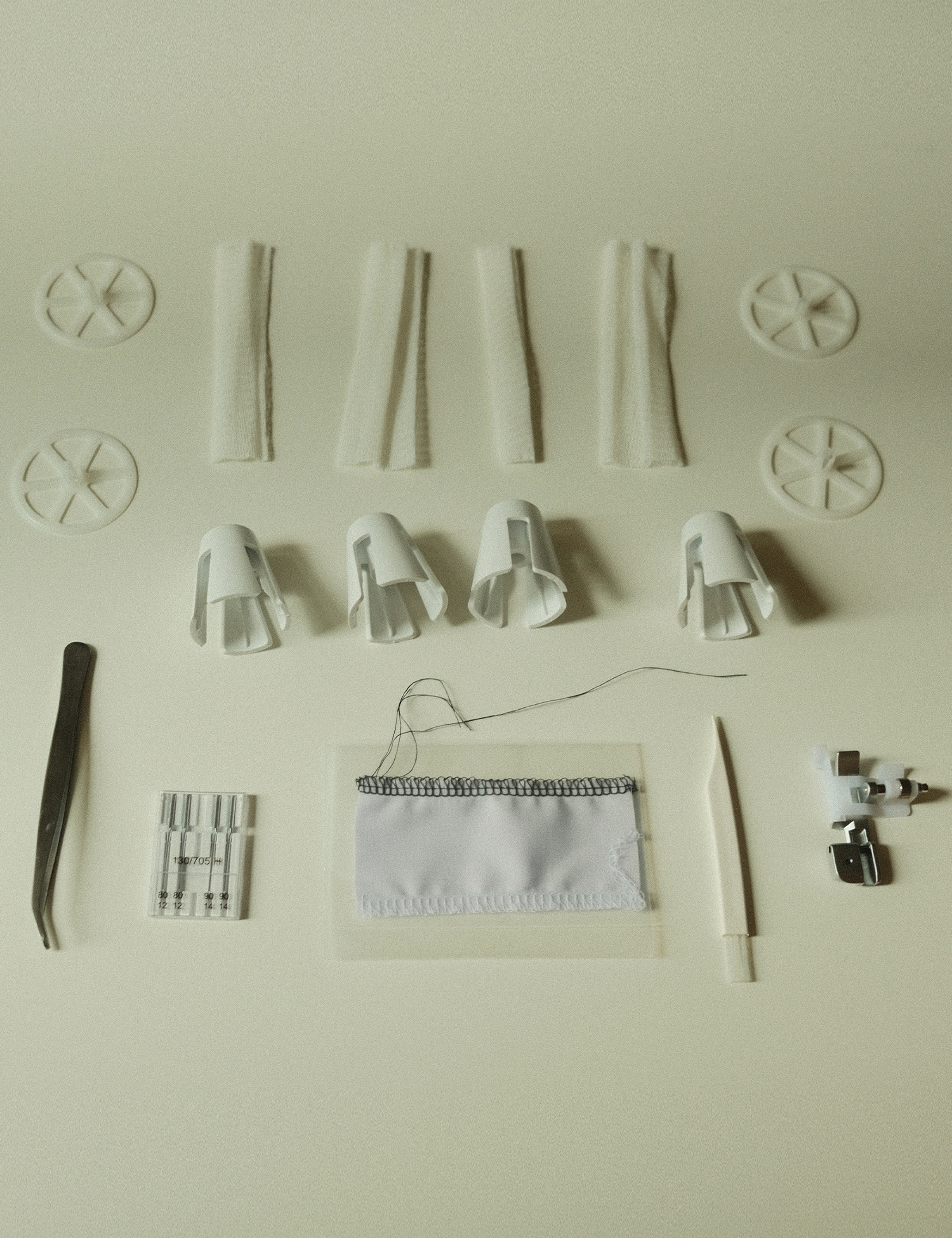
Accessories included with the Brother 2540D.
Along with the machine itself, the 2540D came with a small plastic accessories pouch. The accessories included are a strong entry-level selection, particularly the large tweezers, cleaning brush, and hexagonal driver for changing needles. Of these I have only used one replacement needle, but that’s just because I default to using tools I’ve accumulated over the years. One thing I have used is the plastic machine cover, which I am getting better at pulling over the machine when I know I won’t be sewing for a few days.
As for the ovelock’s physical attributes, I find the machine itself compact and light for a machine. Nowadays I leave it out on a desk next to my domestic machine, but I used to store it in a closet between sewing sessions. Personally, I don’t find it loud for a sewing machine.
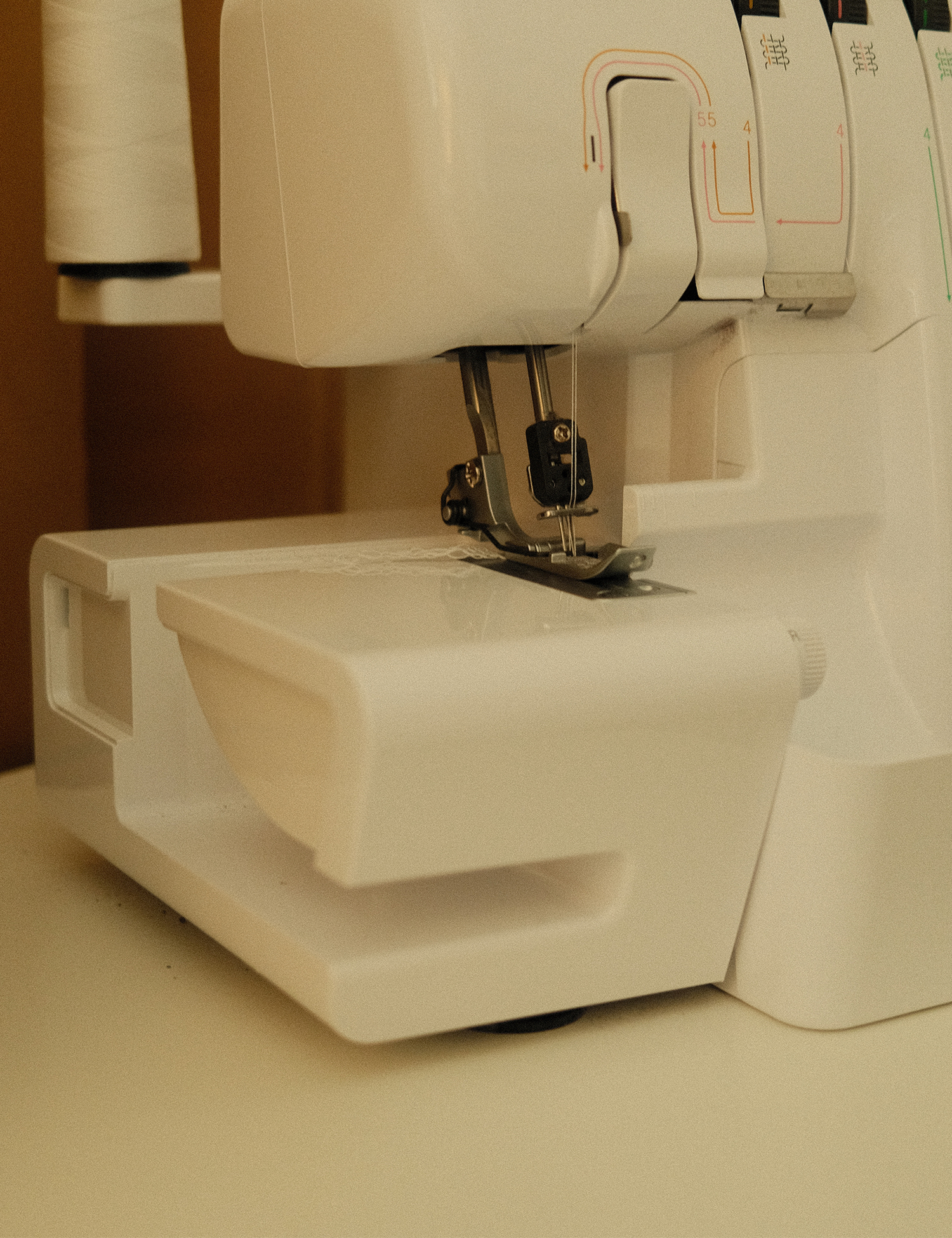
The machine with the free arm removed.
In all, I don’t have any complaints about the 2540D, living up to it’s predecessor as a worthwhile investment in my sewing process and quality of finished projects. Its been a simple yet reliable machine to me over the past two years, and I expect for many more years to come. If I were on the market to buy an overlock today, this is still the machine I would buy. And as for the 1034D I passed onto family? 14 years since purchase its still running smooth.