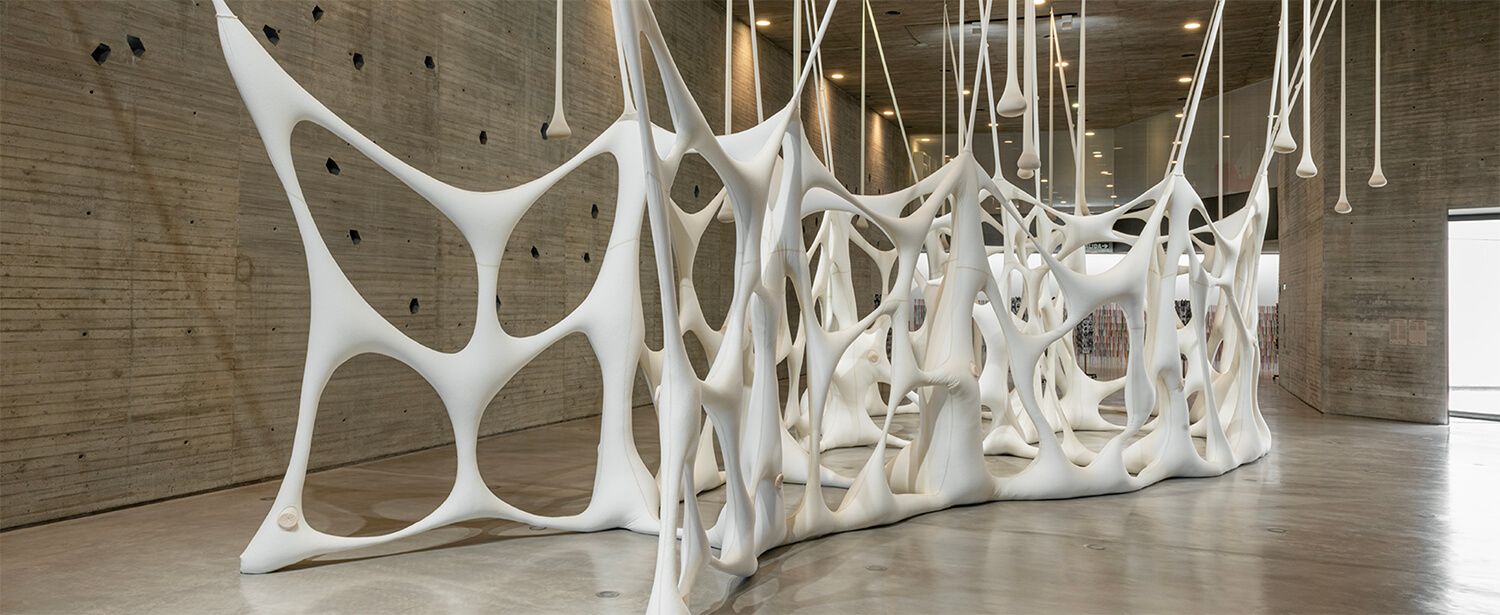
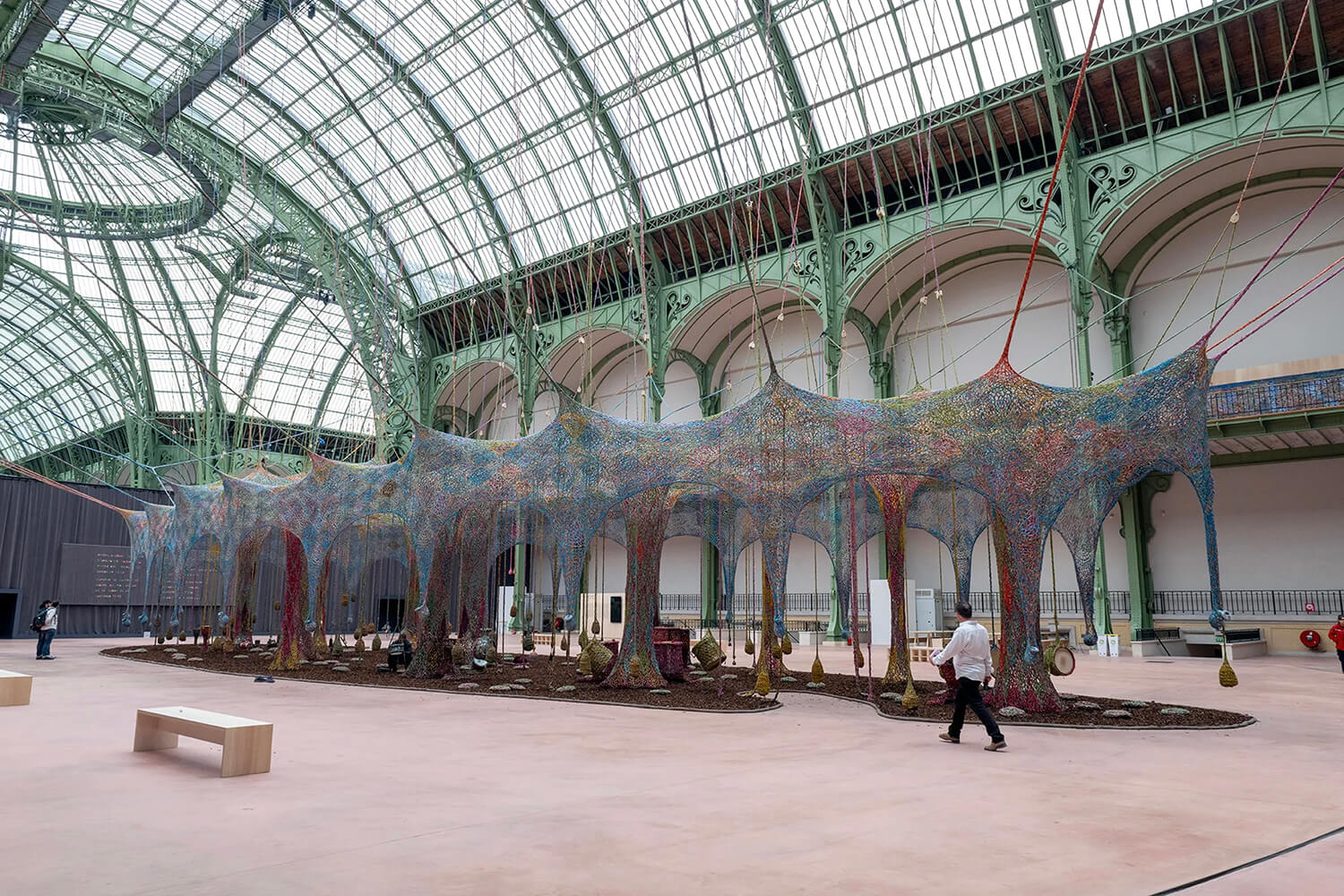
Ernesto Neto installation at the Grand Palais in Paris
Brazilian artist Ernesto Neto makes art with the concept of social interaction at its core. He makes vast and all-encompassing fabric sculptures with a range of unconventional materials and substances that engage the senses, introducing elements of smell, sight, and touch. Considering his works to be living organisms, he constantly experiments with how transparent membranes of stretched nylon fabric can create points of weight and tension across large expanses of space, and become sculptural landscapes that viewers can walk through and physically engage with.
Neto was born in Rio de Janeiro in Brazil in 1964, studied at the MAM Museum of Modern Art at Rio de Janeiro, graduating in 1986, and attended Escola de Artes Visuais do Parque Lage in 1994/1996, followed by the Museu de arte moderna de Sao Paulo. Following graduation, he developed a distinctive approach to making sculpture, influenced by Minimalism, Arte Povera, and the Brazilian Conceptualists Lygia Clark and Helio Oiticica, exploring spatial, environmental installations with participatory elements. He says, “My artwork, in a material sense, features a representation of nature, of the natural space. But it is absolutely cultural, being entirely built with mathematical and topological characteristics, linked to weight and gravity; rational issues that involve a number of calculations.”
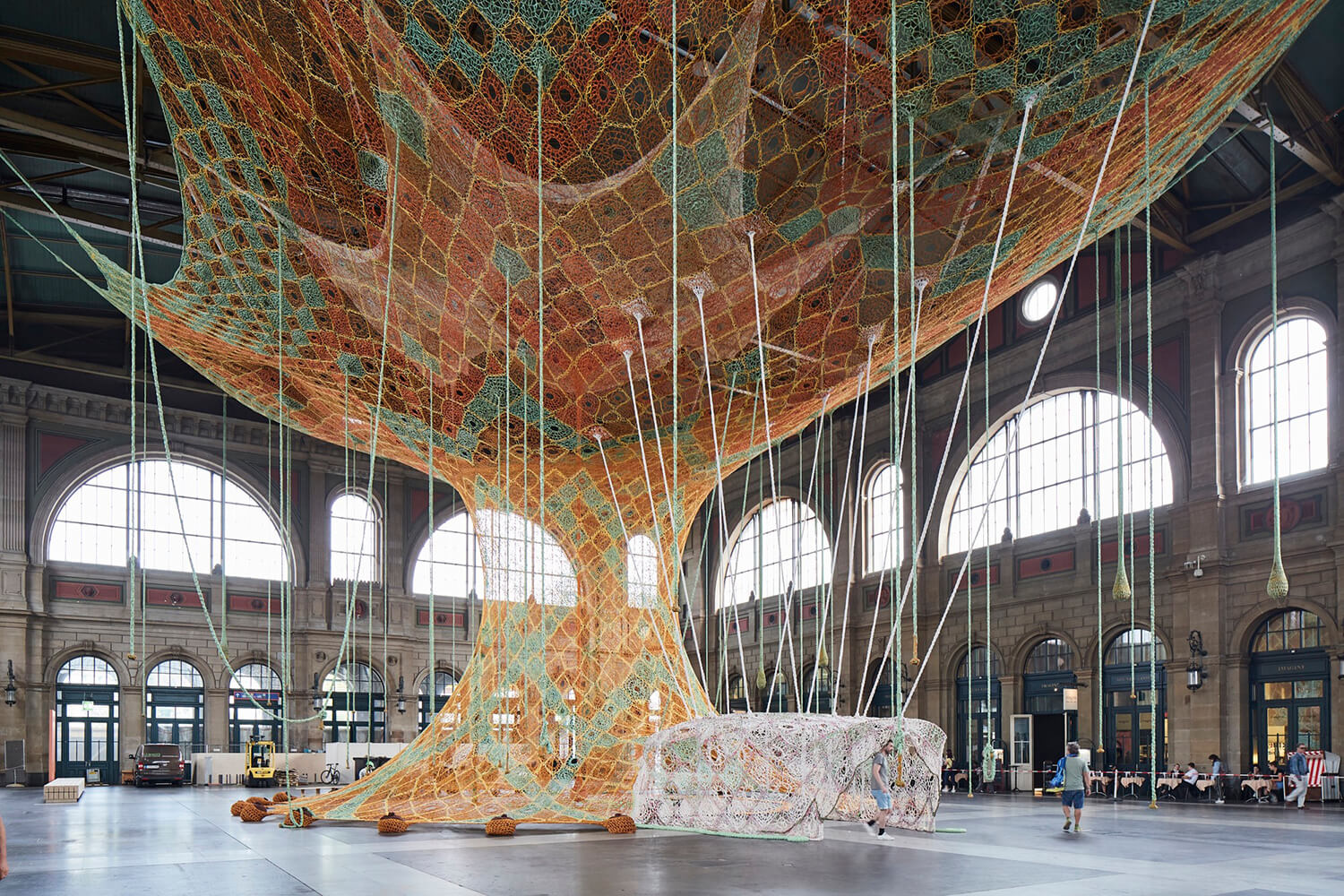
Ernesto Neto’s colossal installation art
Since the 1990s, Neo has been creating what he calls ‘naves’ (Portuguese for ‘ships’). While diverse, these immersive spaces are all made from hanging sheets of translucent, nylon fabric formed into cavernous spaces, which visitors are encouraged to walk into and touch. Speaking about his particular use of this thin, stretchy nylon, he said, “When I started using this material, I wanted to express the weight of a ball and the way to achieve this would be to have a surface that would become deformed with the actual weight of the ball.” He adds, “When I created the first sculpture in fabric, a triangle stretched with a kind of wire, this tension, this minimum surface area, this space tensor, was the focus point. And from then on, I was working in many different ways without really knowing where I was going. I wanted to put things together and I wanted them to become a sculptural moment; the idea of a moment has always fascinated me.”

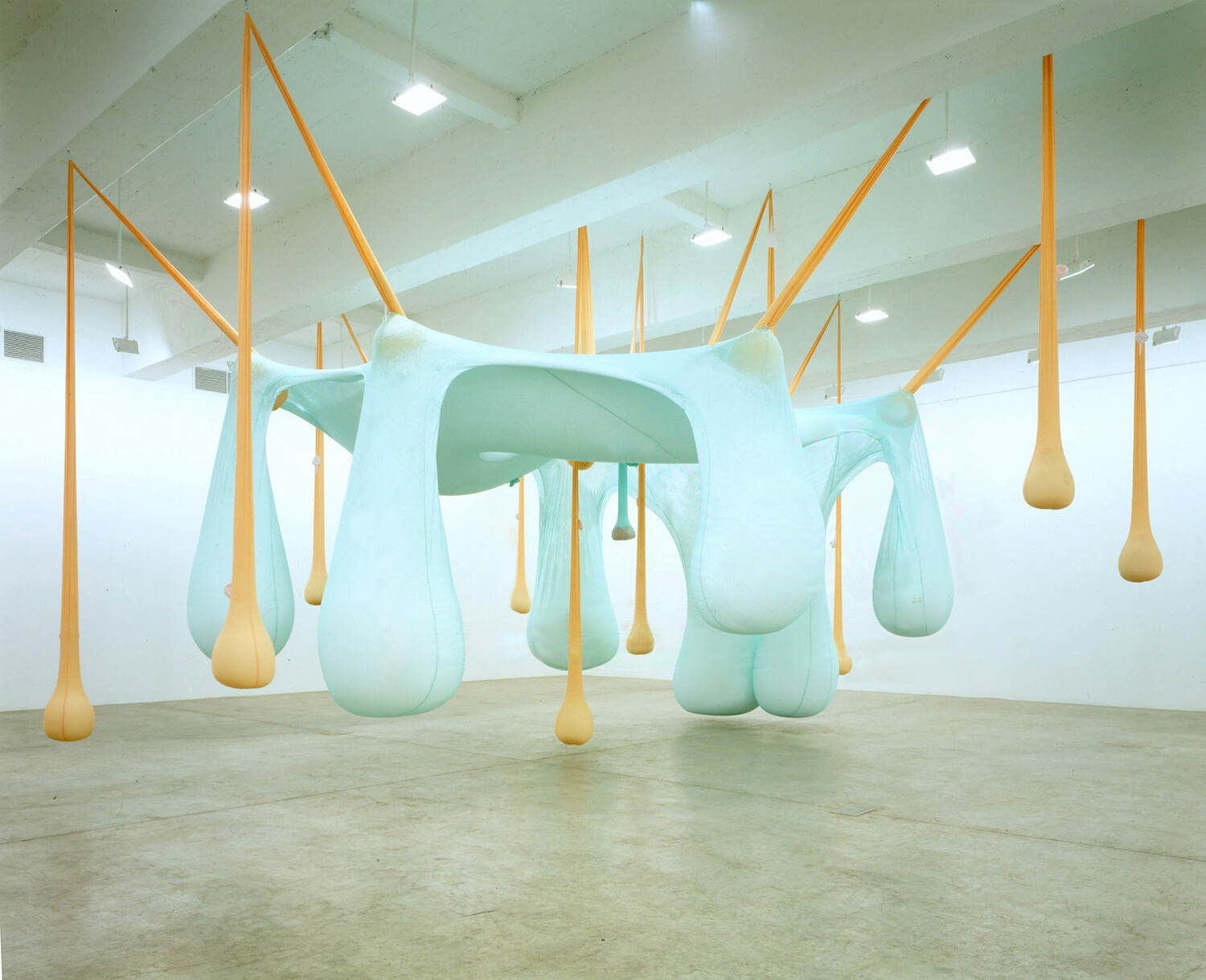
Since this early work, Neto has continued to work with nylon, making an increasingly vast array of sculptures that incorporate separate rooms, tunnels, and even Styrofoam beds. One of his largest works was housed in the drill hall of New York’s Park Avenue Armory in 2009, titled Anthropodino, in which he stretched the fabric over wooden replica dinosaur bones, creating a series of tunnels and grottos that invoked the experience of travelling inside a body. In this work, (and numerous others), Neto introduced a series of suspended nylon sacks filled with aromatic spices, creating a multisensory experience aimed at awakening the viewer’s senses, and enlivening the space in unconventional and deeply engaging ways. On his use of aromatic herbs and spices, he says, “One day I was enticed by the smell of this spice shop, and I bought some turmeric for my studio. After some time, I became dizzy from the smell of just turmeric, so I went back to the shop and I got other spices – it kind of balanced the environment.”
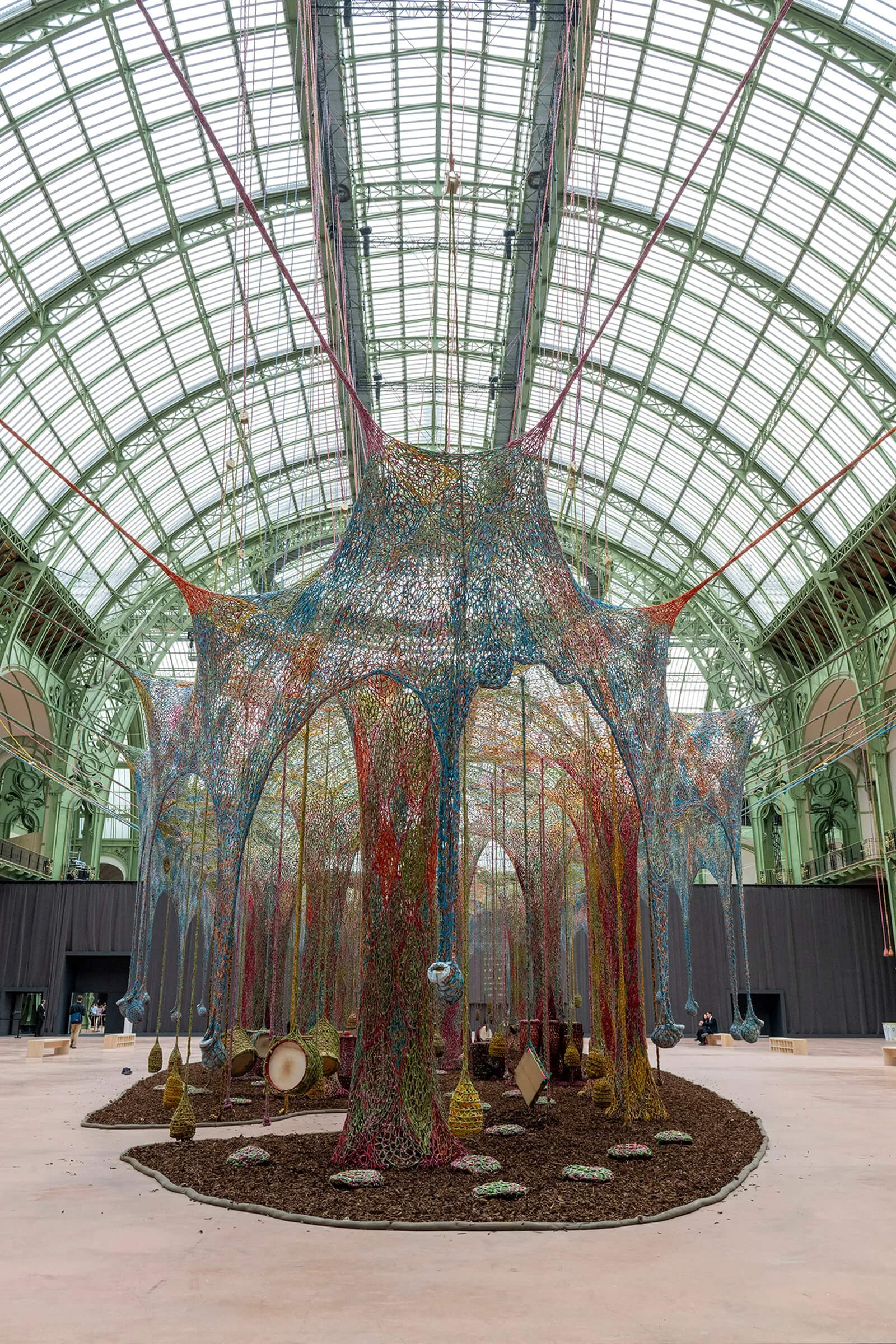
Ernesto Neto installation at the Grand Palais in Paris
Ultimately, Neto says his art is a clash of ideas that bring together both his own Brazilian influences with universal ideas about being a living, breathing human with senses to be awakened and heightened through sensorial experiences. He explains, “I am interested in what we all have in common. For instance, I obviously bring some background baggage with me, freedom and a cultural seasoning that somehow also seduces, mainly the Westerners who are more tied up in the cultural structure. Regarding Europe, if I analyse it from a homoeopathic point of view that takes into account only the basic elements, I can say that my intention here is that my artworks should be perceived as places dedicated to nature.”