

Violeta Parra: Latin American Folk
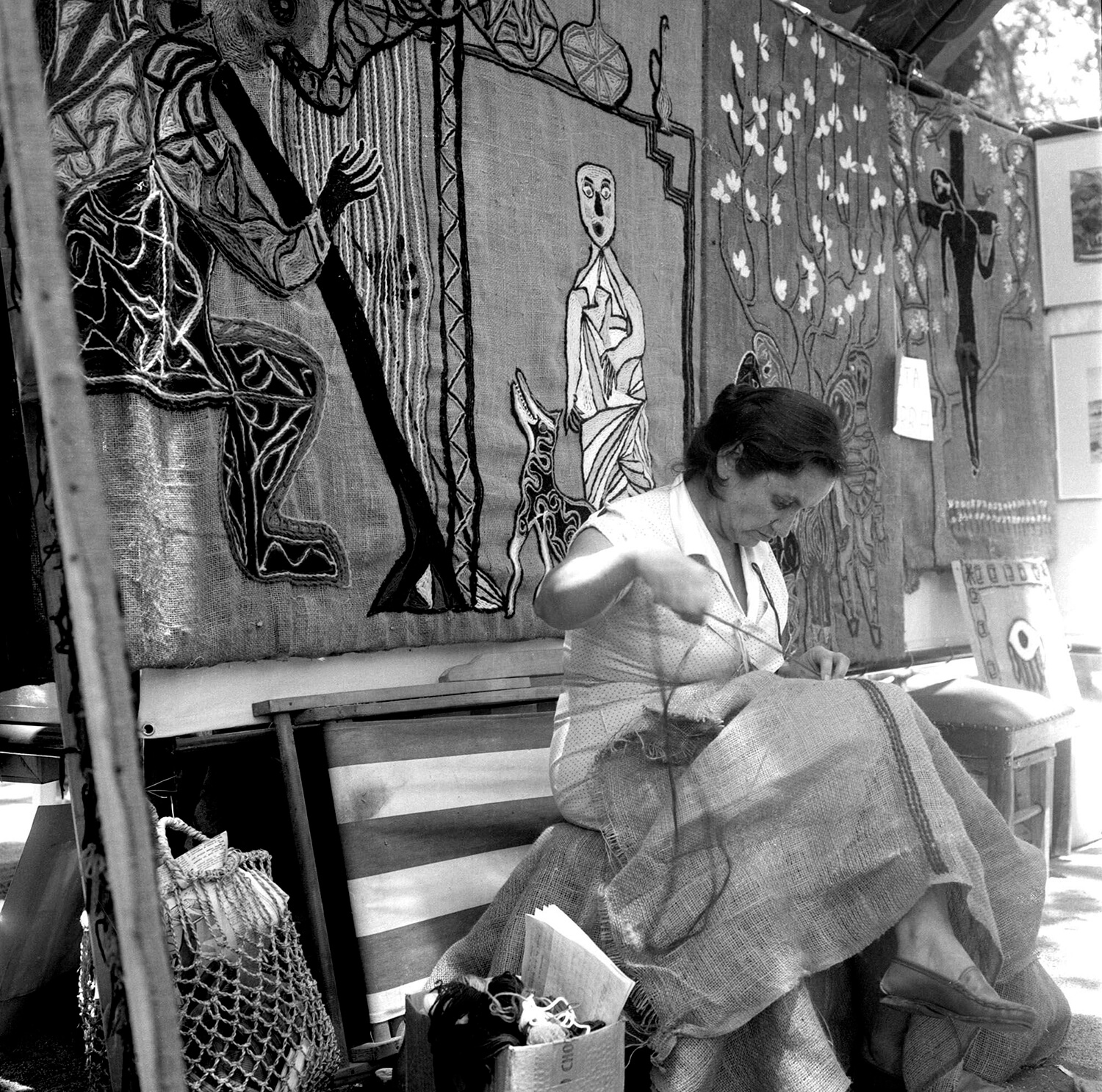
Violeta Parra in of Violeta Parra embroidering 1960
A legendary Latin American folk musician, researcher, poet, and performer, Chilean artist Violeta Parra (1917-1967) was also a remarkable artist, producing a large body of intricate quilts and embroideries, or ‘arperillas’, traditional Chilean patchwork pictures made from wool, thread, and repurposed textile fragments. She famously displayed these embroideries at the Louvre in Paris in 1964, making her the first Latin American artist to have a solo exhibition here, raising widespread awareness of Chilean and Latin American folklore. “I’m just a tiny woman,” she told her friend, the Chilean filmmaker Alejandro Jodorowsky years before achieving this milestone, “but this edifice doesn’t impress me. Mark my words: before long, you’ll see my works exhibited here.”
Parra made her first arperilla embroideries in 1958, following a spell of illness that had left her bedridden for many months, which came shortly after nine earthquakes devastated huge parts of her home country. By this time, she had already established her name as a leading singer-songwriter, lifting herself out of extreme poverty with a remarkable gift for reinventing the heart and soul of Latin American folk music for contemporary audiences.
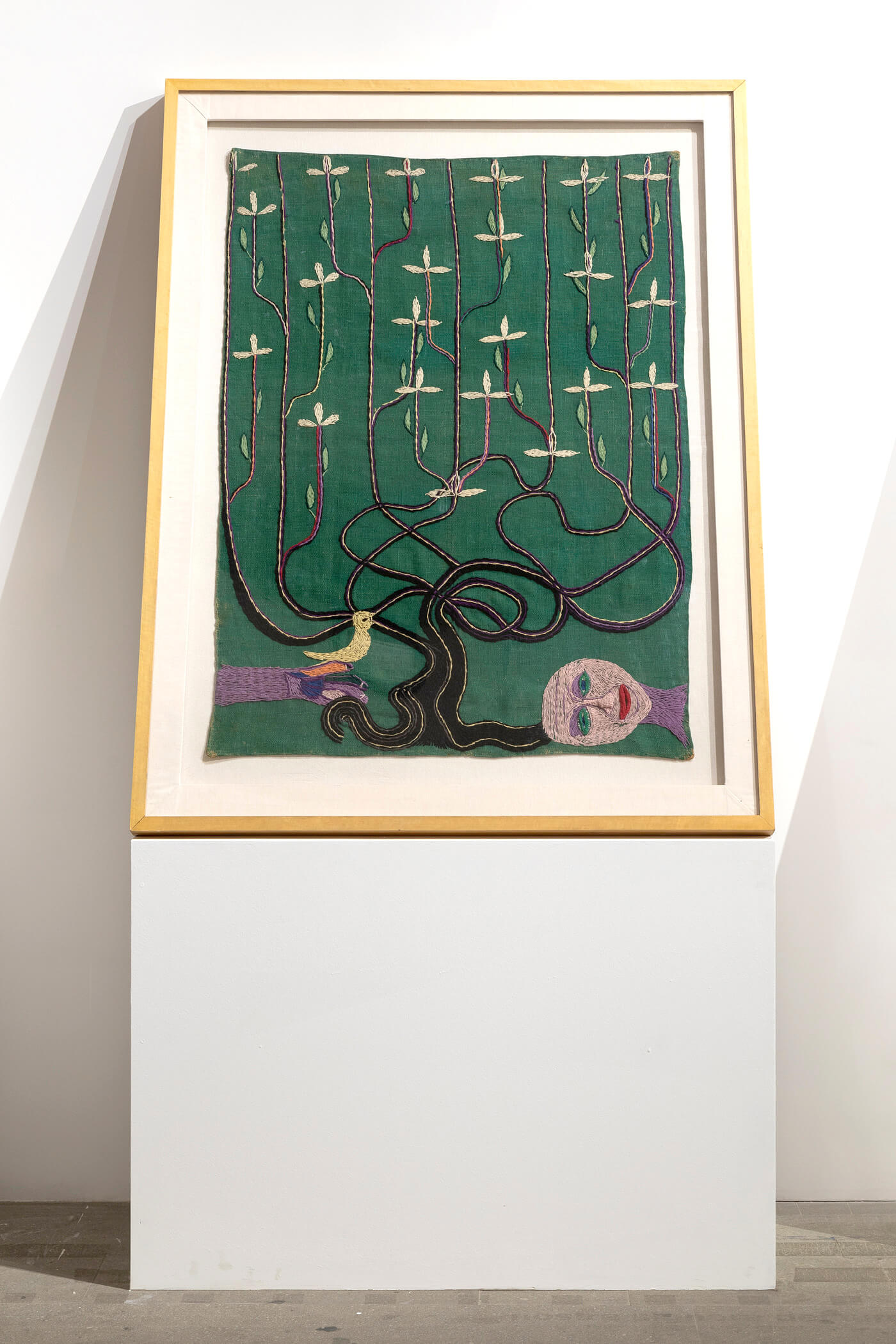
Being bedridden may have impinged on her ability to write songs, but it gave her room for a new passion – the creation of arperillas, made the traditional Chilean way, through salvaging fabrics and threads from personal archives and that of her friends and family, which imbued the textiles with deeply significant personal symbolism. Having suffered such a devastating loss, Parra found great solace working with the patch and repair process of needlework, cutting up old bed sheets and curtains to form reusable scraps, and asking visiting friends to unravel wool sweaters to produce embroidery threads. Passages of thick, woollen stitches, knitted braid, and macramé, were merged into each work of art, lending them a rich, textural quality.
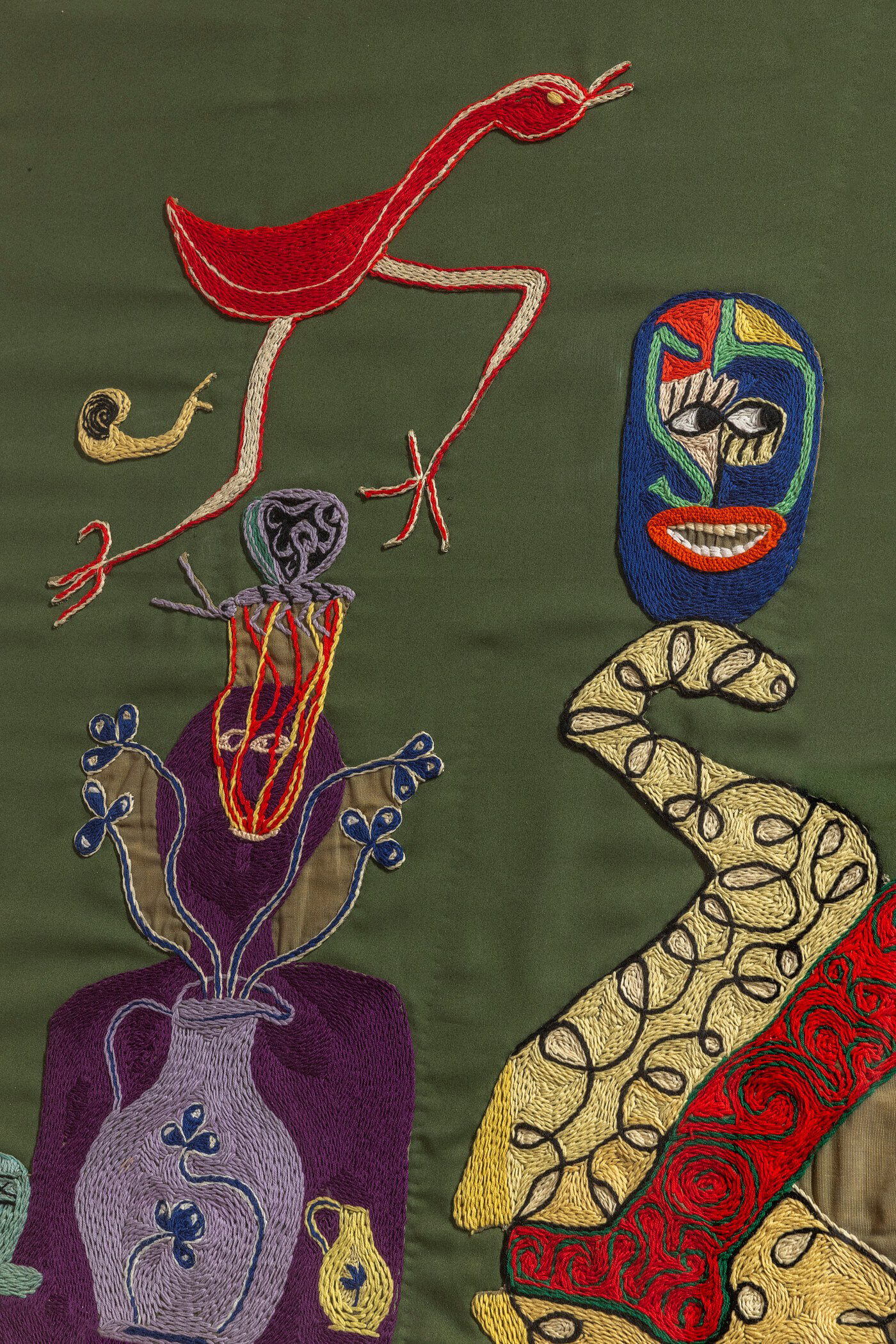
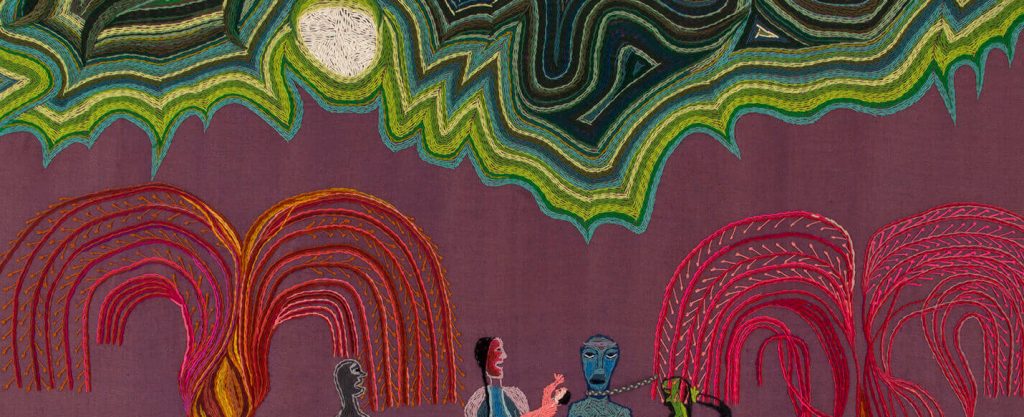
Over time, her embroideries evolved into a lavish means of storytelling – depicting Latin American stories, legends, and newsreels from the past and present including Chile’s conflicts during the War of the Pacific from 1879-1884, famous Chilean folk tales, contemporary strikes, traditional dances, and musical performances, illustrating both universal, and personal themes that, when seen together, form a powerful reflection on Latin American society. She even sometimes stitched herself into her art, using the colour purple (her name means ‘purple’ in Spanish).
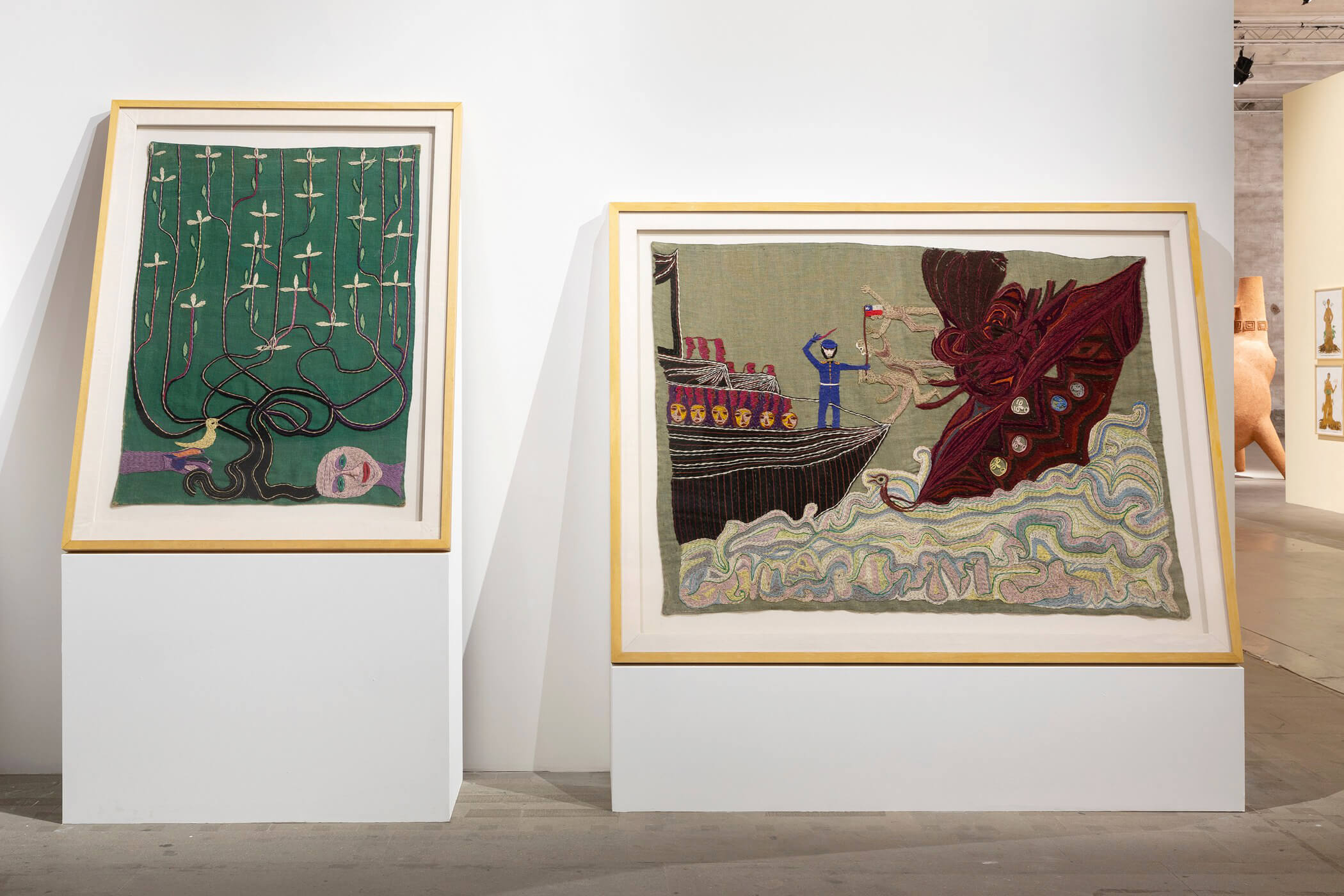
Likening her art to her music, she called these textiles, ‘songs that are painted,’ finding the means to convey her musical expression in visual form. She took the practice of creating arperillas in daring new directions, expanding onto a much vaster scale than had been seen before, while blending 19th century graphics from the ‘Lire Popular’ with a fresh, contemporary colour scheme and expressive, abstracted visual styles. She said, “I want my name to grow to be stronger and more important to better defend my people. To fight against the bourgeoisie, you have to be strong… If it were just about domestic problems, everything would be very simple, but there is a country that awaits my work and yours.”
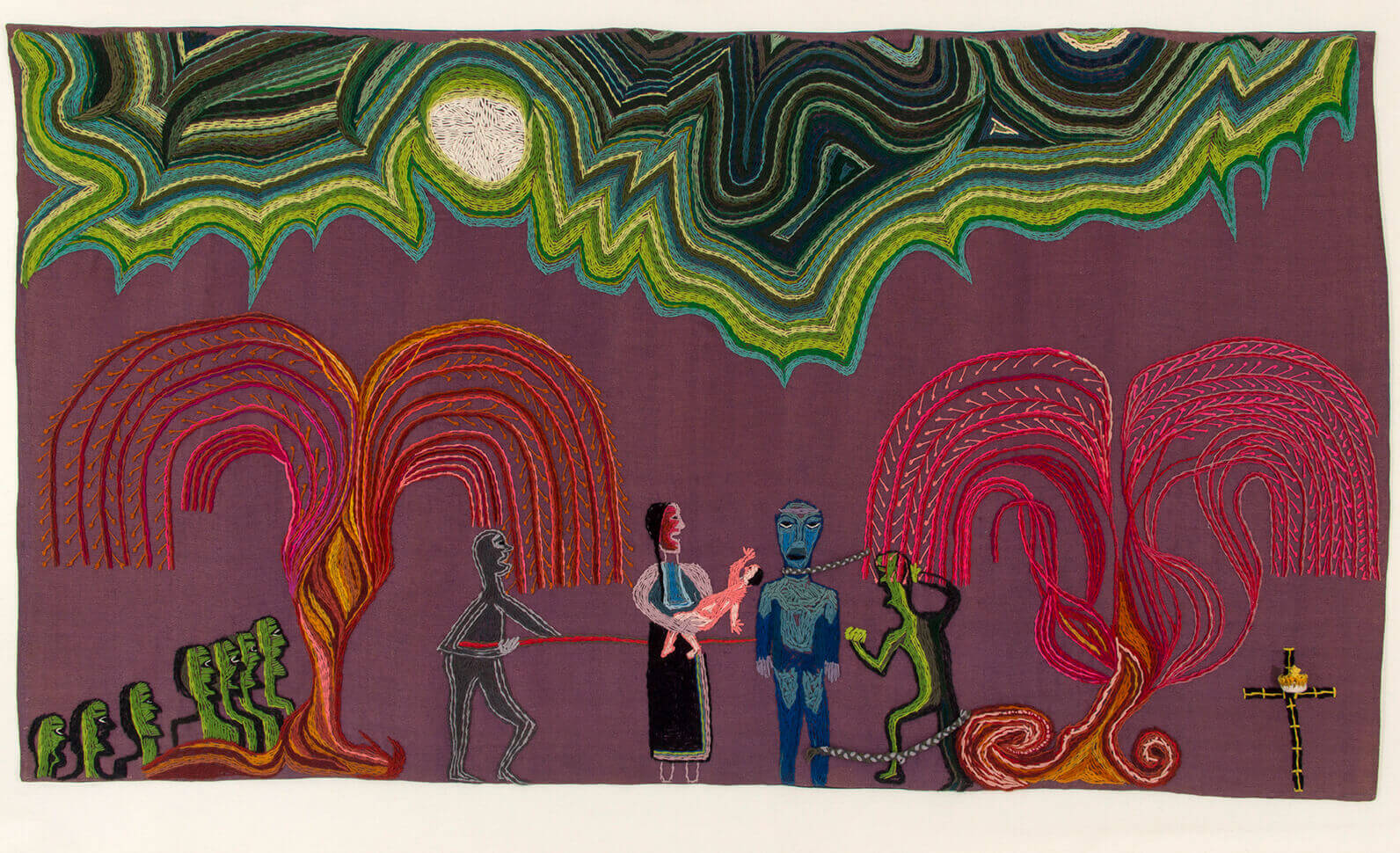
In a review for the aforementioned Louvre showcase in 1964, art critic P.M. Grand sang her praises, writing for Le Monde, “Violeta is present […] to play the guitar, to sing sad and expressive music, to invent as she embroiders […]. Petite and brunette […] simple and complex like a figure from Lorca, or like one of her sculptures, where the tangle of metallic wires make golden flowers burst from a black tree.”
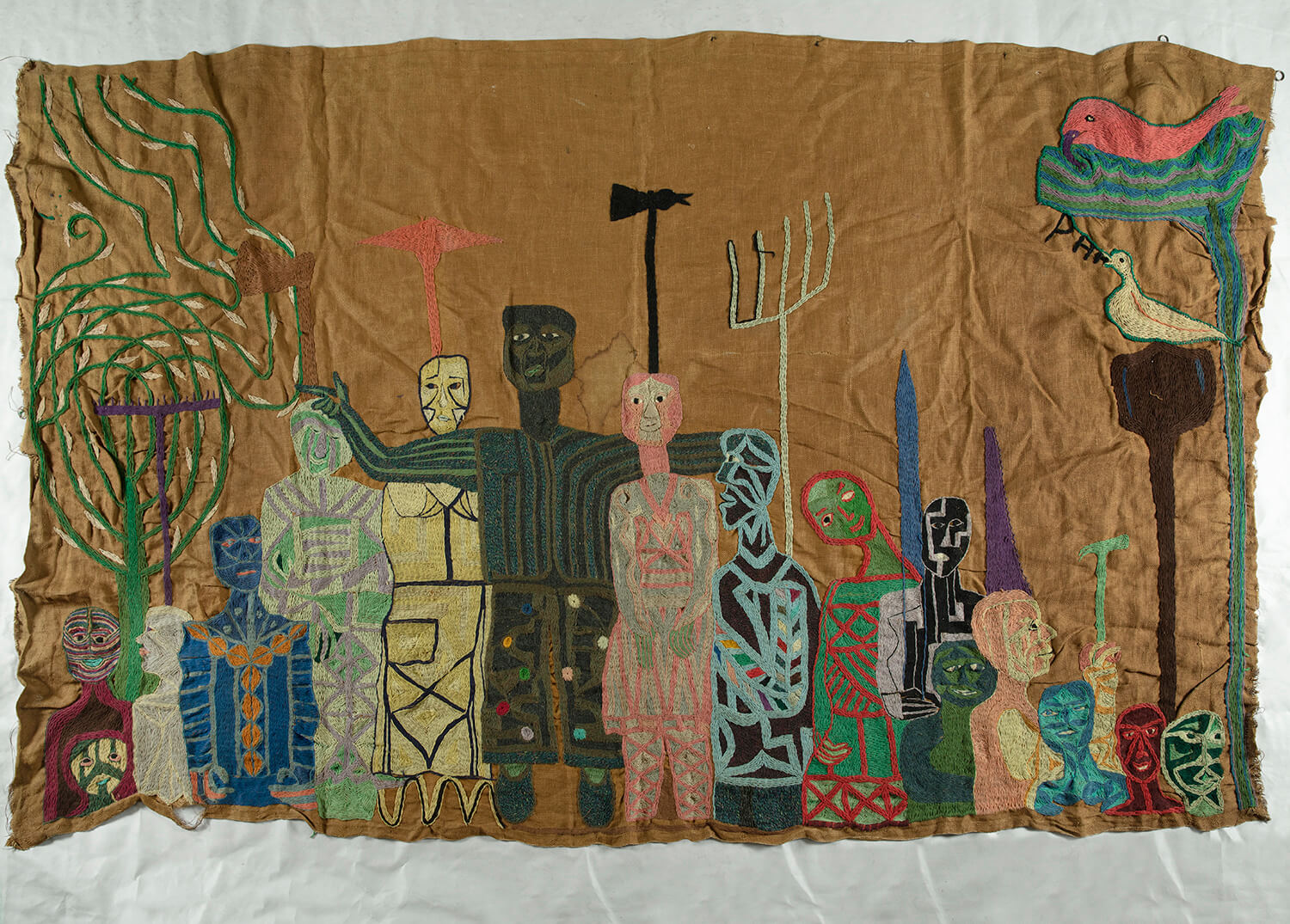
The Peasants’ Strike, 1964. Image courtesy of the Violeta Parra Museum.
Her art can be read today as a message of hope, resilience, and perseverance, both within her personal life, and within the wider history of Latin American society. Reflecting on the potent, powerful role of creative thinking, particularly during the most challenging of times, she wrote, “Don’t cry when the sun is gone, because the tears won’t let you see the stars.”

Leave a comment
Related posts
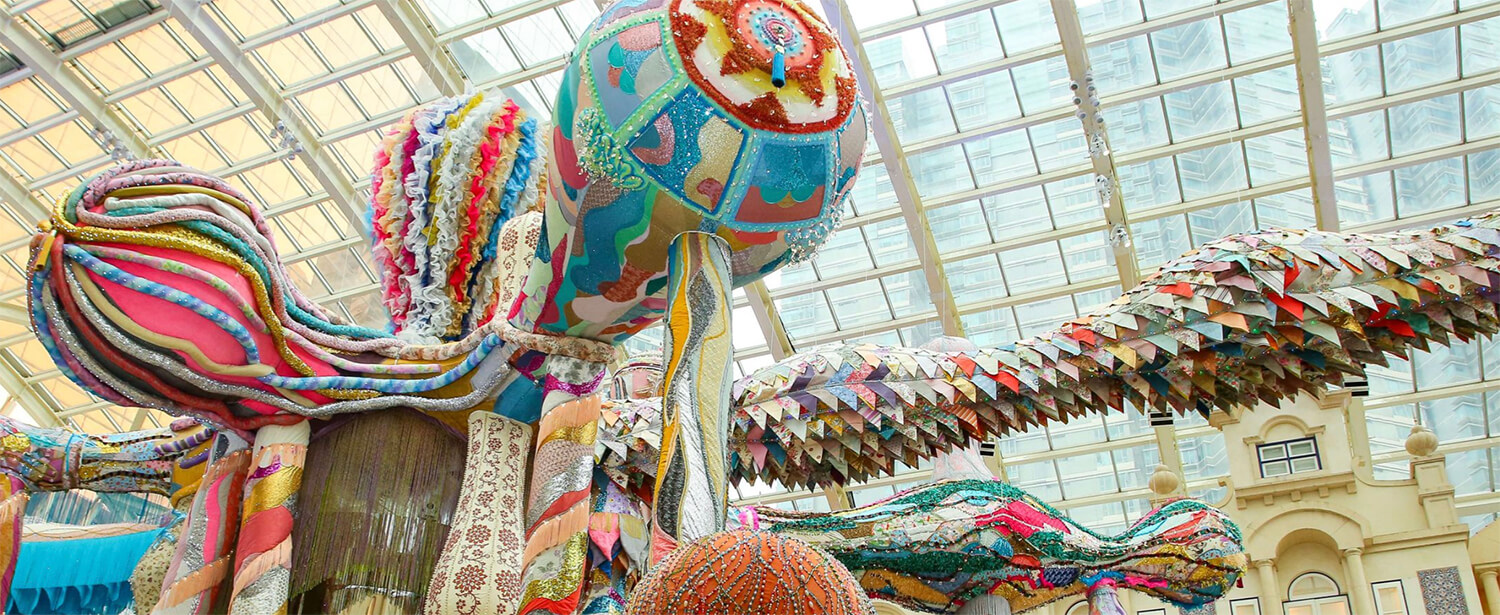
Empowering Textiles: Joana Vasconcelos
Portuguese artist Joana Vasconcelos makes vast, all-encompassing sculptural installations that embrace the wonder of textiles in all their glory, from crochet and embroidery to needlework and knitting, which she often incorporates with every day, found object including pianos, sinks, and computers, creating unlikely but strangely celebratory juxtapositions. She is now known worldwide for these vivid,…

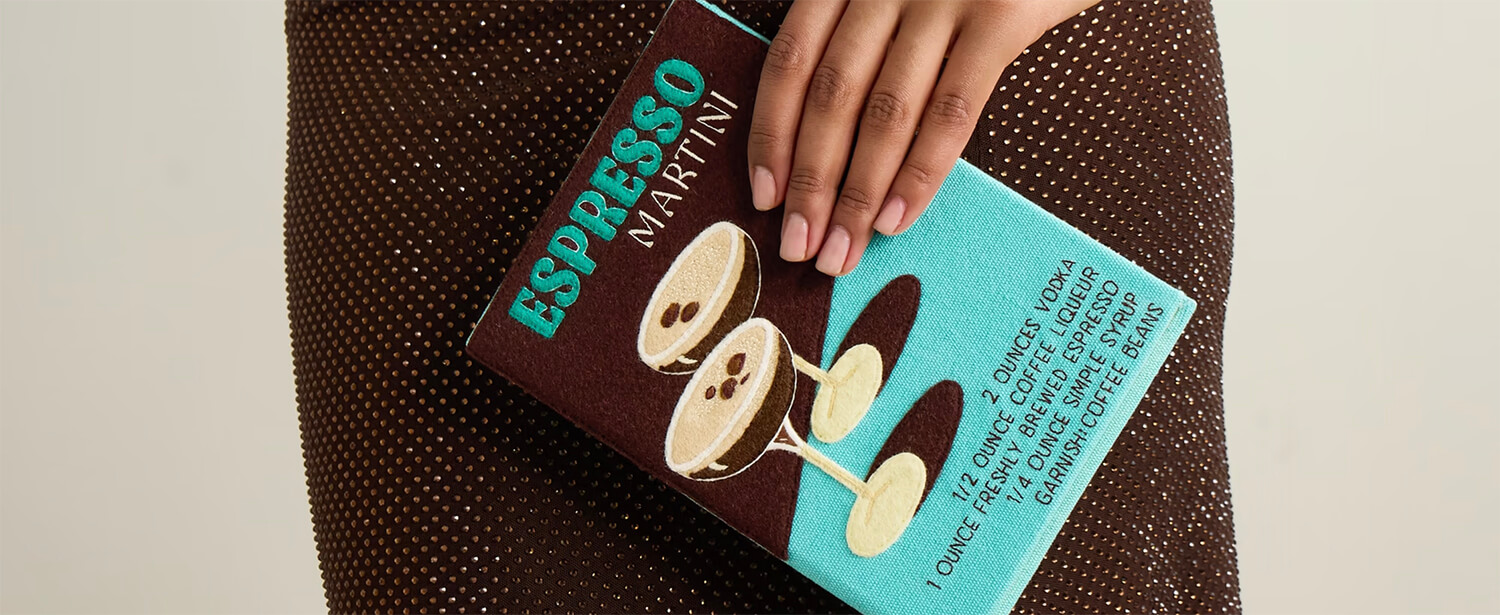
Storybook Bags: The Whimsical World of Olympia Le-Tan
Since launching her eponymous fashion label in 2009, French designer Olympia Le-Tan has earned a cult following for her whimsical, playful and artisanal approach to making accessories. From the outset she has been producing stylised ‘storybook bags,’ hand-woven clutch bags in the same size and shape as limited-edition books, featuring ‘covers’ with references to pop…
The Austrian Lacemaker: Dagobert Peche
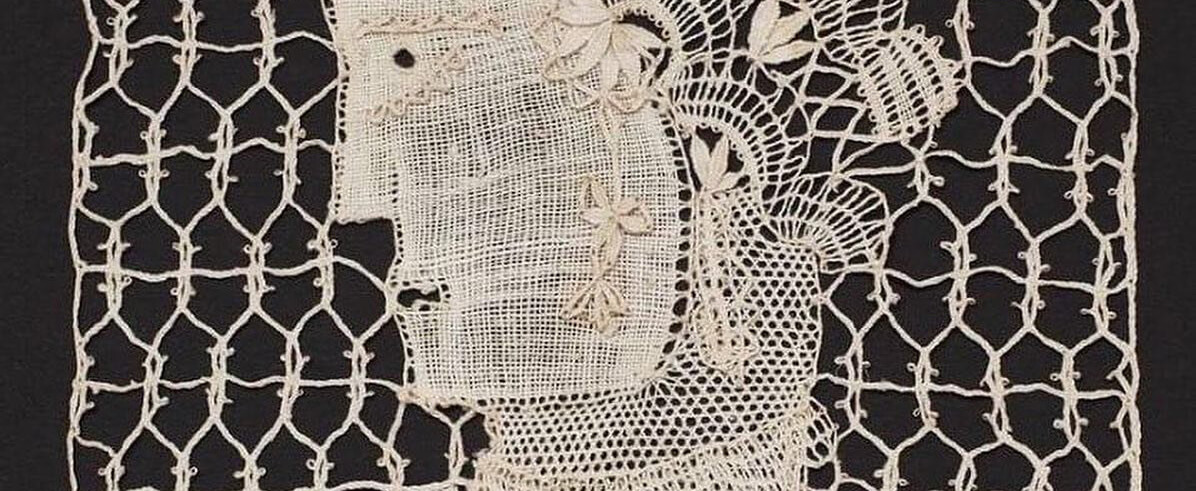
The early 20th century Austrian designer Dagobert Peche was a remarkable talent, whose visionary career expanded across a seemingly endless array of decorative art forms, including metalwork, glass, ceramics, furniture, architecture, and textiles. One of his greatest contributions came in the form of lacemaking – he produced and designed a large body of stunningly intricate…
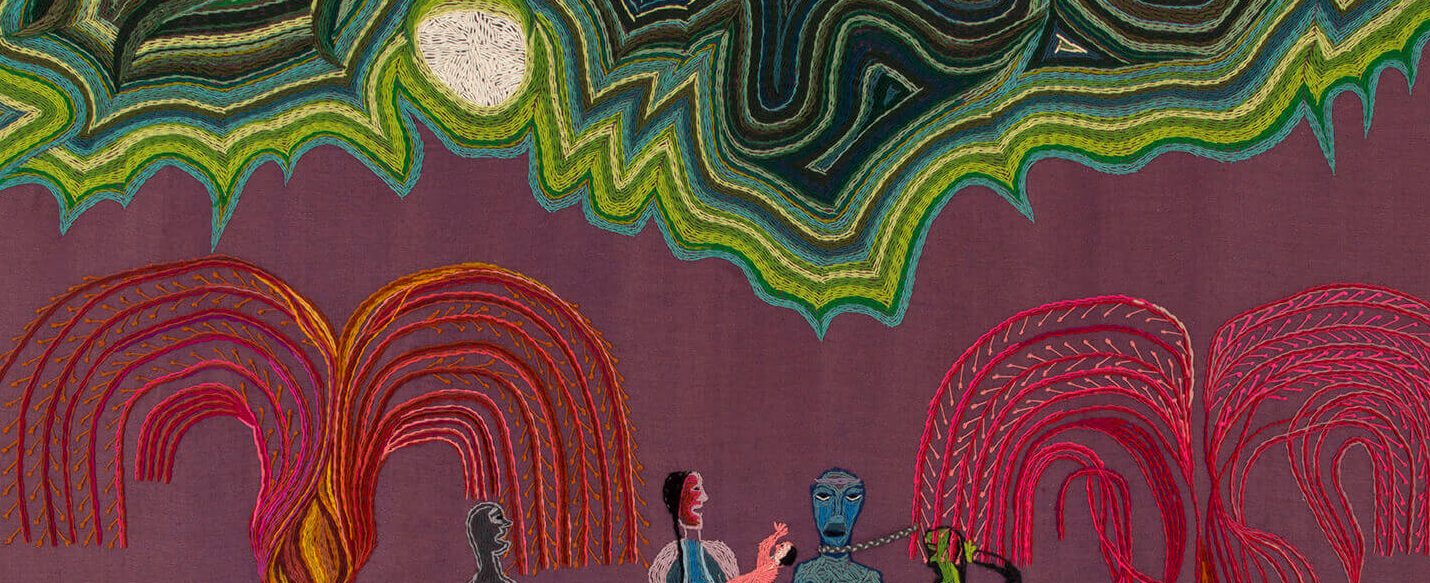
Textiles and Resistance: The Art of the Chilean Arpilleristas
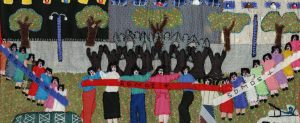
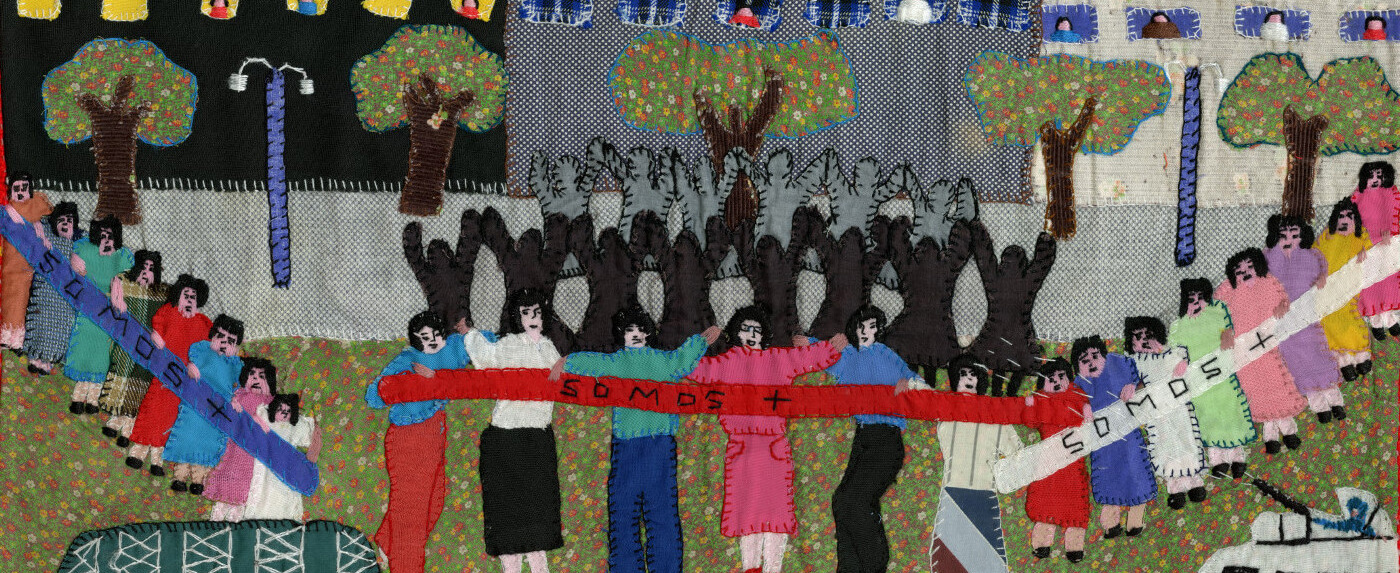
Chilean arpilleras might at first look like playful, whimsical patchworks, featuring brightly coloured houses, scattered children and blazing suns. But closer inspection reveal that they are a potent, emotionally raw form of resistance and rebellion, one that emerged during the brutalist regime of Augusto Pinochet from 1973-1989. While women were forced into submissive silence by…
A Fabric of Sounds: The Embroidered Art of Vivian Caccuri
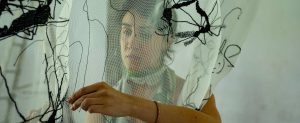
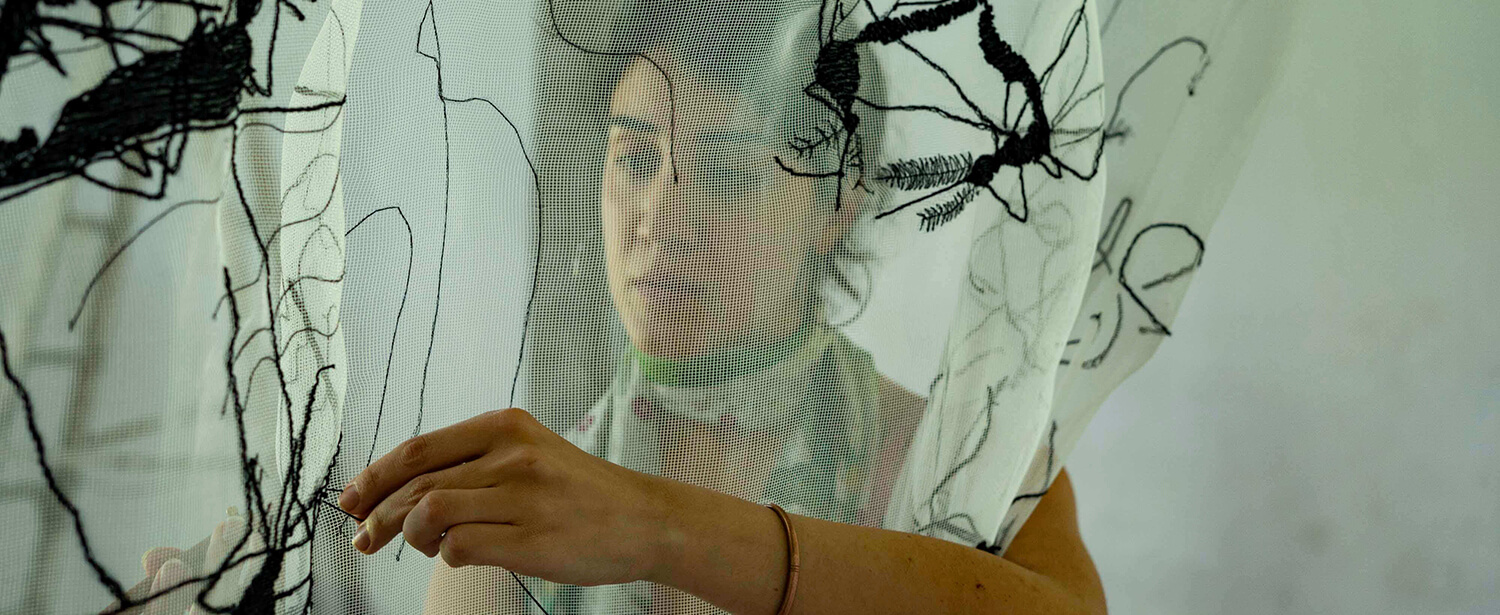
There is a curious and unexpected dichotomy between sound and fabric in the art of Vivian Caccuri, inviting us to consider the ways in which the two are more closely interrelated than we might at first think. Primarily a sound-based artist, her recent forays into textiles has provided a tactile and sensorial element to her…







SEW THIS LOOK

Latest Posts

3 Comments
Karen Baen
So interesting. Thank you!
jane gehring
If you’re not familiar with it you might enjoy this episode of Haptic and Hue about Arpilleras and other textiles of remembrance.
https://hapticandhue.com/a-feeling-of-sorrow/
Heather Barclay Davis
Thank you for sharing these wonderful artist stories with us!