

Breathing Landscapes: Inside Elise Peroi’s Intricate Textile World
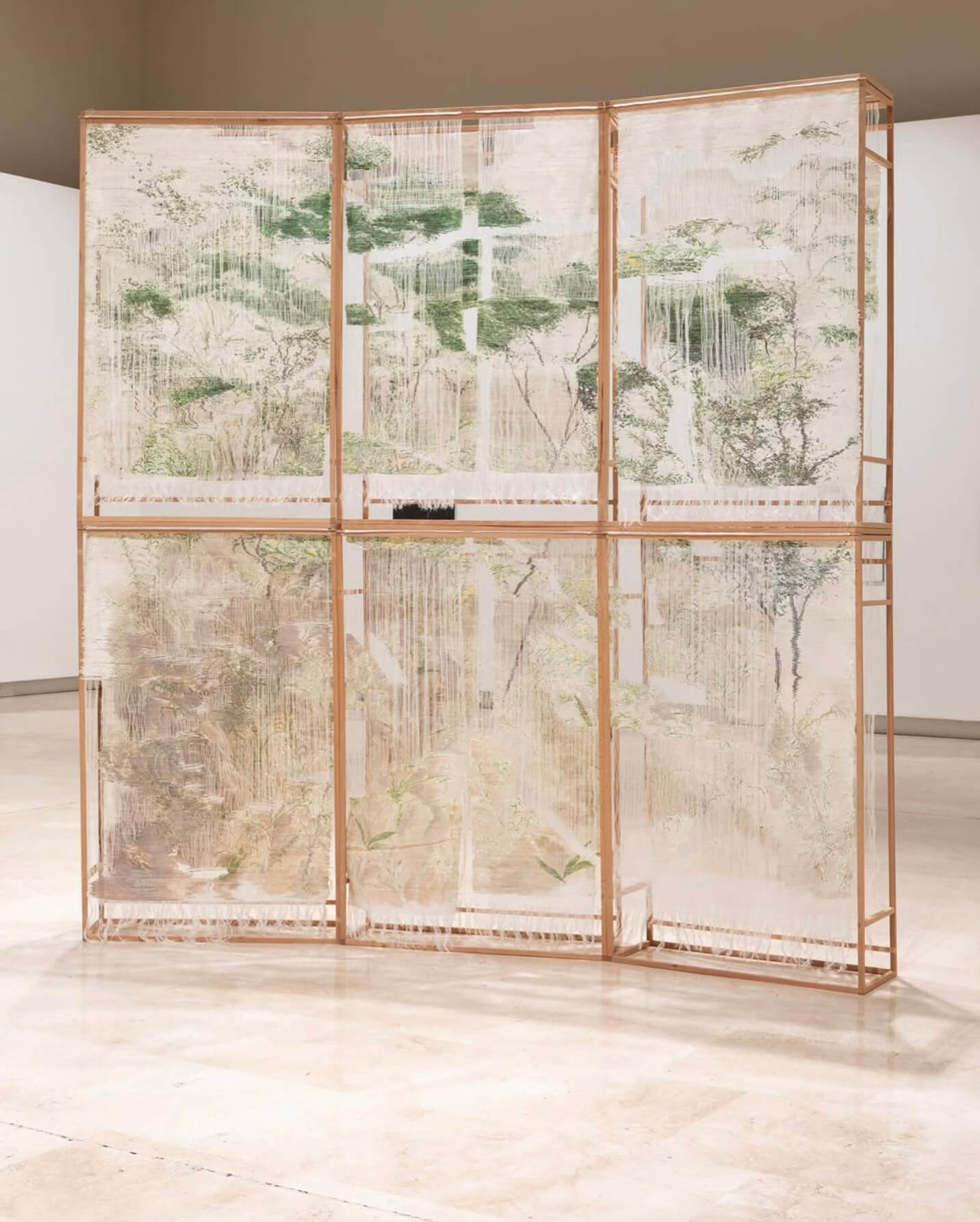
Elise Peroi
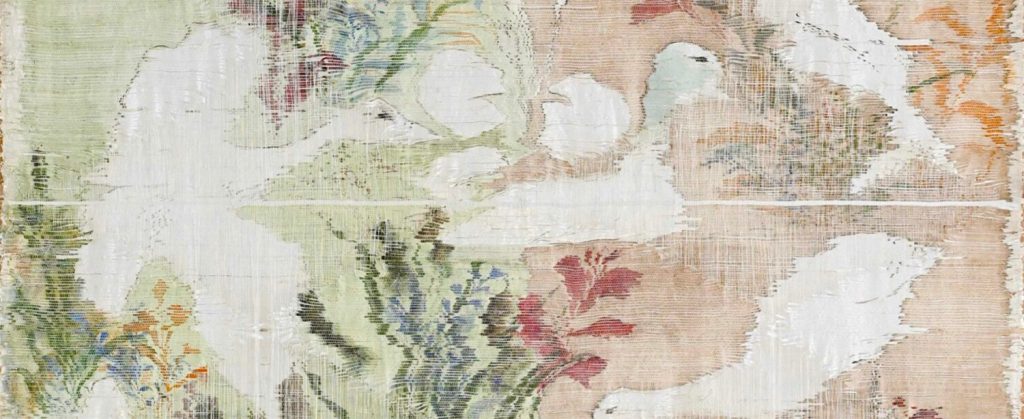
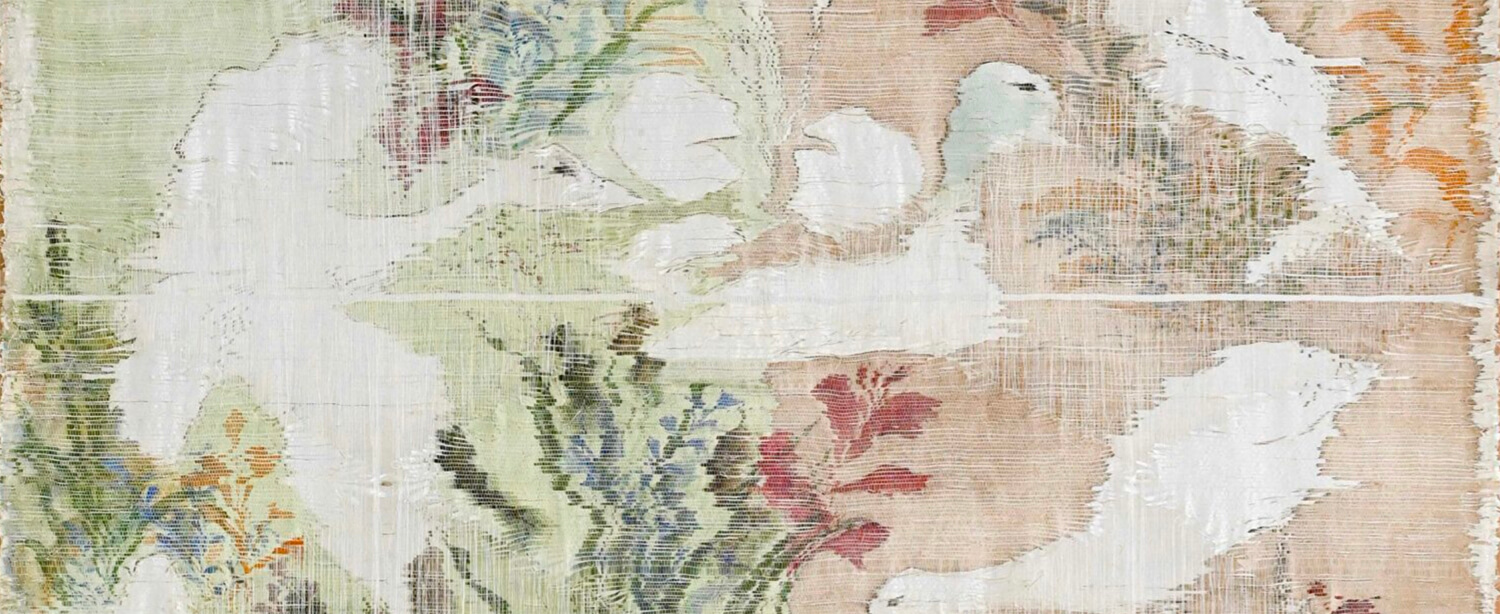
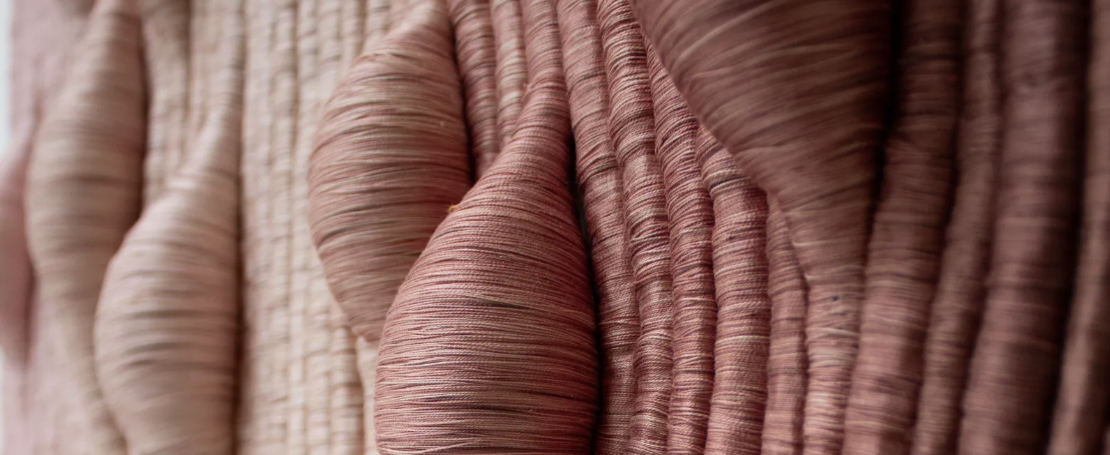
Rising French textile artist Elise Peroi makes liminal artworks that hover between mediums; part tapestry, part painting, and part sculpture, her delicate and intricate work brings plant forms and subtle, naturalistic colours into semi-translucent constructions that act like doorways into another realm. Exploring the airy, breathable, and mutable properties of nature, she likens herself to a landscape gardener, observing, “I’m looking for ways to translate the breath of the landscape and the landscape itself as an inhabited place.” She adds, “The foundation of my work is determined by materials from [a] garden: ‘flax, silk, wool.”
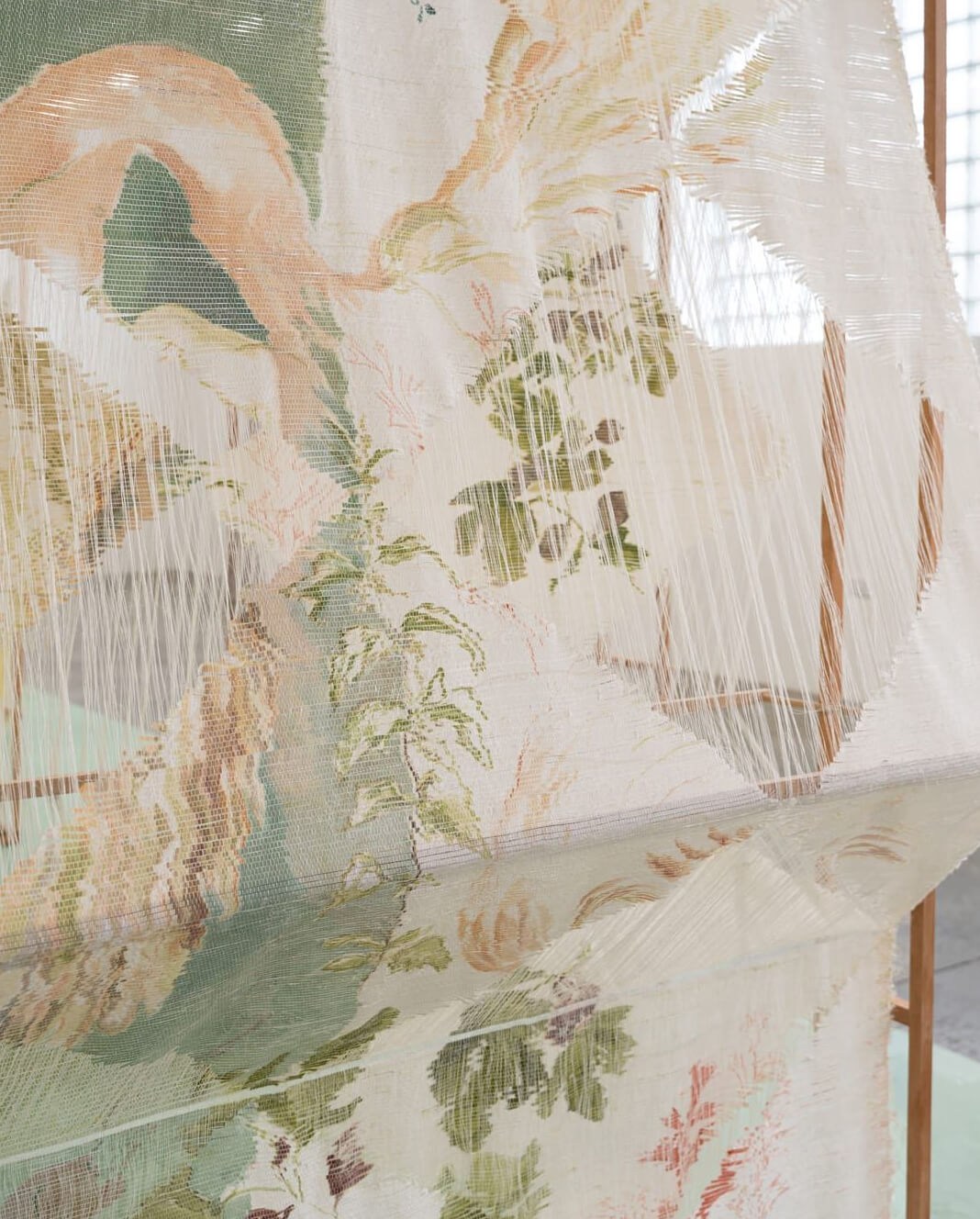
Elise Peroi
Now based in Arles, France, Peroi studied textile design at the Académie Royale des Beaux-Arts in Brussels, where she completed an MFA in 2015. But her journey into art began much earlier. “From a very young age, I had the urge to create pieces that spoke of literature or poetry, interweaving the materiality of fabric with poems,” she says.
Influences came from her immediate family, as she explains, “there are two important figures in my family. The first is my mother, who’s a highly skilled seamstress. The other is my grandmother, on my father’s side, who was an illuminator and calligrapher. She worked on the Kalendrier des Bergiers, a medieval calendar printed from engraved wood.” As a young child Peroi assisted her grandmother’s work, making labels, as well as writing with a quill pen and applying gold leaf accents with a brush.
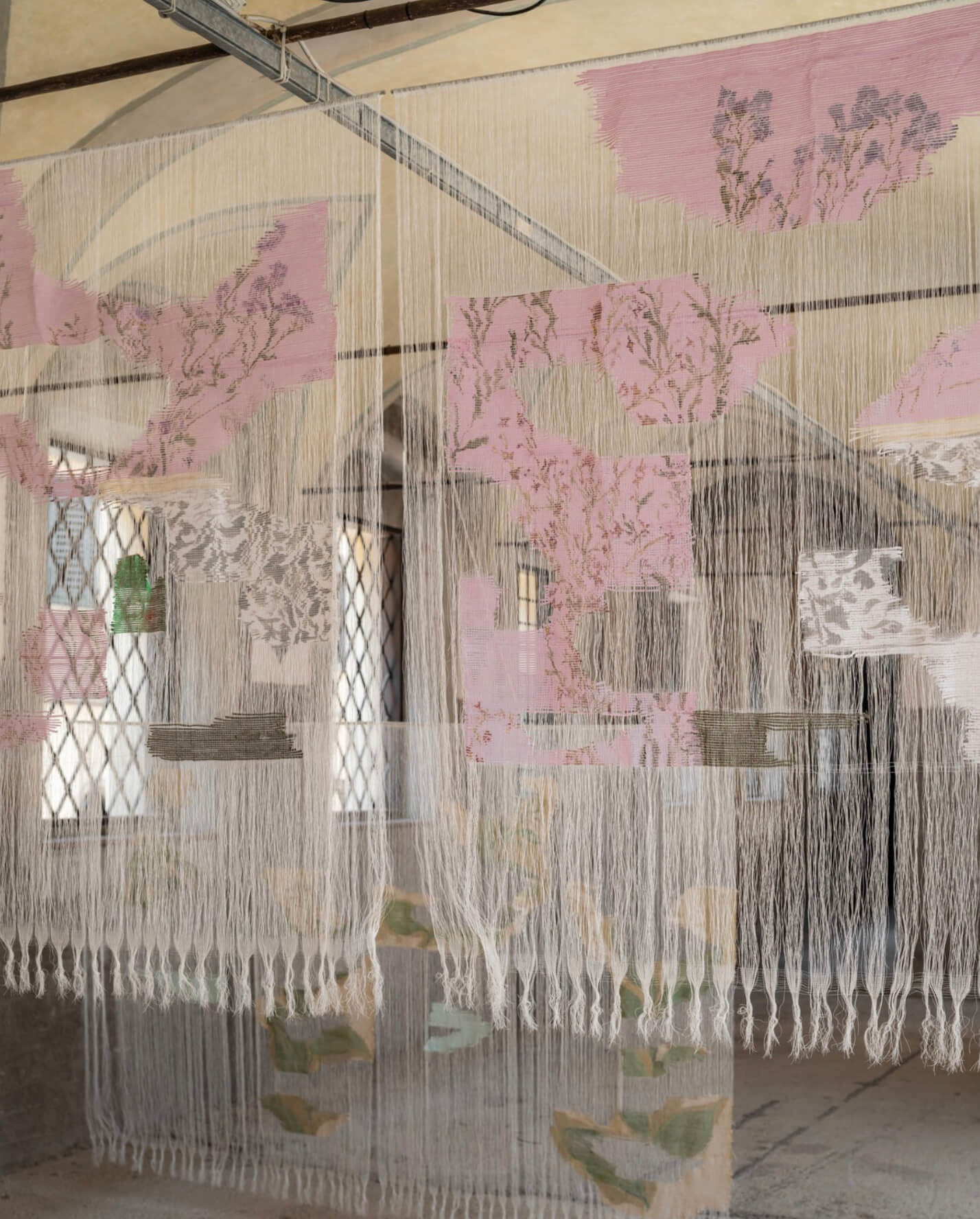
Elise Peroi
This early emphasis on time, care, and skill fed into Peroi’s practice as a student and young graduate, when weaving became central to her creative through processes. “I wanted to do everything I could to keep weaving, and my work eventually found its voice in the contemporary art field,” she explains. As a student Peroi was also drawn to the Chinese meditative martial art qi gong, and its quiet approach to containing and inhabiting space continues to inform her practice today.
Since graduating, Peroi has found her voice through incorporating subtly hued painted elements of naturalistic forms on silk, which are then playfully cut in to, and either rewoven, or left open, creating an airy, spatial quality. She works on one tapestry at a time, patiently, and mindfully, a process which can take weeks or even months, observing, “When I start weaving, I feel like I’m moving forward. I see something taking shape.” These weavings are then mounted onto wooden structures or frames, and arranged into complementary groups, resembling the ordered panels of Japanese screens. Sometimes they stand upright, or lie flat on the floor, or are suspended from the wall. In experimenting with differing arrangements, she invites viewers to move around the work, viewing it from differing angles and how it integrates with the space and light around it.
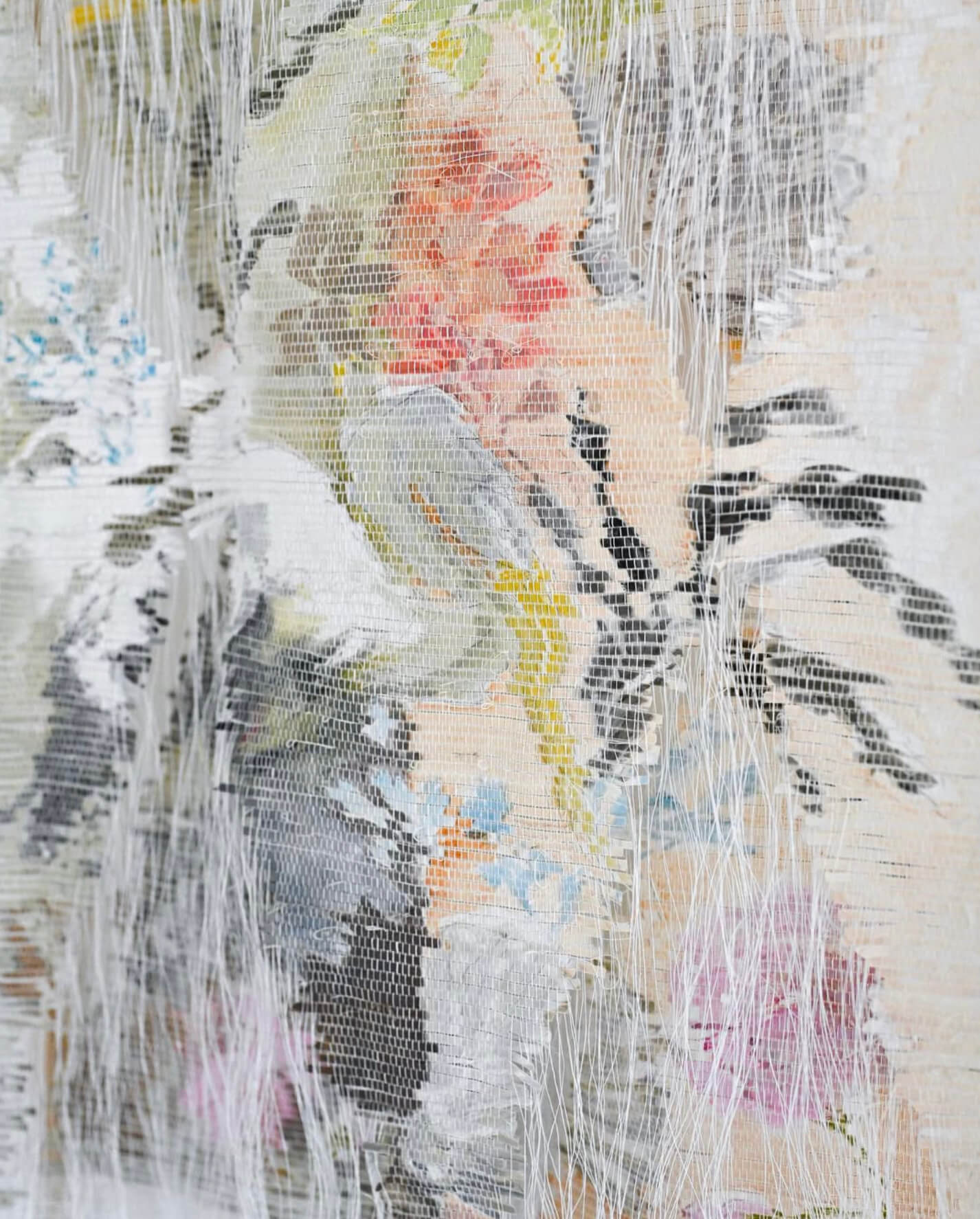
Elise Peroi
Peroi also likens the fusion of nature and structure in her practice to the integration of landscape and architecture that is so central to our lives today, for both urban and country dwellers alike. She says, “When I work on a piece of textile, I can’t help but think about architecture. A fabric, like a house, should be well made and sturdy enough. That requires an underlying architectural structure.”
Peroi also sees the act of weaving, particularly for her floor-based work, as intrinsically linked with the concept of the garden, noting, on the one hand, “I make the age-old link between garden and carpet.” But her works resemble gardens in a variety of other ways, each acting as its own private blend of order, symmetry and chaos, and each also miming the spiritual escapism and room to breathe that so many of us can find within organised green space, however big or small.


Related posts
Empowering Textiles: Joana Vasconcelos
Portuguese artist Joana Vasconcelos makes vast, all-encompassing sculptural installations that embrace the wonder of textiles in all their glory, from crochet and embroidery to needlework and knitting, which she often incorporates with every day, found object including pianos, sinks, and computers, creating unlikely but strangely celebratory juxtapositions. She is now known worldwide for these vivid,…
Made with Love: Richie Wilde Lopez’s Intimate Textiles
There is a familiar quality of warmth and intimacy bound into each thread of Puerto Rican artist Richie Wilde Lopez’s tactile textile art, which he produces in homage to his family heritage, and the women who passed traditions of weaving, embroidering, dyeing and creating down to him. He believes memories are stored deep within fabrics,…

Knitting and Knotting Together Joy in Katrina Sanchez’ Textile Art
Fiber artist Katrina Sanchez makes deeply tactile and brilliantly bright knitted objects that speak of her sunny childhood in Panama, bringing a joyful and optimistic sensibility to the spaces they inhabit. The innocence of her soft, puffy creations makes them immediately appealing on a surface level, but they also form a potent means of fantasy,…
Milla Novo: Weaving New Worlds
From her busy studio in the Netherlands, textile artist Milla Novo has been making great waves in the realms of interior design since launching her career in 2017. Widely recognised today for injecting a lease of new life into the traditional macrame craft, she creates vast, all-encompassing wall-hangings and installations, in which vividly coloured and…
Knots and Webs in the Textile Art of Joana Schneider
Contemporary, German-born textile artist Joana Schneider’s art takes many forms, from haunting, mask-like faces and rhythmic abstractions to excerpts of text. But running through her multifarious subject matter is a common theme; the techniques and materials associated with the fishermen and netmakers of the harbour areas in The Hague, an area she has come to…









SEW THIS LOOK

Latest Posts

Leave a comment