

Empowering Textiles: Joana Vasconcelos
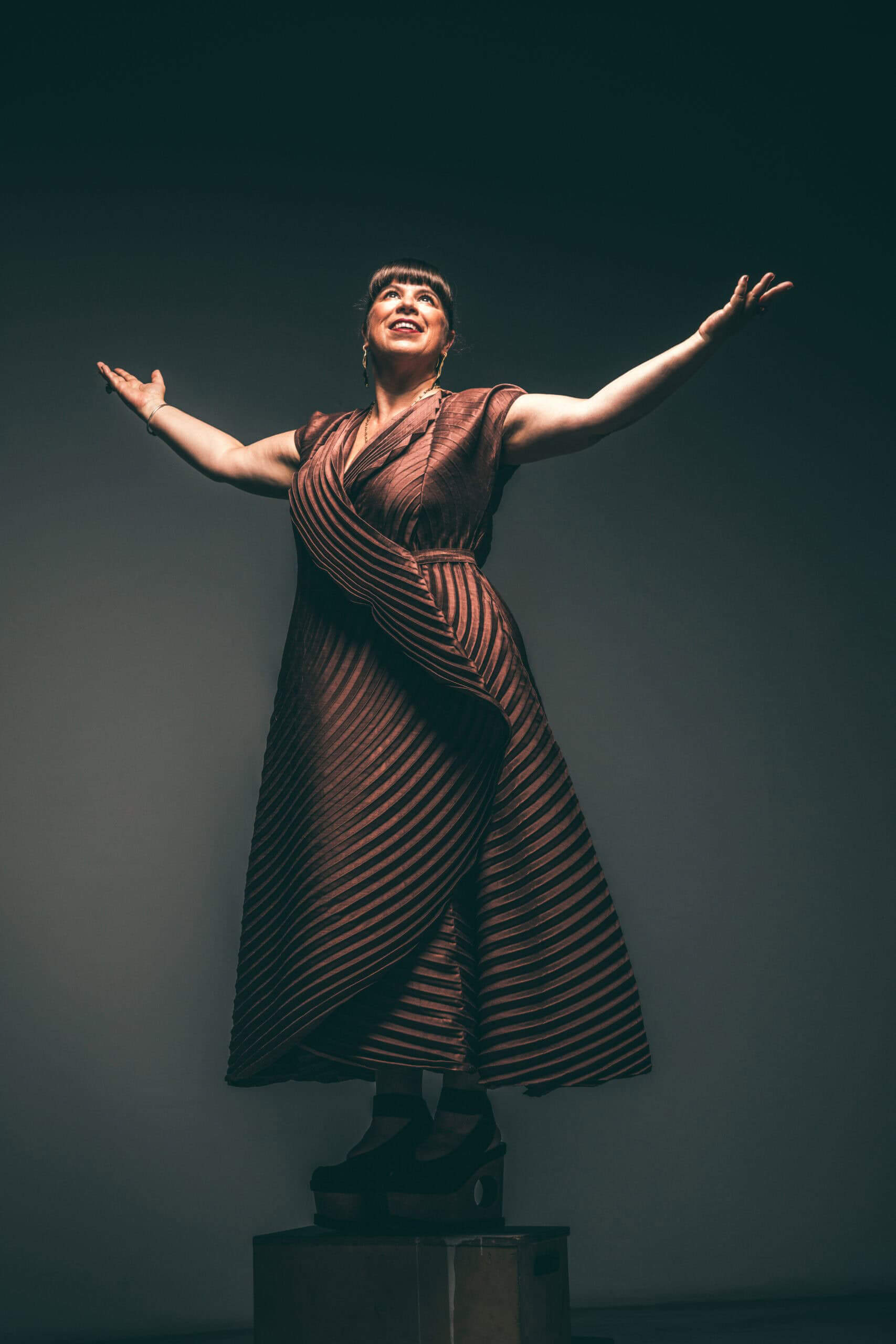
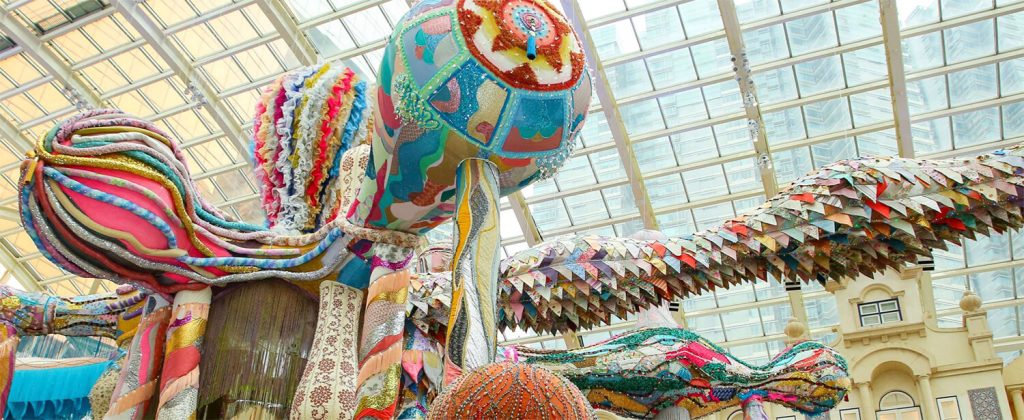
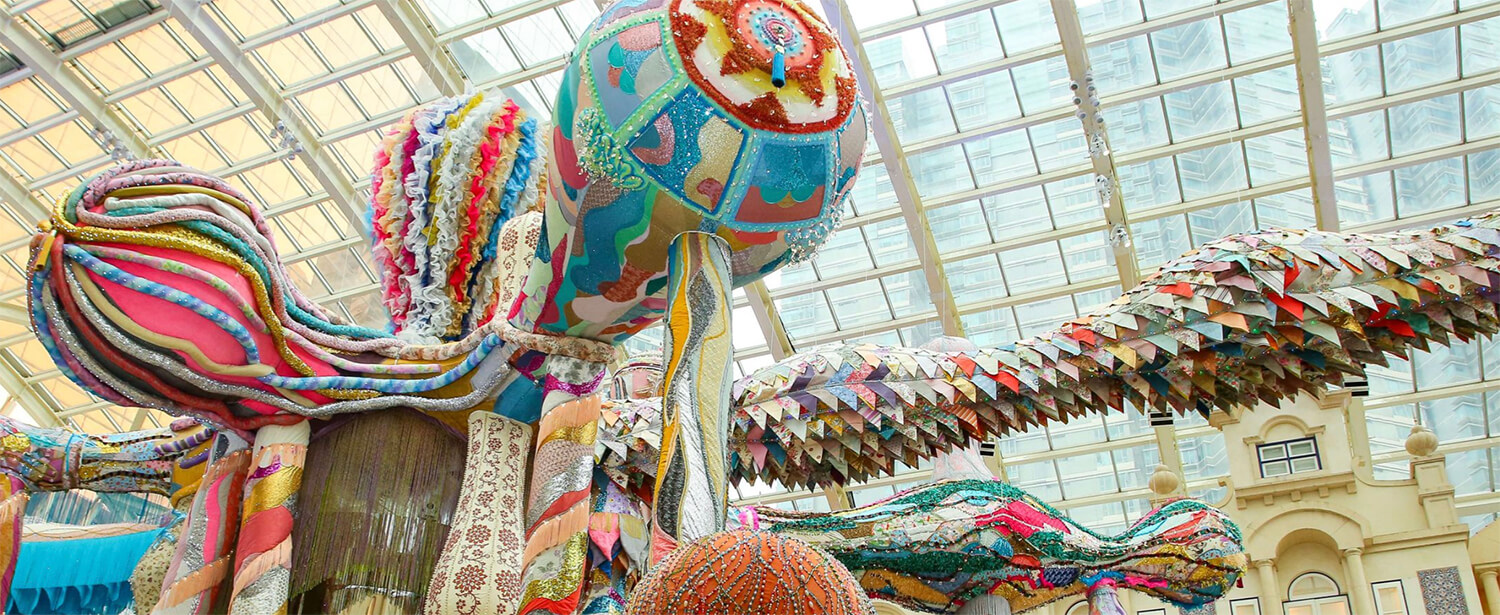
Portuguese artist Joana Vasconcelos makes vast, all-encompassing sculptural installations that embrace the wonder of textiles in all their glory, from crochet and embroidery to needlework and knitting, which she often incorporates with every day, found object including pianos, sinks, and computers, creating unlikely but strangely celebratory juxtapositions. She is now known worldwide for these vivid, evocative works which pay tribute to the joy of texture, surface, pattern and colour, and invite us to consider the relationship between hand-crafted, traditionally feminine practices, and mass production. She says, “The result of my work is the combination of my experiences—it’s the result of my personal life, my family heritage.”
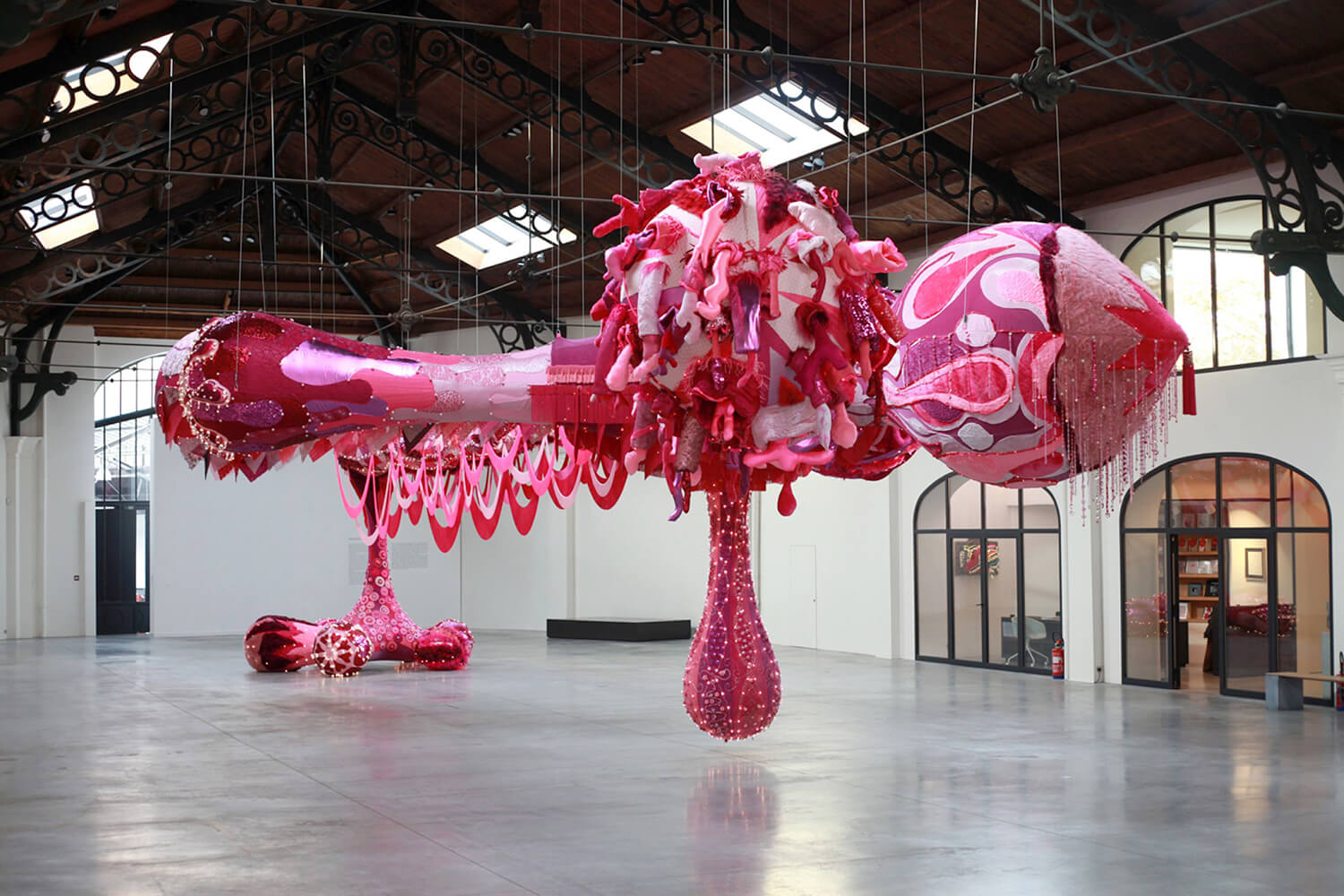
Material Girl, 2015
Vasconcelos trained in craft and design, with a focus on jewellery, and the practice has gone on to inform much of her mature art practice, as she explains, “I studied glass and ceramics, but I studied jewellery most seriously. I was able to experiment with all those mediums in school. It was quite a privilege because I got to work with materials that I continue to use in my daily practice. I draw a lot, too. I use my background in drawing, and the rest of the work is pretty much built like a jewellery piece.” She adds, “The only difference is the scale of the work. The construction of my sculptural projects comes from my jewellery background. When you are constructing jewellery, if you don’t get it right you have to start over. It’s like glass. When it breaks, it breaks.”
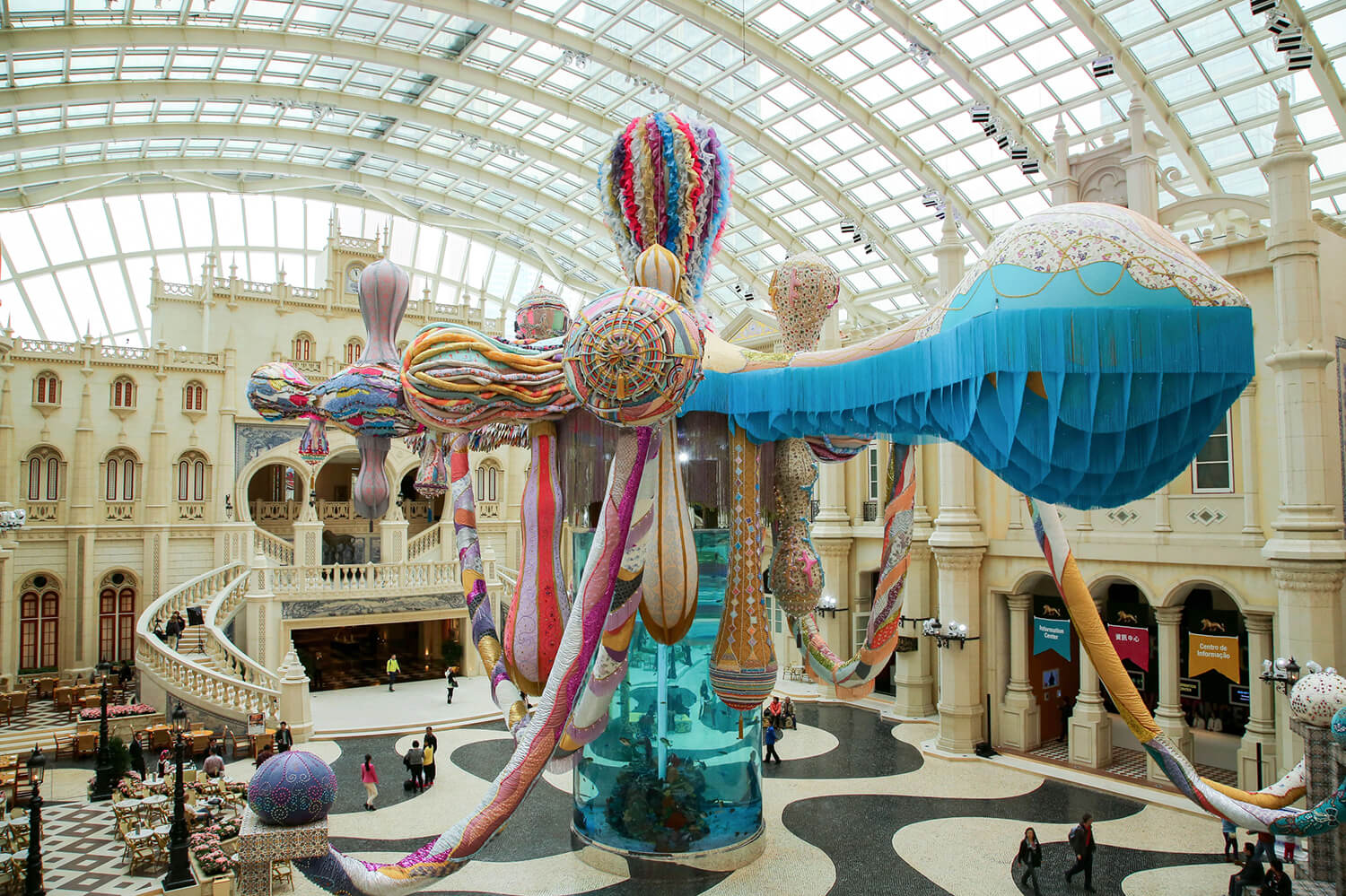
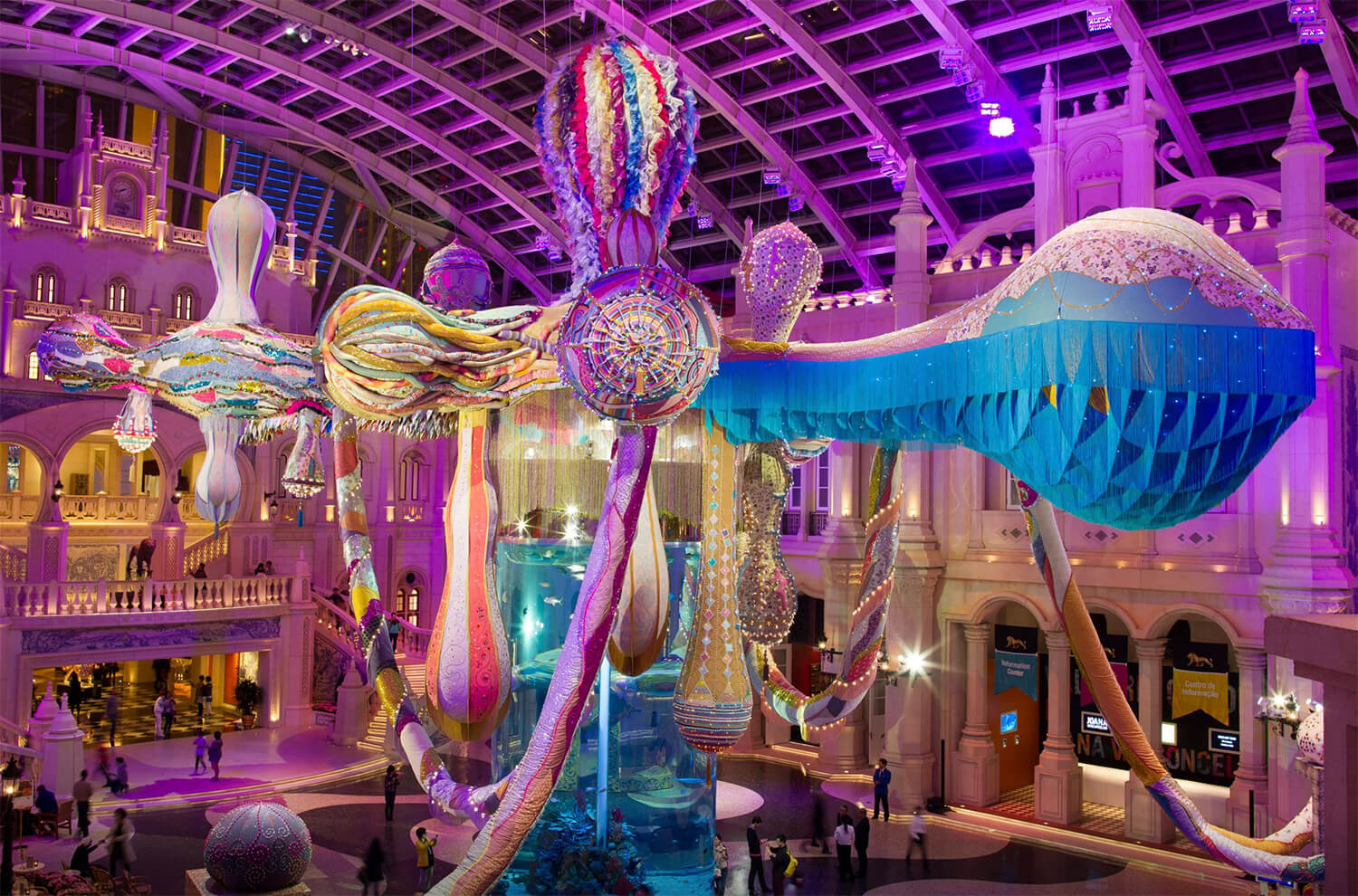
As well as being trained in constructing three-dimensional objects, she insists the skilled crafts of textile making are at the core of her work, noting, “I know how to knit, crochet, and sew. I spent many hours knitting or crocheting.” As her career has expanded, however, she has realised the efficiency of recruiting skilled craftspeople to assist her, particularly when the scale of her projects has continued to grow. She says, “I thought, if I spend eight hours doing everything, I will only produce one piece at a time. So, I decided to try something else. Let’s have more people working. Instead of knitting all day, I can make multiple pieces at once. Of course, I’m not as masterful as my artisans; I just do it from time to time. But in the beginning, I had to do it all.”
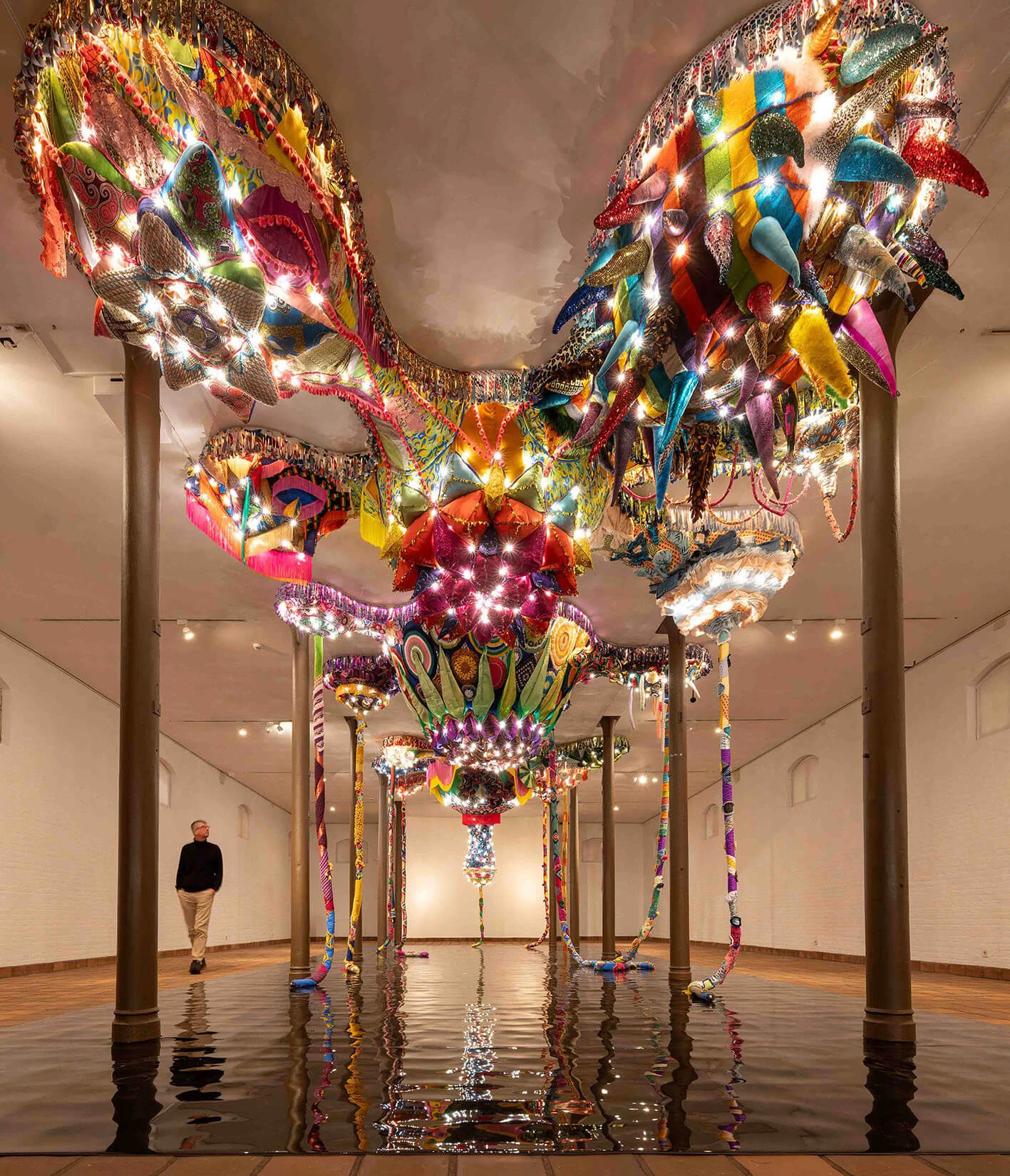
Valkyrie Marta, , 2022-2024
Working closely with craft traditions from her family history has allowed Vasconcelos to embrace her Portugues heritage, building a personalised language which is rooted in the past, yet made contemporary through experimental shapes, forms, and colours. She observes, “I believe that fabrics are part of the identity of a country. If you think about China, you think about silk. If you think about Africa, you think about capulanas. So related to cultural identity, you always have a fabric that’s associated. I really like to create that link with the local history and heritage of the place. Working with fabrics is one way to create that connection.” References she incorporates include Portuguese lace, and the seven skirts of Nazare.
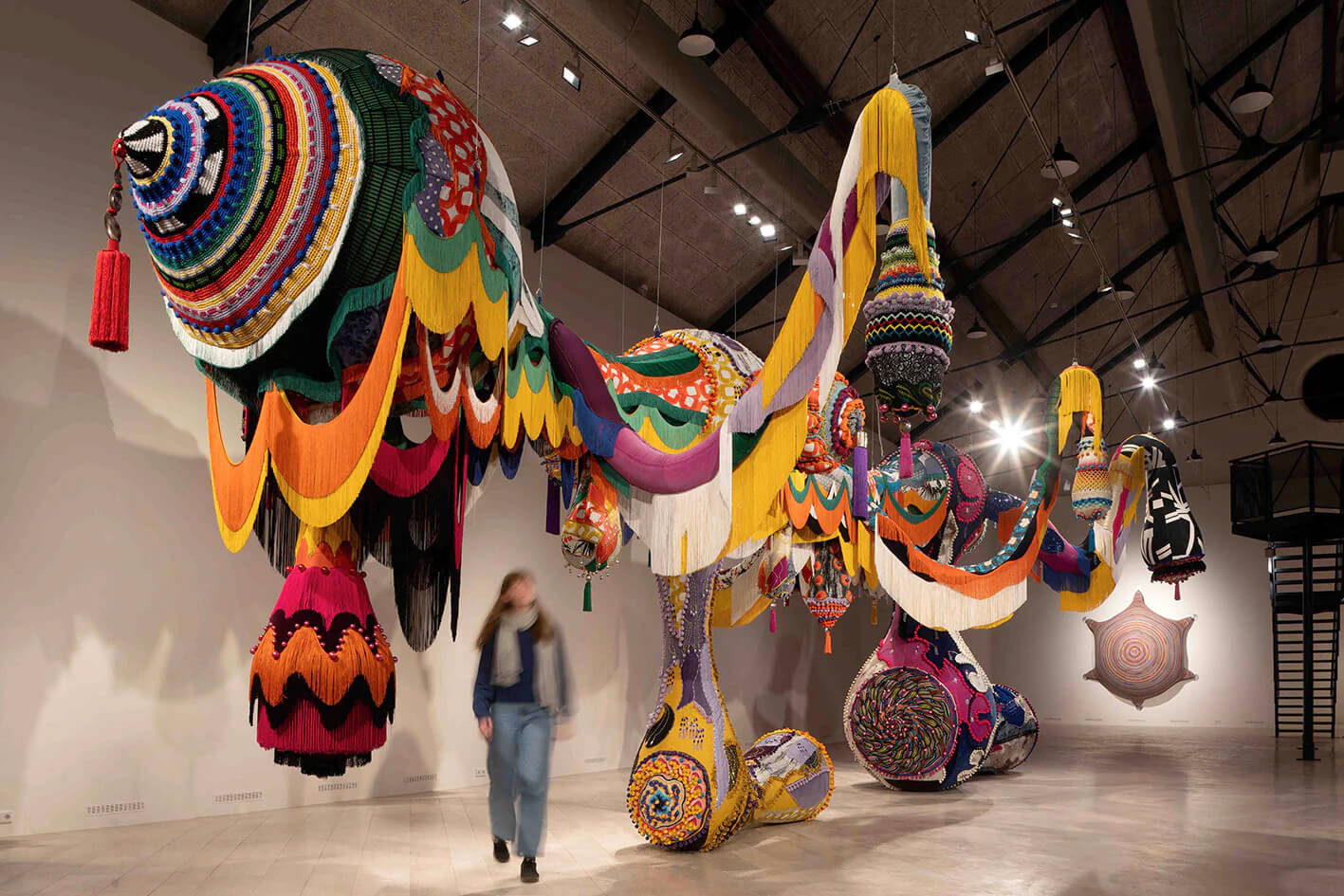
Valkyrie Marina, 2024
Within many of her works of art Vasconcelos also draws on feminist issues, and the importance of raising the status of crafts once associated with domesticity, rather than gallery or museum quality. The objects she incorporates with these skilled practices are often those associated with domestic labour, such as pots and pans, or kitchen sinks, a nod towards the unspoken labour of women who have so often also carried highly skilled making practices from one generation to the next. In her recent ‘Valkyries’ series, Vasconcelos makes monumental sculptural creations that pay homage to the all-powerful female warriors from Norse mythology, sharing a potent message of female empowerment, at a time when women are still fighting for their rightful place in the realms of contemporary art. Vasconcelos says, “The art world remains very male-oriented and, therefore, while there will be women artists who don’t earn as much or are given the same opportunities as men are, we need to continue to pursue the feminist fight. But first and foremost, I do believe in equal human rights for all human beings in the world.”

Leave a comment
Related posts
Made with Love: Richie Wilde Lopez’s Intimate Textiles
There is a familiar quality of warmth and intimacy bound into each thread of Puerto Rican artist Richie Wilde Lopez’s tactile textile art, which he produces in homage to his family heritage, and the women who passed traditions of weaving, embroidering, dyeing and creating down to him. He believes memories are stored deep within fabrics,…
Knitting and Knotting Together Joy in Katrina Sanchez’ Textile Art
Fiber artist Katrina Sanchez makes deeply tactile and brilliantly bright knitted objects that speak of her sunny childhood in Panama, bringing a joyful and optimistic sensibility to the spaces they inhabit. The innocence of her soft, puffy creations makes them immediately appealing on a surface level, but they also form a potent means of fantasy,…
Femininity, Identity and Memory in the Textile Art of Camila Barvo
Contemporary textile artist Camila Barvo weaves complex ideas into her soft sculpture and fibre art, invoking curious, surreal worlds that veer somewhere between dreams and nightmares. Long fibres are stretched out, teased and pulled into colossal twisted braids and knots, hung suspended from the ceiling, spilling onto the floor, or draped across outdoor surfaces. She…

Violeta Parra: Latin American Folk
A legendary Latin American folk musician, researcher, poet, and performer, Chilean artist Violeta Parra (1917-1967) was also a remarkable artist, producing a large body of intricate quilts and embroideries, or ‘arperillas’, traditional Chilean patchwork pictures made from wool, thread, and repurposed textile fragments. She famously displayed these embroideries at the Louvre in Paris in 1964,…
Milla Novo: Weaving New Worlds
From her busy studio in the Netherlands, textile artist Milla Novo has been making great waves in the realms of interior design since launching her career in 2017. Widely recognised today for injecting a lease of new life into the traditional macrame craft, she creates vast, all-encompassing wall-hangings and installations, in which vividly coloured and…









SEW THIS LOOK

Latest Posts
One Comment
Vicki Lang
What a beautiful talent. The colors, the drape of the fabric and the shape on such a large scale.