

Sewing Essentials: A Guide to Sewing Threads
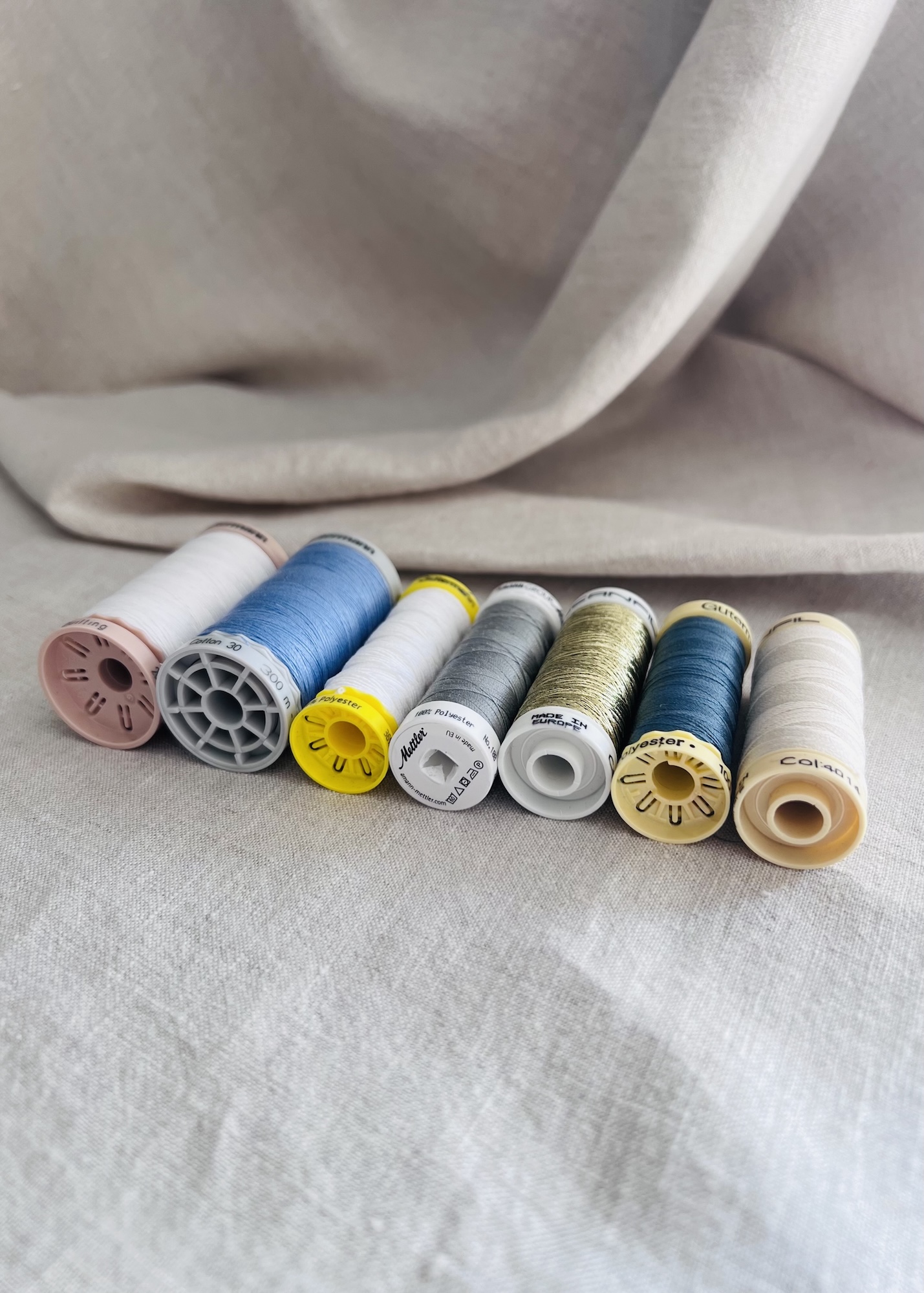
You might be thinking “Thread is thread… right?” Well, not always.
Sewing thread is a key part of any sewing project. But just like fabric, the thread you choose matters, affecting things like the strength, appearance, and durability of your stitching.
But if you have ever shopped for sewing thread, you probably know that it can be a little overwhelming. In-store, you will often be faced with racks and racks of different threads. These will vary in colour, thickness, and composition, each with its own characteristics. Not to mention the variety of brands.
Therefore, with this article, I hope to provide a quick reference you can come back to whenever you’re planning a new project. Hopefully, it will help you decide which thread might work best for what you’re making. I’ll focus on the most commonly used threads for machine and hand sewing.
Most Common Types of Sewing Thread
All-purpose Thread
Just as the name suggests, all-purpose thread is the standard go-to choice for most everyday sewing tasks. You may also hear it referred to as standard, general, or sew-all thread.
It’s versatile, reliable, and suitable for a huge range of projects, which is why you’ll likely have it on your sewing machine most of the time. If you sew a lot, you’ll also likely end up with it in just about every colour.
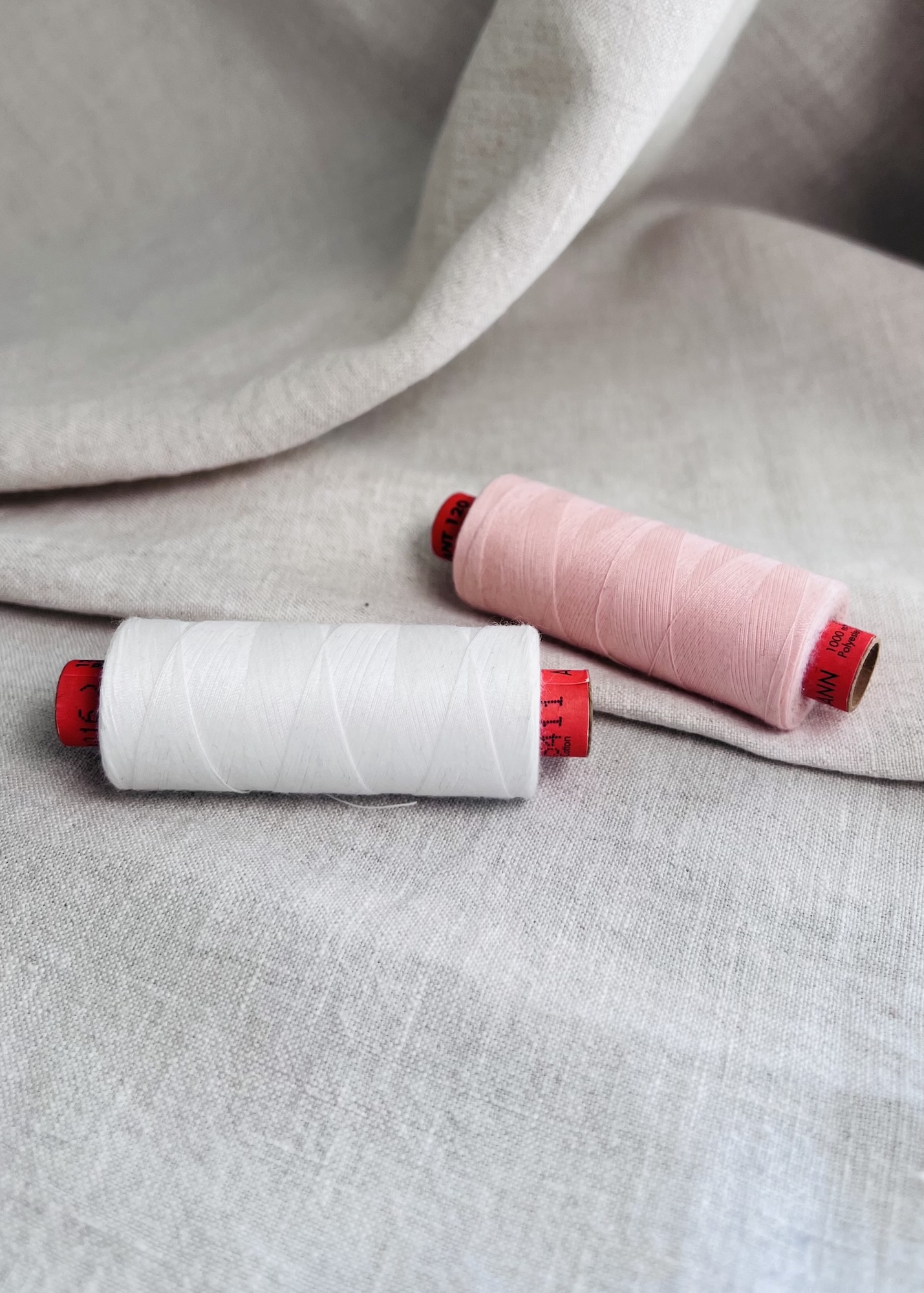
All-purpose thread can be made from polyester, cotton, or a blend of the two. Although generally, polyester all-purpose thread is more common. Thickness-wise, it sits somewhere in the middle, it’s neither thin nor thick, which may explain why it works so well for many different tasks.
Polyester is strong and flexible. Its flexibility makes it a great all-rounder as it allows seams to move and handle the stress of wear more effectively. This makes it ideal for stitching seams, hemming, basic garment construction, and repairs. It works with a wide range of light to medium weight fabrics, both natural and synthetic.
It is widely available in a range of spool sizes, commonly 100m, 250m, 500m, and 1000m. I usually buy larger spools of the colours I use most, and stick to the smaller 100m spools for all other shades. I generally find that this size is more than enough to complete a typical project.
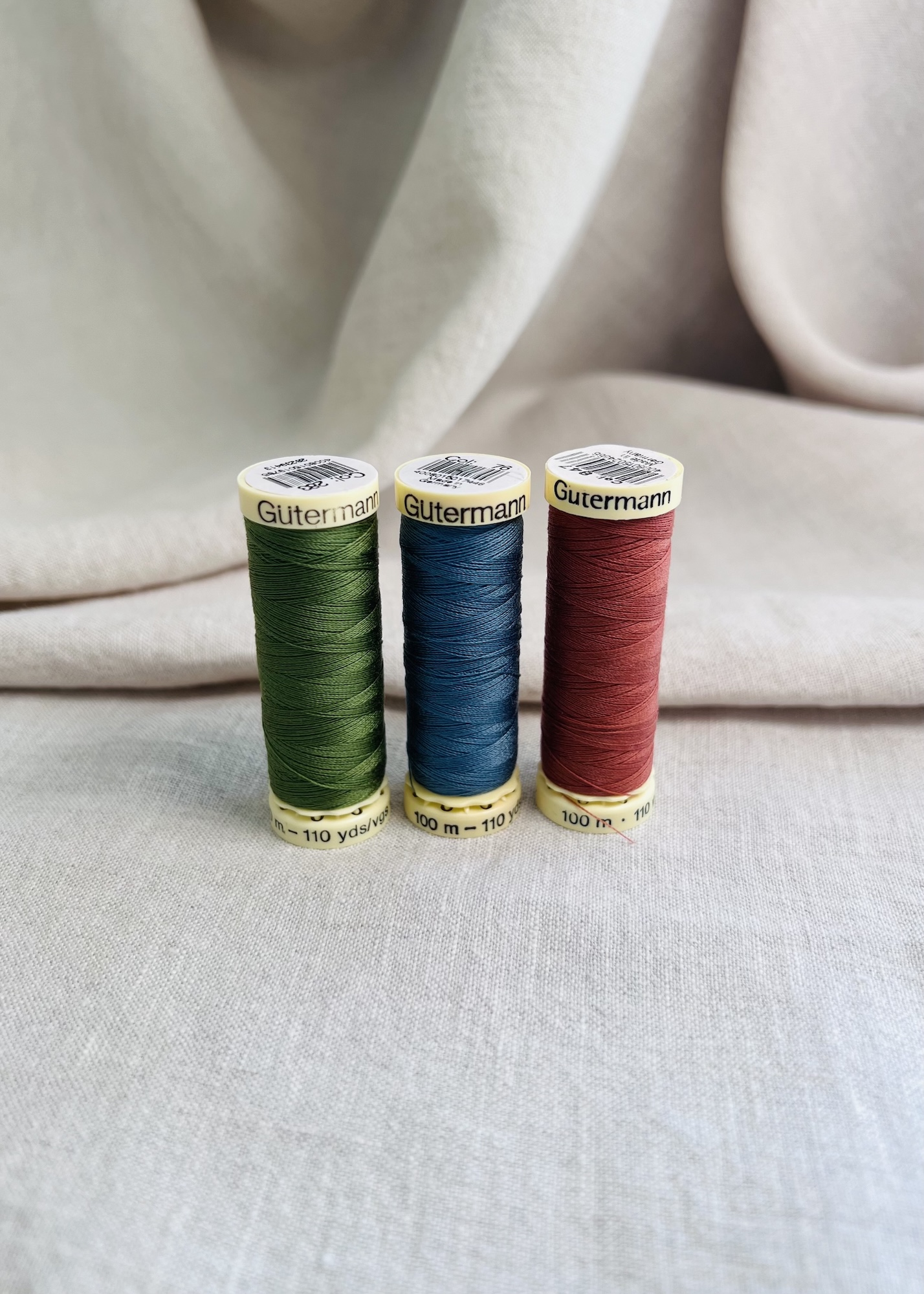
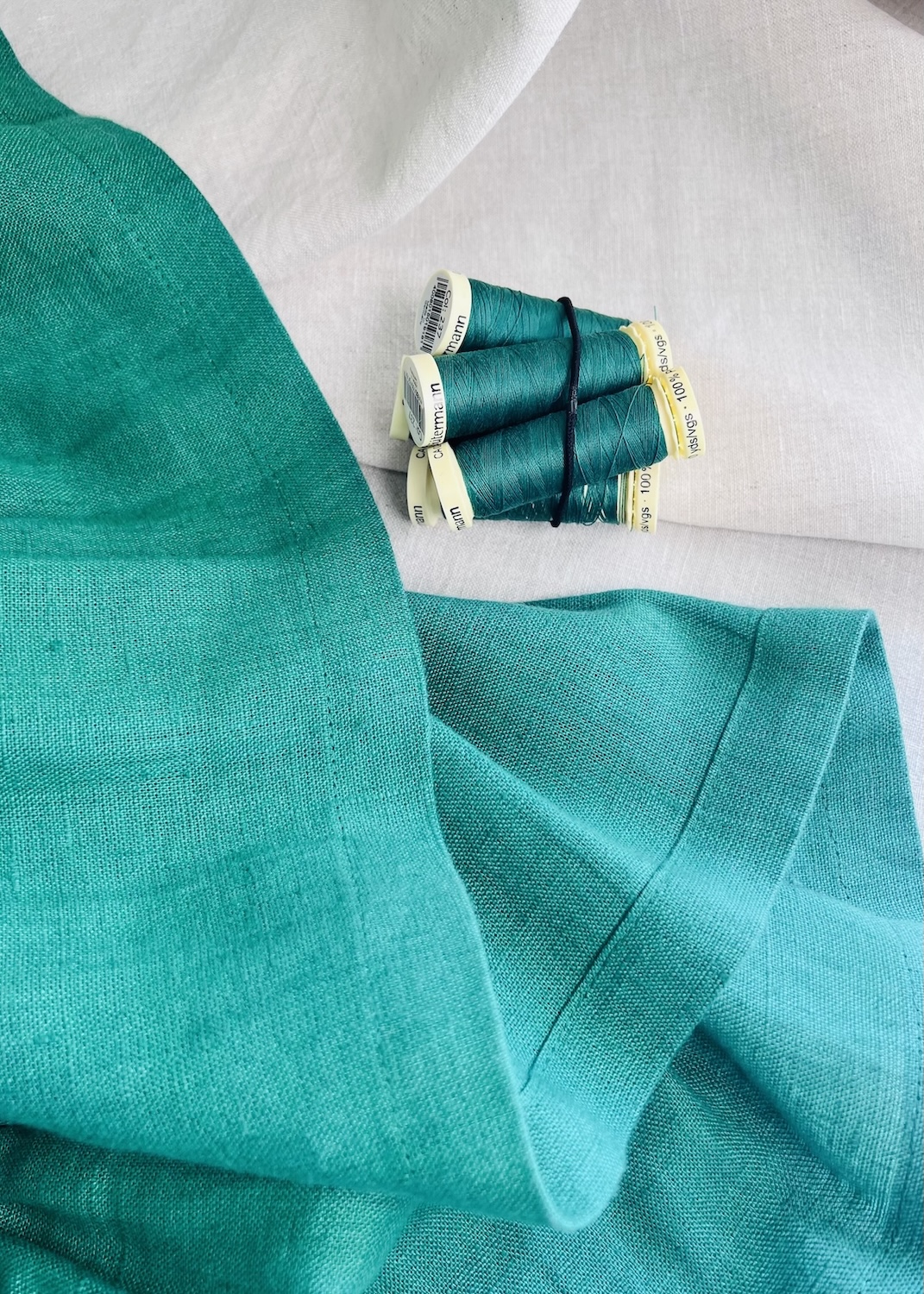
Tip: If you’re looking for a more sustainable option, rPET sew-all thread is available. For example, the Gütermann Sew-All rPET thread photographed below is made from 100% recycled polyester from PET bottles.
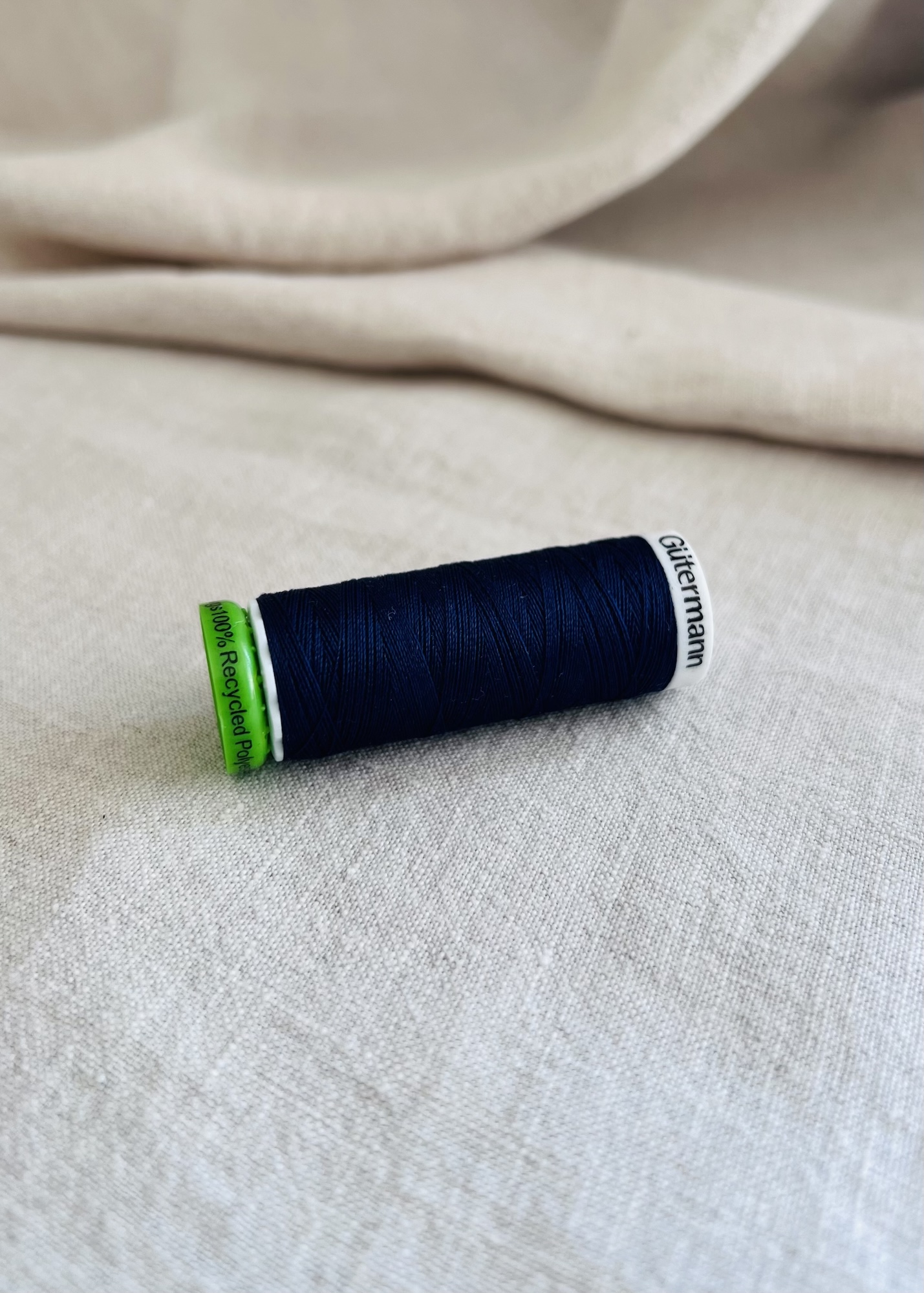
Cotton Thread
Cotton thread is made from spun cotton fibres, giving it a soft, natural feel and a smooth, matte appearance. Because it’s a natural fibre, it’s more suited to sewing natural fabrics such as cotton and linen.
Compared to polyester, cotton thread is generally weaker and has less give. Because of this, it can break more easily under tension or in areas of garments that experience a lot of stress. For that reason, cotton thread is usually better suited to lower-stress sewing projects, such as loose-fitting garments, quilting, and decorative stitching, that don’t require a lot of durability or flexibility. I learned this the hard way, sewing a cotton jumpsuit with cotton thread as a more sustainable option. Unfortunately, on the first wear the underarm seam split.
Cotton thread does however have some advantages:
- It can withstand high temperatures.
- It takes dye really well, making it a good option for garment dyeing.
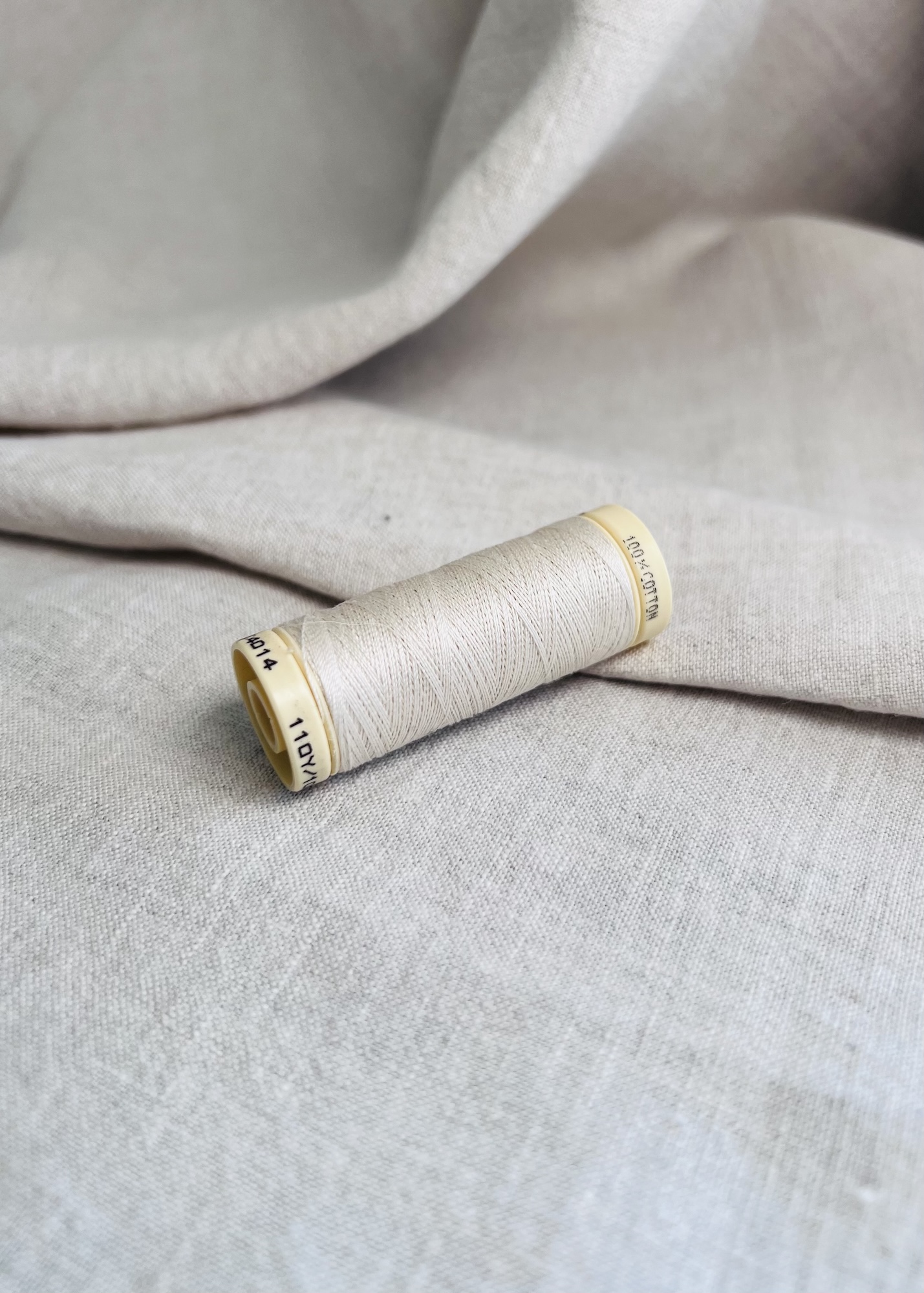
Mercerised versus non-mercerised:
You may come across the terms mercerised and non-mercerised when looking into cotton thread. Simply put, mercerisation is a treatment process that strengthens the cotton fibres, improves dye absorption, reduces lint, and gives the thread a slightly shinier finish. Non-mercerised cotton thread, on the other hand, has a softer, more natural matte appearance, but it can be slightly weaker and may produce more lint while sewing.
Silk Thread
Much like silk fabric, silk thread is usually reserved for more special or delicate projects, rather than everyday sewing.
It is smooth and naturally shiny, which allows it to glide easily through fabric without causing damage, making it ideal for fine and delicate fabrics. While silk thread can be used in a sewing machine, it is more commonly used for hand sewing tasks, such as hand sewing hems, hand embroidery, or attaching beads or embellishments. I once used silk thread to hand sew beads onto a silk dupion fabric. The fine, smooth thread was easy to work with and helped prevent damage to the fabric.
One thing to keep in mind is that silk thread can split or unravel quite easily once cut, so it requires a little care when working with it.
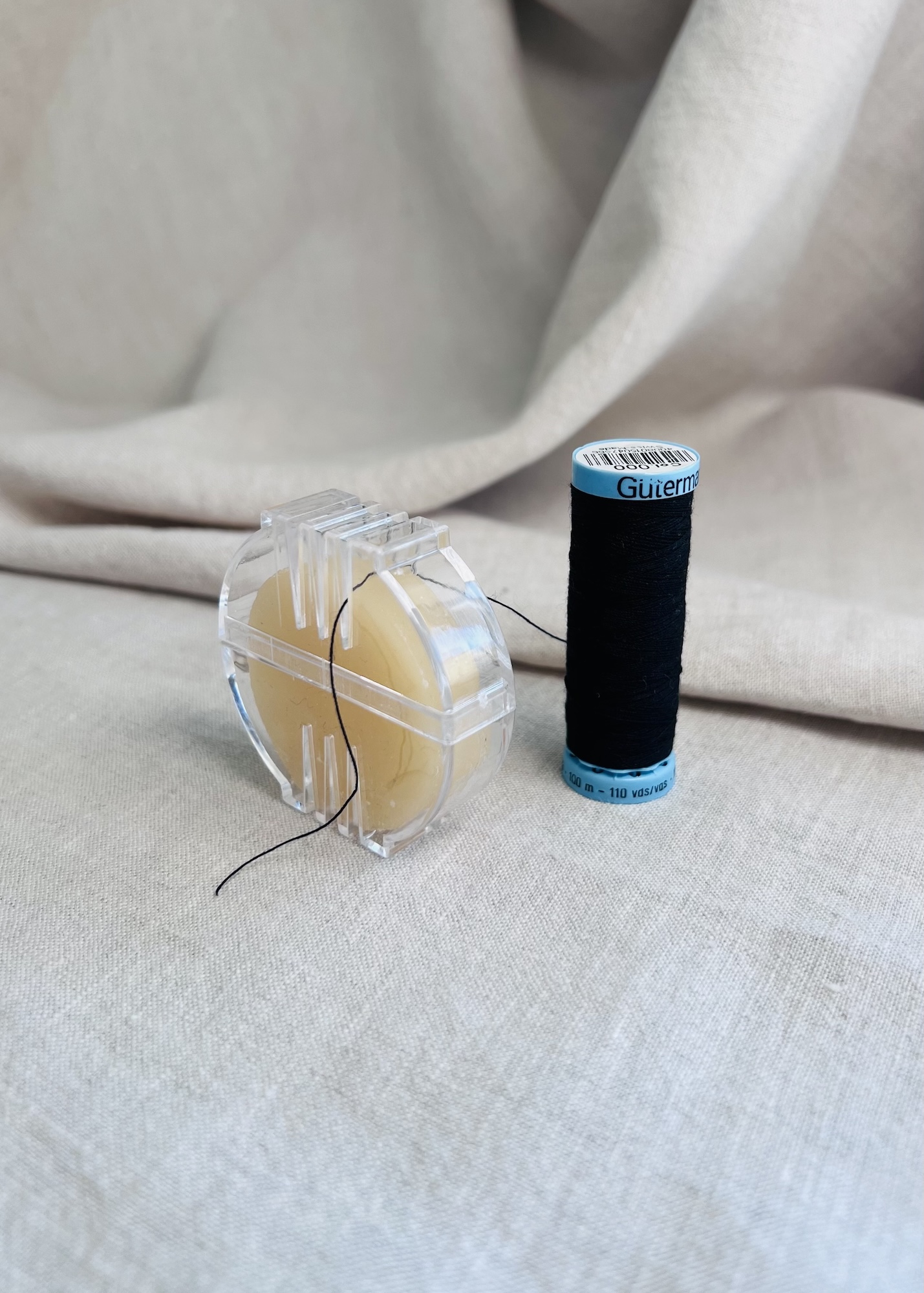
Tip: Have you tried tailors wax? This prevents threads from splitting, fraying, or tangling, and helps them glide smoothly through fabric. Simply pull the thread through the wax a couple of times for a thin, even coating and wipe off any excess.
Topstitching Thread
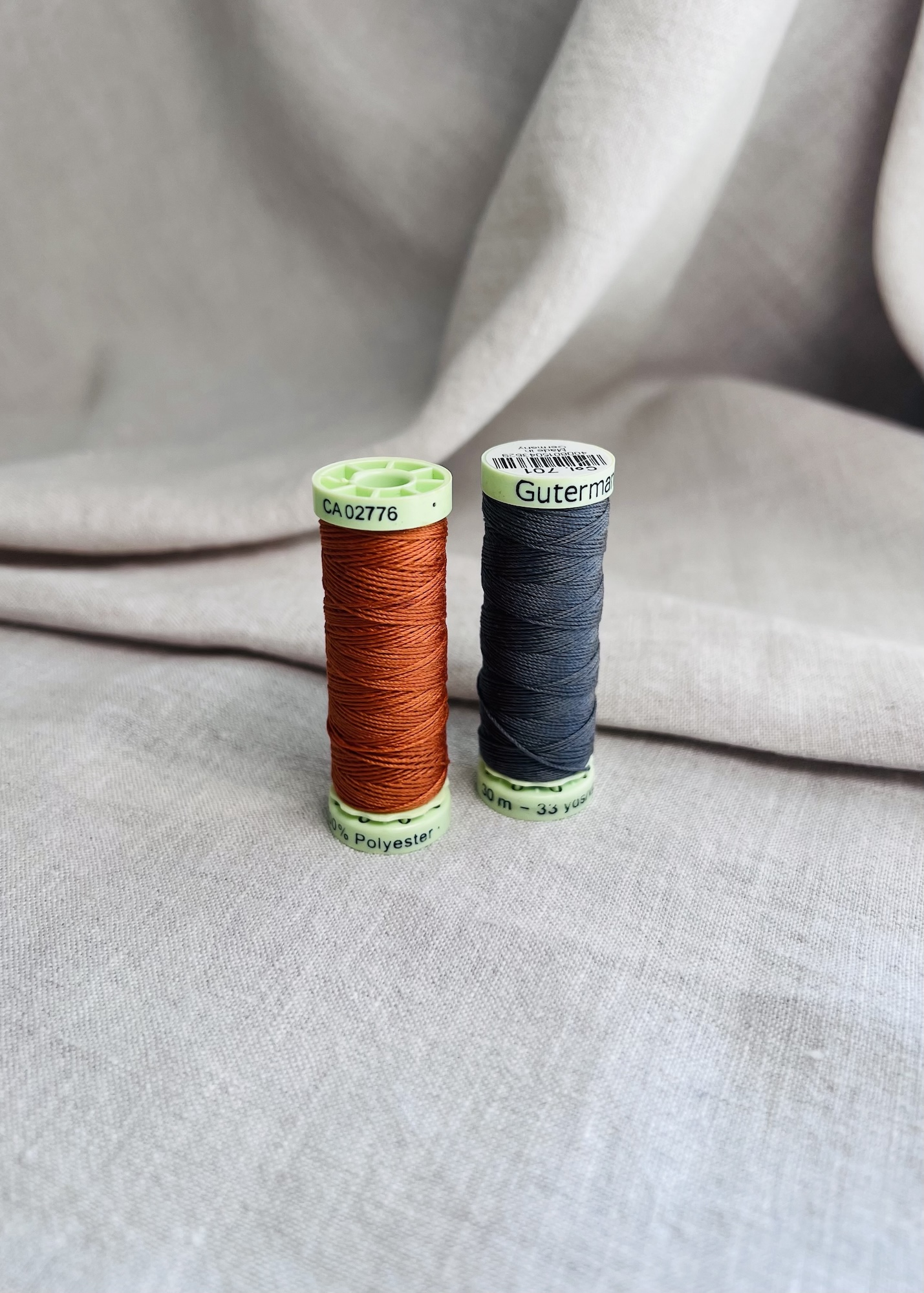
Topstitching thread serves both a functional and decorative purpose, adding strength to seams while also creating a visible design detail. A classic example is the contrast stitching found on jeans.
Topstitching thread is typically made from polyester, giving it strength and a slight sheen, though cotton options are also available.
This thread is a lot thicker than standard all-purpose thread, which helps create more defined, and noticeable stitching. It’s usually sewn using a slightly longer stitch length, allowing the stitches to stand out even more.
Topstitching thread usually comes in a smaller range of colours compared to all-purpose thread. It’s usually used only in the upper thread of the machine, not in the bobbin. The bobbin is typically filled with a regular all-purpose thread to help maintain smooth stitching and proper tension.
Topstitching thread works well on medium to heavyweight woven fabrics.
Denim Thread
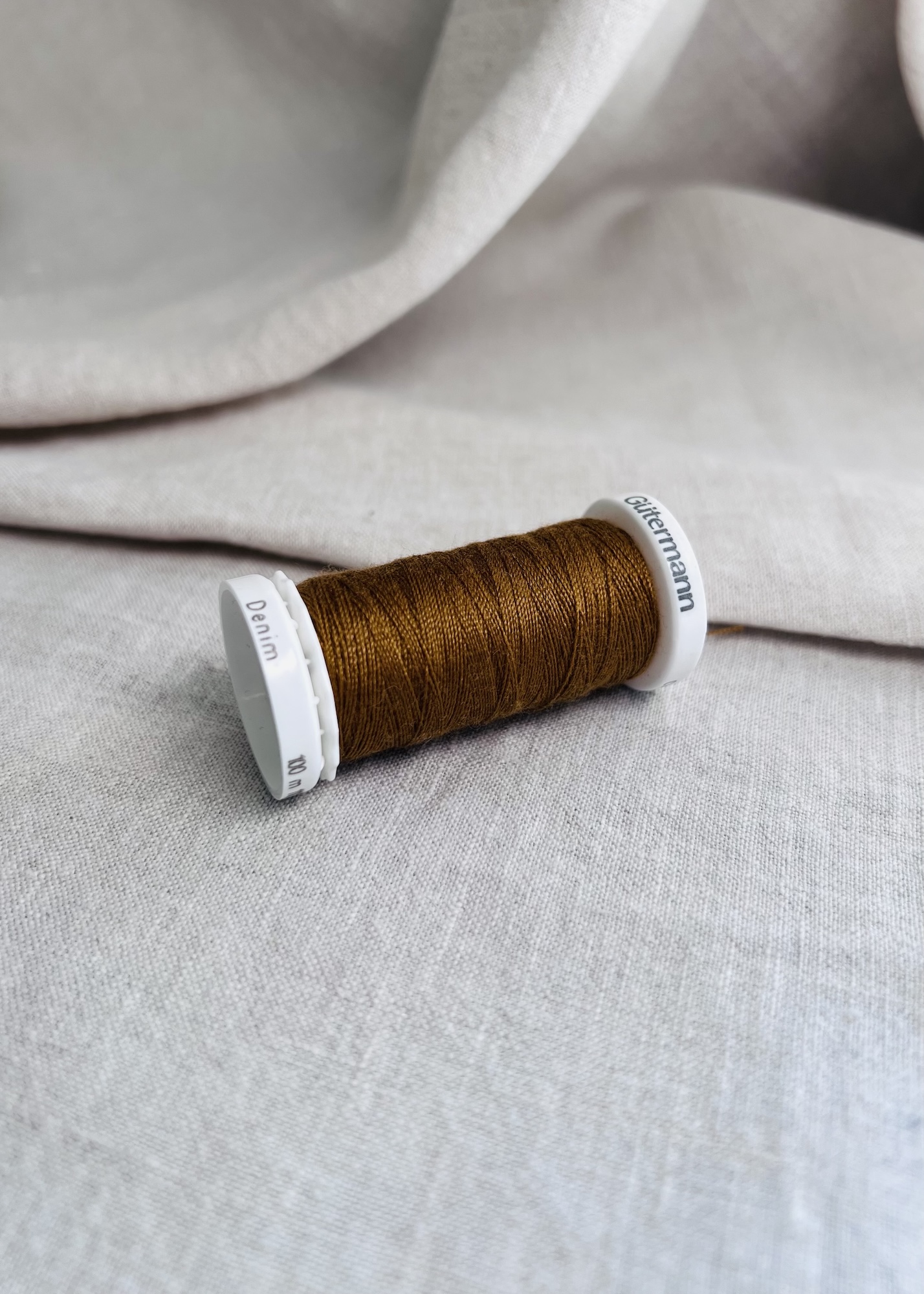
As the name suggests, denim thread is designed for sewing denim and other heavy-duty fabrics that require strong, durable stitching.
Denim thread can be made from polyester or a polyester-cotton blend. The blend features a polyester core for strength wrapped in cotton, combining durability with a slightly softer, more natural look. Because of the cotton outer, it can leave a bit of lint in your machine, so it’s a good idea to clean your machine afterwards.
Denim thread is thicker than standard all-purpose thread, which helps create robust stitching and decorative seams. It usually comes in a more limited range of colours, typically the shades you find jeans in.
Embroidery Thread
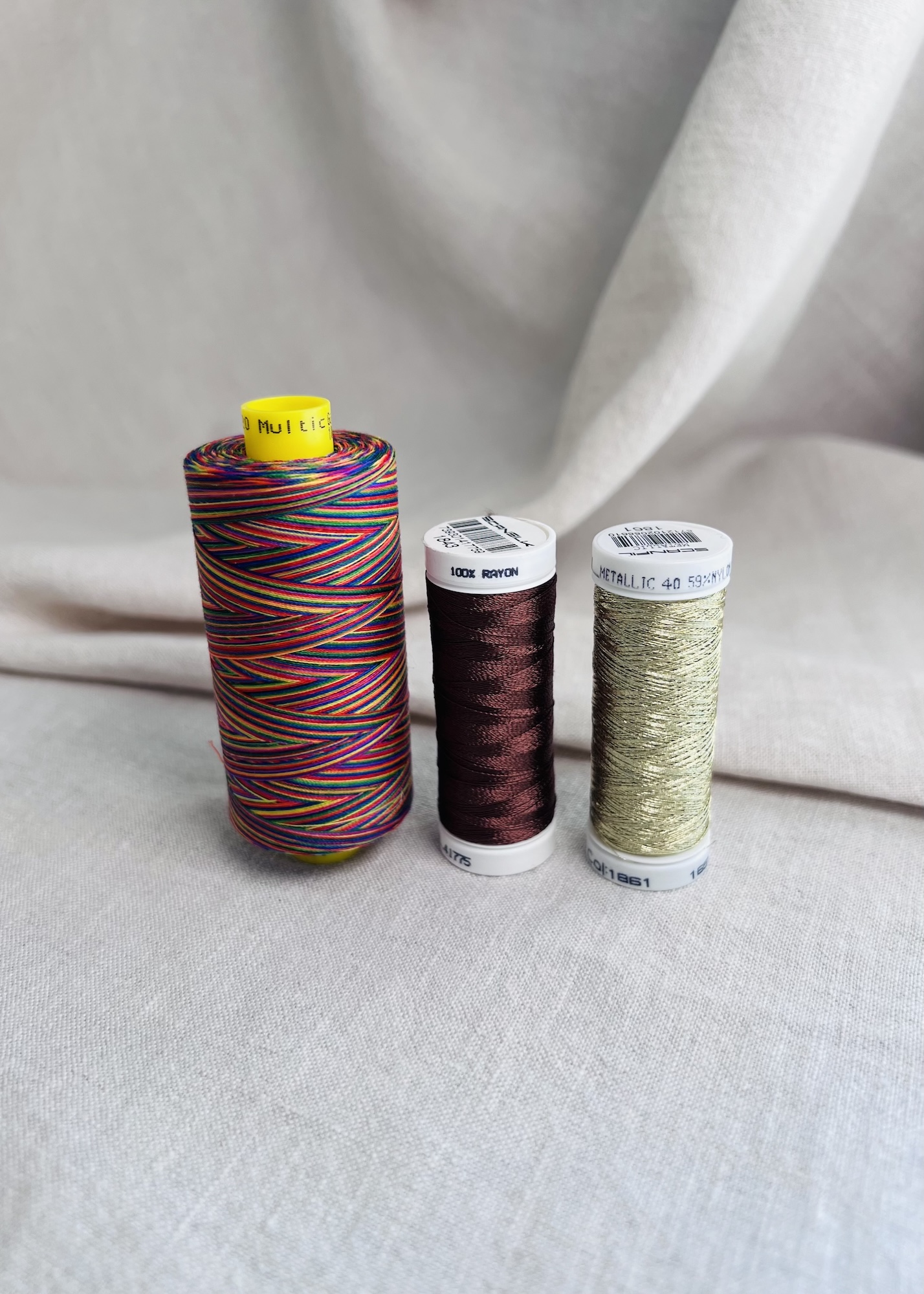
Embroidery thread is designed to be decorative, adding sheen, colour, and texture to projects. It comes in a range of fibres and finishes, from shiny to matte, each creating a different effect.
Some of the most common types of machine embroidery thread include:
- Polyester: Smooth, shiny, and available in many colours. This strong and durable thread makes it ideal for everyday, washable embroidery projects.
- Rayon (viscose): Softer than polyester, shiny, and vibrant in colour, but slightly less strong, being better suited for decorative projects.
- Cotton: Subtle sheen or matte finish, softer and thinner, making it suitable for hand or machine embroidery, when after a more natural look.
- Silk: Fine, soft, with natural sheen. It is ideal for more specialised projects.
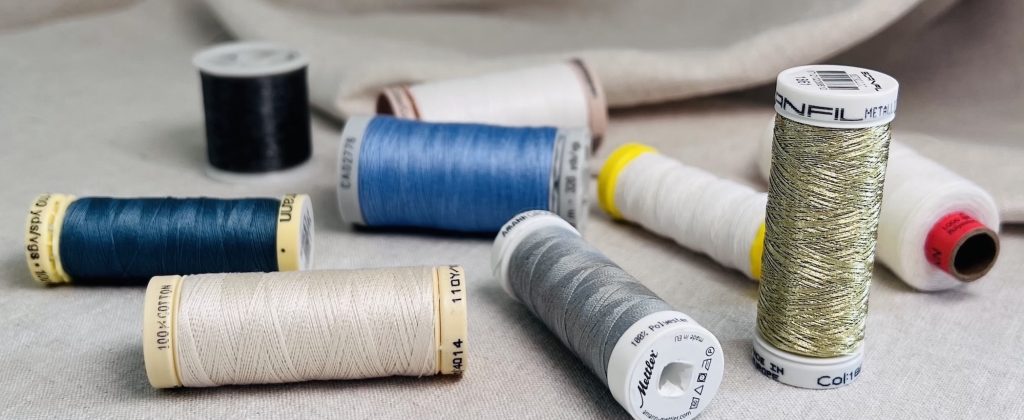
- Metallic: Typically a polyester core wrapped in metal foil. While it adds a little sparkle, it is fragile, heat-sensitive, and not suitable for construction seams. It can split easily, so handle with care.
- Variegated: Features multiple colours along its length, creating a gradient or rainbow effect. It adds depth and visual interest.
For machine embroidery, use regular sewing thread in the bobbin.
Quilting Thread
I’m fairly new to quilting myself, so learning about quilting thread, and the difference between hand and machine quilting thread, has been really helpful. At first, I assumed they were basically the same thing, but they’re actually designed quite differently.
Let’s start with hand quilting thread.
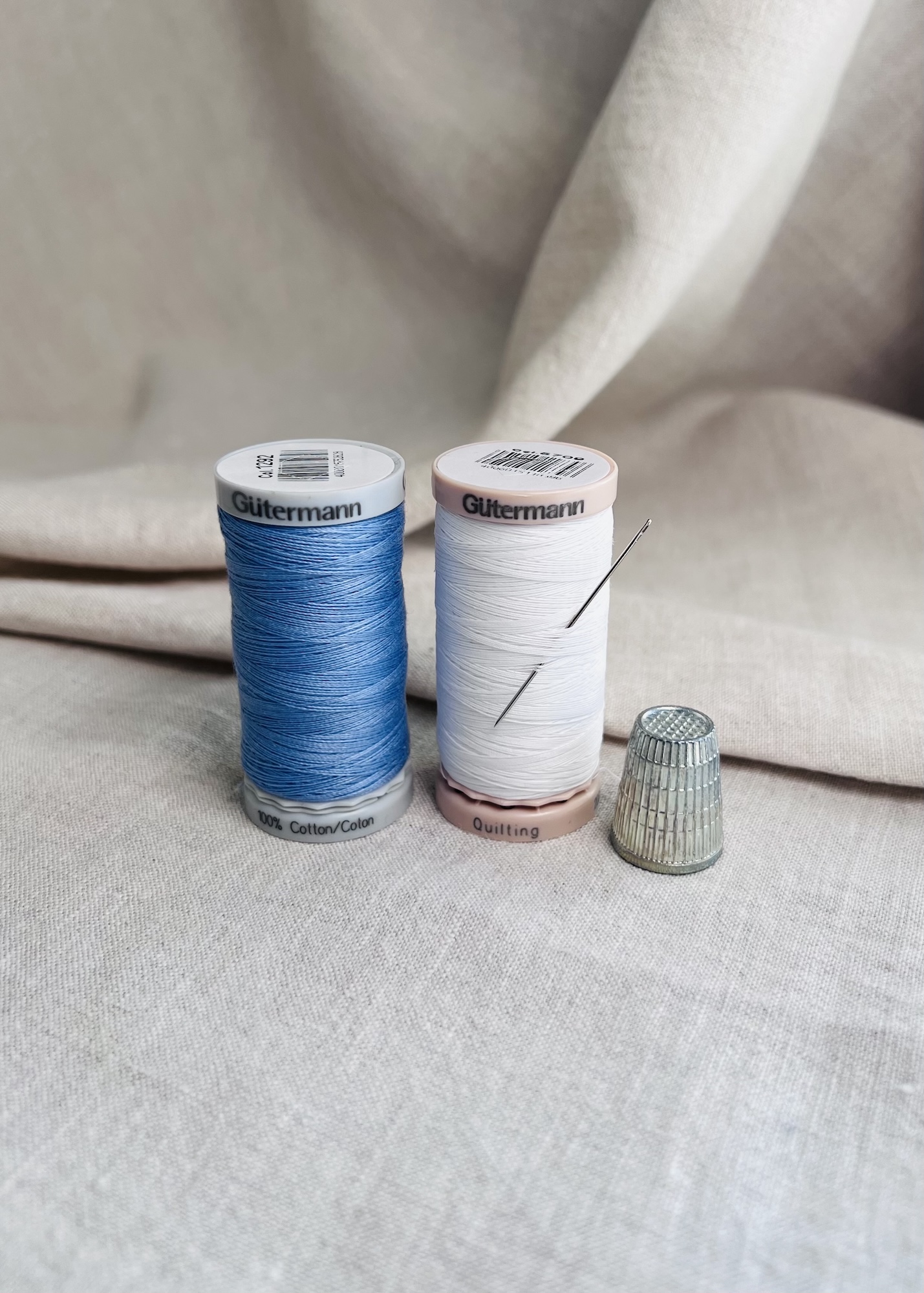
Hand quilting thread is typically used to attach the quilt top, batting, and backing together (like a sandwich). Since many quilts are made with cotton fabrics, quilting thread tends to be made from cotton. Specifically designed for hand stitching, this thread has a few distinctive features:
- It’s usually slightly heavier and stiffer than machine quilting thread, enabling it to withstand being repeatedly pulled through multiple layers of fabric and batting.
- It tends to have a coated or lightly waxed finish that helps it glide easily through layers of fabric while reducing tangling. Because of this coating, however, hand quilting thread should not be used in a sewing machine, as this finish can damage your machine.
Machine quilting thread is typically finer and smoother than hand quilting thread and is made to withstand higher-speed machine stitching. It can be made from cotton, polyester, or specialty fibres, though 100% cotton is one of the more common choices for quilting projects. Because it lacks a coating, it can move freely through the machine.
While machine quilting thread can be used for hand sewing, it may twist or tangle more easily. Therefore, running the thread lightly through tailors wax can help smooth it and reduce tangling.
Extra Strong/Upholstery Thread
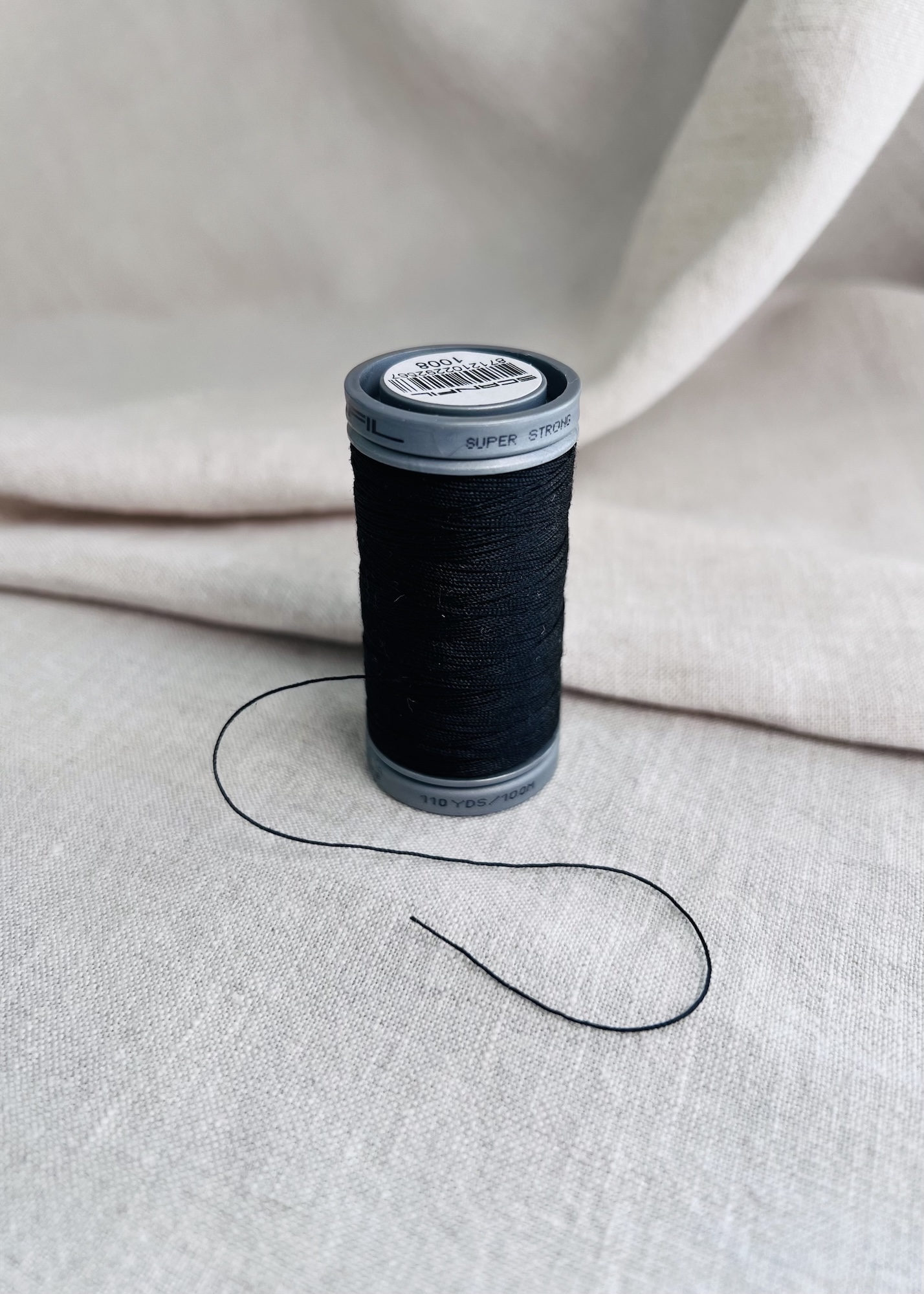
As the name implies, this is the heavy-duty option in the thread world. Its heavier, thicker, and simply more robust than standard sewing threads.
Typically made from 100% polyester, it is highly durable and tear-resistant, making it ideal for seams that will be under a lot of stress or strain, such as upholstery, cushions, and heavy-duty accessories like backpacks. It also works well with heavyweight fabrics such as canvas and denim.
This thread is often too thick for the bobbin, so it’s usually used only as the upper thread, with a regular all-purpose thread in the bobbin.
Elastic Thread
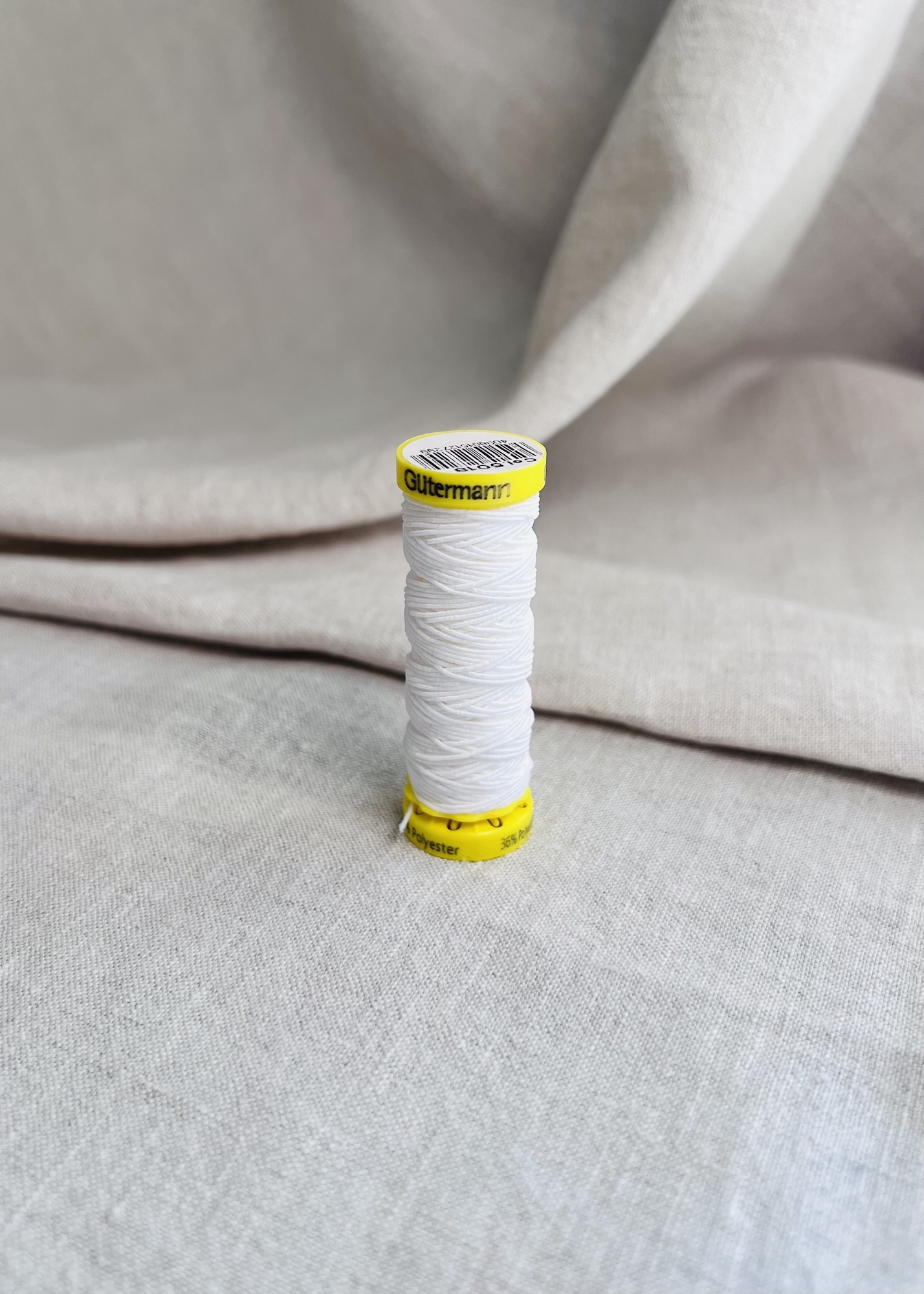
Elastic thread is just that, a thread that stretches. It is also called shirring elastic, being most commonly used for shirring and smocking to create gathered, stretchy fabric.
It’s designed to be used in the bobbin of your sewing machine, with regular sewing thread on the top. The bobbin should be wound by hand, as using the machine can wind it too tightly.
Monofilament Thread
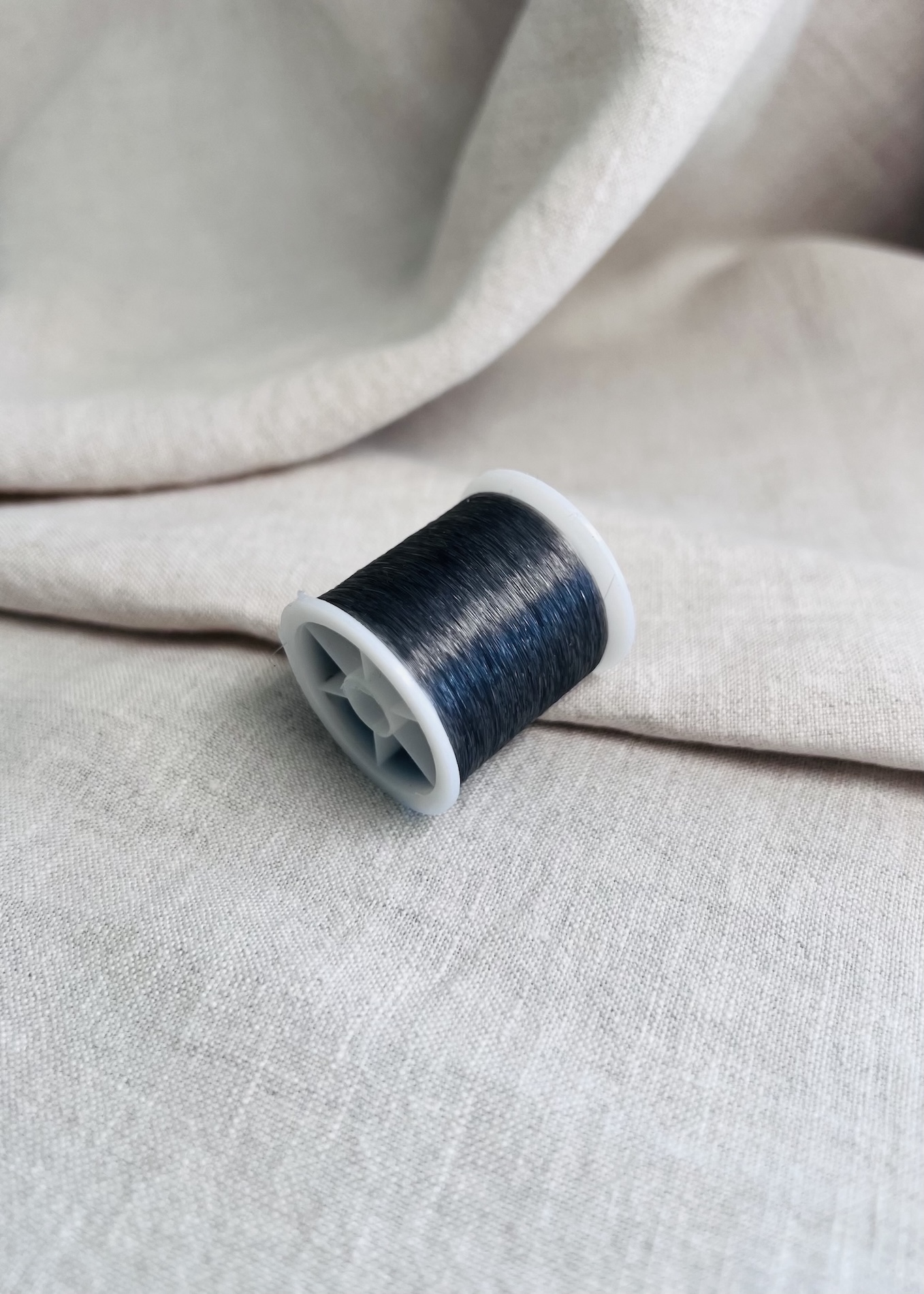
Also called invisible thread, monofilament thread is typically made from nylon and is designed to blend into fabric for an almost invisible finish. It is made up of a single (i.e. “mono”), fine, nearly invisible strand. It is slightly stiff and resembles fishing line.
It is generally available in either clear for lighter coloured fabrics, or a smoky grey for darker fabrics.
Being essentially plastic, these threads are sensitive to heat, so take care when ironing.
Overlocking Thread
Overlocking (or serger) thread is used for finishing fabric edges. It’s usually a finer thread, so it doesn’t add too much bulk to seams while still maintaining good strength.
Most overlocking thread is polyester, though it is also available in nylon or cotton.
Overlockers use multiple threads at once and you can go through it quickly, therefore it is commonly sold on large cones of 1000–5000 meters.
Some of the most common types include:
- Universal: The most common type, similar to standard all-purpose sewing machine thread. Usually polyester and available in many colours. It’s a medium weight (not too thick or thin) and works on a wide variety of fabrics. This is a great everyday option and can handle everything from linen to denim and jersey. If you’re starting out, black and white cones are great basics to have on hand.
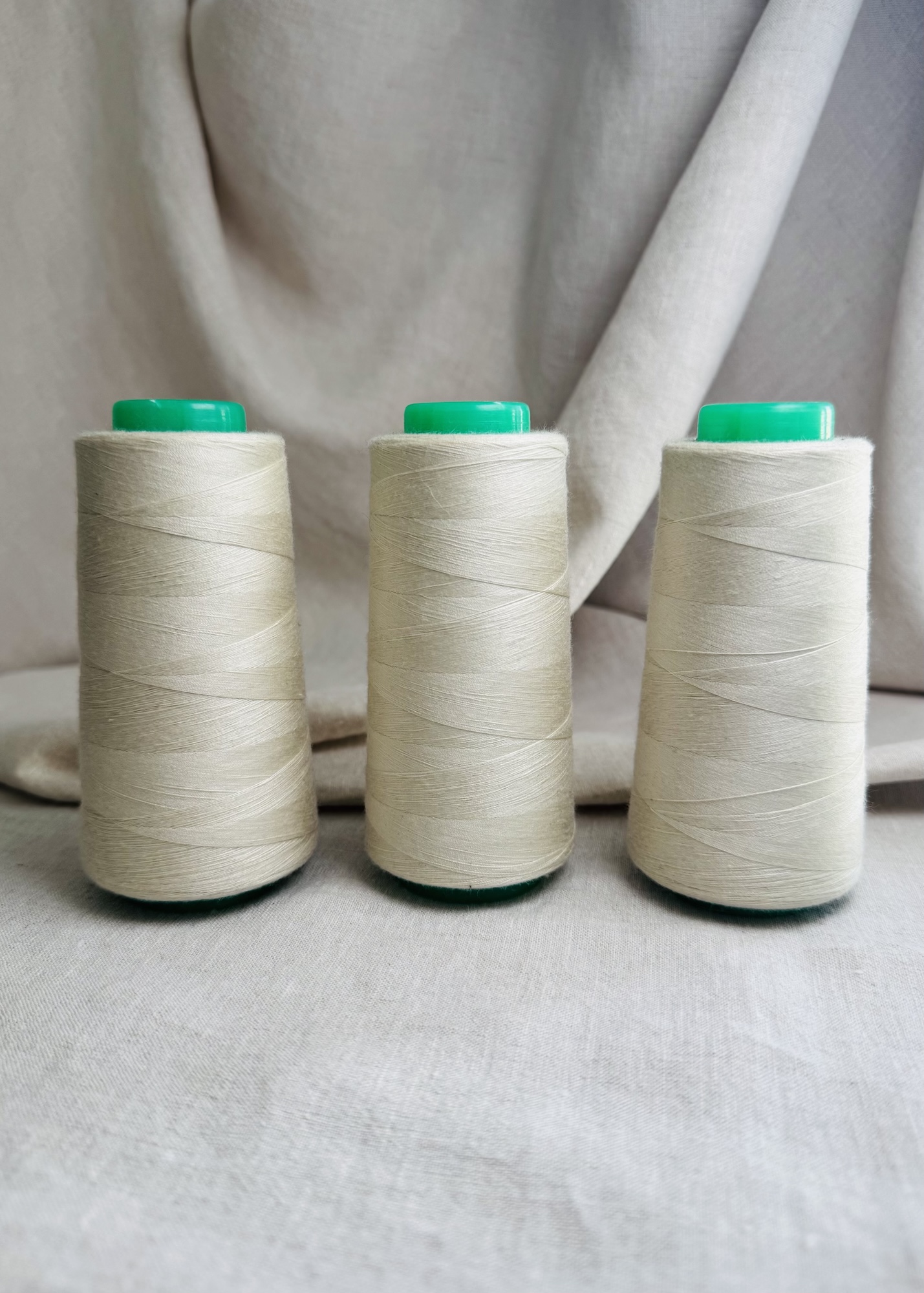
- Shiny thread: Thinner and smoother than universal thread, being ideal for lightweight or delicate fabrics.
- Woolly (nylon) thread: Soft, stretchy, and slightly fluffy. Perfect for elasticated seams and rolled hems on stretch fabrics.
Tip: I’m a bit of a perfectionist and if I can’t find overlocking thread in the right colour (or I don’t want to buy one I won’t use again), I’ll often buy extra spools of all-purpose thread for a perfect match, especially for unlined garments where the inside may be visible.
Sewing Thread Tips
- Thread weight: Thread weight refers to the thickness of a thread. It’s measured using a numbering system (wt) where lower numbers indicate thicker thread, and higher numbers indicate thinner thread. For example, 40wt thread is thicker than 60wt thread. It does feels a bit counterintuitive, but reminds me of how corduroy wales (ribs) are measured—the wider the wales, the lower the number.
Common thread weight ranges:-
- Lightweight: 50–60wt
- Medium weight: 30–40wt
- Heavy weight: 12–30wt
-
- Thread quality: I highly recommend investing in good-quality thread. Cheap thread breaks more easily, creates excess lint, and can cause issues with your sewing machine over time.
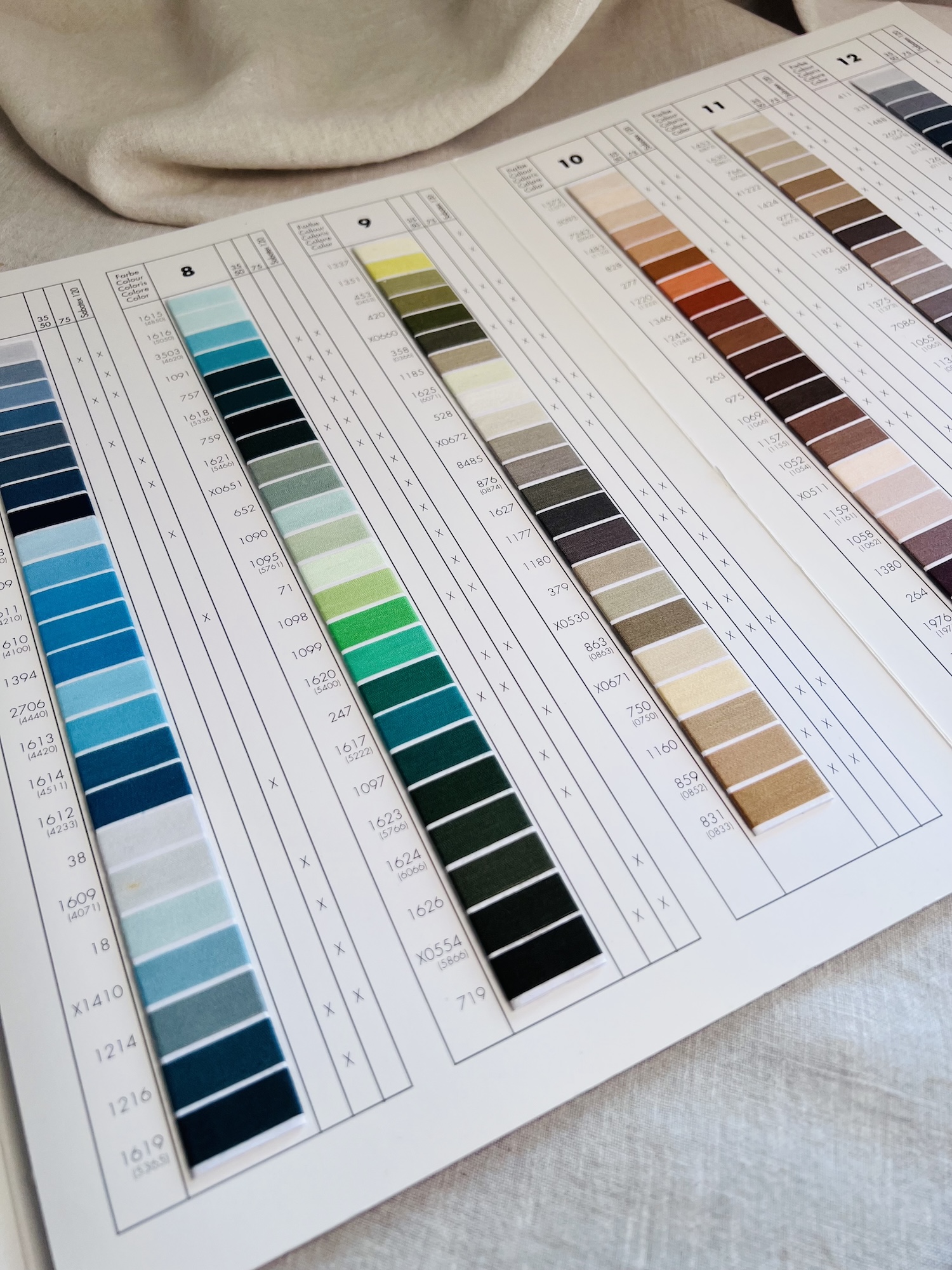
- Colour choices: If you’re like me and often buy thread online, you’ll know that matching colours from a screen can be tricky. I highly recommend purchasing colour charts (like the Rasant one in the photo below) for your favourite brands. They are invaluable when it comes to accurate colour matching.
- Match thread to needle: Always match the thread type and thickness to the correct needle. For more on sewing machine needles take a look at the article ‘Understanding Sewing Machine Needles’.
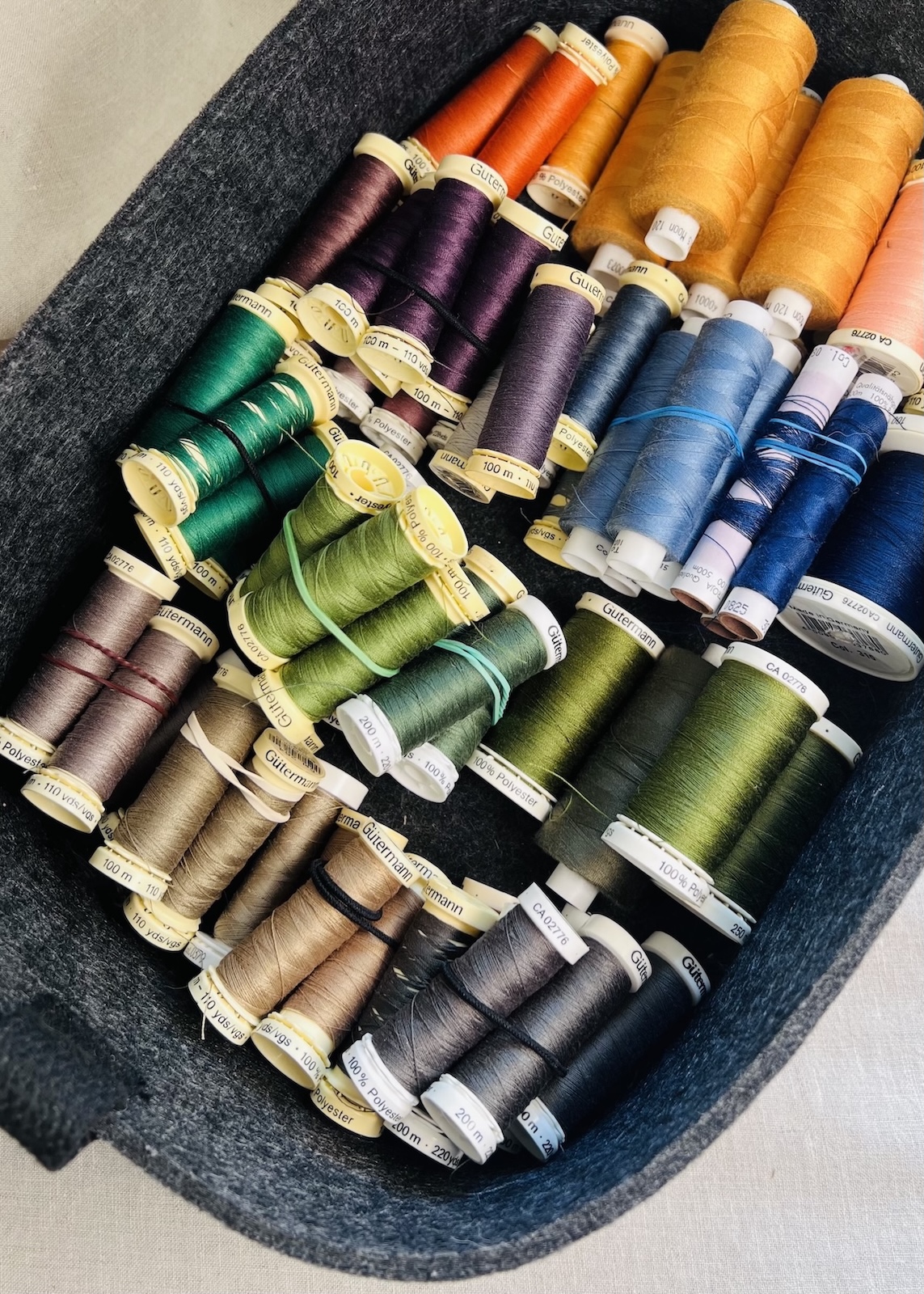
- Storage: You’ll likely accumulate a lot of thread over time. While you can buy specialty organisers, a simple option is bundling threads by colour or type with an elastic band. Just ensure they are kept clean, dry, and out of direct sunlight.
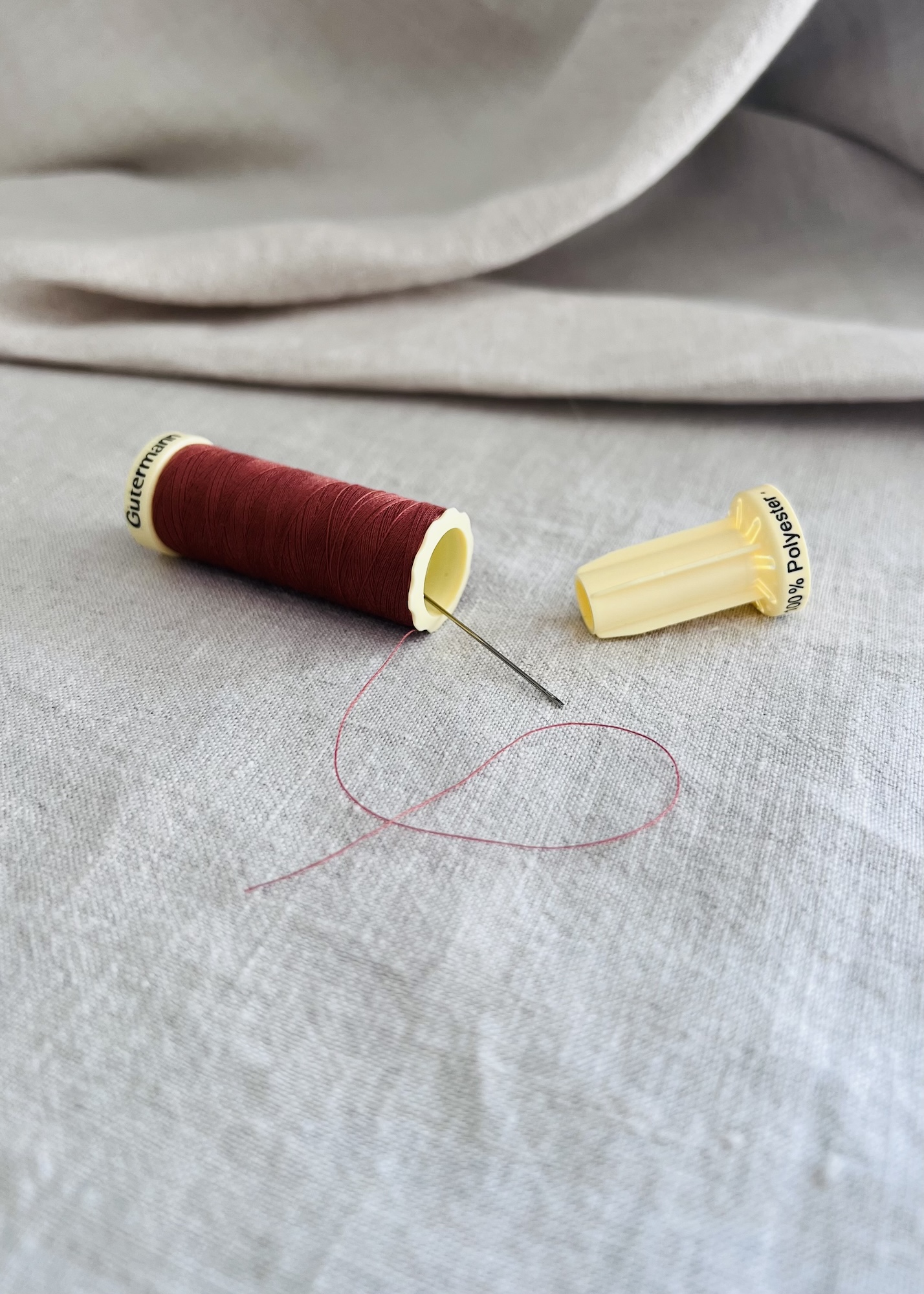
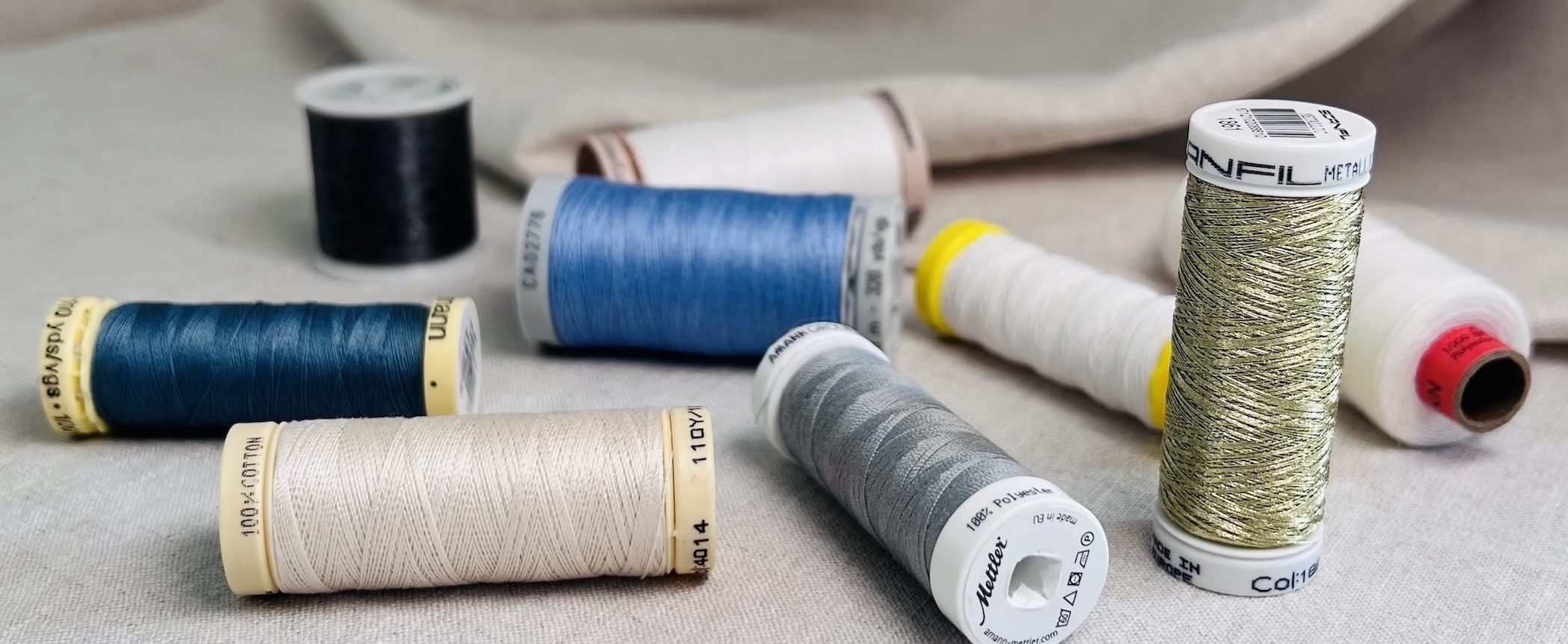
- Spool features: Some thread spools, like those from Gütermann and Scanfil, have a couple of really nifty features:
- Twist end: Have you ever noticed the twist end on some spools of thread? This clever feature is designed to keep your thread secure and tidy. Simply wind the thread around the end and twist it to lock it in place. When you twist it open again, it will reveal the thread end, making it much easier to find.
- Removable end cap: The end cap can also be popped off, creating a handy little compartment that is perfect for storing hand-sewing needles.
- Experiment and test: Like most sewing tasks, try things out on scrap fabric first. This lets you explore different techniques, see what works best for you, and achieve the best possible finish.
Thread really can affect everything from the strength to the look and durability. So, just like your fabric, it’s worth choosing carefully.
With so many options out there, it’s easy to feel a bit overwhelmed. There are plenty of thread types I haven’t even covered here, like basting, bobbin fill, and UV-resistant threads. But hopefully this guide will become a good reference, and give you something to come back to when you’re planning your next project.

About Author
Emma Cartmel
Heya! I’m Emma, and I'm an Aussie living in beautiful Munich with my husband Ben, and our pug Harley. I am a designer, pattern maker, and sewist, and I share my expertise and experience through my ‘cartem.sewing’ page. You can follow me on Instagram @cartem.sewingRelated posts
Sewing Essentials: Stitch Width, Stitch Length & Needle Position
Thinking back to my high school textiles days, I remember having to test stitch settings on every fabric we planned to use for our projects. We would cut out little squares of fabric and experiment with different stitch lengths and widths, and edge-finishing techniques. At the time, it felt unnecessary, not to mention tedious….
Sewing Essentials: A Simple Guide to Notches
I love a notch, so much so that I’ve decided to dedicate this article to these small but important markings. Here, I’ll explain why they’re so helpful, when to use them, and how to add them to your own patterns or adapt them for existing ones. What exactly are notches? Notches are small markings found…
How to Select and Use Interfacing: A Simple Guide
Iron-on or sew-in, woven or non-woven, lightweight or heavyweight. With so many different types, weaves, and weights to choose from, how do you know which interfacing is best for your project? In this article, I will explain the two main types of interfacing before diving into the differences in weave and weight. Hopefully by the…
Sewing Essentials: A Simple Method for Reversible Seams
There are so many ways to finish a seam, from good old overlocking to French seams and binding. I recently stumbled across another method that’s pretty nifty, and honestly, I kind of wish I had known about it sooner. It is a bit like binding, but topstitched in place so it doesn’t move or flap…

Sewing Essentials: Understanding Different Types of Sewing Elastic
Elastic is a really common notion used in sewing. You’ll find it on everything from waistbands to cuffs and necklines. It plays a crucial role in giving garments both support and shape. Have you ever had the waistband of your pants twist and never sit quite right? Or maybe you’ve noticed the leg opening of…






SEW THIS LOOK

Latest Posts


Leave a comment