

Money Made of Linen?
‘ 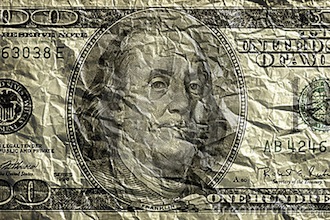 When I was a little kid, I always wondered how money survived a trip through the washing machine.’ I would often leave dollar bills in my pocket and look at the crinkled aftermath slightly bewildered.’ Even as a child, I knew that paper plus water equaled mush.
As much as I enjoyed toying with that inexplicably crinkled money, I was curious to unfold the mystery surrounding it.’ Cash is not your typical paper it turns out.’ ‘
To rewind just a little bit, perhaps we should first discuss paper more in depth. ‘ Normal paper, such as newspaper or notebook paper, is made out of cellulose.’ For this, trees are chemically broken down into wood fibers.’ Then, the cellulose fibers are selected to form very thin sheets of paper.
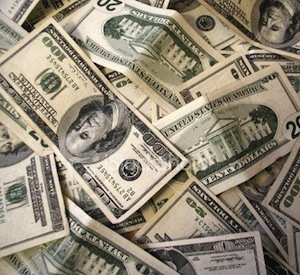
The process to create paper money is quite different.’ For the production of money, cotton and linen fabric are beaten into fibers.’ This is then used to produce the money we handle.’ There is 25% linen and 75% paper in the money we handle.’ Interestingly, before World War I silk was the chosen fiber used in place of linen.
The fibers that bond together money are much stronger than the ones holding together regular paper.’ The fibers used in money are basically unaffected by water, whereas cellulose fibers absorb water and then fall apart when wet.’
Well, that solves the big mystery.’ It’s an interesting fact and makes a lot of sense when you consider how durable linen is. ‘ This is also nice because I greatly prefer my money when it is not disintegrating.

Related posts
Sewing Essentials: Stitch Width, Stitch Length & Needle Position
Thinking back to my high school textiles days, I remember having to test stitch settings on every fabric we planned to use for our projects. We would cut out little squares of fabric and experiment with different stitch lengths and widths, and edge-finishing techniques. At the time, it felt unnecessary, not to mention tedious….
Sewing Essentials: A Simple Guide to Notches
I love a notch, so much so that I’ve decided to dedicate this article to these small but important markings. Here, I’ll explain why they’re so helpful, when to use them, and how to add them to your own patterns or adapt them for existing ones. What exactly are notches? Notches are small markings found…
How to Select and Use Interfacing: A Simple Guide
Iron-on or sew-in, woven or non-woven, lightweight or heavyweight. With so many different types, weaves, and weights to choose from, how do you know which interfacing is best for your project? In this article, I will explain the two main types of interfacing before diving into the differences in weave and weight. Hopefully by the…
Sewing Essentials: A Simple Method for Reversible Seams
There are so many ways to finish a seam, from good old overlocking to French seams and binding. I recently stumbled across another method that’s pretty nifty, and honestly, I kind of wish I had known about it sooner. It is a bit like binding, but topstitched in place so it doesn’t move or flap…
An Introduction to Common Crotch Adjustments
Recently, I drafted a pattern and made a toile of a pair of drop-crotch pants. When I tried them on, I straight away noticed (and felt) they weren’t quite right. The most obvious issue was that the back crotch felt tight and pulled uncomfortably, especially when bending over. Walking also felt a little restricted, with…




SEW THIS LOOK

Latest Posts


Leave a comment