


FS Colour Series: Coffee Bean Linen Inspired by Edvard Munch’s Deep Shadows
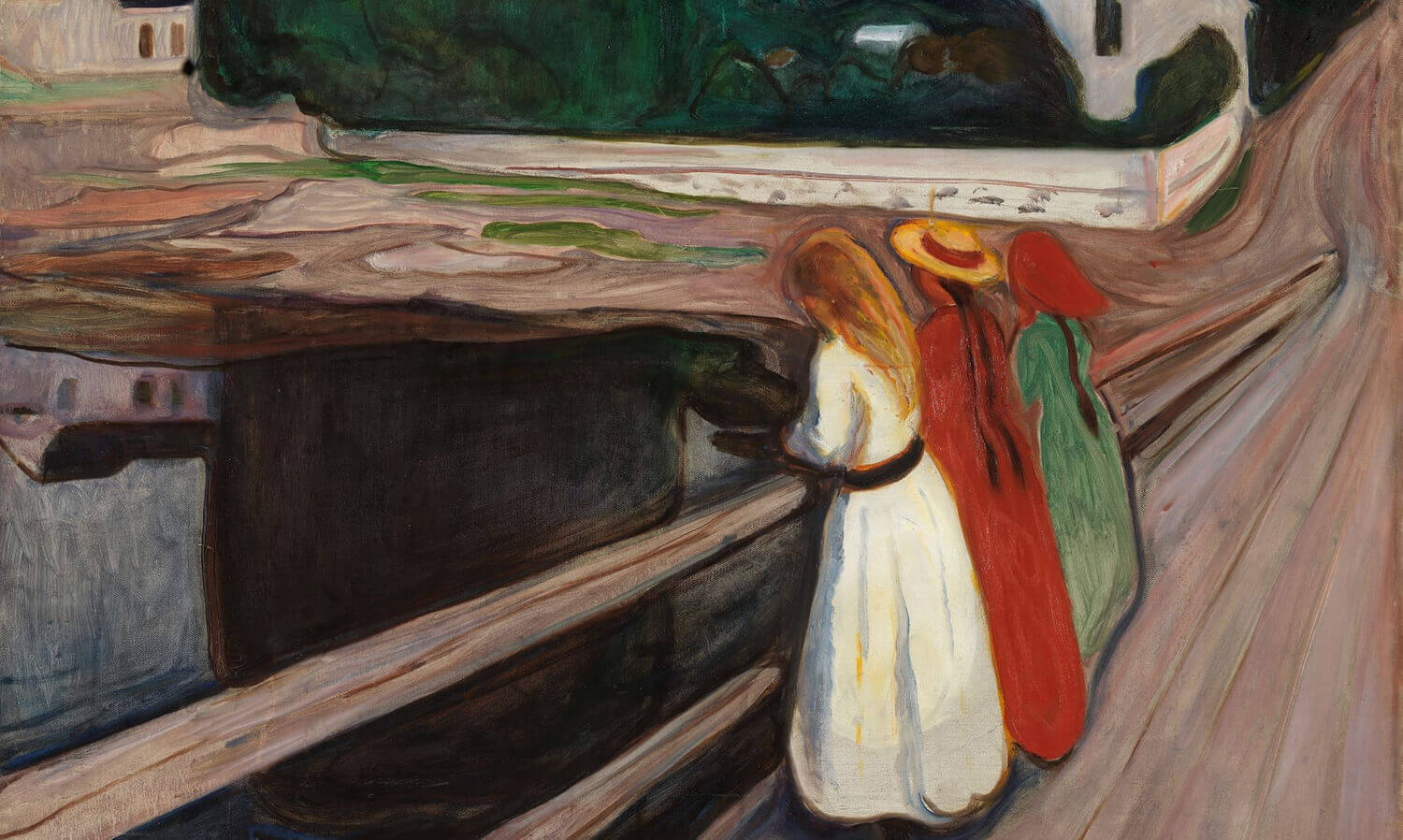
Girls on a Pier, 1901
The early 20th century Norwegian Expressionist painter Edvard Munch saw art as a tool for expressing his innermost thoughts, feelings and desires, and the colours he worked with were a vital tool for expressing these intimate moments from his life. Deep shades of brown like Coffee Bean often played a key role, forming dark tree branches, shadowy reflections, or the solid clothing of brooding figures gazing into the Norwegian wilderness. Made from memory rather than real life, he explained of his process, “I do not paint what I see, but what I saw.”
Munch’s childhood in Kristiania, Norway, was marked by the loss of loved ones (his mother and sister) and plagued by his own anxiety, a quality reinforced by the strict upbringing of his deeply religious father. He recalled, “I learned early about the misery and dangers of life, and about the afterlife, about the external punishment which awaited the children of sin in Hell.”
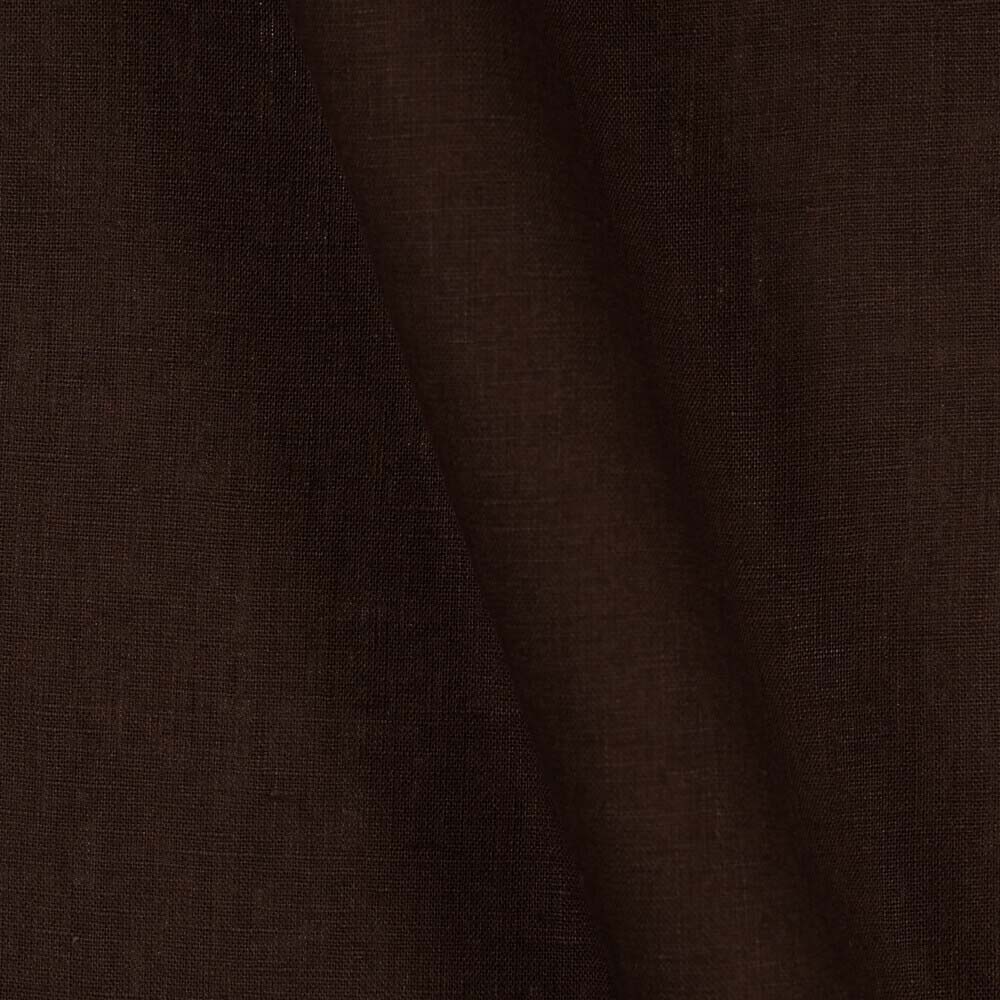
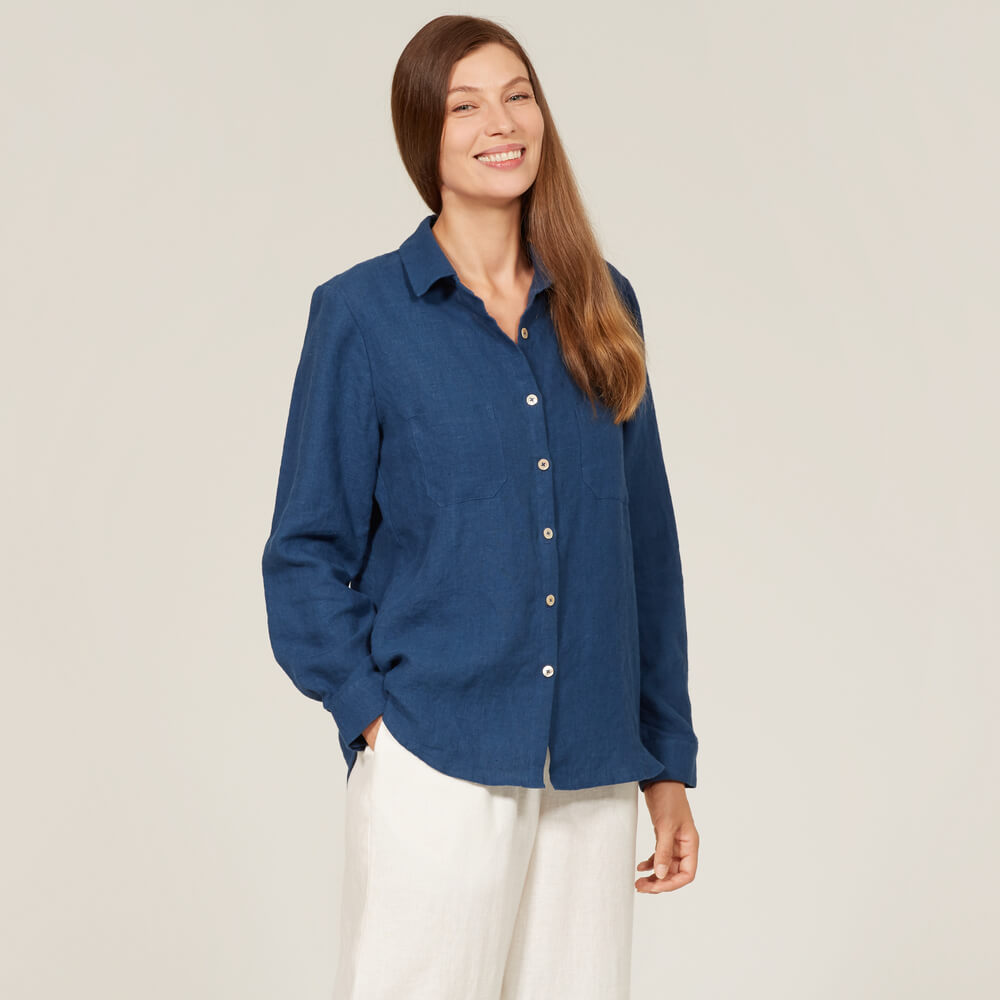
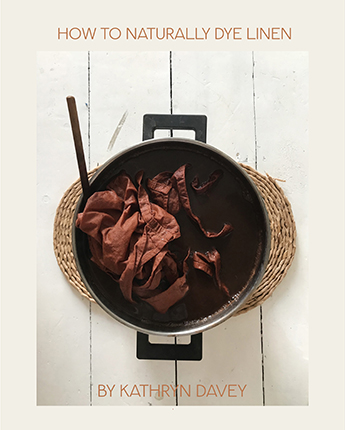
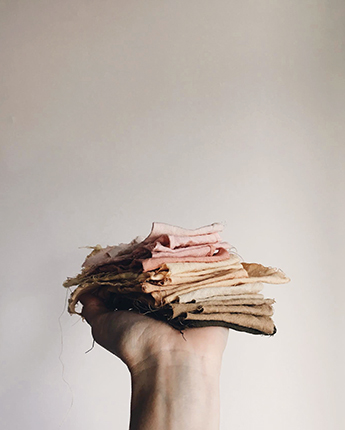
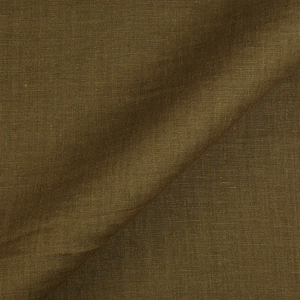
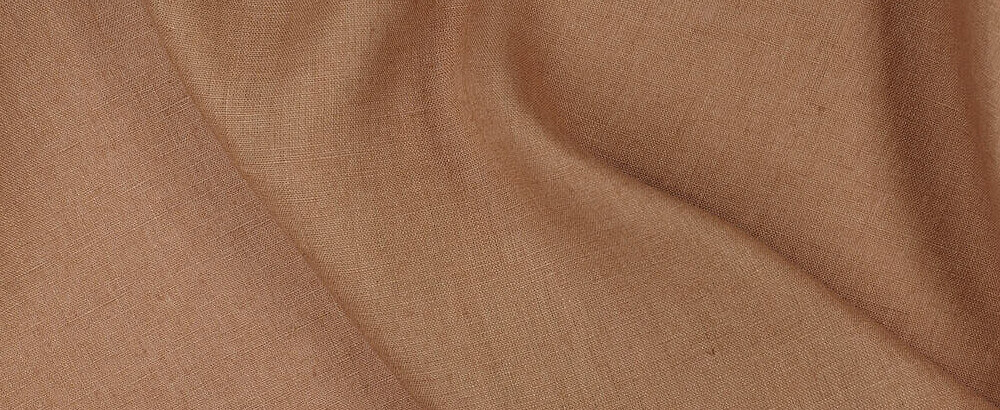
FS Coffee Bean Signature Finish Midweight linen
Following on from his study at the Royal School of Art and Design in Kristiania, Munch was influenced by the Nihilist Han Jaeger to use art for expressing his troubling states of mind, and he came to see it as a potent outlet for releasing the inner turmoil that plagued him throughout much of his life. “No longer shall I paint interiors with men reading and women knitting,” wrote Munch. “I will paint living people who breathe and feel and suffer and love.”
In the following years Munch travelled widely throughout Europe, moving between Paris, Berlin, and Kristiania, soaking up influences from the Post-impressionist and Symbolist painters, particularly their expressive brush marks and vivid, heightened colours. He wrote in his notebook, “Painting picture by picture, I followed the impressions my eye took in at heightened moments. I painted only memories, adding nothing, no details that I did not see. Hence the simplicity of the paintings, their emptiness.”
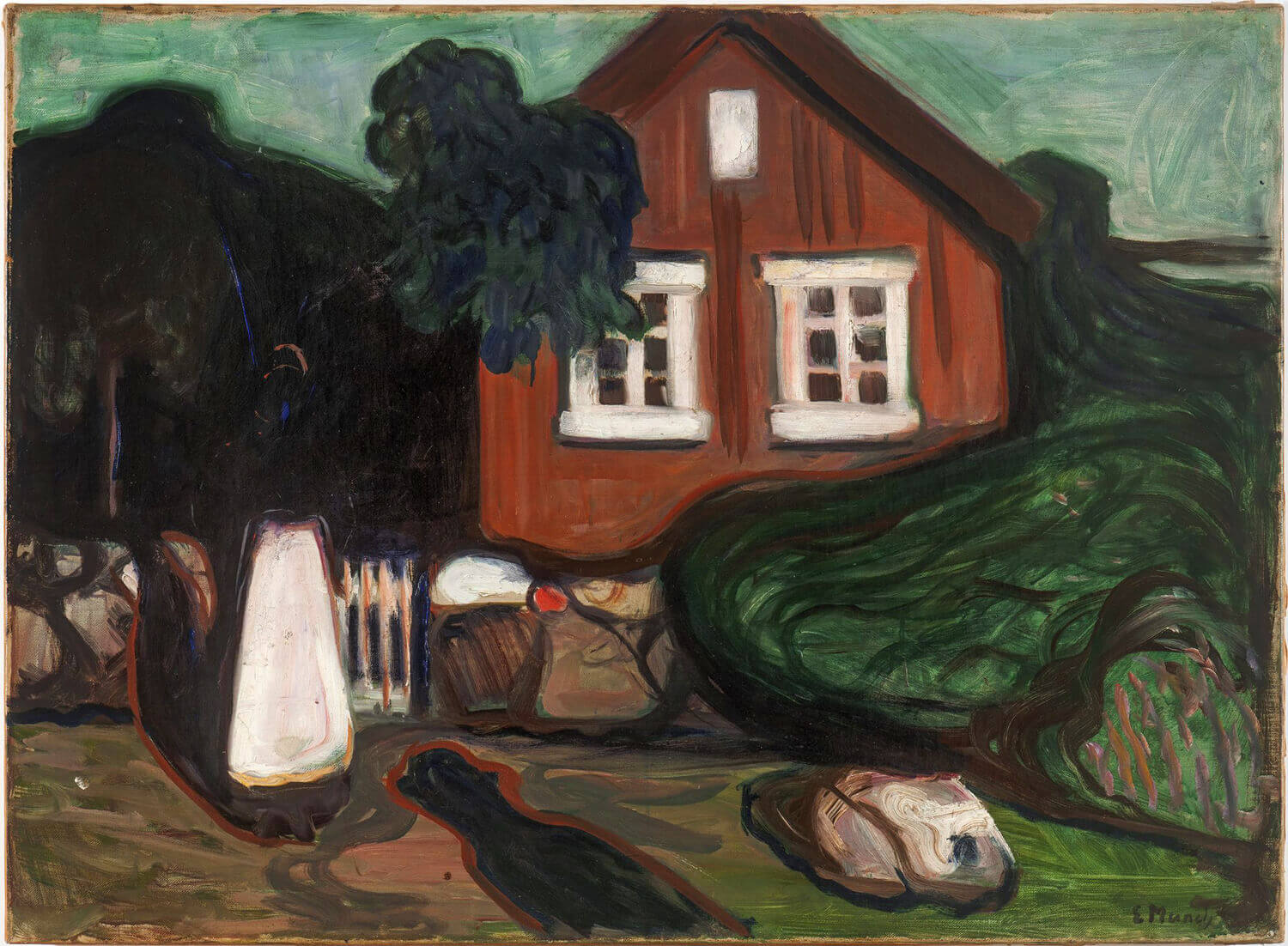
House in Moonlight, 1893-95
Much like Vincent van Gogh, Munch saw art as a means of conveying inner, rather than outer, worlds, and he over time he accepted his anxiety as a powerful tool that could fuel his art. “My fear of life is necessary to me,” he wrote, “as is my illness. Without anxiety and illness, I am a ship without a rudder. My art is grounded in reflections over being different from others. My sufferings are part of my self and my art. They are indistinguishable from me, and their destruction would destroy my art. I want to keep those sufferings.”
In Moonlight, 1895, Munch conveys a brooding, coastal Norwegian landscape with striking simplicity, painting a slender, vertical stream of moonlight glistening like a beacon in the darkening evening water. This shape is echoed in the tall, slim tree trunks that frame the watery scene, painted in a rich and velvety shade of chocolate brown to form stark and totemic silhouettes. He said, “Nature is not only all that is visible to the eye… it also includes the inner pictures of the soul.”
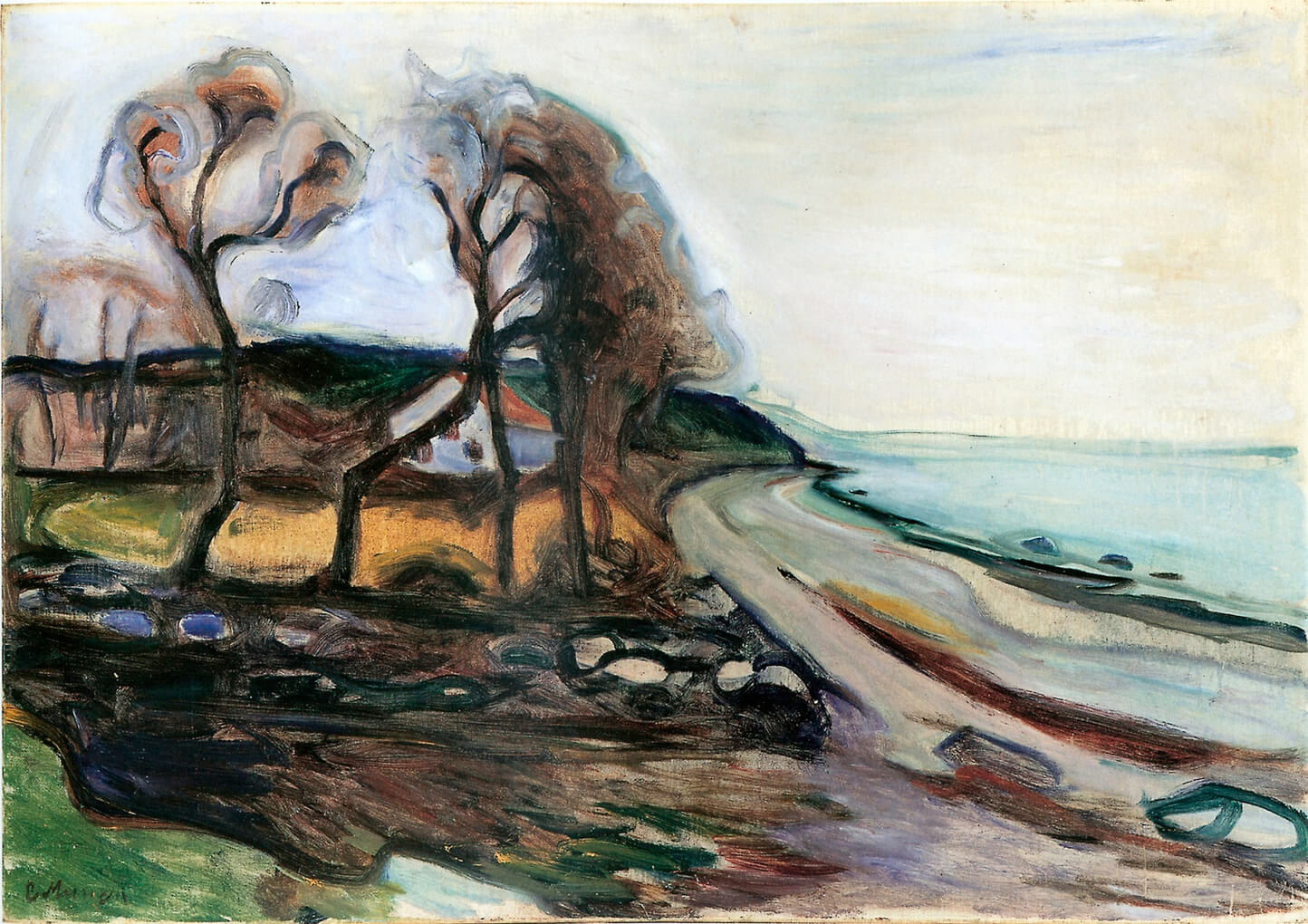
By the Shore, 1898-1904
Melancholy, 1896 is tinged throughout with warm, autumnal hues, from mustard brown and chestnut to deep green, and warm, rich brown that forms curved outlines across the shoreline, before deepening into the hair and clothing of the solemn and introspective man in the foreground.
In the slightly later Girls on a Pier, 1901, Munch paints a trio of young women from behind, gazing into still water over a bridge. Sweeping brushstrokes in a pale, sandy hue draw us along the bridge, while the bright vivid tones of the girls’ clothing pull us back to the centre, and contrast sharply with the vast, curved tree shadow that fills the glassy water below, painted in near black brown to add an air of mystery, melancholy, and intrigue.

Leave a comment
Related posts

FS Colour Series: Shiitake Linen Inspired by Wilhelmina Barns-Graham’s Subtle Bronze
Renowned St Ives artist Wilhelmina Barns-Graham made work with astonishing subtlety, conveying the nuanced patina of rugged landscapes in an array of delicately shifting hues throughout her long and prolific career. Soft, subtle shades of bronzed brown like that of Shiitake Linen weaved through many of her most accomplished works of art, capturing the warm,…

FS Colour Series: Tea Rose Inspired by Henri Matisse’s Indulgent Interiors
Interior views were one of Henri Matisse’s most enduring subjects throughout his career, a theme which allowed him to indulge in his great passion for decorative patterns, surfaces, textures, and colours. Tea Rose’s hot pink was one of the shades he returned to again and again, colouring anything from heavy curtains to lush carpets and…

FS Colour Series: Dusty Rose Inspired by Pierre Bonnard’s Mauve Haze
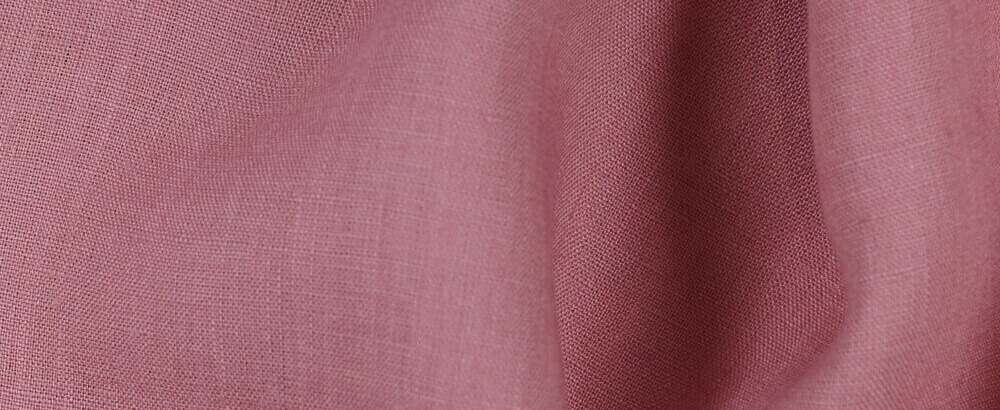
Dusty Rose Linen’s muted, pink hue was an enduring feature in Pierre Bonnard’s shimmering, intimiste paintings, conveying sunlight spreading across morning terraces, breezing through curtains, or flooding across tabletops through open windows. He had an uncanny ability to breathe wonder into life’s most ordinary moments – from intimate bathing scenes to eating breakfast in the…

FS Colour Series: Cherry Inspired by André Derain’s Dazzling Crimson
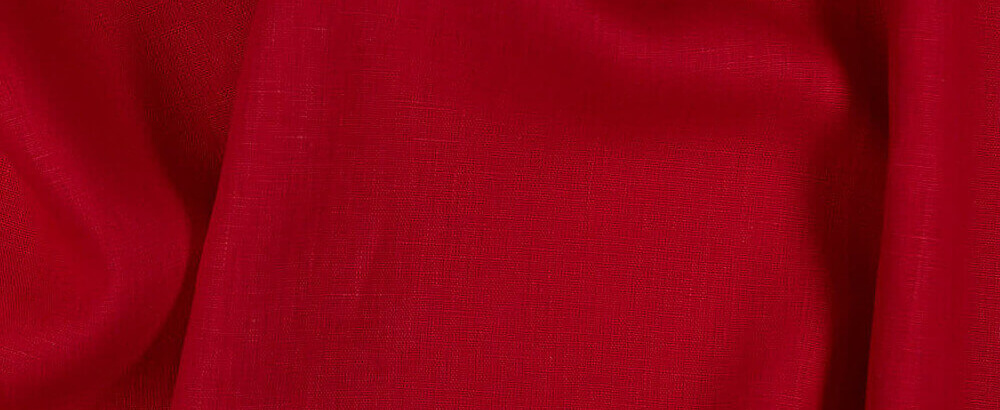
French Fauvist painter André Derain was a true pioneer in early 20th century painting, paving the way for abstraction with his dazzling, experimental use of colour. Vibrant, electrifying shades of crimson like Cherry appeared in many of his most celebrated, early career paintings, transforming the French landscape into fiery fields of electrifying light. He said,…

FS Colour Series: Mocha Mousse Inspired by Edouard Vuillard’s Hushed Tones
The French intimist painter Edouard Vuillard made a career out of observing the quietest and most intimate moments of his life, which he painted with soft, warm hues like Mocha Mousse, a subtle beige tinged with hints of dusty rose. Sometimes he highlighted these hues with vivid accents of bright colour, creating a dazzling visual…






SEW THIS LOOK


Latest Posts



2 Comments
Stina Lake
I too love these posts and appreciate them so much! The essays are wonderful and so inspiring, adding depth to life and stimulate thoughts! Thank you!
Ivey Barr
I love these posts so much! What a fascinating perspective he had.
Would it be possible to show all the images for each post that are referenced in the text, and put them close to the place where they are referenced? I often read these on my phone and today, for example, the “Girls on a Pier” is discussed in the very last paragraph but is shown before the first paragraph, so to see it while reading its description I have to scroll up through the whole post. And then “Melancholy” is not included at all, so I go search Google in order to see it haha.
Thank you again for these lovely essays!