

Femininity, Identity and Memory in the Textile Art of Camila Barvo
Camila Barvo
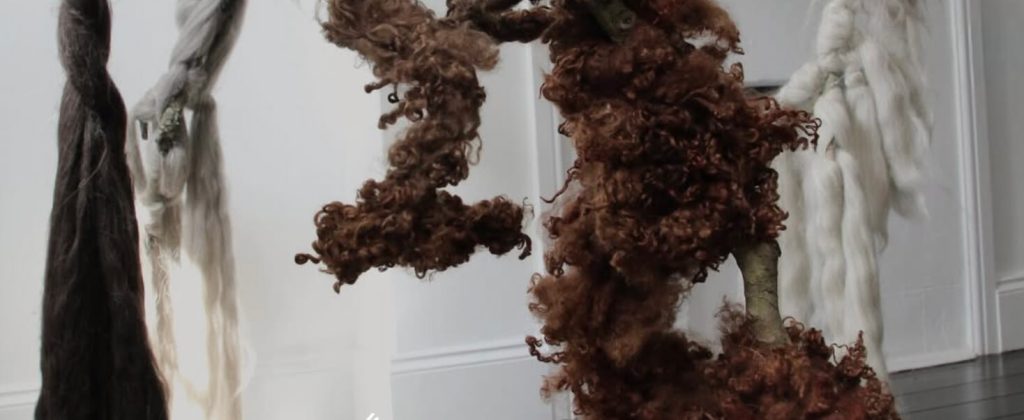
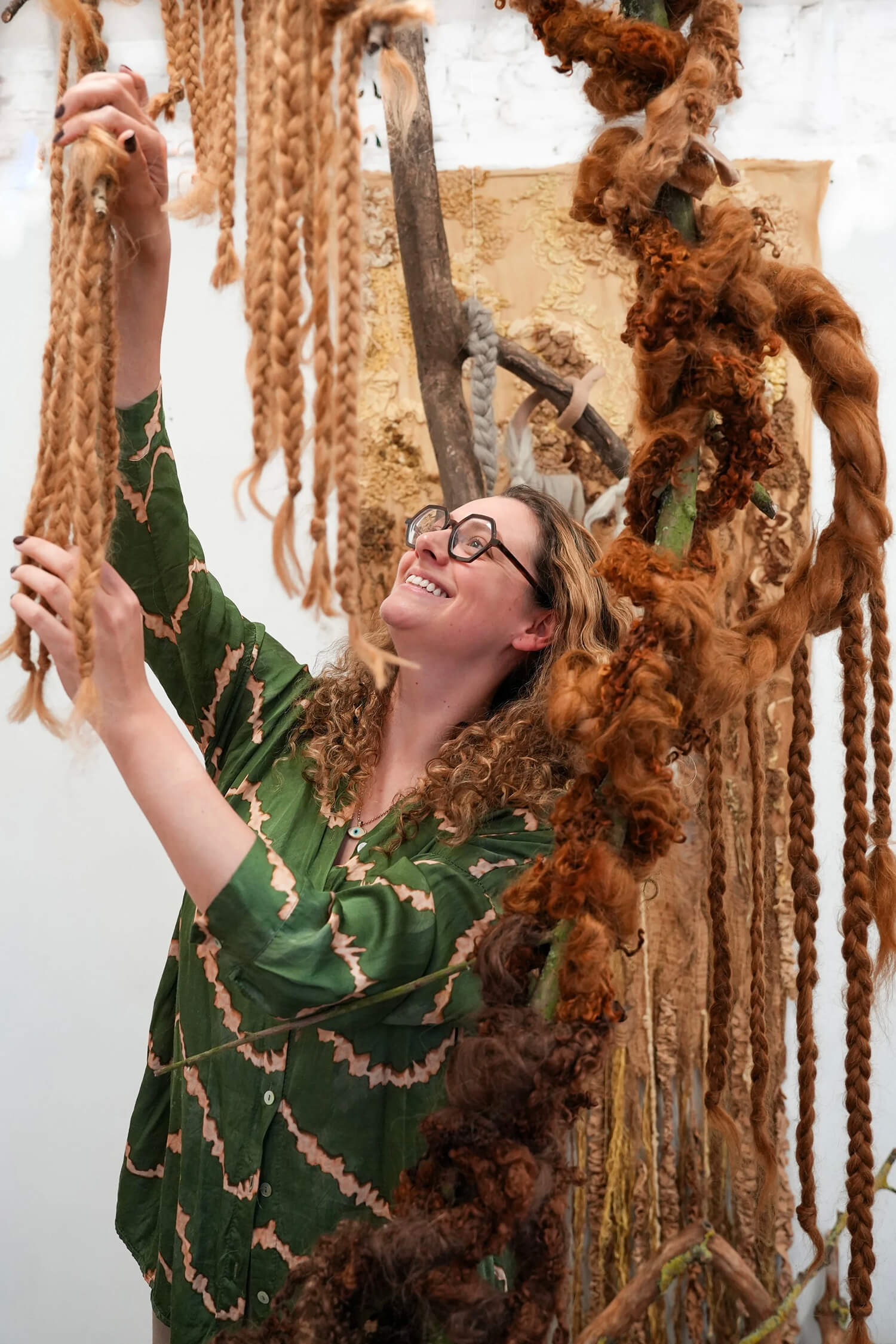
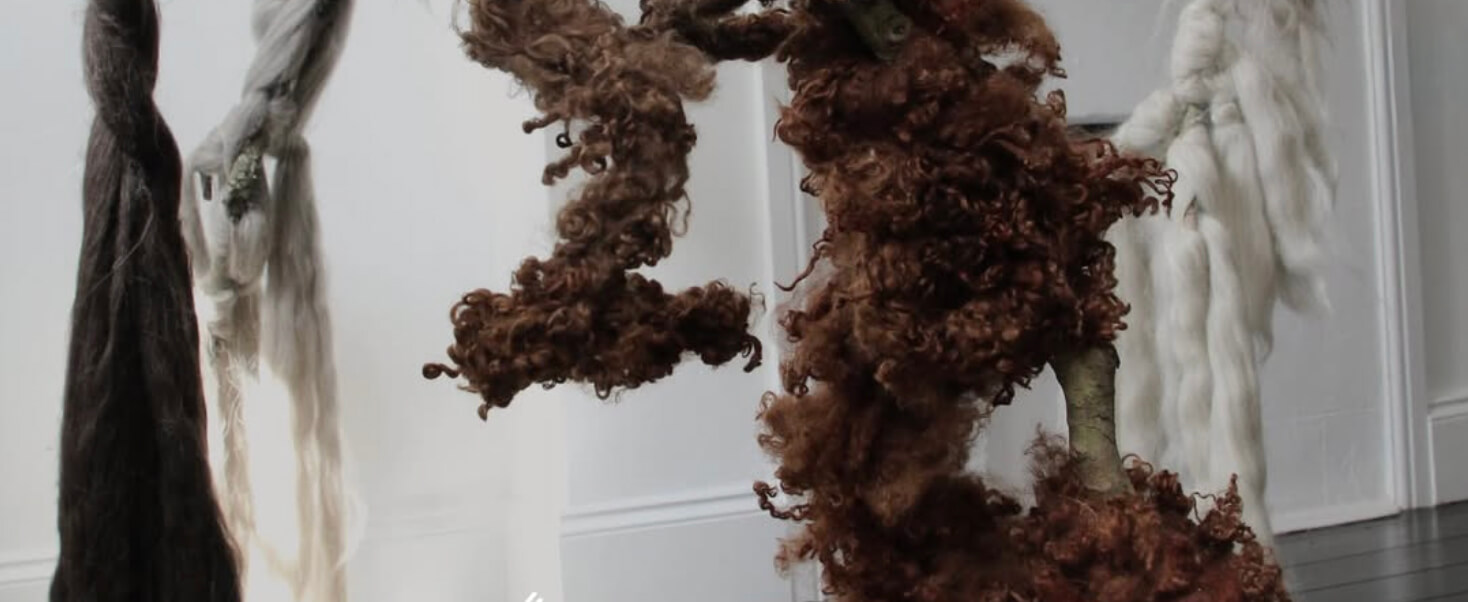
Contemporary textile artist Camila Barvo weaves complex ideas into her soft sculpture and fibre art, invoking curious, surreal worlds that veer somewhere between dreams and nightmares. Long fibres are stretched out, teased and pulled into colossal twisted braids and knots, hung suspended from the ceiling, spilling onto the floor, or draped across outdoor surfaces. She brings aspects of her Colombian history into view through the use of fique, jute, and coffee dyes associated with Latin American textile traditions, along with tying techniques that make reference to childhood memories, and the qualities that she associates with strength and femininity.
Now based in London, Barvo’s childhood in Latin America left an indelible mark. She recalls, “I was born and raised in Medellín. One of the clearest memories I have while growing up is my relationship with my grandfather. He was endlessly curious. He collected seeds and kept them in jars, sorted like tiny treasures. I’d spend hours playing with those seeds, looking at them one by one.” These seeds became a potent symbol of regeneration that would later feed into her art, as she notes, “I remember thinking: each of these seeds will become a different tree, each with its own shape, rhythm, and personality. I believe that was the moment I discovered a deep curiosity for natural objects, for the organic and transformable.”
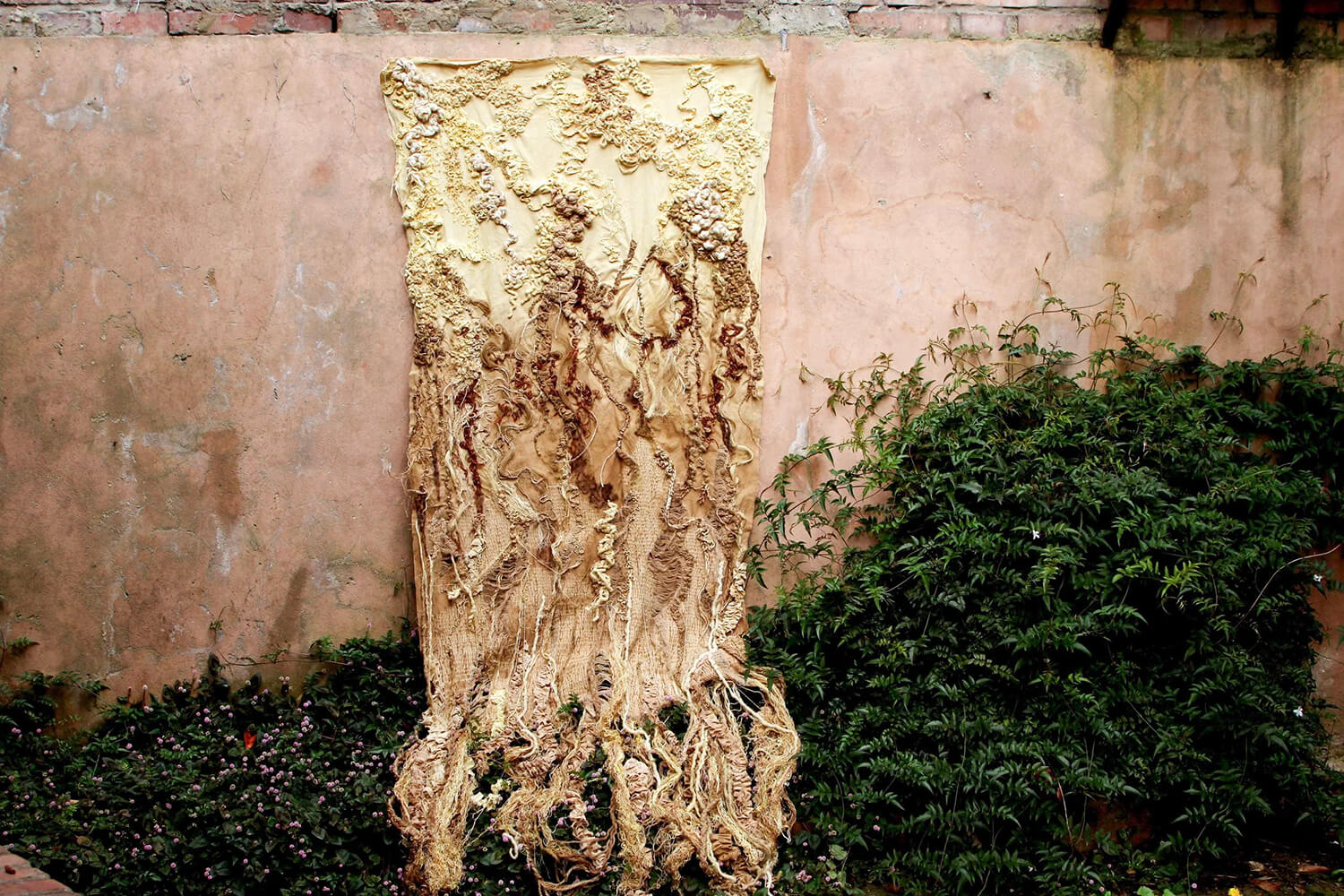
DES-HILADO, 2021. Hand embroidered cotton, wool, yute and fique fibers. Naturally dyed with colombian coffee and ginger.
Barvo moved to Bogotá to study design at Universidad de los Andes, where she worked primarily with embroidery and textiles. It was during this time that she first began to see the fine art potential embedded within fabric, fibres, and weaving. Building on this breakthrough, she enrolled at the Royal College of Art (RCA) to pursue a Master’s degree focused on textile art. Living and working in London was a formative time, when she was able to push her art practice in bold new directions. “Being in London helped me legitimize my voice as an artist and understand the value of something born out of intimacy and craft,” she remembers, “…but still able to hold space within the art world.”
Much of her practice relates to human hair, and the processes of knotting and braiding she has experienced through taming her own curly hair since childhood, a theme that has allowed her to examine connections between memory, identity, and femininity. In her work, La Trenza Como Hilo, made in 2025, for example, she notes, “This piece serves as a personal reflection on the act of braiding. It explores an imagined space where emotions tied to hair might be stored, what would such this place look like? If a braid could trace a cartography of feelings, how would that map unfold?”
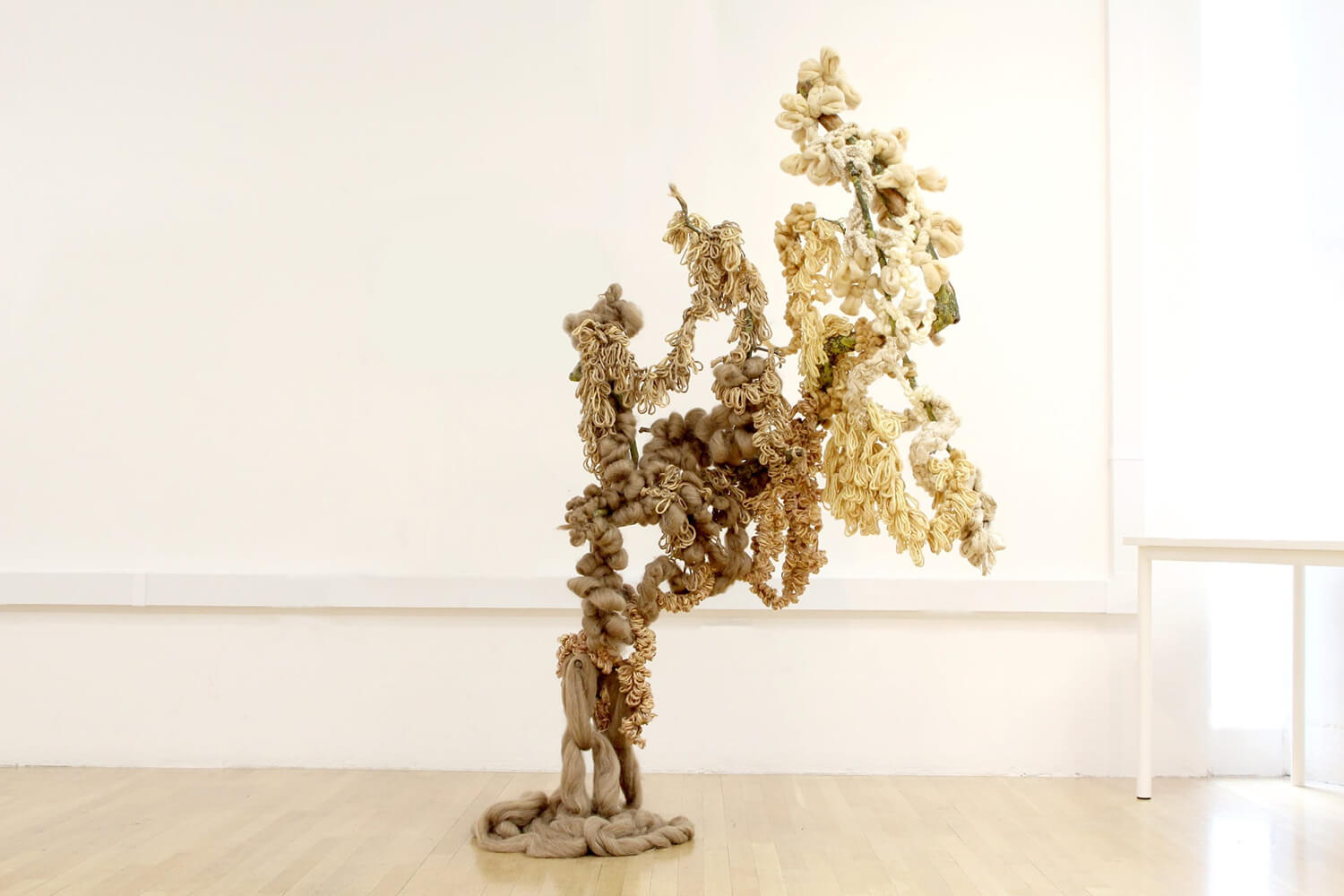
Trenzado. Soft sculpture via RCA
Barvo also sees her hair as innately tied to her family history, noting, “There are so many social layers in Latin America, I feel like hair is something that, in a way, connects us all… What I wanted to do with my work was add another layer to the conversation, maybe just bring in my perspective.” Introducing naturalistic fibres from Latin American textile traditions has furthered the meaningful links with her cultural heritage, and allowed her to expand into larger scales, magnifying her fibrous sculptures into vast, all-encompassing installations that seem to sprout a life of their own as they spill out into the space around them.
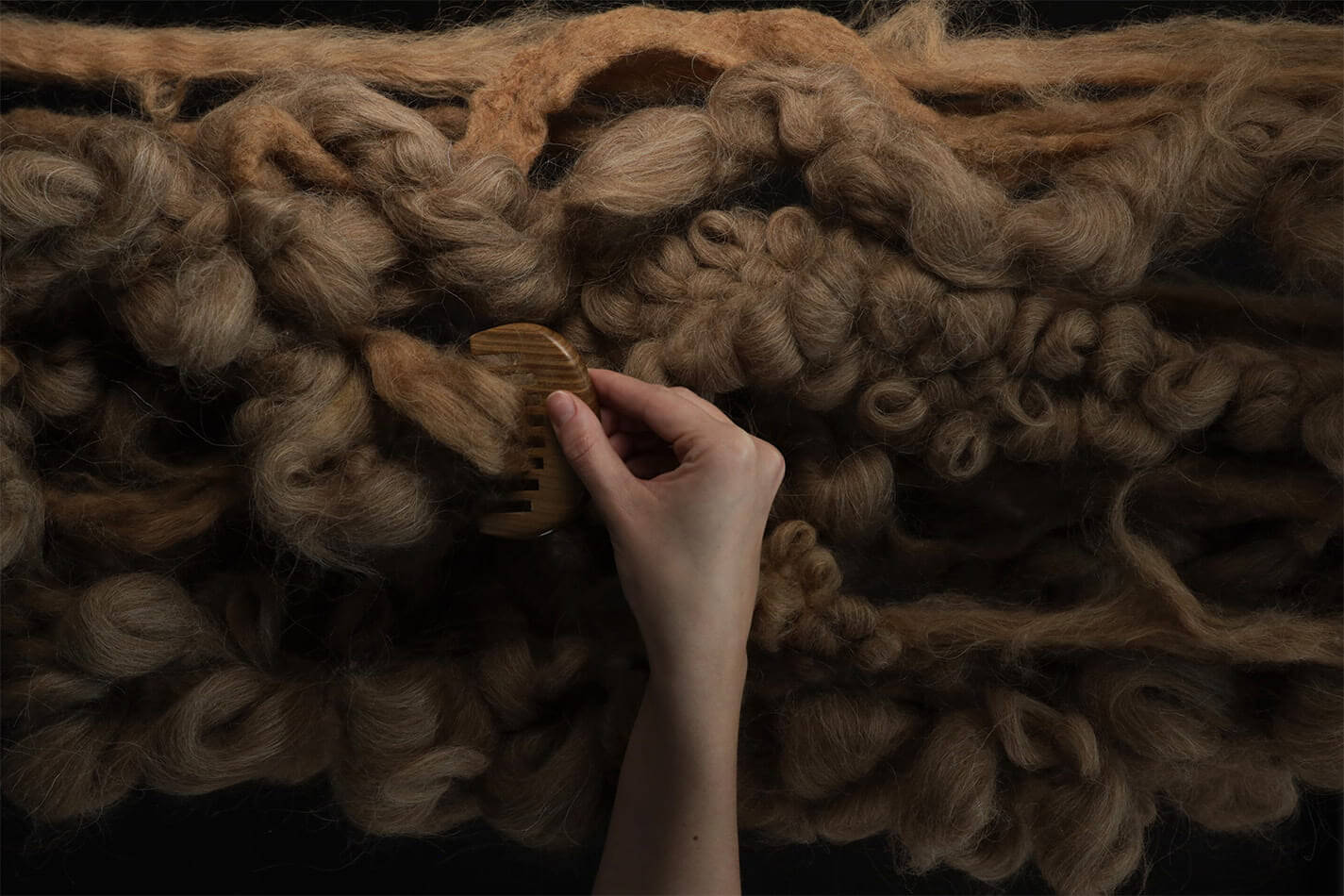
Still shot from video ‘Gesture anthology’ via RCA
Ultimately, working with fibre art has been a liberating experience for Barvo, particularly at a time she sees as pivotal in the development of soft sculpture and fabric-based practices. “I feel that textile art is truly on the rise right now,” she says. “People are beginning to recognize it as a distinct category within the broader art world. The thing is, textiles have long been viewed as decorative elements or domestic objects. But I feel this is changing—those boundaries are starting to blur. Here in the UK, textile art is already firmly established as a category.”

Related posts
Made with Love: Richie Wilde Lopez’s Intimate Textiles
There is a familiar quality of warmth and intimacy bound into each thread of Puerto Rican artist Richie Wilde Lopez’s tactile textile art, which he produces in homage to his family heritage, and the women who passed traditions of weaving, embroidering, dyeing and creating down to him. He believes memories are stored deep within fabrics,…
Knitting and Knotting Together Joy in Katrina Sanchez’ Textile Art
Fiber artist Katrina Sanchez makes deeply tactile and brilliantly bright knitted objects that speak of her sunny childhood in Panama, bringing a joyful and optimistic sensibility to the spaces they inhabit. The innocence of her soft, puffy creations makes them immediately appealing on a surface level, but they also form a potent means of fantasy,…
Milla Novo: Weaving New Worlds
From her busy studio in the Netherlands, textile artist Milla Novo has been making great waves in the realms of interior design since launching her career in 2017. Widely recognised today for injecting a lease of new life into the traditional macrame craft, she creates vast, all-encompassing wall-hangings and installations, in which vividly coloured and…
Breathing Landscapes: Inside Elise Peroi’s Intricate Textile World
Rising French textile artist Elise Peroi makes liminal artworks that hover between mediums; part tapestry, part painting, and part sculpture, her delicate and intricate work brings plant forms and subtle, naturalistic colours into semi-translucent constructions that act like doorways into another realm. Exploring the airy, breathable, and mutable properties of nature, she likens herself to…
Knots and Webs in the Textile Art of Joana Schneider
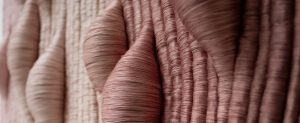
Contemporary, German-born textile artist Joana Schneider’s art takes many forms, from haunting, mask-like faces and rhythmic abstractions to excerpts of text. But running through her multifarious subject matter is a common theme; the techniques and materials associated with the fishermen and netmakers of the harbour areas in The Hague, an area she has come to…







SEW THIS LOOK

Latest Posts
Leave a comment